

Plain, whole-bean roasted coffee is effectively yeast-free as a finished product. Yeast plays a role during processing, before the beans are ever dried or roasted, but roasting itself destroys any living microbes. The single most useful action you can take: buy single-ingredient, freshly roasted whole-bean coffee from a roaster who is transparent about processing and testing, and skip instant, flavored, or heavily processed formats where the real risk of unwanted additives and mold contamination is highest.
TL;DR:
- Buying freshly roasted, whole-bean coffee from a transparent roaster reduces contamination risk and allows for better control over freshness and mold development.
- Processing methods like washed or washed-natural limit microbial activity, helping to ensure the beans are less likely to harbor mold or mycotoxins.
- Asking roasters for third-party lab tests for mycotoxins and details about their sourcing and storage practices provides better safety assurance than label claims alone.
- Storing beans properly in airtight, opaque containers and grinding immediately before brewing minimizes mold and yeast risks during coffee preparation.
- Roasting eliminates live yeast microbes, so concerns about yeast in finished coffee are unfounded; risks mainly stem from post-harvest contamination and improper storage.
Table of Contents
- What “Yeast-Free Coffee” Actually Means
- The Science: How Yeasts Shape Coffee During Fermentation
- Mold and Mycotoxins Are the Real Risk, Not Yeast
- A Shopper’s Checklist for Yeast-Free, Mold-Free Coffee
- Which Coffee Formats to Trust, and Which to Skip
- Storing and Brewing Coffee to Keep Mold and Yeast Risk Low
- Why Esprit Kaffe Fits This Checklist
- My Take: Stop Chasing Purity, Start Chasing Transparency
- Get Freshly Roasted, Single-Ingredient Coffee From Esprit Kaffe
- Sources
- FAQ
What “Yeast-Free Coffee” Actually Means
Nobody labels a bag of coffee “yeast-free” the way a bakery labels bread, and that’s because yeast in coffee isn’t a food-labeling category. It’s a processing detail. Coffee cherries ferment naturally after harvest, and yeasts are one of several microorganisms that show up during that stage. By the time beans are dried, roasted, and bagged, there’s no live yeast culture sitting in your cup the way there might be in a fermented dairy product or a beer.
That distinction matters because a lot of health-conscious buyers assume “yeast-free” means an ingredient was deliberately excluded, similar to gluten-free labeling. Coffee doesn’t work that way. The better framing is process transparency: which processing method was used, whether it involved fermentation at all, and whether the finished bean was tested for the things that actually pose health risks, namely mold-derived mycotoxins.
Whole-bean, single-ingredient coffee is the safest starting point for anyone managing a yeast-free or mold-conscious diet, according to guidance from Verywell Health, because it carries the least chance of cross-contamination or hidden additives. When you’re scanning a label or a product page, look for:
- A single ingredient listed: “100% Arabica coffee” or similar, with no flavoring agents, oils, or fillers
- A stated processing method (washed, natural, honey) rather than vague language like “specialty grade”
- Roast date rather than just a “best by” date, since freshness limits the window for mold growth
- Any mention of third-party lab testing for mycotoxins, even if it’s just a link to a testing summary
- Country or farm of origin, which signals a roaster who tracks their supply chain closely enough to vouch for it
If a bag can’t tell you how the beans were processed, it usually can’t tell you much about contamination risk either.
The Science: How Yeasts Shape Coffee During Fermentation
Yeasts are one of the main biological drivers of coffee fermentation, and they’ve been getting serious scientific attention in recent years. Metagenomic sequencing has identified a surprisingly wide cast of species living in fermenting coffee, including genera like Pichia, Hanseniaspora, and Torulaspora, according to a shotgun metagenomic study published in PLOS One. Which species dominate depends heavily on region, altitude, and the specific processing method a farm uses.
This isn’t incidental microbial noise. Yeast metabolism during fermentation changes the organic acids and volatile compounds in the bean, and that chemistry is a major reason two coffees from neighboring farms can taste completely different, according to research summarized in MDPI Fermentation. Experimental work backs this up directly: isolating specific yeast and lactic acid bacteria strains and reintroducing them during fermentation measurably shifts a bean’s organic-acid profile, as shown in a controlled inoculation study. Processing isn’t just about drying beans. It’s a fermentation choice with real downstream effects.
Suppressing yeast activity during wet fermentation resulted in beans with noticeably lower levels of volatile flavor compounds and lower sensory scores, according to research published in the Journal of Food Chemistry. In plain terms: killing off yeast early doesn’t just remove a theoretical risk. It removes flavor.
That finding reframes the whole “yeast-free” conversation. Controlled fermentation, where a roaster or producer manages which microbes are active and for how long, isn’t a corner-cutting shortcut. It’s closer to the difference between a wine made with a selected yeast strain and one left to spontaneous fermentation. Roasting afterward brings beans to temperatures that eliminate live yeast entirely, which is why the fermentation stage, not the finished product, is where “yeast-free” questions actually apply.
The takeaway for anyone with a yeast sensitivity: your concern shouldn’t be “does this coffee have live yeast in it,” because roasted coffee doesn’t. Your concern should be what processing residues, additives, or contamination might have been introduced along the way.
Mold and Mycotoxins Are the Real Risk, Not Yeast
Yeast and mold are not the same thing, and confusing them leads people to worry about the wrong hazard. Yeast contributes to flavor development during fermentation and disappears under roasting heat. Mold is a different organism entirely, and under the wrong storage conditions it can produce mycotoxins, toxic byproducts that survive roasting far better than yeast does.
Mycotoxin contamination in coffee is a documented concern tied almost entirely to poor post-harvest handling: beans that dry too slowly, get stored at high humidity, or sit in damp warehouses before export. That’s a moisture-control problem, not a yeast problem. Organic certification doesn’t automatically solve it either. USDA organic standards govern farming inputs and handling practices, but they don’t require or guarantee mycotoxin testing, according to USDA guidance on the organic label. A bag can be certified organic and still lack any documented mycotoxin screening.
Pro Tip: An “organic” sticker tells you about farming inputs, not lab results. If mycotoxin risk is your actual concern, ask the roaster directly whether they test, and ask to see a summary of the results.
Look for these trust signals when you’re deciding who to buy from:
- Published third-party lab test results for mycotoxins, ideally from an independent analytical lab rather than an internal claim
- Clear sourcing information, down to region or farm, since traceable supply chains tend to correlate with better handling
- Documented storage and drying practices, especially for moisture control before export
- A single-ingredient label with no vague “natural flavors” or blended-origin obscurity
Regulatory attention to coffee contaminants isn’t limited to biological risk, either. The FDA also monitors chemical contaminants like acrylamide formed during roasting, which is a separate issue from mold or yeast but worth knowing exists if you’re auditing a coffee’s full safety profile.
A Shopper’s Checklist for Yeast-Free, Mold-Free Coffee
You don’t need a lab background to buy smarter. You need a short, repeatable checklist you can run through in under a minute on any product page.
- Start with whole bean, single ingredient. If the label lists anything beyond coffee, especially “flavor” or “natural flavor,” move on. This single filter eliminates most of the risk category entirely.
- Check the processing method. Washed and washed-natural processing methods generally involve more controlled, monitored fermentation than fully natural or extended anaerobic methods, which give wild microbial activity more time to work unsupervised.
- Confirm a roast date, not just a sell-by date. Freshly roasted beans have had less time sitting in conditions where mold could take hold, and freshness also happens to make better coffee.
- Ask about mycotoxin testing directly. If a roaster’s site doesn’t mention it, email or message them. A roaster confident in their sourcing will usually answer specifically, not with a vague reassurance.
- Skip instant, flavored, and most pod coffee. These formats involve more processing steps, more added ingredients, and more shared equipment, all of which raise contamination odds compared to whole beans you grind yourself.
If you want a fast way to vet a roaster before buying, use this three-question script:
- “Do you test your beans for mycotoxins, and can you share a summary of results?”
- “What processing method was used for this specific lot, and was fermentation monitored or spontaneous?”
- “How long between roasting and shipping, and how are beans stored in the meantime?”
Pro Tip: A roaster who answers all three questions specifically, with lot numbers or dates, is telling you more than one who just says “we’re careful about quality.” Specificity is the signal.
Learning how the washed processing method works helps you interpret a roaster’s answer to that second question with more confidence, since washed processing generally limits fermentation time compared to natural methods.
Which Coffee Formats to Trust, and Which to Skip
Format matters almost as much as sourcing. Whole bean sits at the top of the trust hierarchy because it’s the least handled product between farm and cup. You grind it yourself, right before brewing, which limits the window for anything to go wrong after roasting.
Ground coffee introduces a small additional risk: shared grinding equipment at a facility that also processes flavored beans can leave trace residue. Instant coffee carries more risk still, since it involves an additional processing step (spray-drying or freeze-drying brewed coffee) that adds handling stages and, in many cases, additives to improve solubility or shelf stability. Pods are the trickiest category. Many contain ground coffee of unclear origin, sometimes blended from multiple sources, and the packaging itself can trap moisture if not stored correctly.
On processing method specifically:
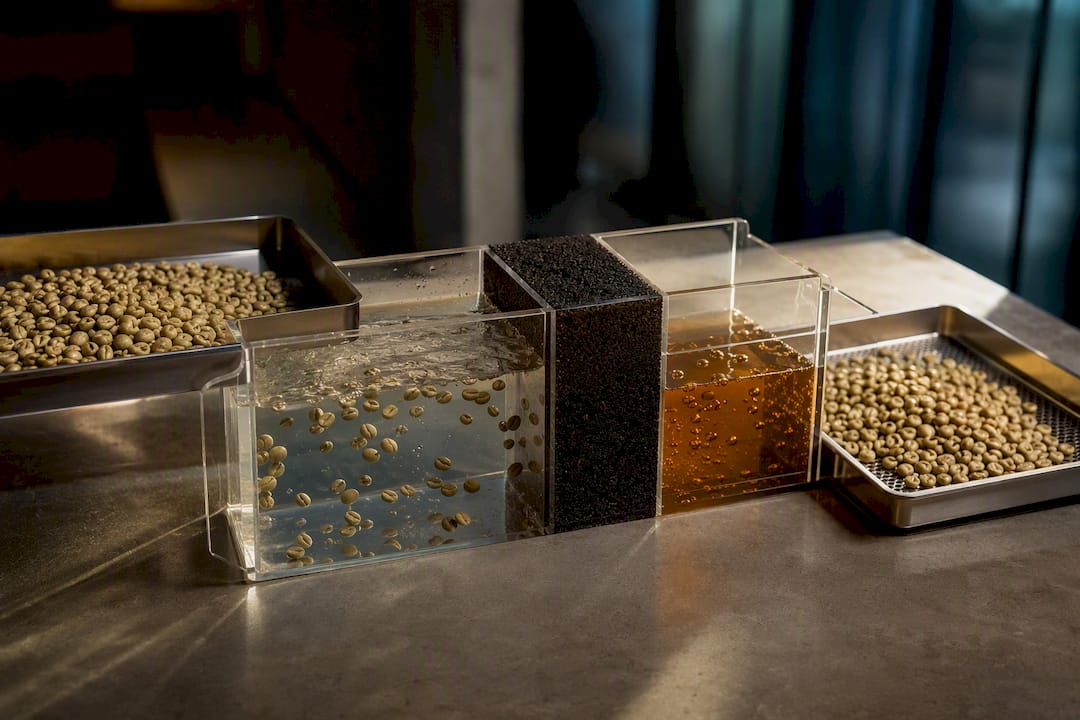
- Washed processing removes the fruit pulp before fermentation, generally shortening and controlling the fermentation window.
- Natural (dry) processing ferments beans inside the whole fruit for longer, giving wild yeast and bacteria more time and more surface area to work.
- Anaerobic and extended fermentation methods, popular for their fruity, funky flavor profiles, intentionally extend microbial activity even further, which can produce excellent coffee but demands tighter quality control to avoid off-flavors or spoilage.
None of these methods make a finished, roasted bean unsafe by default. But washed and washed-natural processing give you more assurance that fermentation was a controlled step rather than an open-ended one.
If you drink decaf, the decaffeination method matters too. The Swiss Water Process uses only water and osmosis rather than chemical solvents, making it a cleaner option for anyone trying to minimize added processing agents in their cup.
Storing and Brewing Coffee to Keep Mold and Yeast Risk Low
Buying clean coffee is half the job. Storing it badly can undo that work fast, since mold doesn’t care how well-sourced your beans were if you leave them somewhere humid for three weeks.
- Store beans in an airtight, opaque container, away from direct light and heat, ideally in a cabinet rather than next to the stove or a sunny window.
- Buy smaller quantities more often. A two-week supply beats a two-month supply, since fresher beans mean less time for any moisture to create problems and better flavor along the way.
- Grind right before brewing. Pre-ground coffee has more surface area exposed to air and humidity, which shortens its safe shelf life considerably.
- Clean your grinder and brewer regularly, especially if you or a household member also uses flavored coffee or other additive-heavy products through the same equipment.
- Trust your nose. A musty, sour, or moldy smell from beans or grounds means it’s time to toss them, no exceptions. Fresh coffee smells nutty, chocolaty, or fruity, never damp or sour.
Pro Tip: If you’re transitioning to a yeast-free or mold-conscious routine, run a two-week trial with one washed-process, whole-bean coffee before judging whether the switch made a difference to how you feel. You can pair that with insights from a low-acid coffee trial if reflux or stomach sensitivity is part of your concern too.
Why Esprit Kaffe Fits This Checklist
Esprit Kaffe roasts in small batches and sells direct to the customer, which keeps the chain between roasting and your cup short. That structure matters for freshness, since beans that sit in distribution warehouses for months lose both flavor and the freshness advantage that limits mold risk in the first place.
The brand’s product lineup leans toward single-ingredient whole-bean offerings across light, medium, and dark roasts, along with origin-specific and blended options, giving buyers who want to follow the whole-bean rule a straightforward set of choices. Esprit Kaffe also publishes educational content on topics like identifying stale beans and running low-acid coffee trials, material aimed at helping customers make informed decisions rather than just pushing a purchase.
A few specifics worth knowing:
- Beans are marketed as tested for contaminants such as mycotoxins, heavy metals, and mold, addressing important quality concerns many mainstream brands leave open
- The catalog includes whole-bean options across various roast levels and origins
- The brand offers an instant coffee option that differs from typical instant formats, which may interest some buyers
If you want processing or testing details beyond what’s listed on a product page, reaching out directly to a roaster’s support team is a reasonable next step. A brand confident in its sourcing usually welcomes that question.
My Take: Stop Chasing Purity, Start Chasing Transparency
Here’s what gets lost in most “yeast-free coffee” searches: people go looking for a product that promises absolute absence of something, when the smarter question is who’s willing to show their work. Roasting already handles the yeast question for you. What it doesn’t handle is a moldy warehouse, a vague ingredient list, or a brand that won’t answer a direct email about testing.
I’d rather buy from a small roaster who says “here’s our washed process, here’s when we tested this lot” than a big brand with a certified organic sticker and nothing else to say. Certification is a floor, not a ceiling, and the USDA’s own description of what organic covers makes that limit pretty clear.
If you’re skeptical, run the cheapest experiment available: switch to one whole-bean, washed-process coffee for two weeks and see how you feel. Then ask that roaster the three questions from the checklist above and see how they respond. The answer tells you more than any label ever will.
— Jett
Get Freshly Roasted, Single-Ingredient Coffee From Esprit Kaffe
Everything in this checklist points toward the same buying habit: single-ingredient whole beans, transparent processing, and a roaster who tests for contamination rather than just claiming purity. That’s the exact lane Esprit Kaffe operates in, with small-batch roasting that keeps beans fresher between roast date and your cup than most warehouse-distributed brands can manage.
Every order ships against beans tested for mycotoxins, heavy metals, mold, and yeast, so you’re not left guessing whether a certification sticker actually covers what you care about. Browse the coffee and tea collection to compare roast levels and origins, or head straight to the full coffee lineup to pick a whole-bean option that fits your routine. Got a question about a specific lot’s processing or testing? Reach out to Esprit Kaffe’s support team directly before you order. They can walk you through it.
Sources
- Coffee and Yeasts: From Flavor to Biotechnology — MDPI Fermentation (2021)
- Isolation and evaluation of yeast and LAB isolates for coffee fermentation (PMC)
- The crucial role of yeasts in the wet fermentation of coffee beans and quality — ScienceDirect
- Gluten-Free Coffee: Types, Facts, Contamination Risk — Verywell Health
FAQ
Is there yeast in coffee?
Yeast is active during coffee’s post-harvest fermentation stage, but roasting eliminates live microbes, so finished roasted coffee doesn’t contain live yeast as an ingredient.
What is the cleanest coffee to buy?
The cleanest option is single-ingredient whole-bean coffee from a roaster who publishes third-party testing for mycotoxins, mold, and heavy metals, since it involves the least processing and the fewest opportunities for contamination.
What is the safest coffee for acid reflux?
Low-acid, washed-process whole-bean coffee tends to be better tolerated by people with reflux, and running a short trial period can help you confirm whether it makes a difference for you personally.
What is the safest coffee to drink?
Freshly roasted, whole-bean, single-ingredient coffee with documented processing and mycotoxin testing is the safest choice, since it limits both fermentation-related variability and mold risk from poor storage.
Which coffee brand has the least mold?
No brand can claim zero mold risk, but roasters who test lots for mycotoxins and control moisture during drying and storage, a category Esprit Kaffe positions itself in, offer stronger assurance than brands that rely on certification alone.
Can coffee contain yeast after roasting?
No. Roasting temperatures are high enough to destroy live yeast, so any yeast activity relevant to coffee happens during fermentation, well before the beans are dried and roasted.