

Acidity is the bright, tangy sensation that hits the tip of your tongue and sides of your mouth first, tied to organic acids like citric and malic acid. Bitterness shows up later, sits at the back of the tongue, and lingers, driven mostly by caffeine and roast-created compounds. Neither is a flaw. Both are adjustable once you know which one you’re tasting.
TL;DR:
- Light roasts preserve more chlorogenic acids, resulting in brighter, citrusy flavors, while dark roasts break down acids and increase bitterness.
- Hot brewing methods and longer contact times extract more acids, making the coffee taste more acidic or sharp, whereas cold brew produces smoother, less tangy cups.
- Overextraction, caused by fine grinds, high temperatures, or extended brew times, leads to bitter flavors, which can be mitigated by coarser grinding or lowering brewing temperatures.
- Underextraction results in sour or harsh flavors, which can be balanced by finer grinding, higher temperature, or longer brew time.
- Tasting side-by-side with only one variable changed helps identify whether acidity or bitterness dominates and guides personalized adjustments.
Table of Contents
- Coffee Acidity vs. Bitterness: A Fast Comparison
- What Chemical Compounds Cause Acidity and Bitterness?
- How Roast Level and Brewing Method Change the Balance
- How to Taste and Compare Acidity vs. Bitterness
- How to Fix a Cup That’s Too Bitter or Too Sour
- Who’s Behind This Sensory Breakdown
- Why Preference Should Never Be a Verdict
- Taste the Spectrum for Yourself
- Sources
- FAQ
Coffee Acidity vs. Bitterness: A Fast Comparison
The two sensations differ in timing, location, and what they signal about the cup. Acidity registers almost instantly, along the tip and sides of the tongue, and fades quickly. Bitterness builds more slowly, concentrates at the back of the tongue and throat, and can hang around for a full minute after you swallow.
Here’s how to sort them out at the table:
- Acidity tastes like: citrus, green apple, tart cherry, or a wine-like tang. It reads as “lively” when balanced, “sour” or “vinegary” when it tips too far.
- Bitterness tastes like: dark chocolate, walnut skin, or a dry, mouth-puckering astringency. It reads as “balanced” in a good dark roast, “burnt” or “ashy” when overextracted.
- Good acidity vs. a problem: bright, juicy acidity that fades cleanly is a quality marker in light roasts. Harsh, sour acidity that lingers uncomfortably usually points to underextraction.
- Good bitterness vs. a problem: a low, chocolatey bitterness that rounds out a medium or dark roast is normal. Sharp, ashy bitterness that dominates the whole cup usually means overextraction or a burnt roast.
Once you can name the sensation, you can start tracing it back to a cause.
What Chemical Compounds Cause Acidity and Bitterness?
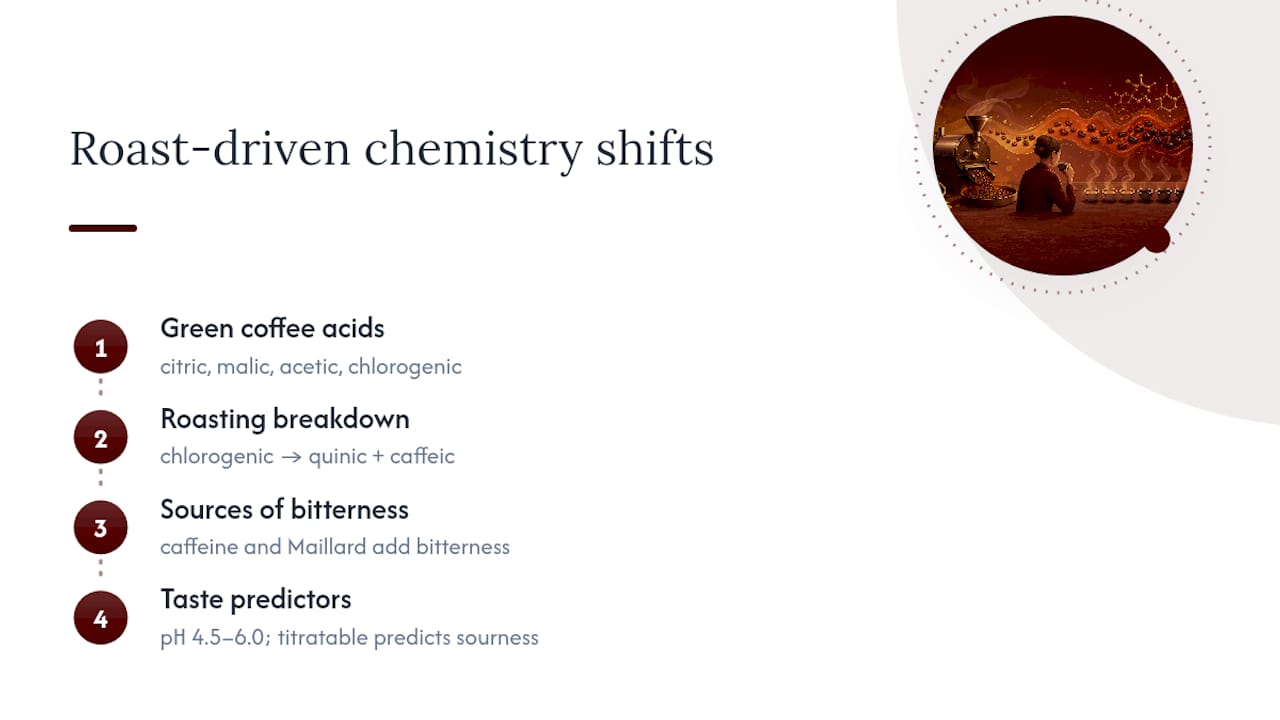
Acidity and bitterness both come from real, measurable chemistry, not just personal taste. Green coffee beans carry a mix of organic acids: citric acid (lemony), malic acid (apple-like), acetic acid (vinegary in excess), and chlorogenic acids, which are the most abundant acids in green coffee but barely register as sour on their own.
Roasting is what rearranges this chemistry. Heat breaks chlorogenic acids down into quinic acid and caffeic acid, and that shift is the single biggest driver of the move from bright to bitter as roasts get darker, since chlorogenic acid degradation during roasting converts fruit-forward acidity into flatter, more bitter notes. Caffeine contributes a small, sharp bitterness of its own, and Maillard reaction products (the same browning compounds that make toast taste toasty) add another bitter layer as roast time increases.
A finding worth sitting with: researchers testing brewed specialty coffee found that citric acid was the only acid present above the sensory detection threshold; most other acids, even chlorogenic acid, showed up in concentrations too low for tasters to detect individually. Perceived acidity isn’t about how much acid is in the cup. It’s about how acids interact with aroma compounds and each other.
This is also why pH is a weak predictor of what you’ll taste. Brewed coffee typically sits at a pH of 4.5 to 6.0, a narrow band regardless of roast, yet two coffees at nearly identical pH can taste wildly different in brightness. Titratable acidity, the actual measurable quantity of acid in solution, tracks perceived sourness far more reliably than pH does.
How Roast Level and Brewing Method Change the Balance
Roast level is the single biggest lever you control before the coffee even reaches your kettle. Light roasts stop the roasting process before much chlorogenic acid breaks down, preserving fruit-forward, citric brightness. Dark roasts push further, degrading more chlorogenic acid into quinic and caffeic compounds while building up Maillard-reaction bitterness. Medium roasts land in between, which is why they’re often the easiest entry point for someone still learning to separate the two sensations.
Brewing method matters just as much as roast:
- Hotter water and longer contact time pull more acid into solution, raising titratable acidity and, past a point, tipping bright acidity into sourness.
- Extraction yield and TDS (total dissolved solids) correlate directly with titratable acidity, so measuring or estimating extraction gives you a practical way to dial acidity up or down without lab equipment.
- Cold brew extracts less total acid over its long, cold steep, which is why it consistently tastes smoother and less sharp than hot-brewed coffee from the same beans.
- Grind size shifts extraction speed: finer grinds extract faster and can push both acidity and bitterness higher if the brew time isn’t adjusted.
Roast choice sets your ceiling. Brew method decides how close you get to it.
How to Taste and Compare Acidity vs. Bitterness
A side-by-side comparison teaches your palate faster than reading about it ever will. Here’s a routine that works with equipment you already own.
- Pick one variable to change. Brew the same bean at two roast levels, or the same roast at two grind sizes. Changing only one thing at a time is what makes the comparison useful.
- Taste both cups within a few minutes of brewing. Coffee shifts as it cools, and side-by-side tasting only works if both samples are at a similar temperature.
- Sip and hold the coffee on your tongue for two seconds before swallowing. Notice where the sensation starts: tip and sides mean acidity, back of the tongue means bitterness.
- Track what happens after you swallow. Acidity fades within seconds. Bitterness lingers, often for 30 to 60 seconds, sometimes creeping up the back of the throat.
- Write down what you notice for both cups: brightness, sourness, chocolatey notes, harshness, mouthfeel. A quick tasting log makes patterns visible after three or four sessions instead of staying a vague impression.
- Repeat with a new pair once you’ve nailed the first comparison. Confirming a result twice is what turns a hunch into a skill.
Pro Tip: Taste the two cups in reverse order on your second attempt. Palate fatigue from the first sample can make the second cup taste more bitter or more acidic than it actually is, so flipping the order cancels out that bias.
How to Fix a Cup That’s Too Bitter or Too Sour
Most bitterness problems trace back to overextraction, and most sourness problems trace back to underextraction. Once you know which one you’re dealing with, the fix is usually a single variable.
For a bitter cup:
- Coarsen the grind so water moves through the grounds faster and pulls less bitter compound.
- Lower the water temperature by a few degrees, since excess heat accelerates extraction of bitter compounds.
- Shorten the brew or contact time.
- Avoid leaving coffee on a hot plate. Prolonged heat continues breaking down chlorogenic acid into quinic acid, adding a stale, harsh bitterness the longer it sits.
For a sour or harsh cup:
- Grind finer or extend brew time to pull more acid and body into the cup, which balances sourness into brightness.
- Raise the water temperature slightly.
- Check the roast date. Coffee more than a few weeks past roasting tends to taste flat and sour regardless of brew method.
If neither adjustment is practical in the moment, a small pinch of salt can suppress perceived bitterness, and a splash of milk softens both extremes by coating the palate.
Who’s Behind This Sensory Breakdown
This kind of tasting method comes straight from Esprit Kaffe’s own sensory work, including Jett’s coffee taste testing guide and deeper dive into roast, pH, and titratable acidity. Some roasters offer light, medium, and dark profiles specifically so you can run this comparison yourself, not just read about it.
Why Preference Should Never Be a Verdict
Culture, food pairing, and individual sensitivity all shape whether someone chases brightness or comfort in a bitter, chocolatey cup. Neither preference is more sophisticated than the other. The enthusiasts who develop the sharpest palates are usually the ones who refuse to settle into one roast style and keep tasting across the spectrum instead.
— Jett
Taste the Spectrum for Yourself
Reading about acid profiles only gets you so far. The fastest way to feel the difference between a bright, citrusy light roast and a chocolatey, low-acid dark roast is to put both in a cup back to back.
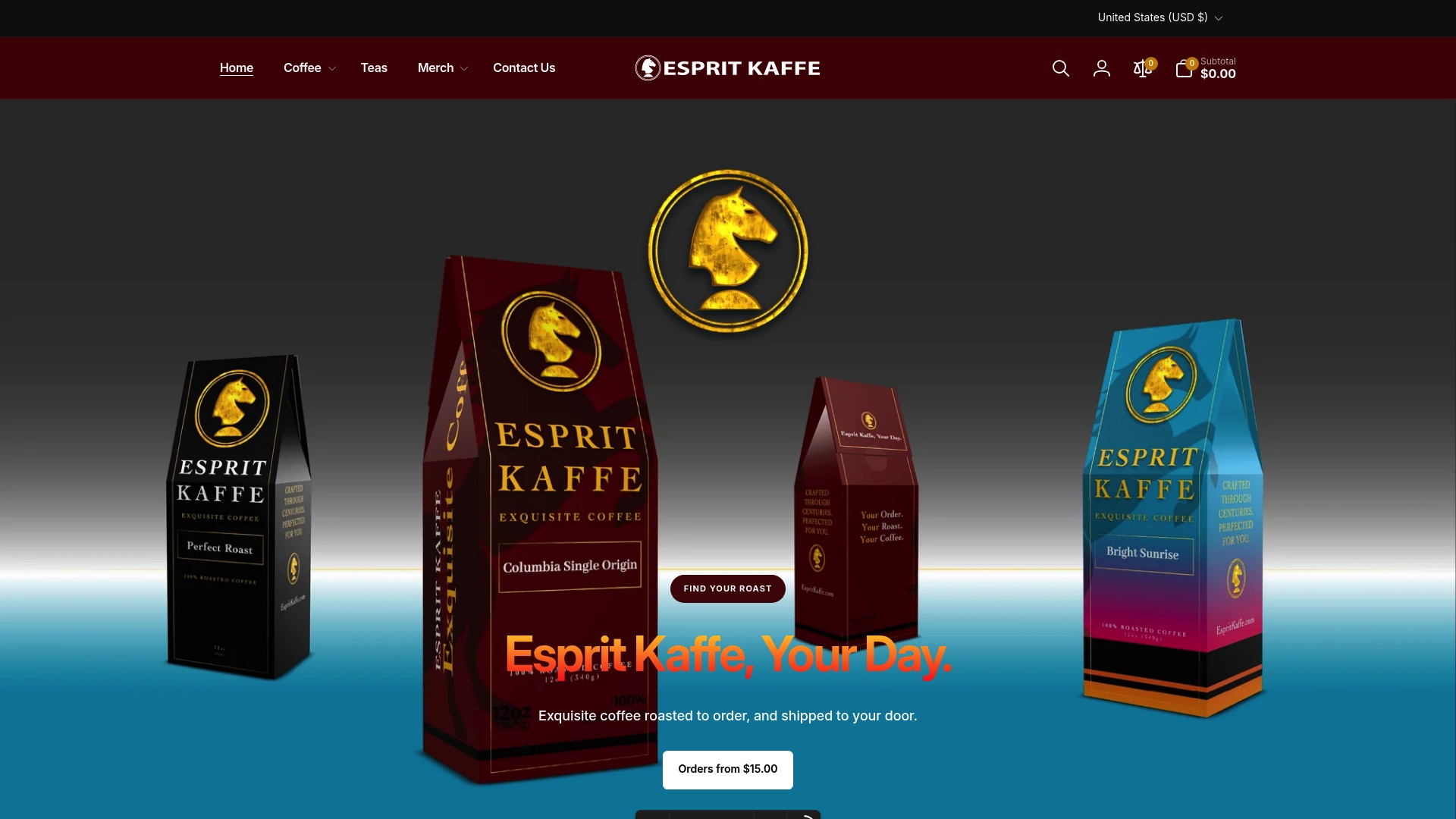
Certain brands offer instant coffee that makes this kind of side-by-side test easy to run without committing to a full bag of beans, since each format is brewed the same way every time, which removes brewing variables from your comparison. For those interested in experimenting with flavor beyond the acidity and bitterness axis, some instant coffee blends offer different profiles worth tasting on their own terms. Pick two roast levels, brew them the same way, and taste them within minutes of each other. That single comparison will teach you more about your own palate than any amount of reading.
Sources
- Acid composition and sensory detection thresholds in brewed specialty coffee — PMC
- Titratable acidity, perceived sourness, and liking of acidity in drip brewed coffee — ACS Food Science & Technology
- Coffee Acidity: pH, Sourness, and What Affects It — Coffee Studies
- Bitter coffee 101: why it happens & 3 ways to fix it — Espro
FAQ
How can you tell if coffee is acidic or bitter?
Acidity hits fast, at the tip and sides of the tongue, and tastes tart or citrusy. Bitterness builds slower, sits at the back of the tongue, and lingers for up to a minute after you swallow.
What kills bitterness in coffee?
Coarsening the grind, lowering water temperature, and shortening brew time all reduce extraction, which is the main driver of excess bitterness. A small pinch of salt or a splash of milk can also mute bitterness in a finished cup.
How do you neutralize acidity in coffee?
Grinding finer, brewing slightly hotter, or extending contact time increases extraction and pulls the cup away from sourness toward balanced brightness. Switching to a darker roast or trying cold brew also lowers perceived acidity since cold brew extracts less total acid.
Why does coffee suddenly taste more bitter than usual?
The most common cause is over-extraction from a grind that’s too fine, water that’s too hot, or a brew time that’s run too long. Stale beans or coffee left sitting on a heat source also build up bitter compounds over time.