

A morning coffee ritual is a short, repeatable pause built around one cup, and it works because the ritual, not the caffeine, resets your attention. Make your first one to three sips phone-free and you’ve already built the ritual’s core. Everything else, from timing to gear to journaling, just extends what that first pause starts.
TL;DR:
- Waiting 60 to 90 minutes after waking before drinking coffee can help stabilize energy levels and improve focus by aligning with natural cortisol rhythms.
- A quick, phone-free ritual can be as short as 60 seconds or as long as 10 minutes, involving sensory awareness, breathing, or gratitude to reset attention.
- Consistency in environment, such as using the same mug and designated spot, is more effective for building a habit than complex brewing techniques or gear.
- Pre-measuring coffee doses and having a dedicated setup minimizes decision fatigue and removes common barriers to maintaining the ritual.
- Running a two-week daily experiment with a chosen template and rating mental clarity afterward can reinforce the habit and identify what works best personally.
Table of Contents
- What Is a Morning Coffee Ritual, and Why Does It Work?
- Three Time-Boxed Coffee Ritual Templates
- How Do You Build Your Own Ritual Sequence?
- When Should You Drink Your First Cup?
- Choosing Gear That Removes Friction From the Ritual
- How Do You Make the Ritual Actually Stick?
- What Espritkaffe’s Own Practice Notes Reveal
- A Two-Week Experiment Worth Running
- Get a Ritual-Ready Bag From Espritkaffe
- Sources
- FAQ
What Is a Morning Coffee Ritual, and Why Does It Work?
A routine is something you do on autopilot. A ritual is something you do on purpose, with attention attached to it. Pouring coffee into a travel mug while scrolling email is a routine. Standing still for the first three sips while noticing the steam, the smell, and the warmth in your hands is a ritual. Same coffee, completely different effect on your brain.
The mechanism is sensory grounding: your nervous system settles faster when you deliberately notice smell, temperature, and touch instead of letting the mind jump ahead to the day’s first fire drill. Espritkaffe has written about this anchoring effect in detail in Sensory Grounding Explained, and it’s the backbone of every template below.
One experiment worth running: delay your first cup by 60 to 90 minutes after waking. It sounds counterintuitive if you’re used to reaching for coffee the second your eyes open, but the logic holds up:
- Your body’s cortisol is already elevated right after waking, so caffeine on top of it can feel jittery rather than clarifying.
- Waiting lets that natural cortisol wave settle before caffeine arrives, which some people find produces steadier focus, according to Huberman Lab’s guidance.
- It’s not a rule. It’s a two-week test you run on yourself.
Three Time-Boxed Coffee Ritual Templates
You don’t need forty-five minutes and a ceramic pour-over set to make this work. Pick the version that fits the morning you actually have, not the one you wish you had.
- The 2-minute version. Phone stays in another room. Drink a glass of water while the coffee brews or heats. Take the first sip standing still, eyes closed if that’s comfortable, and name one thing you smell and one thing you feel. That’s the entire ritual, and it still counts.
- The 5 to 10 minute version. Brew with a method that asks for a little attention, like a pour-over or an AeroPress. Watch the bloom. Sit down with the cup rather than carrying it to your desk. Take three unhurried sips before opening a single tab or app.
- The slow-morning version. Grind fresh, weigh your dose, and use a full pour-over or French press ritual. Add five minutes of journaling or a stretch sequence after the second sip. This is the version worth saving for weekends, and it’s often the one people describe as becoming the anchor point of their entire self-care routine.
How Do You Build Your Own Ritual Sequence?
Every solid ritual follows the same four beats: prep, brew, pause, finish. What changes is how much time and skill you pour into each one.
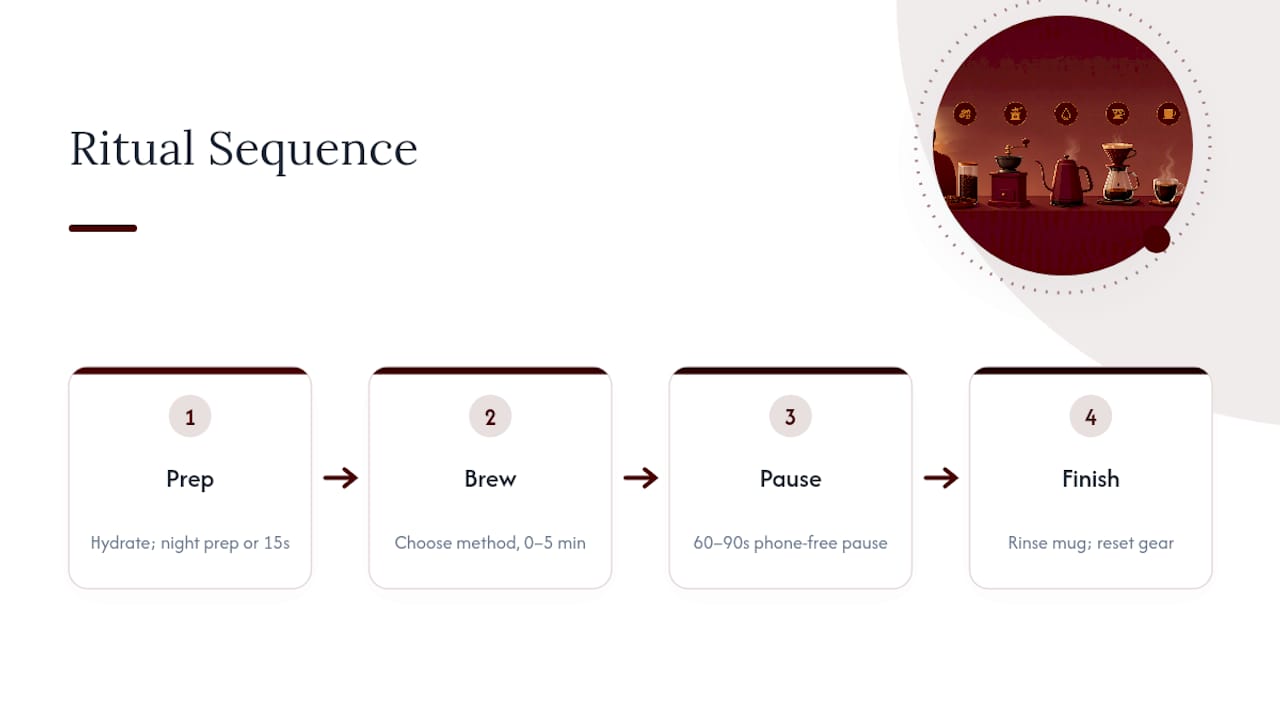
Prep can happen the night before (grinder loaded, water filtered) or take fifteen seconds in the moment (kettle on, mug pulled down). Either way, hydrate first. A glass of water before coffee does more for morning alertness than most people give it credit for.
Brew is where you choose your effort level. Automatic drip asks nothing of you. Pour-over and AeroPress ask for five minutes of attention and reward it with a cup that tastes like you made a decision. French press splits the difference. None of these is the “right” choice. The right one is whichever method you’ll actually repeat tomorrow.
Pause happens in the first sips. Anchor it with something concrete: three slow breaths, one sentence of gratitude, or naming what you notice through smell, sight, and touch. A short, phone-free pause of even 60 to 90 seconds captures most of the ritual’s benefit, so don’t feel like you’re cutting corners on a busy Tuesday.
Finish means rinsing the mug and returning your gear to its spot. This step gets skipped constantly, but a clean, reset station is what makes tomorrow’s ritual easier to start.
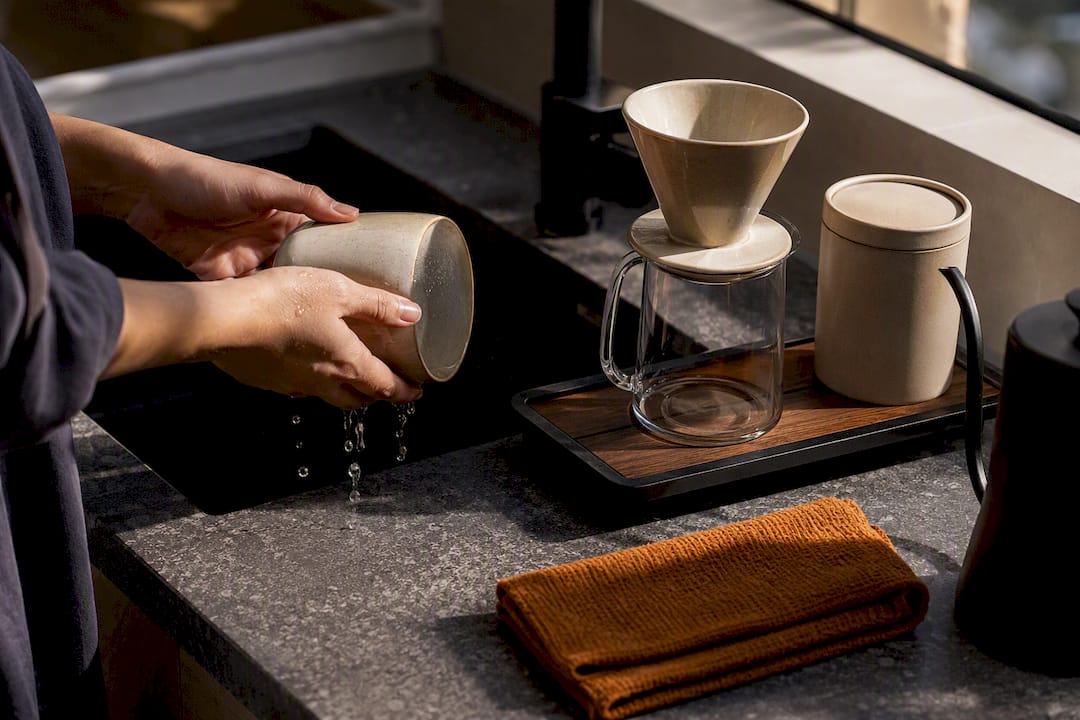
Pro Tip: Keep a pre-measured dose ready in a small jar by the grinder. Removing one decision point in the morning is often the difference between doing the ritual and skipping it.
When Should You Drink Your First Cup?
Timing matters more than most coffee drinkers assume. Caffeine has a half-life of roughly five to six hours in most adults, which is why a 2 p.m. cup can still be disrupting your sleep at 10 p.m. A practical cutoff: stop caffeine several hours before bedtime.
On the front end, some people find that pushing the first cup 60 to 90 minutes past waking, rather than drinking it immediately, produces a smoother energy curve instead of a spike-and-crash pattern, since it works with your body’s natural cortisol rhythm rather than against it, per the step-by-step mindful coffee guide. This is an experiment, not a mandate. If you wake up groggy and non-functional without immediate coffee, don’t force the delay.
If you’re sensitive to caffeine’s edge, try half-caf, a smaller first dose, or pairing your cup with protein to flatten the absorption curve.
Choosing Gear That Removes Friction From the Ritual
The best coffee setup isn’t the most elaborate one. It’s the one you’ll actually use at 6:30 a.m. without thinking twice.
• Pick one mug that becomes your morning mug. The cue matters more than the design.
- Settle on one bean or blend as your default rather than rotating through five bags and second-guessing your grind setting daily.
- A burr grinder, one reliable brewer, and a solid travel mug cover almost every scenario.
- Pre-measuring your dose the night before, or subscribing to a bean delivery so you never run dry, removes the two most common excuses for skipping the ritual entirely, a habit echoed across most morning-ritual how-to guides.
If you’re coming from pod machines or instant coffee, easing into whole-bean brewing doesn’t require becoming a home barista overnight. Espritkaffe’s guide for making that switch walks through the low-effort entry points.
How Do You Make the Ritual Actually Stick?
Consistency of environment beats complexity of method every time. The same mug, the same spot on the counter, the same first move each morning trains your brain to drop into the ritual faster than any elaborate brewing technique will.
- Anchor the ritual to something you already do without fail, like turning on the kettle right after you silence your alarm.
- Build a bare-minimum version (the 2-minute template) so a chaotic morning doesn’t mean skipping the ritual outright, just shrinking it — a technique detailed in this flexible guide for new moms.
- Watch for two common failure points: grabbing your phone before your first sip, and treating the “perfect” slow version as the only version that counts.
Pro Tip: If you miss the ritual three days in a row, that’s not a failure, it’s a sign your default version is too demanding. Shrink it further instead of trying harder.
What Espritkaffe’s Own Practice Notes Reveal
Espritkaffe’s own posts for remote workers reinforce a lot of what shows up in wellness circles more broadly: consistency and a fixed environment matter more than gear complexity. The Coffee Upgrade Remote Worker Checklist lays out eight low-effort fixes, from fixed brew times to a designated coffee corner away from the desk.
Internally, Espritkaffe has also looked at whether these pauses translate into real output, not just a nicer morning. That analysis, Do Intentional Coffee Pauses Really Boost Output?, found that pairing the ritual with one small productivity anchor, like writing down three intentions right after the pause, correlated with people reporting sharper focus once they sat down to work.
A Two-Week Experiment Worth Running
Behavior design is more reliable than willpower when it comes to habits like this one, and coffee rituals are no exception. Pick one template from this guide and run it daily for two weeks.
After each cup, take five seconds to rate your subjective clarity, just a quick gut check, nothing formal. Patterns show up fast. Most people find the answer within days, not weeks.
— Jett
Get a Ritual-Ready Bag From Espritkaffe
A key advantage for this ritual is having fresh beans delivered before your bag runs dry, so the ritual never stalls out on logistics. Freshly roasted coffee is available by roast level, origin, or blend, with merchandise like mugs and hoodies offered to match the routine.

A stale or inconsistent bag is one of the fastest ways to lose interest in a ritual you were otherwise sticking to, and a subscription solves that quietly in the background. The Esprit Kaffe Members Club Subscription keeps a fresh bag arriving on schedule, so restocking never becomes the reason you skip your pause. Browse the coffee collection and pick a roast that fits the version of the ritual you’re planning to keep.
Sources
- Mindful Morning Coffee Ritual: A Step-by-Step Guide
- HubermanLab (excerpt)
- Morning Coffee Ritual: Daily Energy Boost to start your day
FAQ
Is Drinking Coffee First Thing in the Morning Bad for Weight Loss?
Coffee itself has minimal calories and doesn’t inherently block weight loss, but drinking it on an empty stomach immediately upon waking can spike cortisol for people already running high on morning stress hormones. Pairing your cup with water and a small protein source tends to be gentler on both energy and appetite than black coffee alone at 6 a.m.
What Is the Morning Coffee Trick Everyone Talks About?
The most common version is delaying your first cup 60 to 90 minutes after waking so caffeine intake lines up with your body’s natural cortisol rhythm instead of stacking on top of it. It’s an experiment worth trying for a week, not a guaranteed fix for everyone.
What Should I Add to Coffee for Weight Loss?
No specific additive is proven to drive weight loss on its own. Black coffee or coffee with a splash of milk keeps calories low, and adding cinnamon or a small amount of protein powder is a reasonable way to curb a sugar craving without loading the cup with syrup.
What Should I Drink Before Coffee in the Morning?
A full glass of water is the simplest, most effective choice, since it rehydrates you after hours of sleep and takes the edge off caffeine hitting an empty stomach. Some people also find a few minutes of light movement or stretching before that first cup makes the ritual’s pause feel more earned.