

For most home brewers who care about flavor and aroma, whole beans ground right before brewing beat pre-ground coffee. Pre-ground wins when speed and convenience matter more than a nuanced cup. The real deciding factors are roast date, how long the coffee has sat since grinding, and whether your grinder produces a consistent particle size.
TL;DR:
- Freshly roasted whole beans can maintain aroma for several weeks if stored properly, but ground coffee loses freshness within one to two days after grinding.
- Using a screw-cap or one-way valve bag with minimal air exposure significantly extends coffee freshness after opening.
- For optimal extraction, grind size must match brewing method and particle uniformity, with finer grounds needed for espresso and coarser for French press.
- Burr grinders provide consistent particle size and are worth the investment for daily brewers, whereas pre-ground coffee is suitable for occasional use.
- Roast date and packaging quality outweigh format choice, making fresh, well-sealed pre-ground a viable option if it’s from a recent roast and used quickly.
Table of Contents
- Whole Bean vs Ground Coffee: Freshness, Flavor, and Convenience Compared
- How Grind Size and Particle Distribution Change Extraction
- Storage and Resealing Methods That Actually Preserve Freshness
- Should You Buy a Burr Grinder or Stick with Pre-Ground?
- Which Format Should You Actually Buy?
- What Roasters Get Wrong About Freshness
- Get Freshly Roasted Whole Beans Built Around Your Brew Method
- Sources
- FAQ
Whole Bean vs Ground Coffee: Freshness, Flavor, and Convenience Compared
Grinding a coffee bean does something irreversible: it multiplies the surface area exposed to air. A whole bean has a tough, mostly sealed exterior. Ground coffee is thousands of tiny fragments, each one releasing aromatic compounds the moment a blade or burr tears the bean apart. Breville’s explainer on the topic confirms this directly: more surface area means faster aroma loss. Grinding closer to brew time produces a noticeably more aromatic cup.
There’s a second factor at play beyond grinding: degassing. Freshly roasted beans release carbon dioxide for days or weeks after roasting, and that CO2 carries volatile aroma compounds with it. A 2024 literature review on coffee freshness and packaging identifies this degassing process, alongside volatile aroma loss, as the primary chemical driver of quality decline after roasting. Ground coffee degassed and loses aroma far faster than whole beans, since there’s no intact cell structure left to slow the process down.
Here’s how the two formats stack up on what home brewers actually care about:
- Freshness window: Whole beans hold aroma for weeks when stored properly; ground coffee is noticeably flat within a day or two.
- Aroma intensity: Grinding immediately before brewing delivers a sharper, more complex nose than coffee ground even an hour earlier.
- Control: Whole beans let you dial grind size to your brewer; pre-ground locks you into one setting, right or wrong.
- Time and equipment: Grinding adds a step and requires owning a grinder, whether it’s a $20 blade unit or a $150 burr model.
- Price: Pre-ground and whole bean often cost the same per bag, but you’re paying separately for a grinder either way.
None of this means pre-ground is automatically inferior. A bag ground and sealed the same day at the roastery, then opened and used within a week, can outperform whole beans that sat stale on a shelf for two months.
How Grind Size and Particle Distribution Change Extraction
Extraction is a matter of contact time and surface area working together. Water needs to touch coffee for the right amount of time to pull out the good compounds (sugars, acids, oils) without dragging out the bitter ones that show up later in the process. Grind size controls how fast that happens.
- French press: Coarse grind, about the texture of sea salt. Fine grounds slip through the mesh filter and turn the cup muddy.
- Drip machines: Medium grind, similar to granulated sugar. This matches the four to six minute brew cycle most machines run.
- Pour-over: Medium to medium-fine, adjusted based on how fast water flows through your filter cone.
- Espresso: Very fine, almost powdery. The nine-bar pressure of an espresso machine forces water through in 25 to 30 seconds, so the grind has to be fine enough to resist that flow without choking it.
Particle uniformity matters as much as the average size. A grind full of both boulders and dust produces over-extracted bitter fines sitting next to under-extracted sour chunks in the same cup. That’s why the SCAA cupping protocol requires beans to be ground immediately before evaluation. Any comparison that doesn’t control for grind timing is measuring staleness, not quality.
Pro Tip: If your pour-over tastes sour and thin, your grind is likely too coarse for your filter and brew time. Go one notch finer before you touch anything else.
Storage and Resealing Methods That Actually Preserve Freshness
How you reseal a bag after opening changes the chemistry inside it. A 2022 peer-reviewed storage study using GC/MS freshness indices tested several common resealing methods on opened bags of roasted coffee. Screw-cap packaging preserved measurable freshness markers better than clips, tape, or transferring beans into a separate canister.
The takeaway: the way you close a bag after the first pour matters more than most home brewers assume. A few habits make a real difference:
- Reseal with a screw-cap or one-way valve bag whenever the original packaging allows it.
- Push out excess air before sealing to reduce headspace inside the bag or canister.
- Store coffee in a cool, dark spot, away from the stove and out of direct sunlight.
- Buy in quantities that match two to three weeks of drinking, not a two-month supply.
None of this stops the clock entirely. Whole beans still degrade after opening, just more slowly than ground coffee does. And a well-packaged bag of pre-ground coffee from a roaster who dates and seals correctly can hold up better than whole beans left in a torn bag on the counter. Roast date and packaging quality often outweigh the whole-bean-versus-ground question by themselves. For a deeper walk-through of shelf life differences, ground coffee’s fresh window and proper whole-bean storage are both worth a closer look.
Should You Buy a Burr Grinder or Stick with Pre-Ground?
Grind quality depends almost entirely on the grinder, not the beans. Burr grinders crush coffee between two abrasive surfaces, producing a consistent particle size you can adjust with precision. Grinder guidance from The Kitchn confirms burr mechanisms as the more reliable route to real grind consistency. Blade grinders chop unevenly, leaving a mix of fine dust and large chunks that muddies extraction no matter how fresh the beans are.
Basic upkeep matters too:
- Wipe out oil residue and static buildup weekly to prevent clumping.
- Run a small handful of rice or a grinder cleaning tablet through occasionally to clear retained grounds.
- Empty the chamber fully between uses so old grounds don’t mix with fresh ones.
Pro Tip: A cheap burr grinder set correctly will outperform an expensive blade grinder every time. Consistency beats horsepower.
If you brew coffee daily and care about the cup, a modest burr grinder is worth the investment. If you brew occasionally and mostly want caffeine, well-chosen pre-ground is a reasonable trade.

Which Format Should You Actually Buy?
Match the format to your habits, not to an abstract ideal.
- Espresso or pour-over enthusiasts: Buy whole beans and grind fresh. Grind size precision matters too much here to skip.
- Casual drip drinkers: Either format works if the pre-ground bag is recent and well-sealed; check the roast date before anything else.
- Commuters and office setups: Pre-ground saves real time on busy mornings, especially where a grinder isn’t practical.
- Gift shoppers: Whole beans paired with a small burr grinder make a stronger gift than pre-ground alone.
Before buying either format, check the roast date printed on the bag, buy small quantities, and favor roasters who package for freshness rather than shelf appeal. A clear explanation of what roast dates actually mean is a good next stop if you’re shopping for the first time.
What Roasters Get Wrong About Freshness

Most advice about whole bean versus ground coffee treats freshness as a fixed property of the format, as if buying whole beans guarantees a better cup. It doesn’t. A bag of whole beans roasted four months ago and left open on a counter loses more aroma than a bag of pre-ground coffee sealed with a one-way valve last week. Format is a lever, not a guarantee.
The variable that actually predicts cup quality is roast-to-cup timing, tracked all the way from the roaster’s date to the moment water hits the grounds. At Espritkaffe, roast-date transparency and grind guidance tailored to specific brew methods matter more than pushing every customer toward whole beans by default. A pour-over drinker and a French press drinker need different grind settings even from the exact same bag, and pretending otherwise does readers a disservice. The honest answer is to give people the roast date, a real grind recommendation, and packaging that holds up after the first pour, then let them make the call based on their own routine.
— Jett
Get Freshly Roasted Whole Beans Built Around Your Brew Method
Espritkaffe roasts coffee by roast level, origin, or blend, and ships it to your door with the roast date on the bag, not buried in a batch code. That single detail solves the biggest weakness this article covers: staleness you can’t see coming.
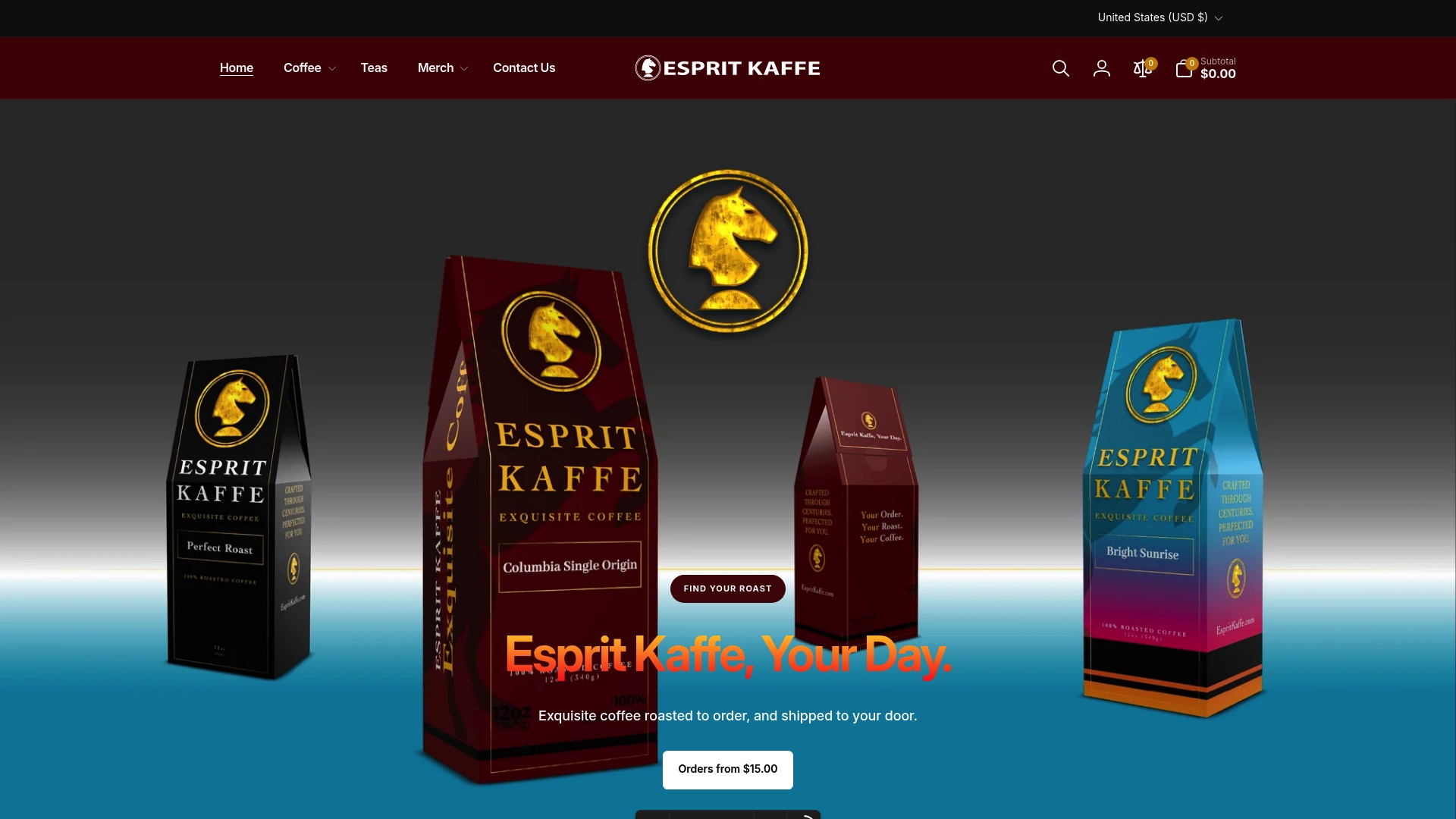
Every order includes grind guidance suited to your brewer, helping you select beans that match how you drink them. For regular drinkers, the Esprit Kaffe Members Club Subscription keeps a fresh bag arriving before the old one goes flat, which solves the “buy in bulk and let it stale” problem this guide warns against. Coffee starts at $15.00, and merchandise is available from $19.99 for readers who want the gear along with the beans. Browse the current roast lineup and pick a roast date, not just a roast level.
Sources
- Effects of different coffee storage methods on coffee freshness after opening of packages
- Whole bean vs. ground coffee: Important differences (Breville)
FAQ
Does Whole Bean Coffee Really Taste Better Than Ground?
Yes, when it’s ground shortly before brewing, because less time has passed for aroma compounds to escape. The SCAA cupping protocol grinds samples immediately before evaluation for exactly this reason. Stale whole beans ground weeks after roasting won’t beat a fresh, well-packaged pre-ground bag.
How Long Does Ground Coffee Stay Fresh After Opening?
Ground coffee loses noticeable aroma within minutes and turns flat within a day or two, according to grinding and freshness guidance. Whole beans stored correctly hold their aroma for several weeks. A full breakdown of shelf life lives in Espritkaffe’s ground coffee freshness guide.
What’s the Best Way to Reseal an Opened Coffee Bag?
A screw-cap closure outperformed clips, tape, and canister transfers in a 2022 GC/MS storage study. If your bag has a resealable valve, use it and minimize air pockets each time you close it.
Is a Burr Grinder Worth Buying Over a Blade Grinder?
Yes, if you drink coffee daily and care about consistency, since burr grinders produce uniform particle size while blade grinders chop unevenly, per grinder comparison guidance. If you brew occasionally, a good pre-ground bag from a fresh roast date is a reasonable substitute.
Does Espritkaffe Sell Both Whole Bean and Pre-Ground Coffee?
Espritkaffe sells freshly roasted coffee by roast level, origin, or blend, with pricing starting at $15.00. Current formats and grind options are listed on the coffee collection page.