

Espresso packs more caffeine per ounce, but a standard 8-ounce cup of brewed coffee usually delivers more caffeine per serving. A 1-ounce espresso shot runs around 63 mg, while an 8-ounce cup of drip coffee holds roughly 96 mg. Espresso is a concentrated extraction squeezed into a tiny volume. Brewed coffee spreads a similar or larger dose across a much bigger cup.
TL;DR:
- A single shot of espresso contains about 63 mg of caffeine, while an 8-ounce drip coffee has roughly 96 mg, making a typical cup somewhat higher in total caffeine.
- Cone-shaped espresso has a higher concentration and hits your system faster, but brewed coffee often delivers a larger overall dose due to serving size.
- The caffeine content varies significantly based on bean type, dose, grind, brewing method, and serving size, with cold brew and concentrates often providing more total caffeine.
- Drinking two espresso shots is approximately equivalent to a small 8-ounce cup of brewed coffee, but larger cups can easily surpass that total caffeine amount.
- Many people can reach or exceed the FDA’s 400 mg daily caffeine limit with multiple drinks, especially when combining espresso, drip, and cold brew, so portion control is important.
Table of Contents
- Espresso Caffeine vs Coffee: The Numbers Side by Side
- Why Espresso Tastes Stronger Even When It Isn’t
- What Actually Changes the Caffeine in Your Cup
- How Many Espresso Shots Equal a Cup of Coffee?
- How Espresso and Coffee Stack Up Against the 400 mg Daily Guideline
- Simple Ways to Dial Your Caffeine Up or Down
- Get Consistent Caffeine and Flavor With coffee from a roaster who labels each batch clearly
- Sources
- FAQ
Espresso Caffeine vs Coffee: The Numbers Side by Side
Here’s the quick-reference version, pulled from USDA FoodData Central and Mayo Clinic figures, so you can find your drink without scrolling through paragraphs.
| Drink | Typical Size | Caffeine (approx.) |
|---|---|---|
| Espresso, single shot | 1 oz | 63 mg |
| Espresso, double shot | 2 oz | around double the caffeine of a single shot |
| Drip coffee | 8 oz | 96 mg |
| Drip coffee | 12 oz | more caffeine than a single shot |
| Drip coffee | 16 oz | significantly more caffeine than a single or double shot |
| Cold brew | 16 oz | more caffeine than most espresso or drip servings |
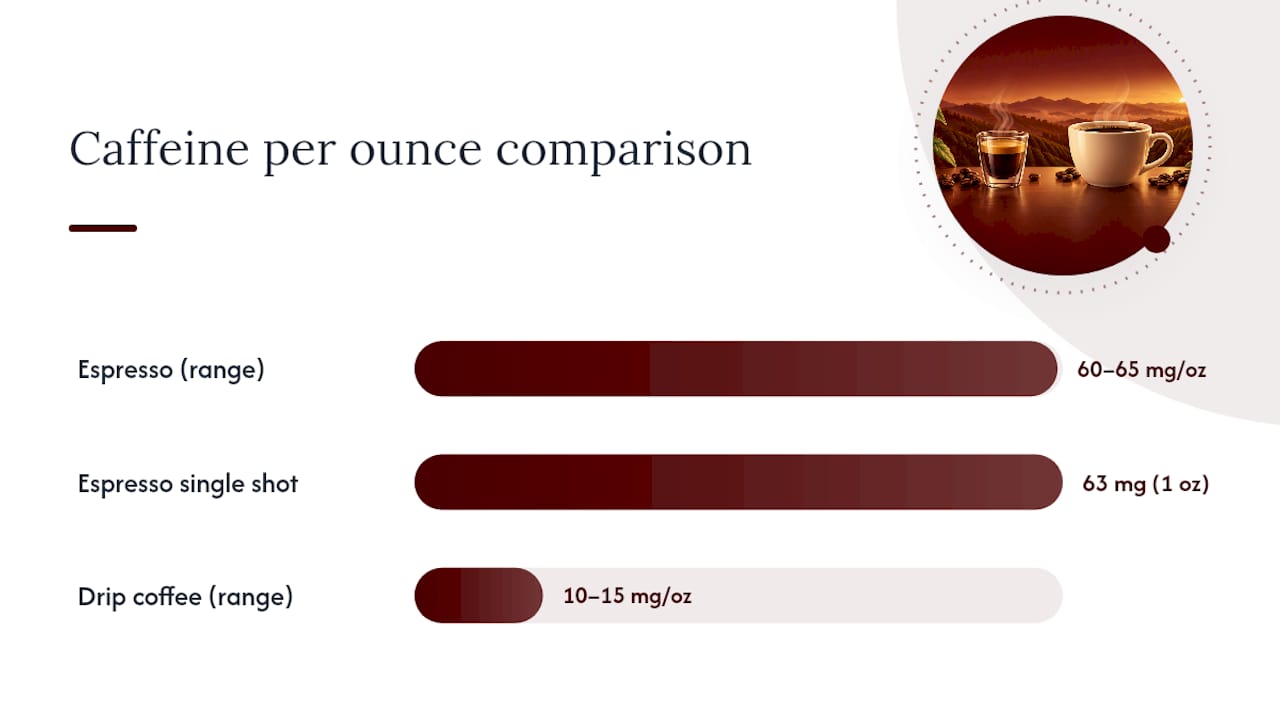
Per ounce, espresso runs about 60 to 65 mg, while drip coffee only hits 10 to 15 mg per ounce. That gap is exactly why espresso tastes like a jolt in a shot glass while a mug of drip feels like a slow burn.
The ranges exist for a reason. CNET’s reporting on drip versus espresso points out that caffeine counts shift by chain, by roast, and by how the barista pulls the shot. A coffee shop’s “double” isn’t a fixed unit. It’s whatever that shop decided a double should be, and it varies more than most drinkers realize.
Why Espresso Tastes Stronger Even When It Isn’t
“Strong” coffee and “high caffeine” coffee are not the same thing, and mixing them up is where most of the confusion about espresso caffeine vs coffee starts.
Strength refers to total dissolved solids, or TDS, a measurement of how much material (oils, acids, flavor compounds) is dissolved in your cup. CoffeeStudies breaks down the brewing science showing drip coffee usually sits around 1.2 to 1.4% TDS, while espresso lands between 8 and 12% TDS. That’s roughly six to eight times more concentrated. Your tongue reads that concentration as intensity, and intensity gets mistaken for caffeine load constantly.
Caffeine is a completely different measurement: a dose, in milligrams, that depends entirely on serving size. A shot glass of concentrated liquid can carry less total caffeine than a big mug of weaker-tasting coffee, simply because the mug holds eight times the volume. Espresso wins the concentration contest. Brewed coffee often wins the total-dose contest.
There’s also a real physiological piece here. Because espresso is small and gulped fast, that dose hits your system quickly, so you feel the lift sooner even if the actual mg count is lower than your morning mug. If you want the deeper mechanics of why espresso pulls this off, the roasting and extraction differences between espresso beans and coffee explain how grind size and pressure change the extraction entirely.
What Actually Changes the Caffeine in Your Cup
Six variables decide how much caffeine ends up in your drink, and most people only ever think about one of them (the bean).
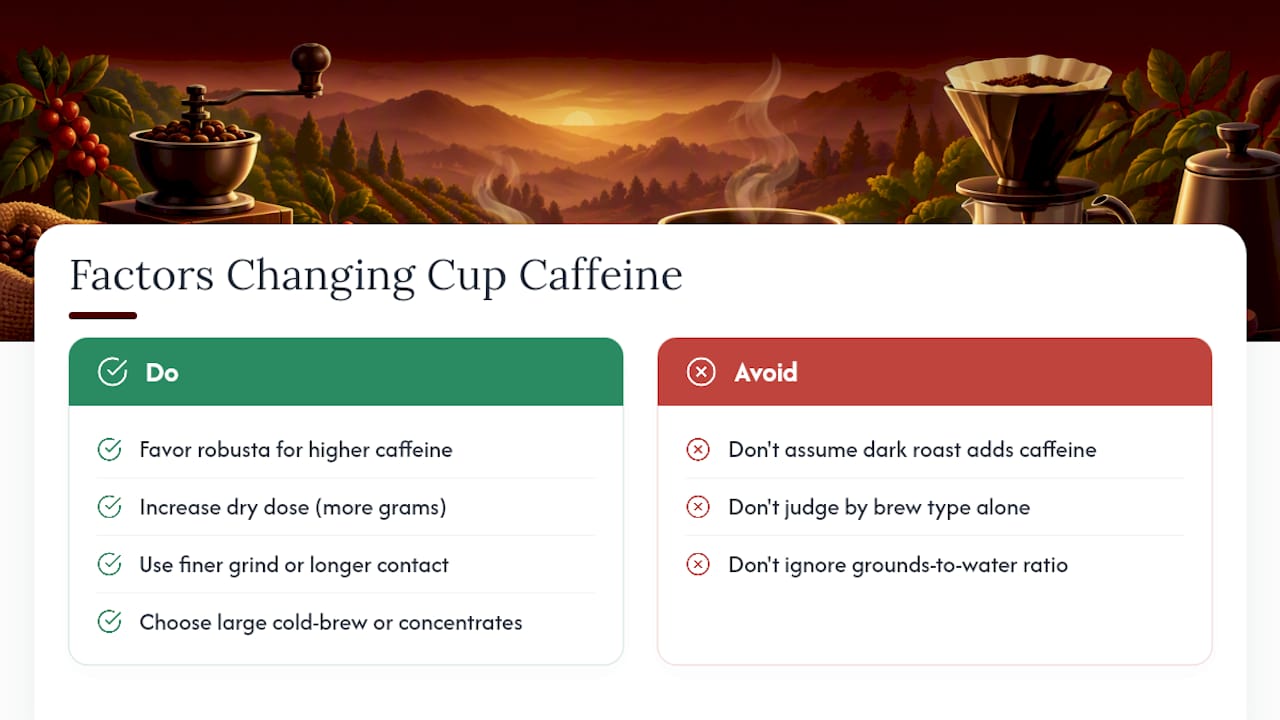
Bean species matters more than roast level ever will. Robusta beans carry roughly double the caffeine of arabica beans by weight, though most specialty roasters, including blends built for espresso, lean heavily on arabica for flavor. If a bag doesn’t specify, assume arabica. The difference between arabica and robusta goes beyond caffeine into acidity and body, but caffeine content is the most measurable gap between the two.
Dose is the simplest lever: more dry coffee grounds per serving means more caffeine, full stop. A cafe using 20 grams of grounds for a double shot extracts more caffeine than one using 14 grams.
Grind size, contact time, temperature, and pressure all shift extraction efficiency. A finer grind or longer contact time pulls more caffeine out of the same grounds. Espresso relies on pressure to force a fast, concentrated extraction; drip relies on gravity and a longer soak.
Roast level barely moves caffeine by weight; a dark roast and a light roast from the same beans carry nearly identical caffeine, even though people assume dark roast means “stronger” (and therefore more caffeinated). It doesn’t. It just tastes bolder because of how roasting changes flavor compounds, not caffeine.
Cold brew and concentrates often edge out both espresso and drip in total caffeine, not because cold extraction pulls more per gram, but because servings tend to be large and grounds-to-water ratios run high.
How Many Espresso Shots Equal a Cup of Coffee?
Here’s the conversion math you actually need at the counter:
- A single 1-oz espresso shot carries about 63 mg. It’s your smallest realistic caffeine order.
- A double shot (2 oz) roughly doubles that to around 125 mg, making it close to, but usually just under, a standard 8-oz cup of drip.
- An 8-oz brewed cup comes in around 96 mg, per Mayo Clinic’s reference values, making it very close to a double shot.
- A 12-oz brewed cup climbs to around 140 mg, more than a double espresso.
- A 16-oz cup (your typical “large” at most cafes) can reach 190 mg or more, easily topping two espresso shots combined.
Translate that to real orders: a single-shot latte lands closest to a small espresso’s dose since the milk adds no caffeine. A double-shot latte roughly matches a small drip coffee. A 16-oz cold brew can outpace both, sometimes by a wide margin, according to Pulled.
Chains don’t standardize this. Always check posted nutrition information if you’re counting mg closely.
How Espresso and Coffee Stack Up Against the 400 mg Daily Guideline
The FDA identifies 400 mg of caffeine per day as an amount not generally linked to dangerous effects in healthy adults. A single espresso shot (63 mg) uses up about 16% of that. An 8-oz brewed cup (96 mg) eats up roughly 24%.
Stack a real day and it adds up fast. A morning double espresso (about 125 mg) plus an afternoon 12-oz drip (about 140 mg) puts you at roughly 265 mg, already two thirds of the daily guideline before dinner. Add a cold brew or a second cafe run and you can cross 400 mg without noticing, especially since large cold brews concentrate so much caffeine into one cup.
Caffeine sensitivity isn’t universal. Pregnant people, anyone on certain medications, and people with heart or anxiety conditions often need a lower threshold. If that applies to you, talk to a doctor about what’s actually safe for your situation rather than relying on a general guideline.
Simple Ways to Dial Your Caffeine Up or Down
You don’t have to quit coffee to control your intake. A few adjustments do most of the work:
- Order a single shot instead of a double, or ask for one fewer shot in your usual drink.
- Choose a smaller cup size; going from 16 oz to 8 oz roughly halves your caffeine without changing the drink.
- Brew at home with less dose (fewer grams of grounds) or a coarser grind and shorter extraction time.
- Dilute with hot water or extra milk to stretch flavor without adding caffeine.
- Switch to decaf or a half-caf blend for your second or third cup of the day; decaf coffee still carries a small residual amount, but it’s a fraction of regular.
- Space out your drinks and skip the late-afternoon cup if sleep is a priority.
Pro Tip: If you want the alertness hit without the full dose, lean on espresso’s fast onset. A single shot in the late morning can help provide alertness akin to a second full mug, with less caffeine.
A Simple Way I Think About My Own Cup
My own routine leans on math, not habit. A quick double espresso before 8 a.m. runs about 125 mg. If I add a midmorning mug of drip, that’s another 96 mg, putting me near 220 mg before noon. The espresso hits faster because of its concentration; the mug lingers longer because of its volume. Tracking milligrams instead of counting cups is the only method that’s actually kept my afternoons predictable.
Get Consistent Caffeine and Flavor With coffee from a roaster who labels each batch clearly
All the math in this article assumes you know exactly what’s in your cup, and that’s the part most store-bought bags never tell you. This roaster provides coffee by roast level, origin, and blend to help avoid guessing caffeine dose the way you might with an unlabeled bag or a cafe’s ever-changing “double.”
If you want to test how caffeine and strength shift across roasts, Espritkaffe’s coffee collection lets you compare light, medium, and dark roasts side by side. For a low-commitment way to try several origins before settling on a favorite, the sample packs are built exactly for that kind of testing. And if you already know cold brew tends to deliver more total caffeine per serving, Espritkaffe’s ready-to-brew cold brew concentrate gives you a fixed starting point instead of a cafe’s variable pour. Readers who want predictable dosing delivered on a schedule can join the Esprit Kaffe Members Club Subscription and skip the guesswork on every order. Start with the coffee collection and pick a roast that matches how much caffeine you actually want in your morning.
Where These Numbers Come From
The caffeine figures in this article come from the FDA, Mayo Clinic, USDA FoodData Central, and brewing-science breakdowns from CoffeeStudies and Pulled.coffee. For brand-specific counts, check that chain’s own nutrition page since defaults vary widely.
Sources
- Spilling the beans: how much caffeine is too much? — FDA
- Caffeine content in food and drinks — Mayo Clinic
- Coffee strength vs caffeine: brewing science — CoffeeStudies
- Pulled
FAQ
Is 2 Shots of Espresso the Same as a Cup of Coffee?
Close, but not identical. A double shot (about 125 mg) usually contains slightly more caffeine than a standard 8-oz cup of drip coffee (about 96 mg), though both fall in a similar range depending on the beans and brew method used.
Is Espresso Stronger Than Coffee?
Yes, in terms of concentration. Espresso’s TDS runs 8 to 12% compared to drip’s 1.2 to 1.4%, but “stronger” refers to taste intensity, not necessarily a bigger caffeine dose per serving.
How Many Espresso Shots Equal a Cup of Coffee’s Caffeine?
Roughly one and a half single shots matches an 8-oz cup of drip coffee at approximately 96 mg. A full double shot slightly exceeds it.
Is Espresso Stronger Than Coffee in Caffeine, Not Just Taste?
Per ounce, yes. Espresso carries about 60 to 65 mg of caffeine per ounce versus drip’s 10 to 15 mg per ounce. Per typical serving size, brewed coffee often wins because the cup itself is so much bigger.
Does Roast Level Change How Much Caffeine Is in My Cup?
Barely. Caffeine content by bean weight stays nearly the same across light, medium, and dark roasts; the perceived “strength” difference comes from flavor compounds, not caffeine. Choosing between Espritkaffe’s roast levels comes down to taste preference, not caffeine control.