

Lab-tested coffee means the roast you’re about to buy is linked to a batch-specific laboratory certificate of analysis (COA) that screens for mycotoxins, heavy metals, mold and yeast, and pesticide residues. A brand’s claim of “third-party tested” is not the same thing as a document you can actually read. Before you buy, ask for the COA tied to the exact roast lot, and confirm the lab holds ISO/IEC 17025 accreditation. Without both, “tested” is just a word on a bag.
TL;DR:
- Lab-tested coffee requires a batch-specific certificate of analysis tied to the exact lot and confirmed by an ISO/IEC 17025 accredited lab for credibility.
- Mycotoxin levels, particularly ochratoxin A, are reduced during roasting but not reliably eliminated, making finished-product testing essential.
- Green bean testing provides limited information, while testing on the actual roasted product offers a more accurate assessment of safety and contamination levels.
- Most FDA-analysed coffee samples show OTA levels below detectable limits, but contamination varies depending on origin, processing, and storage practices.
- Using LC-MS/MS methods enhances detection accuracy for multiple toxins simultaneously, compared to older ELISA screening tests.
Table of Contents
- What Coffee Lab Testing Covers: Contaminant Panels Explained
- FDA Rules, Referral Levels, and What Roasting Actually Does
- How to Verify a Seller’s Lab-Tested Claim
- What a Thorough Test Panel Includes and Why Sample Type Matters
- Buying Checklist: Questions to Ask Before You Order
- How Coffee Contaminants Actually Get Measured in a Lab
- Reading Your Results: Quantitative Numbers vs. Qualitative Flags
- Third-Party Certification vs. In-House Testing Labs
- When Coffee Gets Tested: Timing Across the Supply Chain
- Origin, Processing, and What Shows Up on the Test Report
- Why Batch Testing Shapes How We Roast
- Buying Lab-Tested Coffee, Lot by Lot
- Sources
- FAQ
What Coffee Lab Testing Covers: Contaminant Panels Explained
A real coffee lab testing report is built around a handful of contaminant categories, and each one exists for a specific reason.
- Mycotoxins (ochratoxin A and aflatoxins) are toxins produced by mold that can grow on green coffee during drying or storage. OTA in particular has drawn the most regulatory attention in coffee.
- Heavy metals (lead, cadmium, arsenic, mercury) can accumulate from soil or processing equipment and are screened because they carry no safe accumulation threshold in the body.
- Microbial counts cover mold and yeast directly, distinct from the toxins those organisms can produce. A high mold count doesn’t automatically mean a high toxin count, but it’s a warning sign worth flagging.
- Pesticide residues get included on more thorough panels, especially for beans grown on farms using conventional agrochemicals.
Every result on a COA comes with a limit of quantification (LOQ), the smallest amount a method can reliably measure. A result reported as “non-detect” or “below LOQ” means the contaminant wasn’t measurable at that sensitivity, not that zero molecules exist. That distinction becomes important once you start comparing numbers across different labs and different panels.
FDA Rules, Referral Levels, and What Roasting Actually Does
The single most misunderstood fact in coffee lab testing: the FDA has not set a numeric maximum limit for ochratoxin A in coffee. Instead, the agency uses a referral level of 20 µg/kg as a trigger for case-by-case regulatory review, not a hard legal cutoff. The European Union sets a maximum of 3 µg/kg OTA for roasted coffee, which many exporters and roasters use as an informal benchmark even for coffee sold in the United States.
FDA monitoring data tells a reassuring but nuanced story. Of 514 coffee bean samples the agency analyzed in its long-running compliance program, only 14 showed quantifiable OTA levels above the LOQ, ranging from 1.20 to 116 µg/kg. The rest came back non-detect or trace.
That’s the good news. The catch is that roasting reduces OTA, but doesn’t eliminate it reliably. Reduction rates in published studies swing anywhere from roughly 58% to over 90% depending on roast severity and how contaminated the green beans were to start. A dark roast on badly stored beans can still land with measurable OTA. Roast color alone tells you nothing about what’s actually left in the cup, which is exactly why finished-product testing matters more than assumptions about heat.
How to Verify a Seller’s Lab-Tested Claim
Marketing copy that says “lab tested” without a document attached is not verification. It’s a slogan. Here’s the workflow that actually confirms a claim.
- Request the batch-specific COA. Ask for the certificate tied to the exact roast lot and roast date you’re purchasing, not a generic report from a different harvest or year.
- Check the lab’s accreditation. A credible report names the testing laboratory and states ISO/IEC 17025 accreditation, the standard that confirms a lab follows validated procedures and quality controls.
- Read the method and the LOQs. Look for the analytical method used, ideally a multi-mycotoxin LC-MS/MS method, which is more sensitive and less prone to false results than older single-analyte ELISA screens. Check what units the LOQs are reported in (typically µg/kg) and note whether each analyte is “non-detect” or a specific value.
- Ask whether testing was done on the finished roast. Green-bean testing tells you about the raw material, but it doesn’t account for what happens during storage, roasting, or grinding. A COA on the actual packaged product you’re buying is the stronger signal.
Pro Tip: A seller who publishes COAs openly, with searchable lot numbers, is telling you something about how they operate even before you read a single result. Sellers confident in their testing tend to make it easy to find, not something you have to request three times.
If you want a deeper walkthrough on reading pesticide numbers specifically, this guide on requesting COAs for pesticide residues breaks down what a clean result should look like.
What a Thorough Test Panel Includes and Why Sample Type Matters
Reputable roasters tend to run a consistent set of panels rather than testing for one contaminant and calling it done.
- Multi-mycotoxin panel: OTA and aflatoxins tested together, usually via LC-MS/MS for accuracy across multiple toxins in a single run.
- Heavy-metal panel: lead, cadmium, arsenic, and mercury, screened as a group since they share similar environmental sources.
- Pesticide residue screen: broader agrochemical testing, more common on beans from regions with heavier conventional farming.
- Microbial counts: mold and yeast levels reported separately from toxin results.
The sample type behind these numbers matters as much as the panel itself. A COA generated from green, unroasted beans reflects conditions at export, before heat, storage, and grinding have had any chance to change the picture. A COA generated from the finished, packaged roast reflects what actually ends up in your cup. Sample prep notes and method disclosures on the certificate tell you which one you’re looking at, and that’s worth checking every time, not just assuming.
Buying Checklist: Questions to Ask Before You Order
Keep this list handy at checkout, whether you’re buying a single bag or stocking an office pantry.
- Does a batch-specific COA exist for this exact lot, and can I see it before buying?
- Is the testing lab named, and does it carry ISO/IEC 17025 accreditation?
- Are LOQs and units clearly listed for each contaminant?
- Was testing performed on the finished roast, not just green beans?
- Does the roast date or lot ID on the COA match the product I’m about to receive?
When you’re comparing results, treat a small non-zero number below international benchmarks differently than a non-detect. Both are generally fine, but a non-detect gives you more confidence simply because there’s nothing measurable to interpret.
Pro Tip: Save a copy of every COA you receive. If a seller ever changes suppliers or labs, you’ll have a paper trail to compare against, which matters more for business buyers stocking coffee at scale than for a single home bag.
How Coffee Contaminants Actually Get Measured in a Lab
Two technologies do most of the heavy lifting in modern coffee lab testing: chromatography and mass spectrometry, usually paired together as LC-MS/MS (liquid chromatography with tandem mass spectrometry).
Chromatography separates the complex mixture of compounds in a coffee sample into individual components as they pass through a column at different speeds. Mass spectrometry then identifies and quantifies each separated compound by its molecular weight and fragmentation pattern. Combined, LC-MS/MS can detect multiple mycotoxins simultaneously in a single run, at concentrations far below what older methods could catch.
Older ELISA-based tests still show up on some COAs, particularly for quick screening. ELISA is faster and cheaper, but it targets one analyte at a time and carries a higher risk of false positives or negatives, especially near the detection threshold. The FDA’s own labs have shifted toward validated multi-mycotoxin LC-MS/MS methods for exactly this reason: better sensitivity, fewer ambiguous results, and the ability to check a dozen mycotoxins in one pass instead of running a dozen separate tests.
Heavy-metal testing typically relies on a different technique, atomic absorption spectroscopy or inductively coupled plasma mass spectrometry (ICP-MS), both built to detect trace metal concentrations that chromatography isn’t designed to catch. Microbial counts, by contrast, use culture-based methods, plating a sample and counting colony growth over a set incubation period. None of this needs to become homework for you as a buyer, but recognizing the method name on a COA tells you whether the lab used a modern, sensitive approach or an older, narrower one.

Reading Your Results: Quantitative Numbers vs. Qualitative Flags
A COA gives you two different kinds of information, and mixing them up is the single most common buyer mistake.
Quantitative results are actual numbers: “OTA: 2.1 µg/kg.” These tell you precisely how much of a substance was detected, and you can compare that figure directly against a benchmark like the EU’s 3 µg/kg limit for roasted coffee. Qualitative results are pass/fail or presence/absence calls, more common on rapid screening tests, and they tell you less. A “pass” on a qualitative pesticide screen confirms nothing exceeded a threshold, but it won’t tell you how close the sample came to that line.
The practical rule: a specific number, paired with a stated LOQ, is more useful than a plain pass or fail. If a COA shows “non-detect,” ask what the LOQ was. A method sensitive enough to detect 0.5 µg/kg and reporting non-detect tells you far more than a less sensitive method reporting the same word. Buyers comparing two sellers’ COAs should compare the LOQs first, not just the headline result, because a “cleaner” looking report might simply come from a less sensitive test.
Producers reading their own lab results face the same logic in reverse. A quantifiable but low OTA reading, say 1.5 µg/kg against a 3 µg/kg benchmark, isn’t a failure. It’s useful data for deciding whether upstream drying and storage practices need tightening before the next harvest.

Third-Party Certification vs. In-House Testing Labs
Not every lab result carries equal weight, and the distinction between third-party and in-house testing matters more than most buyers realize.
An in-house lab, run by the roaster or importer itself, can still produce accurate results, but it carries an inherent conflict of interest: the company testing its own product has a financial stake in a clean result. Third-party labs, independent facilities with no ownership relationship to the coffee seller, remove that conflict. Their accreditation, especially ISO/IEC 17025, exists specifically because independent oversight bodies verify the lab’s procedures, equipment calibration, and staff competency on a recurring basis.
That doesn’t mean every in-house result is suspect. Some larger importers maintain in-house labs that meet the same ISO/IEC 17025 standard as any independent facility, and they may run more frequent screening than a third party would for the same cost. The meaningful question isn’t “in-house or third-party” on its own. It’s whether the lab, whichever type it is, publishes its accreditation and its methods clearly enough for a buyer to check independently. A general explainer on food quality standards covers how this independent verification logic plays out across other food categories, and the same principle transfers directly to coffee.
When Coffee Gets Tested: Timing Across the Supply Chain
Coffee lab testing doesn’t happen once. It happens at multiple checkpoints, and where in the chain a test occurred changes what the result actually tells you.
Pre-export testing happens at origin, usually on green beans before they leave the producing country. This step catches contamination tied to harvest and drying conditions, and it’s often required for customs or import documentation. Post-import testing, sometimes run by the importer or a contracted lab, checks the beans again after transit and storage, since humidity and temperature swings during shipping can affect mold growth. Post-roast testing, run on the finished product close to packaging, is the checkpoint that matters most to you as a buyer, because it reflects the coffee as it will actually reach your cup.
A COA dated from pre-export testing, months before roasting, tells you about a green bean that no longer exists in that form. It’s not worthless information, but it’s incomplete for a purchase decision today. The strongest COA for a buyer to request is one generated close to the roast date on the actual packaged lot, which is the standard this article has pushed throughout the verification steps above.
Origin, Processing, and What Shows Up on the Test Report
Where coffee comes from and how it’s processed after harvest changes what a lab is likely to find, and buyers sourcing beans from certain regions or processing methods should understand why.
Natural (dry) processed coffee, where cherries dry with the fruit still intact, tends to carry higher OTA risk than washed processing, because the extended drying period with fruit sugars present creates more favorable conditions for mold growth. Washed processing, which removes the fruit before drying, generally reduces that exposure window. Origin matters too: regions with high humidity during harvest season and limited access to mechanical drying infrastructure tend to show higher variability in mycotoxin results, simply because sun-drying on open patios is more exposed to weather inconsistency than controlled mechanical dryers.
None of this means beans from a particular country or process are automatically riskier in a way that should scare you off. It means the prevention strategies that matter most happen upstream, at the farm and drying stage, long before a roaster ever touches the beans. A roaster sourcing from regions or processes with known higher variability should be running finished-product testing more consistently, not less, and that’s a fair question to ask a seller directly if you’re buying beans from a natural-processed lot.
Why Batch Testing Shapes How We Roast
Publishing a batch COA isn’t a marketing checkbox. It’s a discipline that forces accountability back onto every step before roasting, from sourcing to storage. When a lot-specific report exists, sensory evaluation and safety testing stop being separate conversations. A roast that tastes clean and tests clean earns its place on the shelf; one that only does the first doesn’t.
Coffee enthusiasts curious about how sensory evaluation fits into this discipline can read more in our sensory guide for enthusiasts, which walks through how tasting and testing inform each other in practice.
— Jett
Buying Lab-Tested Coffee, Lot by Lot
Espritkaffe sells fresh roasted coffee by roast level, origin, and lot, and every batch is positioned around a standard many sellers only claim in passing: certified free of mycotoxins, heavy metals, mold, and yeast. That’s not a footnote on the label. It’s the reason to ask for the lot ID before you check out.
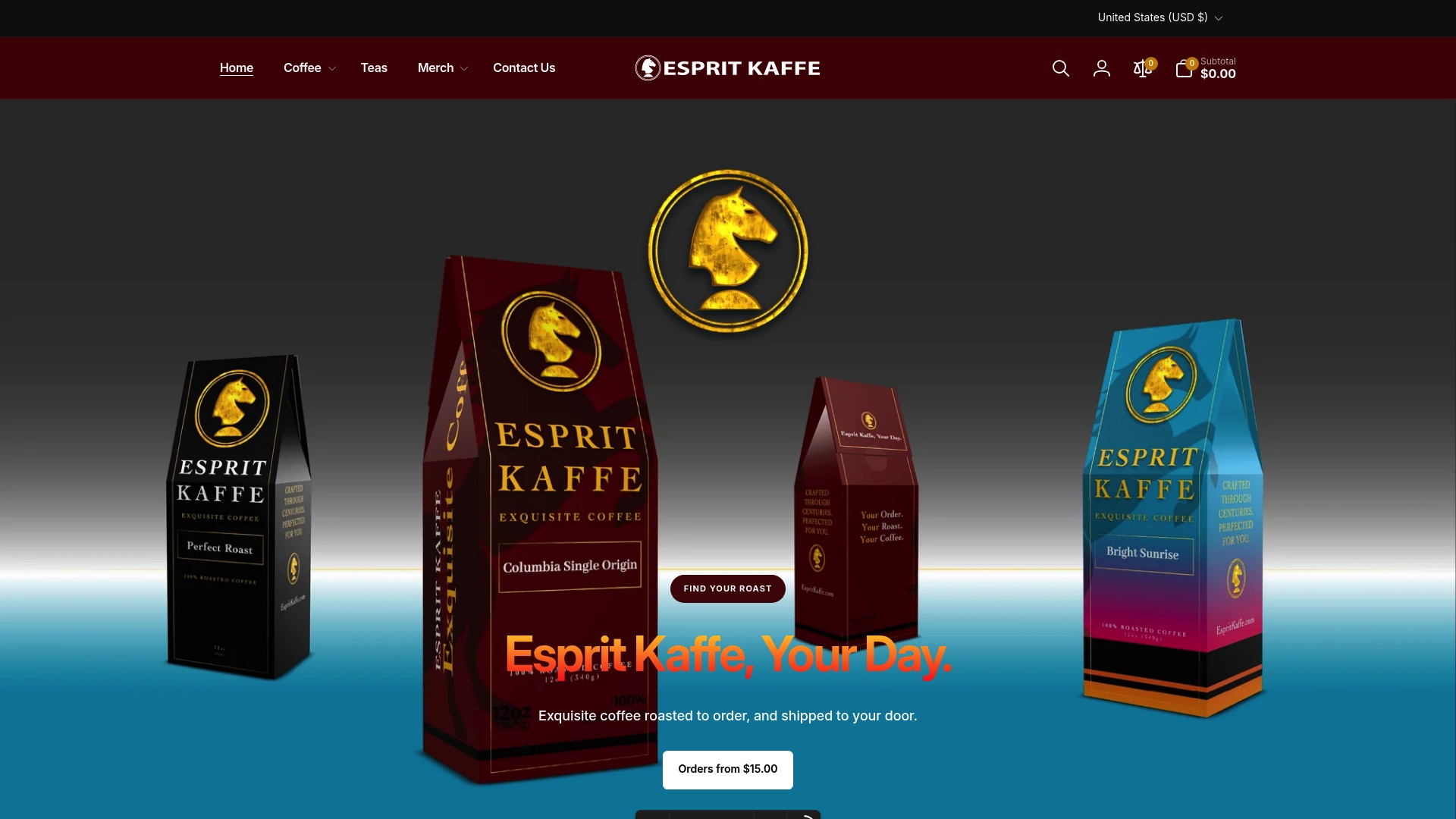
If you’ve read this far, you already know the right questions to ask any seller: is there a batch-specific COA, is the lab accredited, was the finished roast tested. Espritkaffe’s coffee collection is built to answer those questions directly, roast by roast, lot by lot. Browse the current lineup, or join the Members Club subscription if you want tested coffee arriving on a schedule instead of reordering one bag at a time. Either way, the next step is simple: pick a roast, ask for a COA, and see the numbers for yourself before it ships.
FAQ
What does “lab-tested coffee” actually mean?
It means a specific batch of coffee has a certificate of analysis showing results for contaminants like mycotoxins, heavy metals, mold, yeast, and sometimes pesticide residues. The COA should be tied to the exact lot and roast date you’re buying, not a general claim about the brand’s practices.
Does the FDA set a legal limit for ochratoxin A in coffee?
No. The FDA uses a referral level of 20 µg/kg to trigger case-by-case review rather than a fixed legal maximum. The European Union sets a firmer limit of 3 µg/kg for roasted coffee, which many sellers use as an informal benchmark.
Does roasting remove mycotoxins from coffee?
Roasting reduces ochratoxin A significantly, but reductions vary from roughly 58% to over 90% depending on roast severity and initial contamination. It doesn’t reliably eliminate the toxin entirely, which is why finished-roast testing matters more than roast color alone.
What’s the difference between LC-MS/MS and ELISA testing?
LC-MS/MS can detect multiple mycotoxins simultaneously with high sensitivity, while ELISA tests one analyte at a time and carries a higher chance of false results near detection thresholds. A COA naming LC-MS/MS as the method generally reflects a more rigorous test.
Does Espritkaffe provide certificates of analysis for its coffee?
Espritkaffe sells coffee by roast, origin, and lot, positioned around beans certified free of mycotoxins, heavy metals, mold, and yeast. Current products and pricing, starting from $15.00 per bag, are available through the coffee collection.
How much of the coffee FDA tests actually contains detectable mycotoxins?
In one FDA monitoring dataset of 514 coffee bean samples, only 14 samples showed quantifiable OTA above the detection limit. The rest came back non-detect or trace, suggesting most coffee on the market carries low measurable contamination.