

A designated coffee corner is a specifically arranged space built for coffee preparation, enjoyment, and informal gathering, serving as a functional hub for productivity, organization, and daily connection. Whether you set one up at home or in an office, its purpose extends well beyond brewing. Consumer interest in curated home coffee spaces grew over 1,500% by late 2025, according to Pinterest search data. That number reflects a cultural shift: people want their coffee ritual to mean something. A well-designed coffee station anchors your routine, reduces friction in your day, and creates a space where real conversations happen.
What is the designated coffee corner purpose?
A designated coffee corner serves three core functions: it organizes your brewing supplies, protects your surfaces, and creates a natural gathering point. These three roles work together. When your coffee area is clearly defined, you spend less time hunting for filters or wiping up spills, and more time actually enjoying the moment.
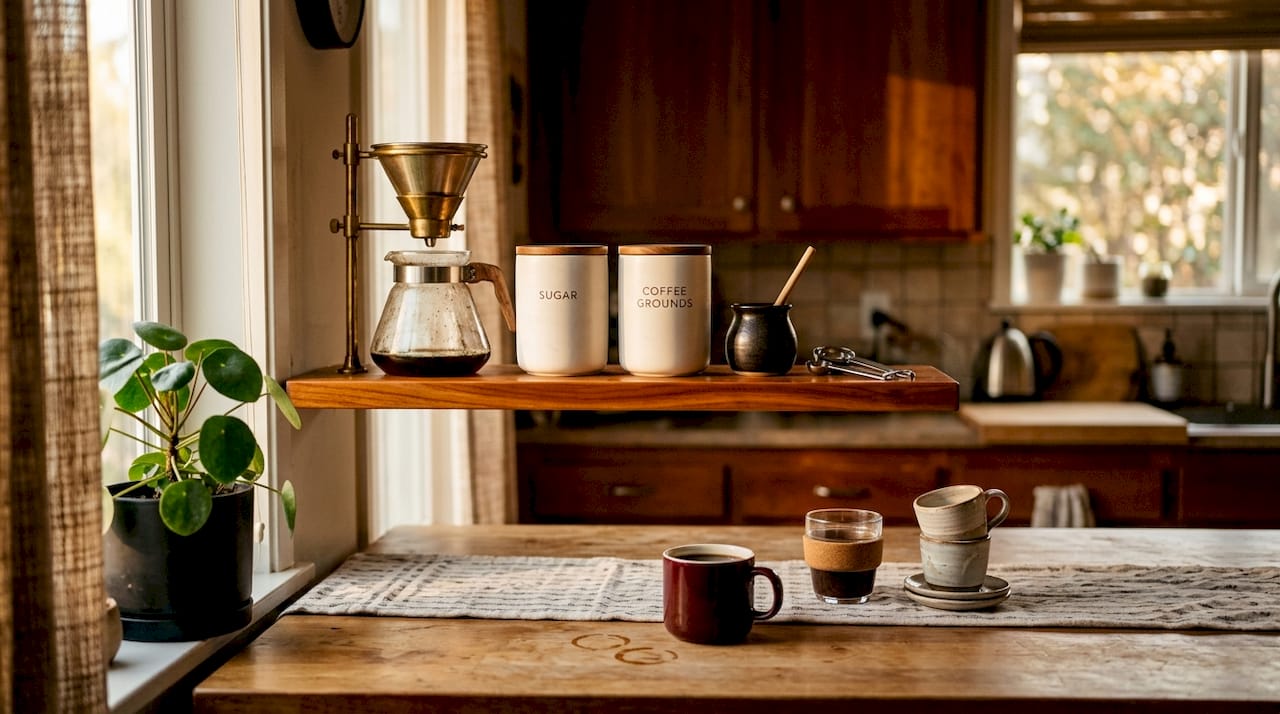
The term “coffee station” is the standard industry label for this type of setup. A coffee corner is the informal, lifestyle-oriented version of the same concept, typically smaller and more personal. Both share the same underlying purpose: to give coffee a dedicated home so it does not take over the rest of your space.
Modern coffee corners reflect a shift toward intentional living, transforming short breaks into sensory rituals that restore energy and sharpen focus. That shift matters for how you design the space. A corner built with intention performs better than one assembled out of convenience.
How does a well-organized coffee corner prevent clutter and spills?
Organization is the first practical benefit of a dedicated coffee area. Without a defined zone, coffee equipment spreads across countertops, mugs end up in the wrong cabinet, and spills go unnoticed until they stain. A designated space solves all three problems at once.
Zoning with specific trays and mats reduces spills, protects surfaces, and maintains tidiness in coffee corners. A tray under your espresso machine catches drips before they reach the counter. A mat under your grinder absorbs vibration and collects grounds. These are not decorative choices. They are functional boundaries that preserve your furniture over time.
Pro Tip: Use a rimmed tray as the anchor of your coffee corner. Everything that belongs in the space sits on or behind the tray. Anything outside the tray does not belong there. This single rule keeps the area self-contained.
Clear zones also promote good coffee corner etiquette in shared spaces. Small boundaries like mats and trays signal personal space and responsible use, which matters in any shared kitchen or office break room. When people know where things go, they put them back.
Here is a quick breakdown of the core organizational elements and what each one does:
| Element | Primary function |
|---|---|
| Rimmed tray | Contains drips and defines the active prep zone |
| Rubber or silicone mat | Protects countertop from heat, scratches, and grounds |
| Labeled canisters | Keeps beans, sugar, and filters visible and accessible |
| Drawer or caddy | Stores spoons, stirrers, and small accessories off the surface |
| Drip tray or cup rest | Catches overflow directly under the machine spout |
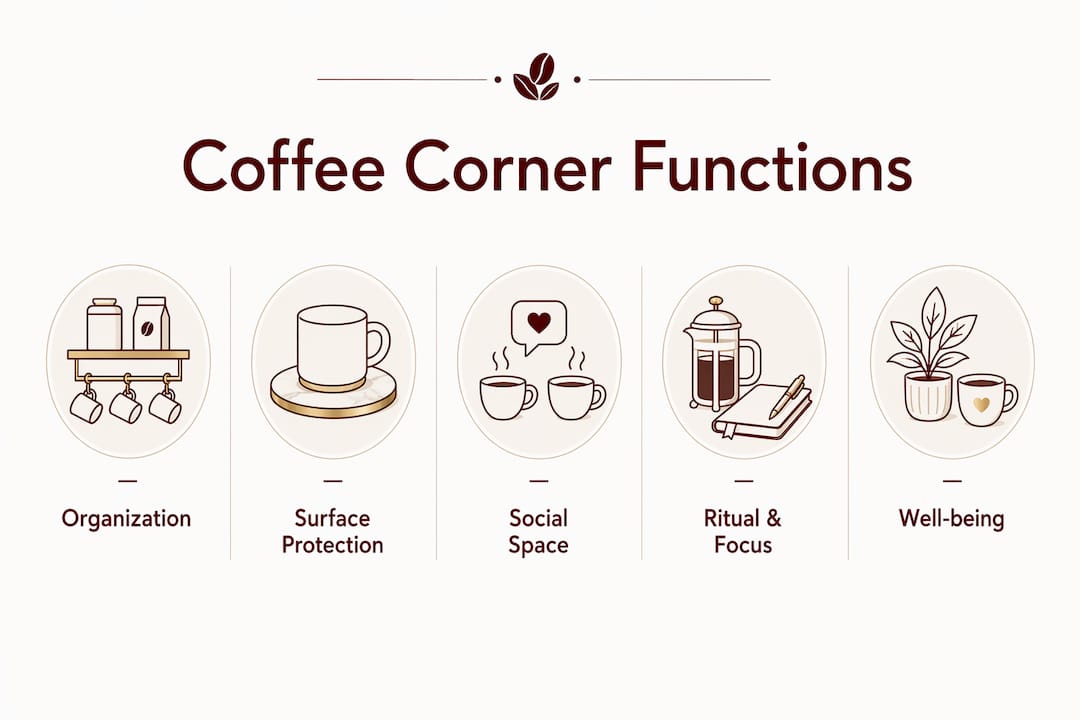
Each element reduces a specific type of mess. Together, they make the space feel intentional rather than improvised.
Why do coffee corners matter for social connection and well-being?
The social function of a coffee corner is its most underrated benefit. Informal interactions around coffee corners build trust faster than scheduled meetings, according to Harvard Business Review research. That finding reframes what a coffee station actually is. It is not just a place to make a drink. It is a place where relationships form.
“The true value of a coffee corner lies in what happens around it. Informal interactions cultivate trust and enhance workplace culture in ways that structured meetings rarely can.”
85% of employees value collaboration and informal socializing, making coffee corners powerful tools for expressing corporate culture and improving engagement. That statistic explains why companies invest in well-designed break areas rather than just functional ones. The quality of the space signals how much the organization values its people.
Companies with over 200 employees that implemented structured coffee corners saw a 30% increase in employee satisfaction regarding workplace well-being. A 30% lift from a single environmental change is significant. It shows that the physical setup of a coffee area directly affects how people feel about their workplace.
Coffee corners create natural breaks that support focus, improving productivity and satisfaction throughout the workday. Short, intentional pauses restore attention better than pushing through fatigue. A well-placed coffee corner makes those pauses easy and natural, which means people actually take them.
How should you design and place a coffee corner for maximum impact?
Placement determines whether a coffee corner gets used or ignored. A station tucked into a back hallway or isolated corner of a room creates social hesitation. People feel awkward lingering there. The result is a functional space that nobody uses for its full potential.
Positioning a coffee corner near entrances with perch points reduces social hesitation and encourages spontaneous interactions. “Perch points” are partial seating options, like a counter stool or a narrow ledge, that let people pause without committing to a full sit-down. They signal that stopping here is welcome.
Follow these four placement and design principles to get the most from your setup:
- Place it on a path, not at a dead end. A coffee station near a main walkway or entrance gets visited naturally. One at the end of a corridor requires a deliberate trip, which most people skip when they are busy.
- Keep supplies visible and within reach. Frictionless flow in coffee corner setup means supplies are always within reach and inventory is visible, which prevents frustration and sustains consistent use. If someone has to open three cabinets to find a filter, they will stop using the corner.
- Use texture and color to define the zone. A different tile, a contrasting countertop color, or a distinct mat signals that this area has a specific purpose. Visual boundaries reduce confusion in shared spaces.
- Add compact seating or a perch option. Even a single stool changes the dynamic. It invites people to pause, which is where the social value of a coffee corner actually gets realized.
Pro Tip: Avoid placing your coffee corner directly against a wall with no side clearance. People need room to stand beside each other comfortably. Even six inches of extra space on each side changes how approachable the area feels.
A reliable, easy-to-use coffee machine with consistent quality fosters positive daily rituals and loyalty to the space. Equipment that frustrates people kills the habit. Choose gear that works the same way every time.
How do coffee corners adapt to different lifestyles and spaces?
A coffee corner looks different depending on the space it lives in. A home setup might occupy one kitchen counter with a single-serve brewer, a small tray, and a jar of beans. An office setup might include a full brewing station, a variety of roast options, and seating for four. The purpose is the same. The scale changes.
The rise of artisan and single-origin coffee culture has pushed home coffee corners toward more curated setups. People want their home station to reflect their taste, not just their convenience. That shift has made aesthetics a real design consideration, not an afterthought.
| Setup type | Best for | Key features |
|---|---|---|
| Compact home nook | Apartments, small kitchens | Single brewer, tray, 2–3 accessories, wall-mounted storage |
| Home coffee bar | Dedicated kitchen space | Multiple brew methods, display shelving, grinder, mug hooks |
| Office break station | Teams of 5–20 people | Auto brewer, labeled supplies, perch seating, snack zone |
| Enterprise coffee corner | Large offices, 200+ staff | Multiple machines, variety of roasts, full seating area, social zone |
Each setup type serves the same core functions: organization, ritual, and connection. The difference is scale and the degree of personalization. A compact home nook prioritizes efficiency. An enterprise coffee corner prioritizes culture.
Balancing aesthetics with practicality is the real design challenge. A beautiful setup that runs out of supplies by Tuesday, or a functional one that looks like a storage closet, both miss the point. The best coffee corners are ones people want to use every day.
Key Takeaways
A designated coffee corner serves as an organized, social, and ritual-focused space that improves well-being, builds trust, and sustains daily focus in both home and workplace settings.
| Point | Details |
|---|---|
| Core purpose | A coffee corner organizes supplies, protects surfaces, and creates a natural social gathering point. |
| Organizational tools | Trays, mats, and labeled canisters contain mess and define the active prep zone. |
| Social value | Informal interactions at coffee corners build trust faster than scheduled meetings. |
| Placement matters | Positioning near entrances with perch points encourages spontaneous use and connection. |
| Lifestyle adaptation | Coffee corners scale from compact home nooks to full enterprise setups while serving the same core functions. |
The coffee corner is doing more work than you think
I have spent years paying attention to how people actually use shared spaces, and the coffee corner is consistently the most underestimated one in any building. People treat it like a utility. It is not. It is the one place in most offices or homes where no agenda is required. You show up, you make something, and you talk to whoever else is there.
The design mistakes I see most often are isolation and friction. Someone puts the machine in a corner because it fits there, then wonders why nobody lingers. Or they set up a beautiful station but forget to stock it consistently, so the habit dies within a week. Both problems are fixable with about 20 minutes of intentional planning.
My honest advice: treat your coffee corner like you would treat a good chair. It should be placed where life already happens, built to last, and comfortable enough that you want to return to it. The ritual matters more than the equipment. Start with a space that feels right, then fill it with coffee worth the effort.
— Jett
The right coffee makes the corner worth returning to
A well-designed coffee corner deserves coffee that matches its intention. Espritkaffe builds roasts for people who take their daily ritual seriously, not for everyone.

The mushroom medium roast from Espritkaffe is a strong fit for any coffee corner setup. It delivers a clean, grounded cup that works as a morning anchor or an afternoon reset. For corners that need a quick, no-fuss option, the instant mushroom coffee keeps quality consistent without adding equipment. If you want to build a corner that reflects real taste, the single-origin collection gives you variety with purpose. Your corner is only as good as what goes in the cup.
FAQ
What is the main purpose of a designated coffee corner?
A designated coffee corner organizes brewing supplies, protects surfaces from spills, and creates a natural social gathering point. Its purpose covers functionality, routine support, and informal connection in both home and workplace settings.
How does a coffee corner improve workplace well-being?
Companies with over 200 employees that implemented structured coffee corners saw a 30% increase in employee satisfaction regarding well-being. The space supports short focus-restoring breaks and builds trust through informal interaction.
Where should you place a coffee corner for best results?
Place a coffee corner near an entrance or main walkway, not at a dead end. Adding perch seating nearby reduces social hesitation and encourages spontaneous conversations.
What are the most important coffee corner setup elements?
A rimmed tray, a protective mat, labeled canisters, and a reliable machine are the core elements. These tools define the zone, contain mess, and keep supplies visible and accessible.
How do coffee corners support focus and productivity?
Coffee corners create natural break points that restore attention without disrupting workflow. Research shows that short, intentional pauses at a well-placed coffee station improve focus and overall productivity throughout the workday.