

Peanut coffee is defined as a beverage made by blending ground roasted peanuts with coffee grounds, or by brewing roasted peanuts alone as a caffeine-free alternative. The result is a smooth, nutty drink with a rich body and noticeably lower acidity than standard drip coffee. Coffee enthusiasts and health-conscious drinkers alike have pushed peanut coffee into the spotlight in 2026, drawn by its protein content, its forgiving flavor, and the sheer creativity of the preparation. Whether you brew it as a peanut butter flavored coffee or grind the peanuts directly into your coffee grounds, the technique is approachable and the payoff is real.
What is peanut coffee and how does it work?
Peanut coffee works by introducing ground peanuts into the brewing process, either mixed with coffee grounds before extraction or used as the sole base for a caffeine-free brew. The peanuts contribute fat, protein, and natural sugars that interact with hot water during extraction. The fat content softens the coffee’s acidity, the protein adds body, and the natural sugars round out bitterness without added sweetener. The technique draws on the same emulsion principles used in specialty coffee preparation, where fat molecules bind with water to create a stable, velvety liquid.
The flavor profile sits between a medium roast coffee and a fresh jar of peanut butter. You get a roasted, earthy base with a mild sweetness and a creamy finish. Peanut coffee offers low acidity and contains protein, which makes it a strong option for anyone with a sensitive stomach or a preference for gentler morning drinks. That combination of flavor and function is exactly why this category is growing fast among people who want more from their cup.

How to make peanut coffee with ground peanuts
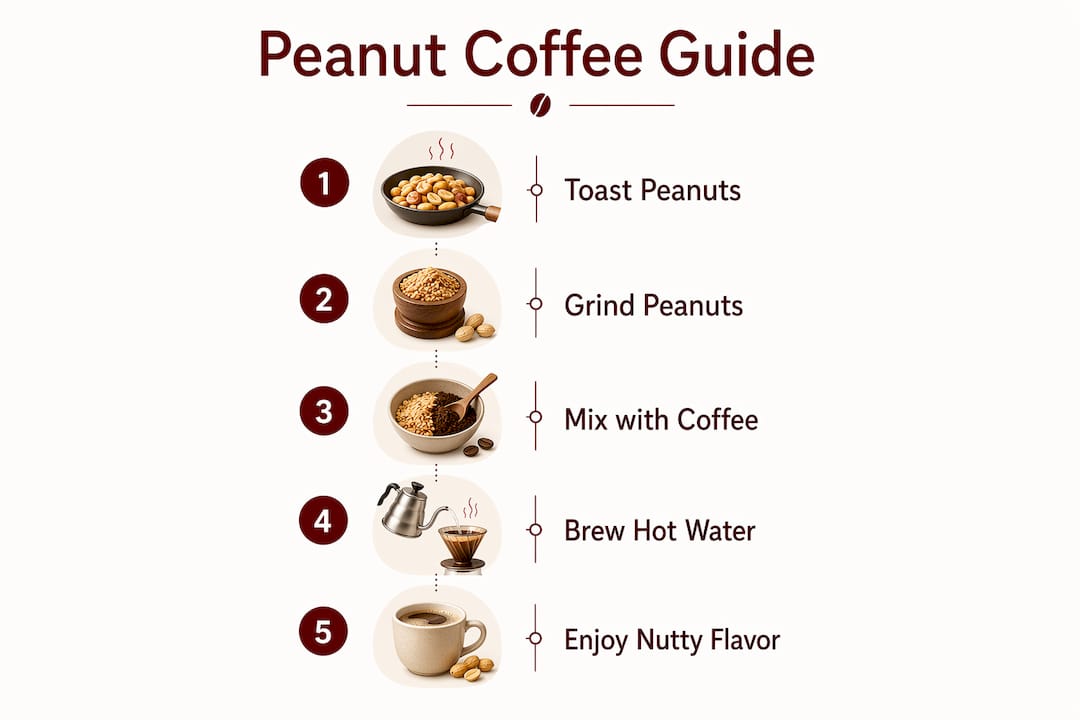
The most traditional method blends toasted peanuts directly with coffee grounds before brewing. The process takes about 20 minutes from start to finish and requires no special equipment beyond a grinder and your preferred brewer.
Step-by-step preparation
- Toast the peanuts. Spread raw peanuts in a single layer on a baking sheet. Toast at 300°F for 5–10 minutes to develop flavor without burning. Pull them when they turn golden and smell roasted.
- Cool completely. Let the peanuts rest for at least 10 minutes. Grinding warm peanuts releases too much oil and creates a paste instead of a powder.
- Grind the peanuts. Pulse in a burr or blade grinder until the texture resembles coarse breadcrumbs. Stop before the mixture clumps. Grinding peanuts too fine produces an oily paste that clogs your brewer and ruins the extraction.
- Measure your ratio. Use 3–4 parts coffee to 1 part peanuts by volume as your starting point. Adjust toward more peanuts for a nuttier cup or more coffee for a stronger caffeine hit.
- Grind your coffee. Aim for a medium-fine to fine grind to match the peanut powder’s particle size and avoid weak extraction.
- Mix and brew. Combine the two grounds thoroughly, then brew using a drip machine, French press, or pour-over. Water temperature between 195°F and 205°F works best for balanced extraction.
- Clean your equipment immediately. Peanut oil coats filter baskets and French press screens. Rinse with hot water right after brewing to prevent buildup.
The most common mistake is skipping the cooling step and grinding warm peanuts straight from the oven. The second most common mistake is using stale peanuts, which produce a flat, cardboard-like flavor. Buy raw peanuts and toast them yourself for the best result.
Pro Tip: Use filtered water for peanut coffee. Tap water with high mineral content competes with the peanut’s delicate flavor notes and makes the cup taste muddy.
You can also explore coffee peanut butter drinks for a broader look at how peanut and coffee flavors combine across different formats.
How do you make peanut butter flavored coffee?
Peanut butter coffee, sometimes called a peanut butter latte, uses emulsification rather than grinding. You dissolve peanut butter directly into hot brewed coffee, then froth the mixture to create a stable, creamy texture. The technique is faster than the ground-peanut method and produces a richer, more dessert-like drink.
Step-by-step emulsion method
- Brew your coffee hot. The target temperature for proper melting is 175°F to 185°F. Coffee that is too cool will not melt the peanut butter evenly.
- Measure the peanut butter. Start with 1 tablespoon of creamy peanut butter per 8-ounce cup. Add your sweetener of choice at this stage, before the coffee goes in.
- Choose the right peanut butter. Smooth commercial-style peanut butter performs better than natural peanut butter. Natural varieties separate in hot liquid and leave an oily film on top.
- Add the hot coffee slowly. Pour in a thin stream while stirring. This starts the emulsification before you froth.
- Froth for 15–20 seconds. Use a handheld frother or blender. Emulsification via frothing prevents the greasy mouthfeel that happens when fat and water separate.
- Add cream or milk. A splash of heavy cream improves fat integration and gives the drink a café-style body. Oat milk works well for a dairy-free version.
- Taste and adjust. Add more peanut butter for intensity, more sweetener for balance, or a pinch of salt to sharpen the nutty flavor.
For an iced version, brew double-strength coffee, froth the peanut butter with a small amount of hot water first, then pour over ice. For a peanut butter mocha, add one teaspoon of cocoa powder or a shot of chocolate syrup at step 2.
Pro Tip: If you only have natural peanut butter, stir the jar thoroughly until no oil layer remains, then refrigerate it for 30 minutes before use. Cold natural peanut butter emulsifies more consistently than room-temperature.
The adding peanut butter to coffee technique balances acidity with the peanut’s natural salty notes, which is why the combination works so well even without added sweetener.
What are the flavor and health benefits of peanut coffee?
Peanut coffee delivers a taste experience that sits firmly in the nutty, roasted category with a noticeably smooth finish. The low acidity makes it gentler on the stomach than most light or medium roast coffees. The fat from peanuts coats the palate and slows the perception of bitterness, which means the cup tastes balanced even without milk or sugar.
From a nutrition standpoint, peanuts bring protein and healthy fats into a drink that is otherwise mostly water and caffeine. The protein content makes peanut coffee more filling than a standard black cup. For people who skip breakfast but need something sustaining before noon, a peanut butter coffee with a splash of cream functions closer to a light meal than a beverage.
Peanut coffee is one of the few coffee variations that genuinely appeals to both traditional coffee drinkers and people who are reducing caffeine. The flavor is familiar enough to feel comfortable, but different enough to feel like a choice rather than a compromise.
The 2026 consumer trend toward functional beverages, drinks that do something beyond hydration or caffeine delivery, has pushed peanut-based coffee drinks into specialty café menus and home brewing routines. Flavor innovation in adjacent categories like snack and specialty flavors confirms that consumers want familiar ingredients in unexpected formats. Peanut coffee fits that pattern exactly.
For those sensitive to caffeine, the ground-peanut method can be used without any coffee at all. Brewed roasted peanuts alone produce a warm, earthy drink with zero caffeine and a mild, toasty flavor. It functions as one of the more satisfying coffee alternatives for people cutting back without wanting to give up the ritual entirely.
Peanut coffee variations and serving ideas
The base recipe is just the starting point. Peanut-flavored coffee adapts well across temperatures, milk types, and flavor additions.
Beverage styles to try:
- Classic peanut blend: Ground peanuts mixed with coffee grounds, brewed black. Best for tasting the pure nutty flavor without distraction.
- Peanut butter latte: Emulsified peanut butter with steamed milk. Rich, creamy, and closest to a café-style drink.
- Iced peanut coffee: Double-strength brew poured over ice with frothed peanut butter and cold oat milk. Refreshing and filling.
- Peanut butter mocha: Add cocoa powder or dark chocolate syrup to the peanut butter latte base. The chocolate amplifies the roasted notes.
- Peanut coffee with spice: A pinch of cinnamon or cayenne added to the grounds before brewing adds warmth and complexity.
Milk and sweetener pairings:
- Whole milk produces the creamiest texture and integrates most smoothly with peanut fat.
- Oat milk adds a mild sweetness that complements the nutty base without competing.
- Almond milk is lighter and works best in iced versions.
- Honey and maple syrup pair better with peanut coffee than refined sugar because their flavor complexity matches the nuttiness.
- Vanilla extract, just a quarter teaspoon, rounds out the flavor without making the drink taste artificial.
Pro Tip: If you are serving peanut coffee to guests, always ask about nut allergies first. Peanut coffee contains real peanuts and is not safe for anyone with a peanut allergy, regardless of how it is prepared.
For more ideas on building layered flavor profiles, the guide to hazelnut flavored coffee covers techniques that transfer directly to peanut-based drinks.
Key Takeaways
Peanut coffee is best made by toasting raw peanuts at 300°F, grinding them to a coarse powder, and blending them with coffee grounds at a 3-to-1 ratio before brewing with water at 195°F to 205°F.
| Point | Details |
|---|---|
| Toast before grinding | Raw peanuts must be toasted at 300°F for 5–10 minutes to develop flavor before use. |
| Grind to coarse powder | Stop grinding before peanuts clump; a paste clogs brewers and ruins extraction. |
| Use the right ratio | Start at 3–4 parts coffee to 1 part peanuts and adjust to taste. |
| Emulsify for butter coffee | Froth peanut butter with hot coffee at 175°F–185°F for 15–20 seconds to prevent separation. |
| Choose commercial peanut butter | Smooth commercial peanut butter emulsifies cleanly; natural varieties separate in hot liquid. |
Peanut coffee is worth the experiment
I came to peanut coffee skeptically. My first attempt used natural peanut butter stirred into lukewarm coffee, and the result was an oily, gritty mess that put me off the idea for weeks. The second attempt, with toasted ground peanuts blended into a medium roast and brewed through a pour-over, was genuinely surprising. The cup was smooth, the nuttiness was subtle rather than overwhelming, and the low acidity made it easy to drink without milk.
What I have found after making this drink regularly is that the ratio matters more than the brewing method. Too much peanut and the cup tastes like liquid peanut butter. Too little and you wonder why you bothered. The 3-to-1 starting point is accurate, but most people end up settling closer to 4-to-1 once they taste the difference.
The health angle is real but easy to overstate. Peanut coffee is not a protein shake. The amount of protein per cup is modest. What it does deliver is a more filling, lower-acid drink that fits naturally into a morning routine without requiring a full breakfast alongside it. For people who are reducing caffeine but not ready to give up the ritual, the ground-peanut brew without coffee is genuinely satisfying in a way that herbal teas simply are not.
The 2026 trend toward functional, ingredient-forward beverages is not going away. Peanut coffee sits at the intersection of flavor curiosity and practical nutrition, and that is a durable position. I expect to see it on specialty café menus more consistently within the next year.
— Jett
Espritkaffe and the world of alternative coffee
Peanut coffee opens the door to a broader question: what else can coffee be? Espritkaffe has been asking that question from the start. The Coffee with Mushrooms Medium Roast blends functional mushrooms with quality coffee beans, delivering a smooth, grounded cup that appeals to the same health-conscious drinkers drawn to peanut coffee. For those who prefer a deeper, bolder profile, the Coffee with Mushrooms Dark Roast brings intensity alongside the functional benefits. Both are built for drinkers who want their coffee to do more than wake them up. Espritkaffe roasts for people who choose their cup with intention.
FAQ
What is peanut coffee made of?
Peanut coffee is made from toasted, ground peanuts blended with coffee grounds and brewed with hot water, or from roasted peanuts brewed alone as a caffeine-free alternative.
Does peanut butter coffee taste good?
Peanut butter coffee has a rich, nutty, and creamy flavor that balances the bitterness of coffee with the salty, roasted notes of peanut butter, making it enjoyable even without added sweetener.
Is peanut coffee healthy?
Peanut coffee contains protein and healthy fats from peanuts and is lower in acidity than standard coffee, making it a good option for people with sensitive stomachs or those seeking a more filling morning drink.
Can I make peanut coffee without caffeine?
Yes. Brewing toasted, ground peanuts alone with hot water produces a warm, nutty drink with zero caffeine that works well as a coffee substitute for people reducing their intake.
Why does my peanut butter coffee taste greasy?
A greasy mouthfeel happens when peanut butter fat separates from the liquid. Fix it by frothing the mixture with a handheld frother for 15–20 seconds at a coffee temperature of 175°F to 185°F to create a stable emulsion.