

Coffee growing states are defined as regions where climate, altitude, and soil conditions support commercial coffee cultivation. Only a narrow band of the planet meets these requirements, and within the United States, just three states qualify: California, Hawaii, and Puerto Rico. Understanding which regions grow coffee, and why, tells you everything about what ends up in your cup. This guide covers the environmental science behind coffee cultivation, the major U.S. and global growing areas, and what climate change means for the future of your morning ritual.
What are the coffee growing states and their conditions?
Commercial coffee cultivation is confined to the Coffee Belt, an equatorial zone stretching roughly 25° North to 30° South of the Equator. This band captures the temperature stability, rainfall patterns, and seasonal rhythms that coffee plants require. Outside this zone, frost, drought, or excessive heat makes consistent production nearly impossible.
The key environmental requirements for any viable coffee growing area include:
- Temperature: Arabica thrives between 60°F and 70°F. Robusta tolerates warmer conditions, up to 85°F.
- Rainfall: Coffee plants need 60–100 inches of rain annually, ideally with a defined dry season for cherry ripening.
- Altitude: Higher altitudes slow cherry maturation, producing denser beans with more complex flavor. Arabica grows best between 800 and 2,500 meters above sea level.
- Soil: Well-drained, volcanic, or loamy soils rich in organic matter support the deepest root systems.
- Microclimate: Shade cover, wind patterns, and humidity all shape the final cup.
Processing method also matters. Washed, natural, and honey processing each extract different flavor compounds from the same cherry, meaning two farms in the same growing region can produce very different coffees.
Pro Tip: If you are evaluating a new coffee growing area, check the diurnal temperature range first. A wide swing between daytime highs and nighttime lows is the single strongest predictor of complex flavor development.
Which U.S. states grow coffee commercially?
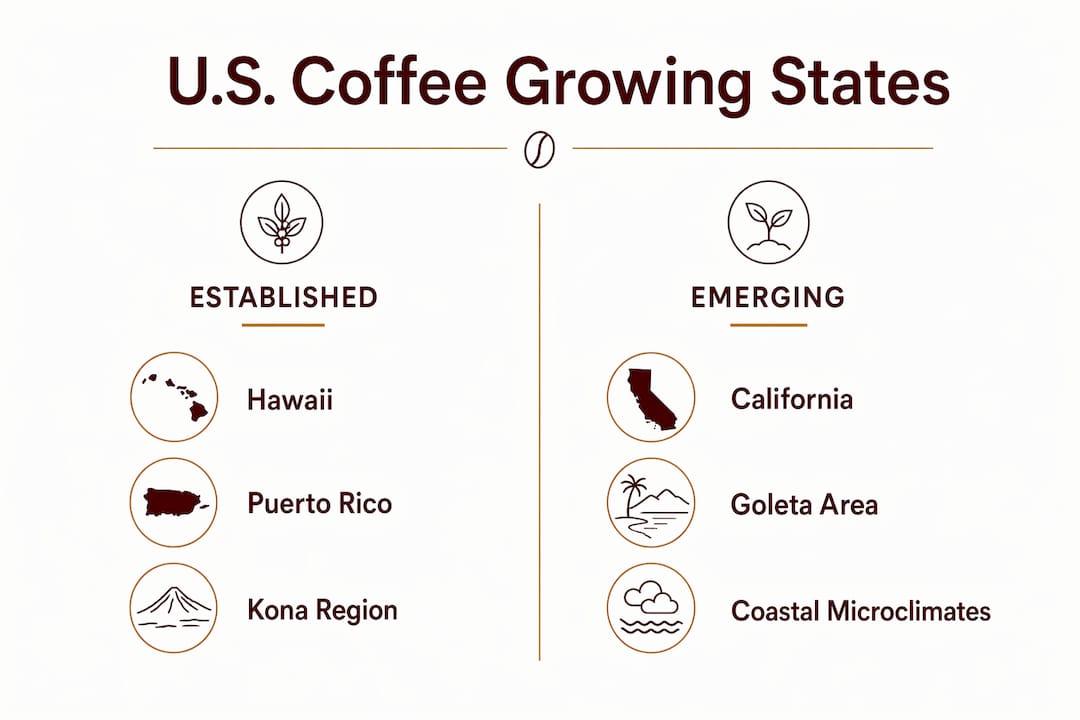
Only California, Hawaii, and Puerto Rico cultivate coffee commercially in the United States. Each state occupies a climate niche that mimics the Coffee Belt conditions found in top global producing countries.
Hawaii is the most established U.S. coffee growing region. The Kona Coast on the Big Island sits at elevations between 800 and 2,500 feet, with rich volcanic soil and afternoon cloud cover that shields plants from intense sun. Kona coffee consistently earns specialty grades and commands premium prices. Maui, Kauai, and Molokai also produce notable lots, each with distinct flavor profiles shaped by their individual microclimates.
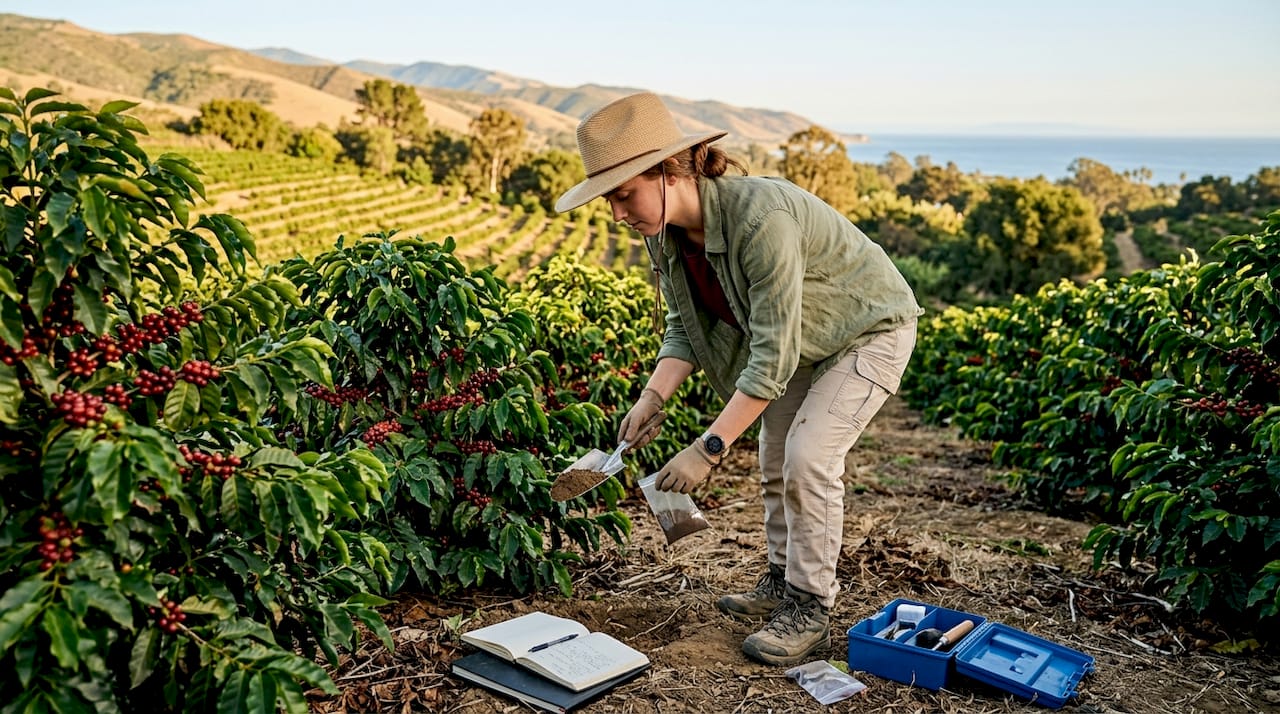
California represents the most exciting emerging coffee growing area in the country. Farms in Goleta, Carpinteria, and the Santa Barbara region have demonstrated that coastal California’s mild temperatures and low frost risk can support Arabica production. U.S. commercial production remains boutique in scale, but California growers are expanding acreage and experimenting with varietals including Typica and Bourbon.
Puerto Rico has a longer coffee history than either Hawaii or California. The Yauco and Lares regions in the island’s mountainous interior produce washed Arabica with bright acidity and mild body. Puerto Rican coffee was once exported to the Vatican and European royal courts, a legacy that modern specialty producers are actively reclaiming.
| State | Primary Region | Altitude Range | Key Characteristic |
|---|---|---|---|
| Hawaii | Kona Coast | 800–2,500 ft | Volcanic soil, afternoon cloud cover |
| California | Santa Barbara Coast | 500–1,200 ft | Mild coastal climate, low frost risk |
| Puerto Rico | Yauco, Lares | 1,500–3,500 ft | Mountain interior, washed Arabica |
Pro Tip: When buying U.S.-grown coffee, look for the specific farm or estate name on the label. “Hawaii coffee” covers a wide range of quality. “Kona Estate” or a named California farm signals genuine specialty production.
What are the major global coffee growing regions?
Global coffee production is concentrated in South America, Central America, Africa, and Southeast Asia. Each major coffee growing region produces distinct flavor profiles tied directly to its altitude, climate, and processing traditions.
South America dominates global output. Brazil’s coffee plantations cover approximately 27,000 km², with the state of Minas Gerais alone producing roughly half of Brazil’s total harvest. Brazilian coffee grows at lower altitudes than most specialty origins, producing a smooth, nutty, low-acid profile suited to espresso blends. Colombia, by contrast, grows coffee on steep Andean slopes at 1,200–2,000 meters, yielding the bright acidity and caramel sweetness the country is known for.
Africa is the birthplace of coffee. Ethiopia’s Yirgacheffe and Sidama regions produce floral, fruit-forward naturals that set the standard for African specialty coffee. Kenya’s SL-28 and SL-34 varietals, grown on red volcanic soil at high altitude, deliver a distinctive blackcurrant acidity that no other region replicates.
Southeast Asia produces the world’s Robusta supply. Vietnam is the second-largest coffee producer globally, growing primarily Robusta at lower elevations for the instant and blended coffee markets. Indonesia’s Sumatra, Java, and Sulawesi regions produce earthy, full-bodied Arabica through wet-hulling, a processing method unique to the region.
Regional climate and altitude shape flavor so precisely that specialty buyers use origin labels to predict cup characteristics before tasting. A coffee from Yirgacheffe and one from Sumatra are as different as a Burgundy and a Napa Cabernet, even though both are coffee.
How is climate change affecting coffee growing areas?
Climate change threatens to render 20% of current Arabica growing areas unsuitable by 2050, with suitability declines of up to 24 points projected in key regions including Brazil, Colombia, and Vietnam. That is not a distant problem. Growers in these regions are already experiencing erratic rainfall, shorter dry seasons, and rising average temperatures.
The most visible adaptation is the upslope shift. As lower elevations become too warm for quality Arabica, growers move cultivation higher. This works until the mountain runs out. In regions like Central America and East Africa, the available high-altitude land is finite, and competition for it is intensifying.
Pest pressure is rising alongside temperatures. Coffee borer beetles and coffee rust are becoming more prevalent worldwide as warming expands the zones where these organisms thrive. Coffee rust, a fungal disease, devastated Central American harvests in 2012 and 2013, and warmer conditions are extending its range upward into previously safe elevations.
Climate-smart farming practices, including shade planting, agroforestry, and restoring degraded land, are the most practical tools growers have right now. Nearly 40% of Peru’s suitable coffee land overlaps with degraded land, meaning restoration and expansion can happen simultaneously without clearing new forest.
Pro Tip: If you source coffee from a specific region you love, pay attention to harvest reports each year. Unusual rainfall or heat events in a growing region show up in the cup 6–12 months later as inconsistent flavor or lower availability.
What should aspiring coffee cultivators know before starting?
Starting coffee cultivation requires an honest assessment of your local conditions against the requirements of the Coffee Belt. Most of the continental United States falls outside the viable range, but microclimates in coastal California, southern Florida, and Hawaii’s islands can support small-scale production.
Here is what to evaluate before planting:
- Frost risk. Coffee plants die at sustained temperatures below 32°F. Even a single hard frost can destroy an established crop. Map your last and first frost dates carefully.
- Altitude and slope. Higher elevation and good drainage reduce disease pressure and improve bean density. Flat, low-lying land retains moisture and increases fungal risk.
- Soil pH. Coffee prefers slightly acidic soil in the 6.0–6.5 pH range. Test before planting and amend with organic matter if needed.
- Water access. Coffee needs consistent moisture during the growing season and a dry period for cherry ripening. Drip irrigation gives you control over both.
- Shade structure. Shade trees slow cherry maturation and protect plants from temperature extremes. Banana, macadamia, and native hardwoods all work well as canopy companions.
Legal and commercial scale constraints also apply in U.S. states. Hawaii has strict agricultural import rules that affect which varietals you can introduce. California farms operate under state water regulations that affect irrigation planning. Understanding how coffee is grown at a commercial level gives you a realistic baseline before committing land and capital.
Pro Tip: Start with a small test plot of 10–20 plants before scaling. Coffee takes 3–4 years to produce its first full harvest. A test plot lets you learn your microclimate’s behavior without a large financial commitment.
Key Takeaways
The viability of any coffee growing state depends on a specific combination of altitude, temperature, rainfall, and soil that only a narrow band of the planet naturally provides.
| Point | Details |
|---|---|
| Coffee Belt defines viability | Only regions between 25°N and 30°S reliably meet the climate requirements for commercial cultivation. |
| Three U.S. states qualify | California, Hawaii, and Puerto Rico are the only states with climates suited to commercial coffee production. |
| Altitude drives quality | Arabica grown at 800–2,500 meters above sea level produces denser beans with more complex flavor. |
| Climate change is shrinking viable land | Up to 20% of current Arabica growing areas may become unsuitable by 2050, pushing cultivation upslope. |
| Sustainable practices extend viability | Shade planting, agroforestry, and restoring degraded land are the most effective tools for long-term production. |
Why the origin of your coffee matters more than you think
I have spent years tasting coffees from dozens of growing regions, and the single most consistent finding is this: geography is not background information. It is the product. A Kona coffee tastes the way it does because of volcanic soil and afternoon cloud cover, not because of a roasting decision made thousands of miles away. A Yirgacheffe tastes floral and bright because of altitude and heirloom genetics, not because of marketing.
What concerns me about the current conversation around coffee origins is how quickly it becomes abstract. People talk about “Ethiopian coffee” as if it is one thing, when the difference between a Yirgacheffe and a Harrar is as dramatic as the difference between two entirely different fruits. The same is true within U.S. growing states. Kona and Maui coffee come from the same island chain but taste nothing alike.
The climate change projections are the part of this story I think gets underreported. Losing 20% of viable Arabica land by 2050 is not a slow, manageable decline. It is a structural shift that will change which origins are available, which flavors are accessible, and what specialty coffee costs. Growers who invest in shade planting and agroforestry now are not just being environmentally responsible. They are protecting the long-term viability of their farms.
My advice to anyone serious about coffee origins: buy single-origin coffees, read the harvest notes, and pay attention to how the same origin tastes from year to year. That practice builds a sensory map of the world’s growing regions that no article can fully replace.
— Jett
Single-origin coffees from the world’s best growing regions
Espritkaffe sources directly from recognized coffee growing regions, so every bag carries the flavor signature of its specific origin.
Whether you want the volcanic richness of a Hawaiian-style profile or the bright acidity of a high-altitude South American lot, Espritkaffe’s single-origin collection connects you to the terroir behind each cup. Every coffee in the collection is roasted to order, preserving the regional character that makes origin matter. If you prefer something cold, the cold brew coffee range showcases how growing region flavors translate beautifully into a chilled format. Espritkaffe is built for people who want to know exactly where their coffee comes from and why it tastes the way it does.
FAQ
What states grow coffee in the United States?
California, Hawaii, and Puerto Rico are the only U.S. states with climates suitable for commercial coffee cultivation. Hawaii’s Kona Coast is the most globally recognized American coffee growing region.
What conditions does a coffee growing region need?
A viable coffee growing region requires temperatures between 60°F and 85°F, 60–100 inches of annual rainfall, well-drained soil, and altitude between 800 and 2,500 meters above sea level for quality Arabica production.
Why does altitude matter so much for coffee quality?
Higher altitude slows cherry maturation, which allows more sugars and acids to develop in the bean. Arabica grown at 800–2,500 meters consistently produces denser, more complex beans with higher cupping scores.
How does climate change affect coffee growing areas?
Climate change is projected to make up to 20% of current Arabica growing areas unsuitable by 2050. Rising temperatures push cultivation upslope and increase the prevalence of pests like coffee borer beetles and coffee rust.
Can you grow coffee outside the Coffee Belt?
Small-scale cultivation is possible outside the Coffee Belt in protected microclimates, as California’s coastal farms demonstrate. Commercial-scale production outside the Belt remains rare because frost risk, temperature extremes, and rainfall patterns make consistent yields difficult to achieve.