

Washed coffee has its fruit removed before drying, which produces a clean, bright, and clear cup. Natural coffee dries inside the whole cherry, producing a fruit-forward, syrupy, heavier-body cup. For home brewers, that difference means washed lots reward lighter roasts and precise pour-over technique, while naturals shine at medium roast and forgive a looser hand.
TL;DR:
- Quality control at the mill level, such as consistent moisture content and proper drying, determines cup quality more than the processing method itself.
- Well-managed natural coffees can taste as clean as washed ones, but they require careful drying and handling to avoid fermentation flaws.
- Roasters should adjust their profiles: lighter roasts highlight washed coffee’s brightness, while medium roasts best develop the sweetness of natural beans.
- Home brewers can distinguish between processed coffees by smell, bloom behavior, and finish, which reflect preservation of acidity or fruit-forward richness.
- Comparing washed and natural coffees through a side-by-side cupping at the same roast level provides the clearest understanding of their differences.
Table of Contents
- Washed vs Natural Coffee: How Each Process Actually Works
- How Do Washed and Natural Coffee Taste Different?
- What Roast Level Works Best for Each Process?
- How Should You Brew Washed vs Natural Coffee?
- Water Use and Drying Risk: The Trade-Offs Behind Each Method
- How Do You Choose Between Washed and Natural Beans?
- A Note From Jett on Roasting Both Processes
- Why Most People Rank Washed Above Natural, and Why That’s Backwards
- Try Both Side by Side With Esprit Kaffe
- Sources
- FAQ
Washed vs Natural Coffee: How Each Process Actually Works
The two methods diverge at the mill within hours of picking, and every step after that shapes what ends up in your cup.
Washed processing removes the skin and fruit pulp mechanically (depulping), then relies on fermentation to strip the sticky mucilage layer still clinging to the parchment. Fermentation typically runs anywhere from several hours to a couple of days, depending on temperature and altitude. Once the mucilage sloughs off, the parchment gets rinsed and moved to raised beds or patios to dry, a process that takes one to three weeks.
Natural processing skips depulping entirely. Whole cherries go straight onto drying beds and dry intact, which can take two to six weeks depending on humidity and sun exposure. Once the fruit is brittle and the moisture content drops low enough, a hulling machine cracks off the dried skin and fruit to reveal the green bean underneath, followed by a conditioning rest.
Between these two extremes sits honey (pulped natural) processing, where the skin comes off but some or all of the mucilage stays on during drying. Yellow, red, and black honey variations differ mainly by how much mucilage remains and how long the coffee dries, which Wikipedia’s overview of coffee processing lays out clearly. Wet-hulled coffee, common in parts of Indonesia, is its own hybrid: parchment gets hulled at a higher moisture content than usual, producing a distinct low-acid, heavy-body cup.
Whichever path a lot takes, quality control looks similar:
- Hand-sorting or optical sorting to pull defective or underripe cherries before drying
- Drying to a target moisture of roughly 10 to 12 percent to prevent mold and stabilize the bean for storage
- Regular turning on raised beds or patios to dry cherries evenly
- Tarps or covered structures to protect drying lots from sudden rain
How Do Washed and Natural Coffee Taste Different?
Cup them side by side and the contrast is obvious within the first sip. Washed coffee tends toward clean, bright acidity with floral or tea-like clarity and a lighter body that lets origin character show through. Natural coffee leans fruit-forward and syrupy, with softer acidity, heavier body, and sometimes a winey or boozy fermentation note that can veer toward funky if the drying went wrong.

That “if” matters more than most buying guides admit. A well-run natural can taste like ripe berries and dark chocolate. A poorly dried one tastes like fermented trash. The mill-level view from FnB Tech makes the point directly: process control, not the process label, decides whether a cup is clean or flawed. A rushed or over-fermented washed lot can taste dull and vegetal just as easily as a mismanaged natural can taste like nail polish remover.
Three simple home tests help you spot the difference:
- Dry-smell the grounds. Washed coffee smells clean and floral; natural coffee smells like dried fruit or jam.
- Watch the crema or bloom. Naturals often bloom more aggressively due to residual sugars.
- Check the finish. Washed coffee finishes crisp and short; natural coffee lingers with a sweet, sometimes syrupy aftertaste.
Pro Tip: Brew both at the same ratio and grind, then taste them warm and again once they’ve cooled to room temperature. Fermentation notes in naturals get louder as the cup cools, while washed coffee’s acidity fades faster.
What Roast Level Works Best for Each Process?
Roasting a washed lot and a natural lot the same way is one of the most common mistakes home roasters make. The two beans behave differently on the same curve.
Washed coffee generally rewards a lighter roast that stops before deep caramelization mutes its acidity and aromatics. Push development too far and you lose the floral, tea-like clarity that makes washed lots distinctive in the first place.
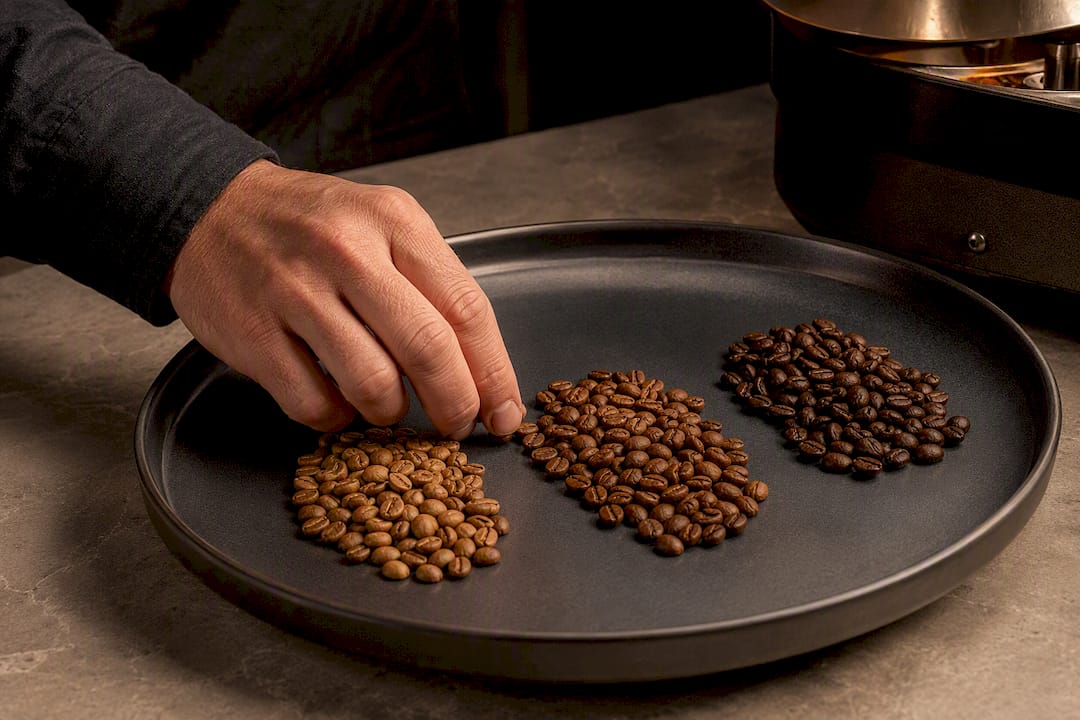
Natural coffee often does better at a medium roast, which deepens the fruit sugars into something closer to jam or dried fruit instead of raw ferment. Surface sugars on natural-processed beans speed up the Maillard reaction, so color changes faster than it would on a washed bean at the same temperature, according to Royal New York’s roasting guidance. That means naturals can look “done” before they actually are, risking a baked, flat flavor if you pull too early or push heat too hard early in the roast.
A few practical cues:
- Drop your charge temperature slightly for naturals to avoid scorching the sugar-heavy skin residue
- Slow your ramp rate through first crack on naturals to prevent uneven color
- Track development percent, not just total time, and log it alongside moisture readings
- Roast small batches (150 to 200 grams) when dialing in a new lot, and adjust in small increments
Our guide on wet milling and the washed process breaks down how mill-level moisture and fermentation choices show up later in the roaster.
How Should You Brew Washed vs Natural Coffee?
Brewing method matters just as much as roast here. Getting the recipe wrong hides exactly the traits that make each process worth trying.
- Pour-over or Chemex: Use a slightly finer grind and shorter bloom (30 seconds) for washed coffee to accentuate clarity and acidity. For naturals, coarsen the grind slightly and extend the bloom to 45 seconds, giving the fermentation sugars room to bloom without turning muddy.
- Espresso: Washed beans handle a higher yield ratio (1:2.5) cleanly, showing bright, structured shots. Naturals often taste better pulled shorter (1:2) at a slightly lower temperature to keep the fruit sweetness from turning cloying or one-dimensional.
- Cold brew or immersion: Washed coffee produces a lighter, more tea-like cold brew. Natural coffee produces a fuller, almost juice-like body, though it can turn muddy if steeped too long or ground too fine.
If a natural tastes muddy, coarsen your grind or shorten contact time first. If a washed brew tastes thin, check your water temperature. Anything below 200°F often under-extracts washed coffee’s more delicate sugars, and our piece on roast acidity and pH versus titratable acid explains why that balance shifts by roast level.
Pro Tip: When dialing in a new natural, taste it black and unsweetened first. Cream or sugar can mask early signs of over-fermentation you’ll want to catch before you commit to a full bag.
Water Use and Drying Risk: The Trade-Offs Behind Each Method
Processing choice is also an environmental and economic decision for the farmer, not just a flavor one. Washed processing can use roughly 40 liters of water per kilogram of coffee in some studies, mostly for fermentation tanks and washing channels. Natural processing uses a fraction of that, relying almost entirely on sun and airflow.
That water savings comes with its own risk profile:
- Naturals depend on stable, dry weather for weeks; a rain event mid drying can invite mold or uneven fermentation
- Producers without raised beds, mesh covers, or mechanical driers face higher spoilage risk on natural lots
- Washed processing gives farmers more control over timing but demands water access and wastewater management
- Buyers should ask about drying infrastructure, since it directly predicts consistency from harvest to harvest
How Do You Choose Between Washed and Natural Beans?
Start with your brew goal, then verify the lot actually delivers on its label.
- Match process to preference. Want clarity and acidity? Go washed. Want fruit and body? Go natural. Want something between the two? Look for honey or pulped natural.
- Ask for harvest date and drying method. A bag without a harvest date or process listed is a red flag, and freshness fades fast once beans are roasted.
- Check moisture and defect data if available. Roasters serious about quality track moisture at bagging and defect counts as proxies for how well the mill controlled the process.
- Buy small and cup it yourself. A simple home cupping session using the same water, grind, and ratio for both lots is the fastest way to confirm what you’re actually tasting.
A Note From Jett on Roasting Both Processes
Jett writes for Esprit Kaffe on roasting and the ritual behind it. The pattern that matters most: moisture and drying data from the mill should drive your roast start point, not guesswork. For deeper technical grounding, see what wet milling actually involves and how honey processing changes roast behavior.
Why Most People Rank Washed Above Natural, and Why That’s Backwards
The specialty coffee world has spent two decades treating washed as the “serious” process and natural as the crowd-pleaser. That hierarchy never held up under scrutiny, and the mill-level data backs that up: process control determines cup quality far more than the process label does. A natural lot dried on raised beds with daily turning and careful moisture tracking will beat a rushed, over-fermented washed lot every time.
What gets lost in most guides is how much this framing shapes home roasting habits. Roasters default to treating every washed bean as fragile and every natural as bulletproof, when the truth runs the other way. Naturals need more attention during roasting, not less, because their surface sugars change color faster and hide over-development until it’s too late to fix. Washed beans are often the more forgiving roast, not the more demanding one.
If you take one thing from this: stop asking “washed or natural” as though it’s a quality ranking. Ask about drying time, moisture at bagging, and how the lot was handled. That’s the real signal.
— Jett
Try Both Side by Side With Esprit Kaffe
The fastest way to understand washed versus natural isn’t reading about it. It’s cupping both back to back, with the same brew ratio, the same water, and beans roasted with real attention to their process data. You can order small batches roasted by origin and process, instead of committing to a full bag before you know what you’re tasting.

If pour-over gear isn’t part of your morning right now, Esprit Kaffe’s instant coffee gives you a fast way to taste roast character without the setup, and the instant coffee with mushroom option works if you want the ritual with a lighter caffeine curve. Order two small formats, one from each process, and taste them the same morning. That single comparison will teach you more about washed versus natural than any chart.
Sources
For water-use figures behind washed processing, see the CTAHR low water use processing overview. For sensory framing and buyer-facing detail, Perfect Daily Grind’s piece on processing favoritism and Coffee Studies’ processing breakdown both go deeper into regional practice. For roast-specific guidance, Royal New York’s roasting notes cover how surface sugars change roast behavior.
- Low Water Use Processing (CTAHR)
- Washed vs natural processing: favouritism in specialty coffee — Perfect Daily Grind
- Washed vs Natural: mill-level perspective — FnB Tech
FAQ
Which is better, washed or natural coffee?
Neither is objectively better. Washed produces a cleaner, brighter cup while natural produces a fruitier, heavier one, and the better choice depends on your taste preference and brew method.
What is the healthiest method of making coffee?
Processing method has little bearing on health outcomes at the brewing stage. What matters more for health is roast freshness, proper drying to 10 to 12% moisture to avoid mold risk, and using beans free of mycotoxins or heavy metal contamination.
What is the cleanest form of coffee?
Washed coffee typically delivers the “cleanest” tasting cup because fermentation and rinsing strip away the fruit sugars that give natural coffee its heavier, fruit-forward character.
What is the healthiest decaffeination process?
Decaffeination is a separate step from washed or natural processing and depends on the method used, such as Swiss Water or carbon dioxide processing, rather than how the cherry itself was dried.
How is washed coffee made?
Washed coffee is depulped to remove the skin and fruit, fermented for hours to a few days to strip the mucilage, rinsed clean, then dried on raised beds or patios for one to three weeks.