

Whole roasted beans hit peak flavor 1 to 4 weeks after roasting and stay drinkable for months if you store them right. The single rule that matters most: buy by roast date, not “best by,” and keep beans in an airtight, opaque container away from heat and light. Grind only what you’re brewing, right before you brew it. Do that and you’ll rarely waste a bag.
TL;DR:
- Buying coffee in small, weekly portions and storing beans in an opaque, airtight container extends freshness and reduces oxygen exposure.
- Unopened bags with a one-way valve last about three months, but roast date determines actual freshness; after opening, beans peak between one and four weeks.
- Ground coffee loses aroma within an hour due to oxygen exposure, making fresh grinding immediately before brewing essential for optimal flavor.
- Freezing beans is effective only if sealed properly in portions and thawed fully at room temperature; refreezing damages flavor stability.
- Signs of stale coffee include a dusty aroma and flat taste, while visible mold or sour smells indicate spoilage requiring disposal.
Table of Contents
- How Long Do Coffee Beans Actually Last?
- Why Do Coffee Beans Lose Freshness?
- What’s the Best Way to Store Coffee Beans?
- Can You Freeze Coffee Beans to Make Them Last Longer?
- How Can You Tell If Coffee Beans Have Gone Bad?
- What Buying Habits Keep Coffee in Its Peak Window?
- What Actually Matters for Freshness, and What Doesn’t
- Where to Buy Coffee That Fits This Storage Playbook
- Sources
- FAQ
How Long Do Coffee Beans Actually Last?
The countdown starts the moment beans leave the roaster, not when you open the bag.
Unopened sealed bags hold up the longest. Bags with a one-way valve or nitrogen flush can stay good for around three months in practice, though some vacuum-sealed packaging pushes that further. None of that matters as much as the roast date printed on the bag. A bag sitting on a shelf for six months before you buy it is already past its window, valve or no valve.
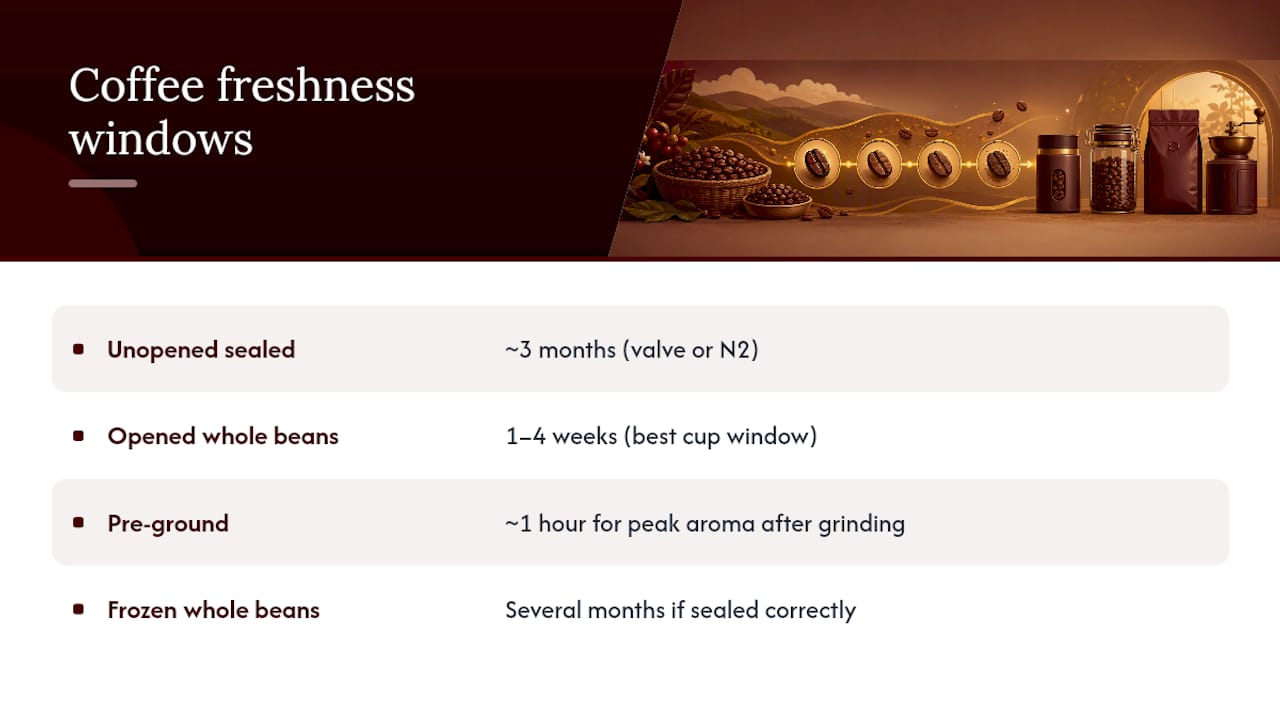
Opened whole beans peak fast and fade slowly. Expect the best cup somewhere between 1 and 4 weeks after roasting, with flavor declining gradually after that rather than falling off a cliff.
Pre-ground coffee is the fastest to go flat. Grinding exposes far more surface area to oxygen, so peak aroma can vanish within an hour of grinding. Opened ground coffee loses freshness quickly and is best consumed within a relatively short period after opening.
Frozen whole beans, sealed correctly, hold near their peak for several months. The catch is “sealed correctly.” A poorly wrapped bag in the freezer picks up moisture and freezer odors just as fast as it would lose flavor sitting on the counter.
Why Do Coffee Beans Lose Freshness?
Freshly roasted beans are still off gassing. Roasting builds up carbon dioxide inside the bean, and most of that CO2 escapes in the first one to three weeks, which is why baristas often rest beans for a few days before brewing. Brew too soon and the excess gas can mute extraction and throw off the shot; the Specialty Coffee Association notes that this rapid degassing period is exactly why roast date, not a generic “best by” stamp, tells you what’s actually happening inside the bag.
Once degassing slows, oxidation takes over as the main culprit behind stale flavor. Oxygen breaks down the oils and aromatic compounds that give coffee its character, turning a bright, complex cup flat and cardboard-like. Heat speeds that reaction up, light degrades the oils directly, and moisture invites mold. Grinding multiplies all of it at once by exposing far more surface area to the air.
What’s the Best Way to Store Coffee Beans?
Storage comes down to blocking oxygen, light, heat, and moisture, in roughly that order of importance.
If the bag is unopened and has a one-way valve, leave it alone. That valve lets CO2 escape without letting air back in, and it’s already doing the job. Once you break the seal, transfer beans to a dedicated canister.
- Choose a container that’s opaque, airtight, and sized close to what you’ll use in a week or two, since a mostly empty jar traps more air around the beans.
- Store it in a cabinet or pantry, not next to the stove or on a sunny counter. Heat and light are two of the fastest ways to wreck a good roast.
- Skip the refrigerator. Coffee absorbs odors and moisture from everything around it, and the fridge’s humidity works against you rather than for you.
- Buy in amounts you’ll actually finish in 1 to 3 weeks. A 250 gram (about 8 to 12 ounce) bag is a realistic size for most one or two person households.
- Grind right before brewing, every time. A whole bean waiting in a cabinet ages far slower than the same bean already ground.
Pro Tip: If you brew the same amount every morning, weigh out a week’s worth of beans into a small daily container and leave the rest of the bag sealed. You’ll open the main bag less often, which means less oxygen exposure overall.
For more detail on setting up your cabinet correctly, this guide to storing whole beans properly walks through container choices step by step.
Can You Freeze Coffee Beans to Make Them Last Longer?
Freezing makes sense when you’ve bought more than you’ll use in a month, snagged a rare seasonal lot, or want to stock up on a favorite roast before it sells out. Done carelessly, though, it introduces the exact moisture problems you’re trying to avoid.
- Divide the beans into single-use portions before freezing. Small amounts you’ll use in one go beat one giant bag you keep reopening.
- Seal each portion in a vacuum bag or a double layer of freezer bags, pressing out as much air as possible.
- Tape over any one-way valve or move the beans into a fully airtight container. A valve built to release gas at room temperature won’t protect against freezer condensation.
- Label each portion with the roast date and freeze date so you’re not guessing later.
- Thaw fully sealed at room temperature before opening. Opening a cold bag lets warm, humid air condense straight onto the beans.
Frozen beans, portioned and sealed this way, hold close to peak flavor for an extended period. The one hard rule: never thaw and refreeze the same portion. That cycle is exactly the failure mode that ruins the benefit of freezing in the first place.
How Can You Tell If Coffee Beans Have Gone Bad?
Stale coffee and unsafe coffee are two different problems, and mixing them up either wastes good beans or risks a bad cup.
- Aroma test: fresh beans smell rich and distinct; stale beans smell faint, dusty, or like cardboard.
- Bloom check: pour hot water over freshly ground stale beans and you’ll notice less bubbling and rise than you’d expect from a fresh roast.
- Taste: flat, papery, or one-dimensional flavor points to staling, not spoilage.
- Spoilage signs: visible mold, a musty or sour smell, or any fermented odor mean the bag goes in the trash, no exceptions.
If you’re unsure, brew a small test cup before tossing a whole bag. Coffee that’s simply stale still works fine in cold brew, where the long steep and added ice mask some of the flatness, or as a mild abrasive for cleaning out a grinder. For a deeper breakdown of stale versus spoiled, see this guide on what stale coffee beans actually mean.
What Buying Habits Keep Coffee in Its Peak Window?
Look for a roast date on the bag, not just a “best by” stamp. A roast date tells you what’s really happening to those beans; a “best by” date usually just marks the far edge of shelf stability. If you brew one or two cups a day, a smaller bag that lasts two weeks beats a bulk bag that spends its second half slowly fading. Buying larger only makes sense when you’re prepared to freeze the extra in portions right away. Roast-fresh ordering or a subscription that ships smaller batches more often keeps you inside that 1 to 4 week peak far more consistently than stocking up occasionally.
What Actually Matters for Freshness, and What Doesn’t
Most advice about coffee freshness obsesses over grabbing beans the day they’re roasted, and that instinct is a little misguided. A short rest of a few days after roasting often produces a rounder, more balanced cup than one brewed the same afternoon it came out of the roaster, since that early CO2 release can otherwise mute extraction. The bean world overcorrects toward “freshest possible” when “correctly rested and properly sealed” gets you a better result more reliably.
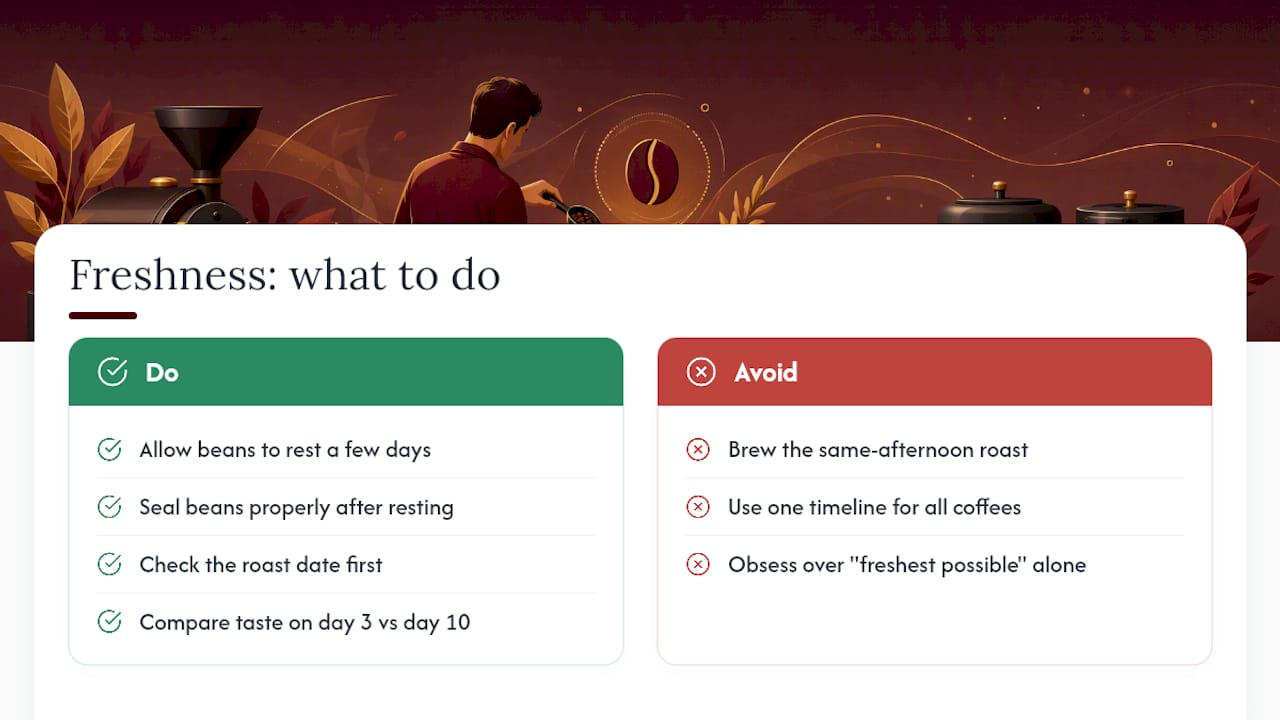
The other overlooked variable is processing and roast level. Washed coffees tend to peak earlier than natural or honey processed lots, so treating every bag with the same one-size-fits-all timeline is a mistake enthusiasts make constantly. Pay attention to how a specific coffee tastes on day 3 versus day 10, and you’ll start noticing patterns particular to how it was grown and processed, not just how it was roasted.
If there’s one habit worth building, it’s checking the roast date before checking the price. Espritkaffe’s approach, and the practical tips in how to buy fresh roasted coffee, both come back to that same starting point.
— Jett
Where to Buy Coffee That Fits This Storage Playbook
Everything in this guide points to one buying habit: know your roast date, buy an amount you’ll actually finish, and skip the guesswork on freshness. Some coffee roasters roast to order and ship with the roast date on the bag, so customers are never stuck reverse-engineering freshness from a vague “best by” stamp.

That transparency matters more than most people realize until they’ve compared a bag roasted six weeks ago to one roasted six days ago side by side. If you want a ready-to-drink option that skips the grinding and brewing decisions entirely, Espritkaffe’s cold brew coffee is made from beans handled with the same freshness standards covered here. Order a size you’ll actually finish within a couple of weeks, check the roast date on arrival, and you’ve already put the biggest lesson in this article into practice.
Sources
- How Long Does Coffee Last? How to Store Coffee
- Storage and shelf life - Beans
- Coffee Decoded: What is “freshly roasted” coffee? — Specialty Coffee Association
- I Asked Coffee Experts How to Keep Beans Fresh—They All Said the Same Thing
FAQ
Can You Drink 20 Year Old Coffee Beans?
Drinking them likely won’t hurt you if there’s no mold or moisture damage, but the flavor will be almost entirely gone. At that age, you’re brewing hot brown water with a faint coffee smell, not a cup worth the effort.
Can You Use 2 Year Old Coffee Beans?
Yes, if they were stored airtight and away from moisture, though expect a noticeably flatter, less aromatic cup than fresh beans. They’re a reasonable candidate for cold brew rather than a pour-over you’re expecting to shine.
Are 4 Year Old Coffee Beans Still Good?
They’re almost certainly stale rather than dangerous, assuming no mold or off odors, but four years is well past any usable flavor window. Check for a musty smell before using them for anything beyond cleaning a grinder.
Do Coffee Beans Go Bad or Expire?
Beans don’t expire the way dairy does; they gradually lose the aromatic compounds that make coffee taste good rather than becoming unsafe. The exception is contamination from moisture, which can lead to visible mold, and that’s the one case where beans genuinely need to be thrown out.