

Sumatra coffee is best known for a heavy, syrupy body, low acidity, and earthy notes running through cedar, tobacco, and dark chocolate. The main reason is a processing method called wet-hulling, which strips out the bright acidity most drinkers associate with African or Central American coffee and replaces it with something denser and more savory. Roasters and reviewers, including the team behind Esprit Kaffe’s own sourcing notes, treat that trade as the whole point of buying Sumatran beans in the first place.
TL;DR:
- Sumatra coffee’s low acidity and heavy body are primarily due to wet-hulling processing, which exposes beans to humidity and microbial activity.
- Regional differences, such as Gayo’s brighter and floral profile versus Mandheling’s deep chocolate and earthy notes, influence flavor, with Lintong offering a balance.
- Alternative processing methods like washed or honey-processed Sumatran beans can produce cleaner, brighter cups closer to Central American profiles.
- Brew Sumatra with French press or espresso to emphasize its characteristic full body and savory, chocolatey notes, adjusting roast levels accordingly.
- For a balanced experience, start with small purchases of washed Gayo or lighter roasts before committing to traditional wet-hulled Mandheling or Lintong lots.
Table of Contents
- What People Mean by “Sumatra Coffee Flavor”
- Why Sumatra Tastes Like This: Processing and Terroir
- Regional Differences: Gayo, Mandheling, and Lintong
- Building a Tasting Vocabulary for Sumatra
- How to Brew Sumatra to Bring Out Its Best Side
- Who’s Behind This Guide
- Is Sumatra Coffee Right for You?
- Try Sumatra-Style Coffee Roasted Your Way
- Sources
What People Mean by “Sumatra Coffee Flavor”
Ask ten coffee drinkers what Sumatra tastes like and you’ll get some version of the same three words: earthy, heavy, dark. That shorthand is accurate, but it skips the actual mechanics of flavor, which break down into three measurable traits: body, acidity, and finish.
Body is the weight of the coffee on your tongue, the difference between drinking skim milk and drinking cream. Sumatra sits at the heavy end of that scale, often described as syrupy or almost viscous. Acidity is the brightness or tang you’d get from a green apple or a squeeze of lemon. Sumatra ranks low here, which is precisely why it reads as smooth or mellow rather than sharp. Finish is what lingers after you swallow. On a good Sumatran lot, that finish is long and savory, sometimes with a dry, tobacco-like edge that sticks around for a full minute.
The descriptors that show up again and again on tasting sheets include:
- Earth and forest floor, the damp, mineral note that gives Sumatra its reputation
- Cedar and tobacco, dry and slightly smoky
- Dark chocolate and molasses, giving the cup its sweetness without any citrus lift
- Baking spice, sometimes black pepper or clove, especially in darker roasts
- A syrupy, almost chewy mouthfeel that coats the palate
Compare that to a washed Ethiopian or Kenyan coffee, which tends toward blueberry, citrus, and a light, tea-like body, and you can see why Sumatra reads as the opposite end of the spectrum. Where those origins are about lift and clarity, Sumatra is about weight and depth. Neither is objectively better. They’re different tools for different moods, and knowing the distinction is most of what you need to shop by flavor instead of by guesswork.
Why Sumatra Tastes Like This: Processing and Terroir
The short answer is a method called giling basah, or wet-hulling, and it’s almost entirely responsible for the flavor profile Sumatra is famous for.
Here’s what actually happens on the farm. After picking, farmers pulp the coffee cherries and let them ferment briefly, much like anywhere else in the world. But instead of drying the parchment-covered beans down to a stable 11 to 12% moisture before hulling, Sumatran processors hull the beans while they’re still wet, often sitting around 30 to 40% moisture. The now-exposed green beans finish drying out in the open air, frequently on tarps at roadside stands or small household patios, which means they spend extra time exposed to humidity and ambient microbial activity before they’re fully stable.
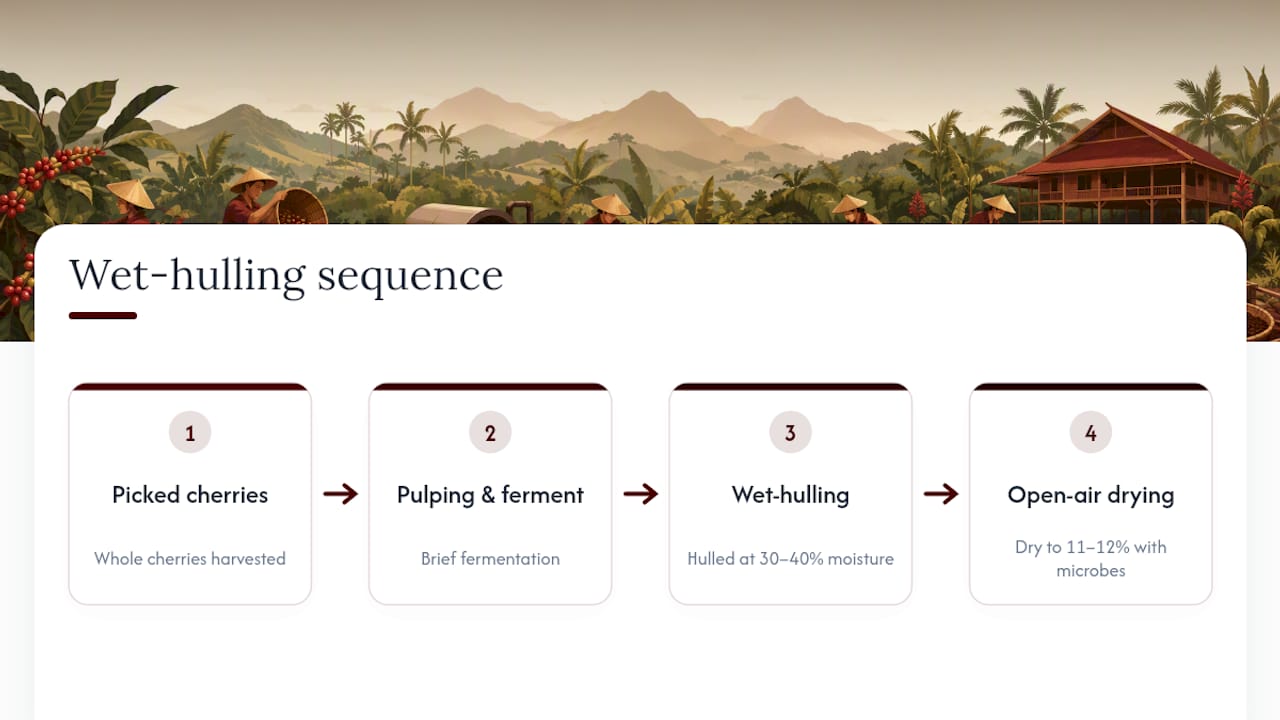
That extended wet exposure changes the chemistry inside the bean. Acids that would normally develop and stabilize during a slower, drier process get broken down or altered, which is the direct cause of Sumatra’s famously low acidity. At the same time, the added microbial activity during that open-air drying window is linked to the earthy, sometimes mushroomy or forest floor compounds that define the cup. This isn’t a flaw in execution. It’s a deliberate regional practice that farmers have used for generations because drying beans fully in Sumatra’s humid climate, before hulling, is genuinely difficult, and the flavor outcome became its own selling point over time, as Coffee Studies documents in its breakdown of wet-hulled processing.
Terroir does the rest of the work. Sumatra’s Arabica grows across volcanic highlands at roughly 900 to 1,700 meters above sea level, where mineral-rich soil and shade-grown conditions slow cherry maturation. Slower ripening means more time to develop sugars, which shows up later as body and sweetness rather than acidity. The island produces roughly 60% of all Indonesian coffee, concentrated in the Gayo highlands, the Lake Toba region, and the Barisan mountain range, which is why so much of what you see labeled “Sumatra” traces back to a handful of growing zones with genuinely similar climates.
One visual tell worth knowing before you buy green or read a bag description: wet-hulled Sumatran beans often look bluish-green or grayish, with an irregular, sometimes cracked shape. That’s an expected result of the processing method, not a sign of poor quality.
Not every Sumatran lot goes through this process, though. A growing number of washed and honey-processed lots skip wet-hulling entirely, and the difference in the cup is immediate: cleaner, brighter, more fruit-forward, closer to what you’d expect from a washed Central American coffee than a “classic” Sumatra. If you’ve tried Sumatra and found it too heavy, one of these alternative-process lots is worth seeking out before writing off the origin entirely.
Regional Differences: Gayo, Mandheling, and Lintong
Not all Sumatran coffee tastes the same, and the region printed on the bag tells you more than most buyers realize.
- Gayo (Aceh), grown in the northern highlands, tends to run brighter and more floral than other Sumatran coffees, often carrying caramel and honey sweetness thanks to its higher average altitude. Some Gayo microlots score 87 to 90-plus points on specialty cupping scales and show a lightness that surprises drinkers expecting the stereotypical earthy Sumatra profile.
- Mandheling, from North Sumatra, is the classic version most people picture: deep dark chocolate, licorice, and a thick, almost syrupy body with real earthy depth underneath. This is the profile that built Sumatra’s reputation in the first place.
- Lintong, grown near Lake Toba, leans into cedar and dark cocoa with a syrupy mouthfeel similar to Mandheling, but often with slightly more structure and a cleaner, more defined finish.
- Beyond these three, smaller growing areas across the island produce lots that get blended into general “Sumatra” bags, and blends sometimes include a small amount of Robusta for added body and bitterness, which shifts the profile toward something rougher and more bitter than a pure Arabica lot.
If you want the earthy, chocolate-forward reputation Sumatra is known for, look for Mandheling or Lintong on the label. If you want something closer to a bridge between Sumatra’s body and a brighter, more floral cup, Gayo is the region to chase. For a deeper look at how Lintong specifically behaves in the cup and how to brew it, Esprit Kaffe’s Sumatra Lintong guide walks through both in detail.
Building a Tasting Vocabulary for Sumatra
Cupping Sumatra well means knowing what you’re smelling and tasting before the sip even happens, and having the right words ready when you do.
On the aroma side, expect forest floor, cedar, and tobacco to hit first, sometimes with a faint mustiness that’s part of the authentic wet-hulled character rather than a defect. In the cup itself, look for dark chocolate, molasses, and a savory, almost herbal quality that specialty reviewers have described as layered rather than one-note, even in coffees that read as simply “earthy” on first sip. Mouthfeel is where Sumatra separates itself most clearly from brighter origins: syrupy, oily, almost chewy in the best examples. Acidity should be soft and low, never sharp, and the finish should run long and savory, sometimes leaving a dry, tobacco-like note that lingers well after you swallow.
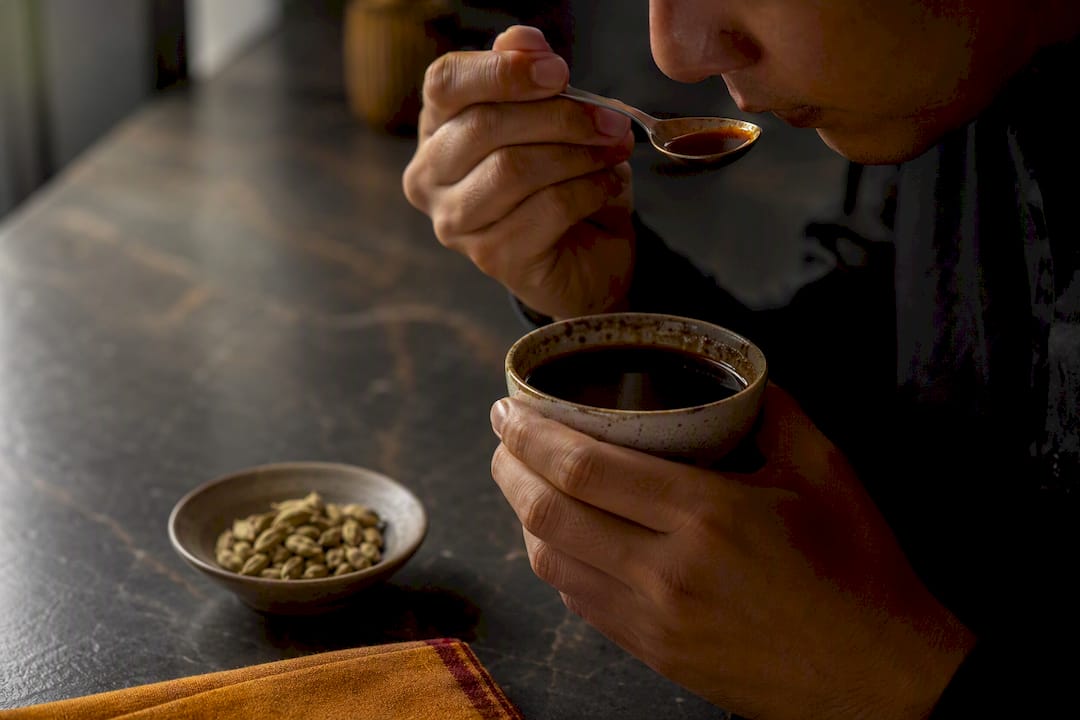
Spice notes show up too, particularly black pepper and occasionally cardamom in darker roasts, which adds complexity beyond the standard earth-and-chocolate description. The line between “authentic earthy” and “musty defect” comes down to balance. A trace of must alongside clean chocolate and cedar is normal. A cup that tastes like wet cardboard or mold with nothing else going on is a processing flaw, not terroir.
Pro Tip: Taste Sumatra last in any lineup, not first. Its heavy body and low acidity will flatten your palate’s sensitivity to brighter coffees that follow, and a plain water rinse between cups helps reset your taste buds so the earthy notes register clearly instead of blending into whatever you tasted before it.
How to Brew Sumatra to Bring Out Its Best Side
The brewing method you choose either amplifies or tames Sumatra’s signature heaviness, so match the method to what you actually want in the cup.
- French press or other immersion brewing is the top choice for maximizing body. Use a medium coarse grind, a ratio around 1:15 (coffee to water), water just off boiling at roughly 200°F, and a four-minute steep. Immersion lets the oils and heavier compounds fully saturate the water, which is exactly what makes Sumatra’s robust character come through.
- Espresso concentrates the chocolate and earthy notes into something dense and long-finishing. A slightly finer grind than usual and a shorter extraction window keeps the shot from tipping into bitterness.
- Pour-over works best with washed or honey-processed Sumatran lots rather than classic wet-hulled ones, since the cleaner filtration highlights clarity you’d otherwise lose in a heavier brew method.
On roast level, darker roasts lean into the chocolate and tobacco notes and are the traditional choice for wet-hulled Mandheling or Lintong. Medium roasts suit washed Gayo lots better, preserving more of their floral, honeyed character. Drink Sumatra black if you want the full earthy, savory experience; add milk if you’d rather soften that edge into something creamier and more dessert-like.
Pro Tip: If a cup tastes more musty than earthy, tighten your grind slightly and drop your coffee-to-water ratio a touch. Over-extraction pulls out the muddier, less pleasant compounds first, and dialing back the extraction time usually fixes it without changing beans.
Who’s Behind This Guide
This guide comes from Jett, writing on behalf of Esprit Kaffe’s editorial team, which focuses on roast-level education and origin transparency rather than one-size-fits-all coffee advice. Esprit Kaffe roasts to order by origin and roast level specifically so a Sumatra lot can be dialed toward the syrupy, chocolate-forward profile the region is known for, or pulled back toward something cleaner depending on what a customer actually wants in the cup.
If you want to go deeper on any of the threads covered here, Esprit Kaffe’s honey process breakdown explains how alternative processing changes roast behavior, and the French press brewing guide covers the exact technique that best showcases Sumatra’s body at home.
Is Sumatra Coffee Right for You?
Sumatra tends to win over drinkers who already gravitate toward red wine over white, dark chocolate over milk chocolate, and savory over sweet. If bright, fruity coffee has never done much for you, this is probably your origin.
If you’re on the fence, don’t commit to a full bag of classic Mandheling right away. Start with a small microlot, or try a washed Gayo if you suspect the earthiness might be too much. That gives you a real read on where you land without betting a whole roast on it.
— Jett
Try Sumatra-Style Coffee Roasted Your Way
Most Sumatra bags on the market are roasted for the average buyer, which usually means a generic dark roast that plays up bitterness and buries the chocolate and cedar notes that make the origin worth drinking in the first place. Roasting by order allows customers to specify their preferred roast level for a Sumatran lot, whether aiming for a deep, syrupy style or a cleaner, washed cup.
Esprit Kaffe’s coffee collection lists current origin and roast options, and the full product lineup covers beans alongside brewing gear if you’re setting up a full home setup. Every bag ships with quality assurance measures to ensure the cup’s earthy character comes from processing and terroir, not contamination.
| Goal | Suggested pick | Why it fits |
|---|---|---|
| Classic heavy, chocolate-forward cup | Darker roast, wet-hulled style | Maximizes body and cedar/tobacco depth |
| Softer entry point into Sumatra | Medium roast, washed lot | Cleaner, less earthy, easier transition |
| Daily drinker, black coffee | French press brew | Highlights full body and savory finish |
Place an order through the coffee collection and specify your roast preference at checkout to get a Sumatra-style cup built around your palate instead of a generic default.
Sources
- Sumatra Coffee: History, Characteristics & Flavor Profile — Roastopedia
- Sumatra coffee: wet-hulled beans and earthy depth — Coffee Studies
- Sumatra: earth, chocolate and change — Coffee Review