

Decaf coffee is not caffeine free. An 8-ounce cup usually contains a small amount of caffeine, commonly falling within a low milligram range, compared to a much higher amount in the same size cup of regular coffee. That gap exists because federal standards require only 97% caffeine removal, not total elimination, so trace amounts always survive the process.
TL;DR:
- The caffeine content in decaf varies widely depending on serving size, brewing method, and decaffeination process, ranging from 2 to 32 mg per cup.
- Decaffeination methods like Swiss Water or solvent-based extraction typically remove about 97% of caffeine, but residual amounts still remain.
- Beans like Robusta naturally contain double the caffeine of Arabica beans, affecting decaf’s residual caffeine level even after processing.
- Shorter brew times and smaller servings significantly reduce caffeine extraction compared to longer steeping or large-volume drinks.
- Most healthy adults can consume two to three cups of decaf daily without concern, but sensitive individuals or medication users should consult their healthcare providers.
Table of Contents
- How Much Caffeine Is in Decaf by Serving Size?
- What Determines the Caffeine Left in Decaf Coffee?
- Why Isn’t Decaf Officially Caffeine Free?
- Can Caffeine-Sensitive People Drink Decaf Safely?
- How Do You Get the Lowest-Caffeine Cup Possible?
- Where Espritkaffe Stands on Decaf and Clarity
- Sources
How Much Caffeine Is in Decaf by Serving Size?
The numbers shift depending on what you’re drinking and how much of it. An 8-ounce cup of drip decaf generally lands between 2 and 7 mg. Bump that to a 12-ounce mug and you’re often looking at 7 to 15 mg, based on aggregated product and study data from WebMD. A 16-ounce serving, the size most coffee shops pour by default, showed something more interesting in a controlled test: samples ranged from 8.6 to 13.9 mg, averaging around 9.4 mg. A single decaf espresso shot usually comes in under 5 mg, since the tiny volume limits total extraction even with concentrated grounds.
For comparison, here’s roughly where things stack up per 8-ounce serving:
- Decaf coffee: low milligram range
- Regular brewed coffee: moderate to higher milligram range
- Black tea: moderate milligram range
- Herbal tea (true herbal, no tea leaf): contains no caffeine, as it’s not made from the Camellia sinensis plant
- Cola: low to moderate milligram range
The math that actually matters: caffeine scales with volume, not magic. Double the cup size and you roughly double the milligrams, assuming the same brew strength. A 32-ounce decaf cold brew isn’t a “low caffeine” choice just because the label says decaf. It can quietly stack up to 20 to 30 mg once you account for volume, which rivals a can of soda.
One review of published data found decaf measurements spanning 1 to 32 mg depending on brand and preparation, a wider spread than most drinkers assume. That range is the honest answer to “how much caffeine in decaf”: it depends on the cup in front of you, not a fixed universal number.
What Determines the Caffeine Left in Decaf Coffee?
Three factors decide the final milligram count in your mug: the decaffeination method, the bean itself, and how you brew it.
Commercial decaffeination generally uses one of three approaches:
- Swiss Water Process: uses hot water and activated carbon filtration, no chemical solvents involved.
- Solvent-based methods: rely on ethyl acetate or methylene chloride to strip caffeine from green beans before roasting.
- Supercritical CO2 processing: uses pressurized carbon dioxide to pull caffeine out while leaving more flavor compounds intact.
All three are built to hit that 97% removal threshold, but none claims to reach zero. Pushing further would mean extra processing steps that tend to strip flavor along with the caffeine, according to the National Coffee Association, which is why manufacturers stop at “almost none” rather than “none.”
Bean species matters too. Robusta beans start with roughly double the natural caffeine of Arabica, so even after decaffeination, a Robusta-based decaf can carry more residual caffeine than an Arabica one processed the same way. Roast level plays a smaller role: darker roasts lose a bit more caffeine during longer roasting times, which is part of why dark-roast decaf tends to test lower.
Brewing is where you have the most control. Grind size, water contact time, and temperature all affect extraction. A French press or long steep pulls out more of everything, caffeine included, than a quick pour-over.
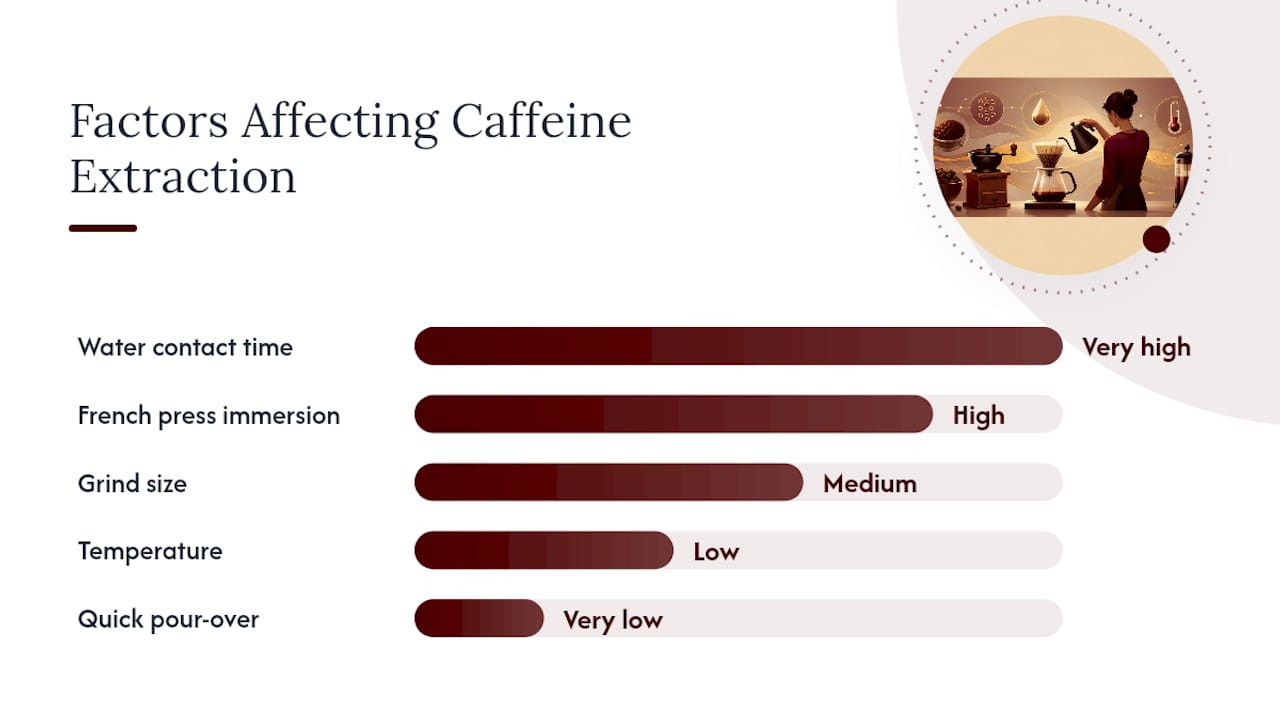
Pro Tip: If you’re trying to minimize caffeine, a shorter brew time matters more than picking one decaffeination method over another. Extraction time swings your cup’s mg count further than the process listed on the bag.
Why Isn’t Decaf Officially Caffeine Free?
Decaf isn’t caffeine free because no regulatory body defines it that way. The 97% removal standard referenced by the National Coffee Association is a threshold, not a guarantee of zero, and that 3% margin is exactly where the 2 to 15 mg range comes from.
Measuring that trace amount accurately depends on the testing method, and not all methods agree.
- HPLC (High-Performance Liquid Chromatography): the gold standard for accuracy, separating and quantifying caffeine molecules with high precision, though it’s slower and more expensive to run.
- NIR (Near-Infrared Spectroscopy): faster and cheaper, commonly used for quick quality checks on roasted batches.
- UV-Vis spectroscopy: another rapid method, useful for screening but less precise than HPLC for low-concentration samples.
That precision gap explains why lab reports and coffee-shop tests sometimes disagree. A technical summary of decaffeination methods notes that measurement approach alone can shift reported values, separate from any difference in the actual coffee.
| Sample type | Reported caffeine range | Measurement context |
|---|---|---|
| 16-oz brewed shop decaf | 8.6 to 13.9 mg | Controlled study, HPLC-based |
| General brewed decaf, mixed sources | 1 to 32 mg | Aggregated review across brands |
| 8-oz standard estimate | 2 to 7 mg | Industry and lab average |
Brewed-shop samples often run higher than the “average cup” figure most articles quote, simply because shop portions are larger and brewing is more concentrated than a home drip setup. Sample size and dissolved solids in the finished beverage can also bias readings if a lab doesn’t follow strict prep protocols.
Can Caffeine-Sensitive People Drink Decaf Safely?
For most people, yes. For a smaller group, even 5 to 10 mg matters. Highly caffeine-sensitive individuals can experience jitteriness, elevated heart rate, or sleep disruption from amounts that wouldn’t register for anyone else, and clinicians recommend weighing total daily intake from every source, not just coffee, when evaluating symptoms.
Medication interactions are the other piece people overlook. Certain drug classes, including some antibiotics, antidepressants, and heart medications, are known to interact with even modest caffeine intake, and the effect isn’t always dose-proportional. If you’re on a medication with a caffeine warning, decaf’s few milligrams may still be worth a conversation with your pharmacist rather than an assumption that “decaf” means “safe.”
The FDA frames roughly 400 mg per day as the upper bound for most healthy adults, a ceiling decaf almost never approaches even across multiple cups. Pregnant individuals typically work with a lower daily target, and decaf’s low mg count makes it one of the easier ways to stay under that number while keeping the ritual of a warm cup.
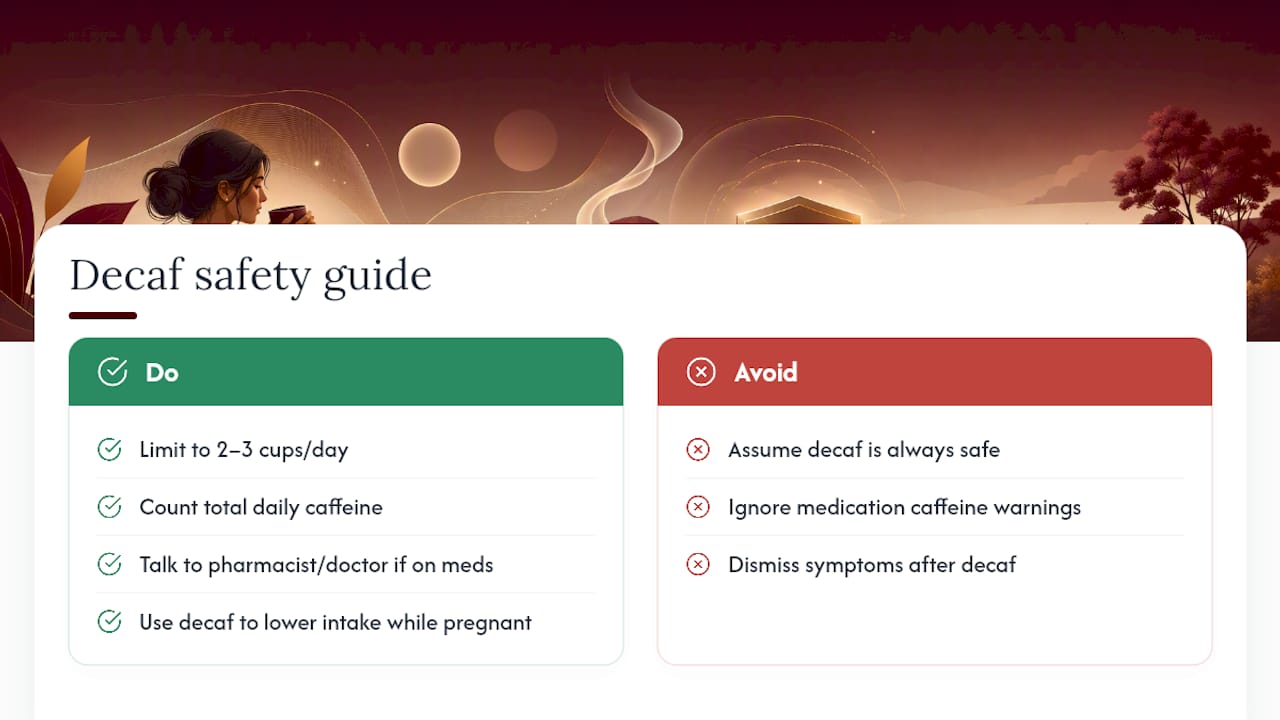
Rule of thumb: if you’re not unusually sensitive and not on an interacting medication, two to three cups of decaf a day sits well within normal limits. If you notice symptoms after decaf specifically, or you’re managing a condition where caffeine is flagged, talk to a doctor before assuming decaf is a safe workaround. Decaf also retains most of coffee’s antioxidant content, so the tradeoff isn’t all downside. For a fuller comparison of decaf against regular coffee’s effects, see our breakdown of decaf versus regular coffee.
How Do You Get the Lowest-Caffeine Cup Possible?
- Choose instant decaf or dark-roast decaf. Both categories tend to test lower than standard drip decaf, since roasting time and processing both nudge residual caffeine down.
- Keep servings smaller. An 8-ounce cup beats a 16-ounce one on total mg even if the concentration is identical.
- Shorten brew time and avoid double shots. Longer contact time and concentrated pulls both raise extraction, decaf included.
- Ask before you order. At a shop, ask which decaffeination process they use and whether it’s a dark roast; at home, cut steep time and stick to smaller pots rather than a big cold brew batch.
Pro Tip: A cold brew concentrate, even decaf, sits longer with the grounds than a quick pour-over. That extra contact time is why decaf cold brew can carry more caffeine per ounce than you’d expect.
Where Espritkaffe Stands on Decaf and Clarity
Decaf shouldn’t mean a dull cup. At Espritkaffe, the goal is a decaf that keeps the roast character intact while landing on the lower end of that mg range, so a slower evening cup doesn’t fight your sleep. If you want brewing specifics, our decaf black coffee guide and dark decaf breakdown go deeper than this overview allows.
— Jett
If you’re ready to put these numbers into practice, Espritkaffe’s Max Caf Blend and instant coffee options give you flexibility on the caffeine side without giving up flavor, and the Members Club subscription keeps a decaf roast stocked so you’re never guessing at what’s in the bag. Pair your cup with a smarter evening routine using our guide to cutting caffeine without losing focus, or if timing your coffee around dental habits interests you, Y-Brush’s take on brushing before or after coffee is worth a read.
Sources
- All About Decaffeinated Coffee — National Coffee Association (NCA)
- PubMed article on caffeine interactions
- Spilling the beans: How much caffeine is too much? — FDA