

Stale coffee beans are usually safe to brew, but they’ve lost most of the flavor you paid for. The fix depends on what you find: run the quick sniff and bloom tests below, and if the beans just taste flat, repurpose them into cold brew or baking instead of dumping them. Toss them only if you spot mold, moisture damage, or a rancid, oily smell.
TL;DR:
- Stale coffee beans mainly lose flavor due to oxidation, which causes a reduction in aromatic oils and a dull, dusty taste.
- Whole beans stay fresh for a few weeks post-roast when stored in sealed, opaque containers away from heat and light; grinding accelerates staling.
- You can still safely brew stale beans unless they show mold, rancid smell, or moisture damage, which require discarding immediately.
- Cold brew and baking are effective ways to use stale beans, as cold extraction preserves sweetness and flavor, and baking masks dullness.
- Regular small-batch buying, tracking roast dates, and proper storage significantly extend bean freshness and improve coffee quality.
Table of Contents
- What Makes Coffee Go Stale
- How Long Do Coffee Beans Actually Stay Fresh?
- How to Tell If Your Coffee Beans Are Stale
- Are Stale Coffee Beans Safe to Drink?
- What to Do With Stale Coffee Beans
- How to Store Coffee Beans to Slow Staling
- What Espritkaffe Has Learned About Freshness
- Why Freshness Is Part of the Ritual, Not an Afterthought
- Never Run Out of Fresh Beans Again
- Sources
What Makes Coffee Go Stale
Staling is oxidation, plain and simple. The moment beans leave the roaster, they start shedding carbon dioxide and absorbing oxygen, and that trade breaks down the aromatic oils that gave your coffee its complexity in the first place. Grinding speeds the whole process up dramatically because it exposes far more surface area to air.
That CO2 release matters for another reason: it’s what causes the bloom, that satisfying puff of foam when hot water hits fresh grounds. Once a bag has lost most of its gas, the bloom fades and so does the bright, layered flavor. What’s left is what coffee people describe as flat, dusty, or cardboard-like, sometimes with an oily sheen on beans that have started breaking down internally.
How Long Do Coffee Beans Actually Stay Fresh?
The honest answer: shorter than most people assume, and it depends entirely on form and packaging.
Whole beans in a sealed, degassing valve bag hit their flavor peak for a few weeks after the roast date, according to Day9’s breakdown of coffee freshness. Once you break that seal, the clock resets in a worse way. Opened whole beans stay good for several more weeks, though their aroma and body noticeably decline over time.
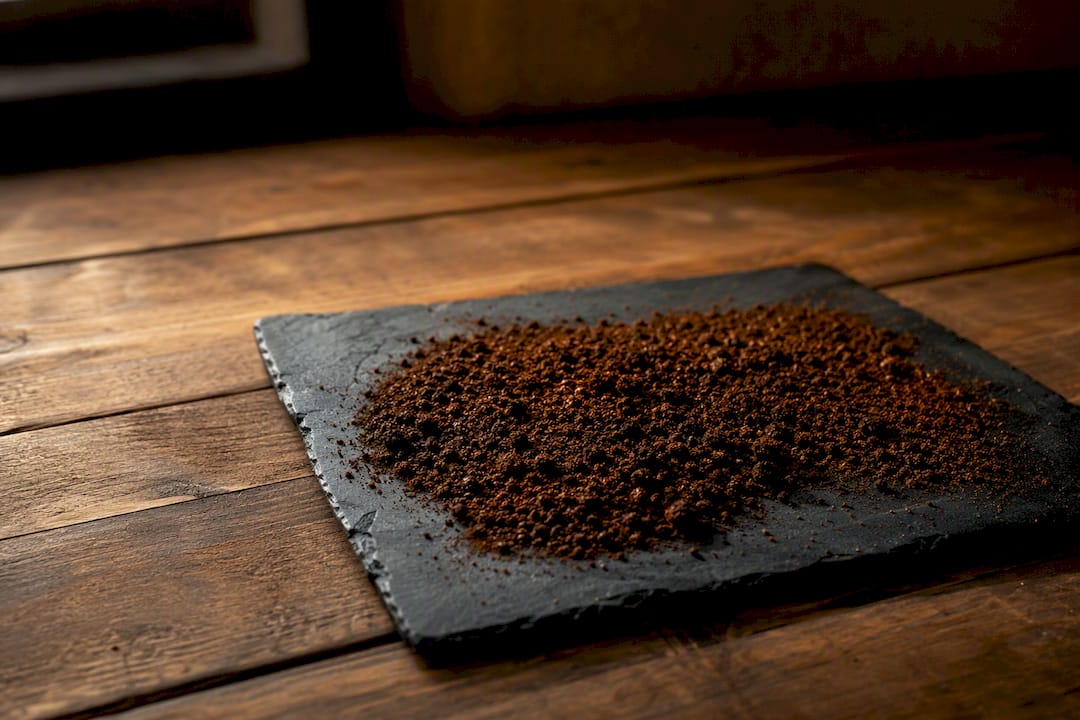
Ground coffee loses its edge much faster because grinding exposes more surface area to oxygen. Brewed coffee moves even faster: a pot on the counter is noticeably worse within a few hours, and refrigeration only slows that decline, it doesn’t stop it.
Instant coffee is the outlier. Because it’s dehydrated and processed differently, it holds up for a long stretch without the same oxidation curve, which is one reason instant coffee makes sense as a backup for anyone who doesn’t brew often enough to keep whole beans fresh.
How to Tell If Your Coffee Beans Are Stale
You don’t need lab equipment. A few minutes and your own nose will tell you almost everything.
- Sniff the bag. Fresh beans smell sharp, sweet, sometimes fruity or nutty depending on roast. Stale beans smell muted, dusty, or vaguely like cardboard. If you have to bring the bag right up to your face to smell anything, that’s a bad sign.
- Run the bag puff test. Seal a small handful of beans in a zip-top bag and press out the air. Fresh beans still releasing CO2 will puff the bag back up within an hour or two; this is the same degassing principle America’s Test Kitchen uses to explain why bloom happens during brewing.
- Check for sheen versus grease. A light, dry sheen from roasting oils is normal, especially on darker roasts. A wet, greasy coating usually means the oils have started to oxidize and turn rancid.
- Listen and look at the grind. Fresh beans crunch cleanly in a grinder. Stale beans can feel brittle or unusually dusty, producing more fines than you’re used to.
- Brew a small batch and watch the bloom. Pour hot water over the grounds in a pour-over or French press. A weak, quick-fading bloom instead of a thick, bubbling one confirms what your nose already told you.
If the results are borderline, don’t guess. A short cold-brew test will tell you fast whether the beans still have enough character left to be worth drinking.
Are Stale Coffee Beans Safe to Drink?
Yes, in almost every ordinary case. Roasted coffee is a dry product, and dry environments don’t support mold or bacterial growth the way moisture does, a point confirmed on Coffee StackExchange’s discussion of old coffee safety. Staling is a flavor problem, not a food-safety one, for beans stored properly.
The exceptions are visible and unmistakable: fuzzy mold spots, a sharp chemical or rancid smell, or any sign the beans got wet or damp during storage. Any of those means the bag goes in the trash, no test needed. The only edge cases worth a second thought are beans stored somewhere genuinely humid for months, or packaging that was already compromised before you opened it. Neither is common with a normal kitchen shelf.
What to Do With Stale Coffee Beans
Stale beans still have plenty of life left outside a regular cup of drip coffee.
- Cold brew. The long, cold extraction pulls out sweetness and body while leaving behind the harsher, flat notes staling creates. Use a ratio around 1:8 to 1:5 coffee to water and steep for 12 to 24 hours; the Café du Monde guide to aging coffee notes this slower extraction is exactly why cold brew is so forgiving of tired beans.
- Baking. Swap stale grounds into brownies, coffee cakes, or spice rubs for cookies. You’re after the coffee flavor note, not brightness, so staleness barely registers.
- Savory rubs and marinades. Ground stale coffee mixed with brown sugar, paprika, and salt makes a solid dry rub for steak or ribs.
- Household uses. Dried grounds absorb odors in a fridge or shoe, work as a light abrasive scrub, or add nitrogen to a compost pile, as long as there’s no mold present.
How to Store Coffee Beans to Slow Staling
A little discipline at the storage stage buys you weeks of better cups.
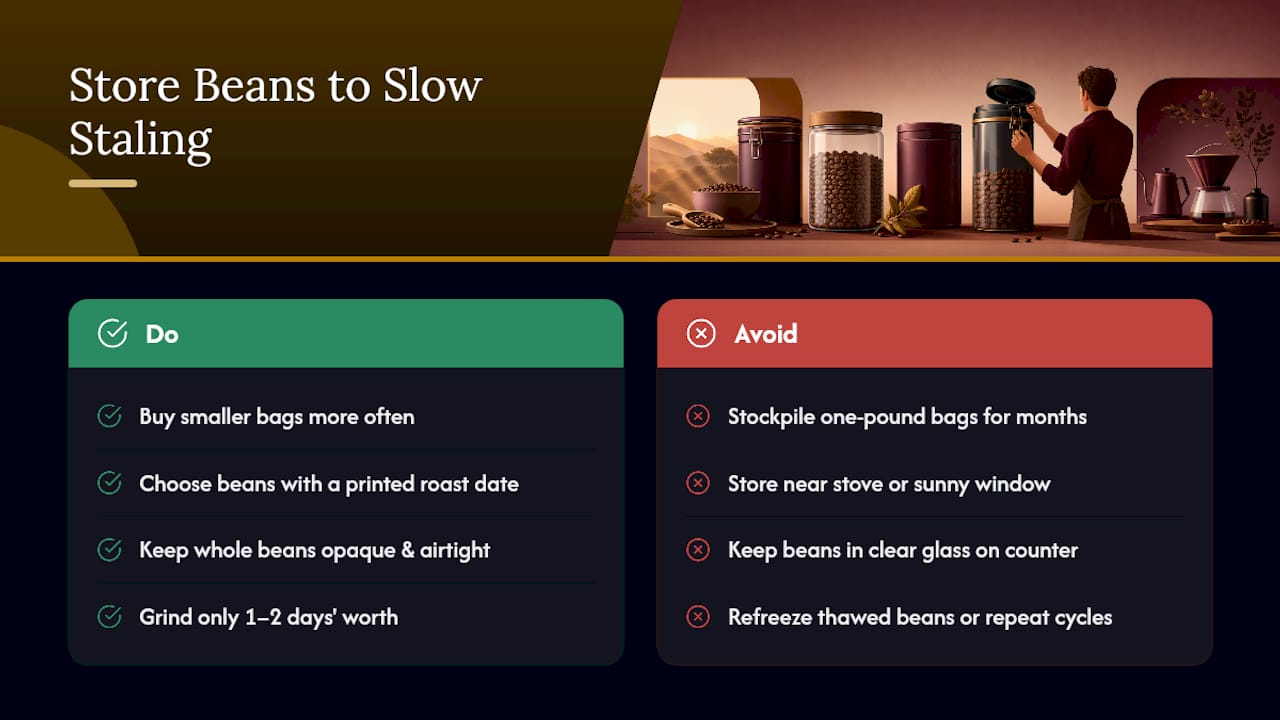
Buy smaller bags more often instead of stockpiling. A pound that sits for two months is working against you no matter how good the beans were on day one. Look for a printed roast date rather than a vague “best by” stamp; the National Coffee Association’s storage guidelines point to roast date, not expiration date, as the number that actually matters.
Keep whole beans in an opaque, airtight container, away from the stove, a sunny window, or anywhere heat builds up. Clear glass canisters look nice on a counter, but light degrades flavor almost as fast as air does. If you want a walkthrough on setting this up at home, this guide to storing whole beans in a kitchen cabinet covers the basics well.
Grind only what you’ll use in the next day or two, since ground coffee stales far faster than whole beans. Freezing works, but only once: pack beans airtight, freeze them a single time, and thaw the whole portion before opening. Repeated freeze-thaw cycles introduce condensation, and condensation means moisture, and moisture is the one thing that turns “stale” into “ruined.”
Pro Tip: Freeze coffee in small, single-use portions rather than one big bag. That way you never have to thaw and refreeze the same batch, which is what actually damages beans in the freezer.
What Espritkaffe Has Learned About Freshness
Espritkaffe roasts to order rather than to a warehouse shelf, which means freshness management starts before the bag ever reaches your counter. Buying in smaller batches and tracking the roast date on every order keeps beans inside that two to four week peak window instead of guessing.
A simple bloom test at home tells you most of what you need to know: pour just enough hot water to saturate the grounds, wait thirty seconds, and watch. A strong, bubbling rise means the beans are still actively releasing gas. A weak or nonexistent bloom means they’ve settled into their flatter, later stage, still drinkable, just past their best.
For beans headed to the freezer, the rule Espritkaffe follows is one freeze, one thaw, no exceptions. Understanding how roast level and bean structure affect stability also helps explain why some beans hold up longer than others, which this piece on how a coffee cherry becomes a bean breaks down in more detail.
Why Freshness Is Part of the Ritual, Not an Afterthought
The whole point of a slow morning cup is the moment it gives you, not just the caffeine. Stale coffee steals that moment quietly. The cup still looks right, still smells vaguely like coffee, but the clarity and brightness that make it worth the ritual are gone before you even notice.
That’s why roast date and small-batch thinking matter more than most drinkers realize. It’s not about chasing perfection. It’s about not settling for a dull version of something that was built to be sharp. If tracking dates and buying smaller amounts sounds like more math than your morning needs, a subscription built around fresh roast cycles solves that math for you.
— Jett
Never Run Out of Fresh Beans Again
Chasing roast dates and rationing bags to avoid staleness gets old fast, especially compared to coffee that just shows up fresh on a schedule. Espritkaffe’s Members Club Subscription sends freshly roasted beans on a rhythm timed to when you’ll actually finish your last bag, so you’re rarely drinking anything outside its peak window.

If you already know a bag has gone past its best, Espritkaffe’s Cold Brew Coffee offers a ready-made way to get that smooth, forgiving profile without babysitting a steep at home. Prefer to sidestep the whole freshness math altogether? Instant Coffee holds its quality far longer than whole beans, making it a practical backup for slower coffee weeks. Set up a subscription now and stop thinking about roast dates altogether.
Sources
- How to Tell Whether Your Coffee Is Fresh — America’s Test Kitchen
- How to store coffee — National Coffee Association (NCAUSA)
- Does coffee expire? How to tell if your coffee has gone bad — Day9
- Is it safe to brew old coffee? — Coffee StackExchange
- Do coffee beans go bad? — Café du Monde (guide)