

A peaberry is a single seed formed inside a coffee cherry that normally grows two. It’s rarer, usually pricier, and prized by roasters for its round shape and dense structure. Whether it tastes better than a regular flat bean is a different question entirely, and the honest answer is: it depends on the farm, the processing, and the roast far more than the shape of the bean itself.
TL;DR:
- Peaberries are naturally occurring single seeds inside coffee cherries, making up about 5 to 10 percent of a crop and mostly distinguished by size and density.
- Sorting peaberries adds labor costs, often through hand-sorting or density separation, which justifies their higher price more than any intrinsic flavor difference.
- Tasting notes for peaberrys commonly include brighter acidity and fruitier profiles, but blind comparisons do not consistently prove they taste better than flat beans from the same harvest.
- Roasters typically roast peaberries separately because their shape and density alter heat transfer and crack timing, requiring adjustments for optimal extraction.
- The premium price of peaberry coffee is driven by labor and scarcity, not guaranteed superior quality or flavor, so origin and roast date are more reliable quality indicators.
Table of Contents
- What Is Peaberry Coffee, and How Does It Form Inside the Cherry?
- Why Peaberries Get Sorted Out, and Why That Sorting Costs Money
- What Does Peaberry Coffee Actually Taste Like?
- How Roasting Changes for Peaberry Batches
- How to Brew Peaberry Coffee for the Best Cup
- How Espritkaffe Approaches Sourcing and Roasting Peaberry Lots
- Do Peaberry Beans Actually Score Higher in Cupping?
- Does Peaberry Coffee Have More Caffeine Than Regular Beans?
- How to Store Peaberry Coffee to Keep Its Flavor Intact
- Common Myths About Peaberry Coffee, Debunked
- The Honest Take on Whether Peaberry Is Worth Buying
- Where to Try Peaberry Coffee Without Overpaying for the Label
- Sources
- FAQ
What Is Peaberry Coffee, and How Does It Form Inside the Cherry?
Most coffee cherries develop two flat seeds pressed against each other, which is why a standard coffee bean has one flat side. A peaberry happens when only one seed fertilizes and grows inside the cherry, so it develops without a neighbor to flatten it. The result is a small, rounded, oval bean, often called caracol or caracolillo in Spanish-speaking growing regions.
This isn’t a defect or a special varietal. It’s a natural mutation that shows up randomly across nearly every coffee farm on earth, and it happens in roughly 5 to 10 percent of a given harvest, depending on the crop year, the growing conditions, and the plant itself.
A few things distinguish a peaberry once it’s dried and hulled:
- It’s noticeably smaller and rounder than a standard flat bean from the same tree.
- It’s denser, since the single seed absorbs nutrients that would otherwise split between two beans.
- It shows up across almost every origin, but two regions have built entire marketing categories around it: Tanzania and Kona in Hawaii.
Tanzania peaberry and Kona peaberry are the two names you’ll see most often on retail bags, and for good reason. Both regions have invested in the hand-sorting infrastructure needed to separate peaberries at scale, which most smaller cooperatives can’t justify economically.
Why Peaberries Get Sorted Out, and Why That Sorting Costs Money
Mixing peaberries into a batch of flat beans creates real problems at the roastery, not just an aesthetic mismatch. Round beans and flat beans absorb heat differently, so a roast dialed in for flats will often under-develop or scorch the peaberries mixed in with them.
That’s why mills separate them, usually through one of two methods:
- Hand-sorting, where workers pick round beans out of the flow, which is slow and labor-intensive but common on smaller Kona and Tanzania lots.
- Density or screen sorting, using mechanical sizing tables that separate beans by shape and weight before they ever reach a roaster.
Both methods add labor cost to a harvest that already yields less usable weight per cherry, since a peaberry lot only represents a small slice of the total crop. That combination, low yield plus extra sorting, is the real driver behind the premium price, according to Coffee Studies’ breakdown of the peaberry market. It has less to do with peaberries being inherently better and more to do with the extra hands it takes to isolate them.
Pro Tip: Check the roaster’s own notes on the bag or product page. A specific mention of hand-sorting, harvest year, or farm name is a stronger signal of quality than the word “peaberry” alone. If a bag just says “peaberry blend” with no origin detail, that’s a red flag.
What Does Peaberry Coffee Actually Taste Like?
The flavor claims around peaberry coffee run hot: brighter acidity, a cleaner cup, a lighter body, and, in Tanzanian lots specifically, a concentrated berry or wine-like fruitiness. Those notes show up often enough in cupping reports that they’re worth taking seriously, and specialty coverage of Tanzanian peaberry backs up the fruit-forward, wine-toned profile as a recognizable regional signature.
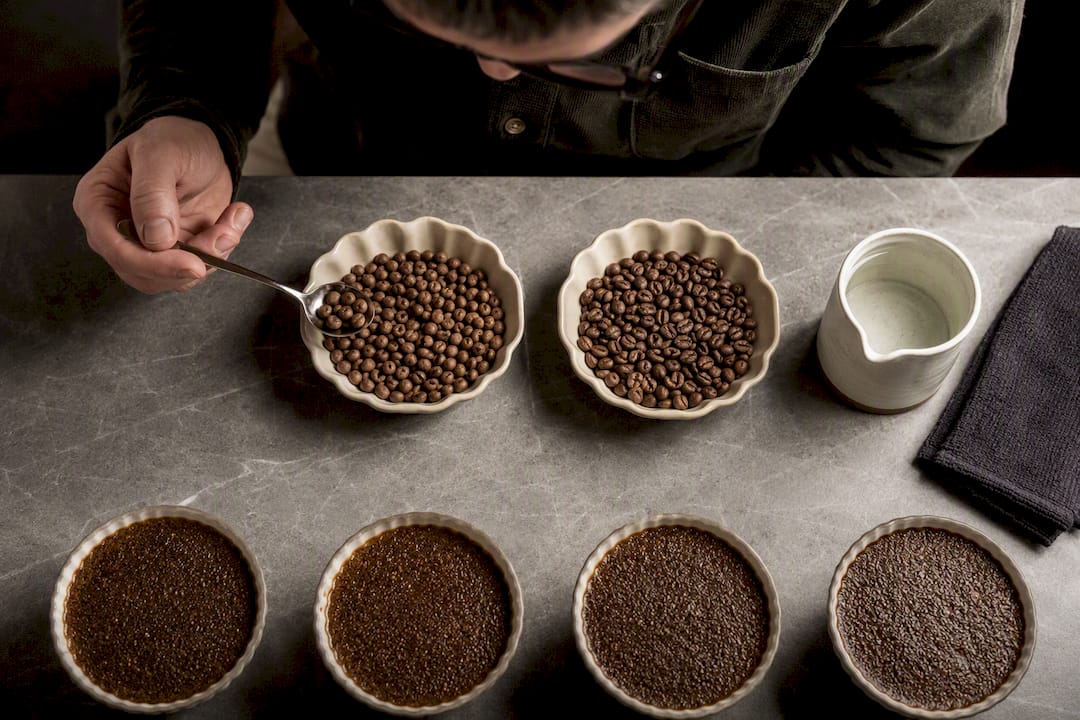
Here’s the part most marketing skips: controlled comparisons don’t consistently back up the idea that peaberries beat flat beans from the same crop. Blind cuppings that pit peaberry lots against flat-bean lots from the identical farm and harvest tend to produce mixed, inconsistent results, not a clean win for the peaberry side. That lines up with how Serious Eats frames the whole debate: peaberry is different, not definitively better.
The number that matters here isn’t a taste score. It’s the 5 to 10 percent occurrence rate mentioned earlier — since peaberries are rare within any single harvest, the flavor you’re really tasting is usually the farm and processing quality, with peaberry shape riding along as a bonus, not the source of the flavor itself.
Want to test this yourself? Buy a flat-bean and a peaberry lot from the exact same farm and harvest, roast or ask your roaster to roast them to matching levels, and cup them side by side. That’s the only fair comparison, and it’s more revealing than any tasting note on a bag.
How Roasting Changes for Peaberry Batches
Round beans behave differently in a roaster than flat ones, which is the main technical reason peaberries almost never get roasted alongside standard lots. The shape changes how heat moves through the bean, and the density difference means peaberries often hit first crack at a slightly different point in the roast curve than flats from the same farm.
Roasters who work with peaberry lots generally follow a similar sequence:
- Batch it separately. Mixing peaberries with flats risks under-roasting the flats or scorching the rounds, since they don’t heat at the same rate.
- Watch for an earlier or subtler first crack. The denser structure changes the internal heat gradient, so the audible crack can arrive sooner or quieter than expected.
- Adjust airflow and charge temperature rather than copying a flat-bean roast curve exactly.
- Cup a sample roast before committing the full batch, since peaberry behavior can vary even between two harvests from the same farm.
Pro Tip: If you’re buying from a roaster, ask directly whether the peaberry lot was roasted in its own batch. A roaster who can answer specifics about the crack timing or curve adjustments is telling you something real about how seriously they treat the lot, versus one who just repeats “peaberry” as a marketing term.
How to Brew Peaberry Coffee for the Best Cup
Peaberry’s dense, uniform shape is genuinely useful at the grinder. Because the beans are consistent in size, they tend to grind more evenly than a mixed batch of flats and broken pieces, which gives you more predictable extraction regardless of method.
Four brewing methods bring out different sides of a peaberry lot:
- Pour-over for clarity. This is the method that shows off the brighter acidity and cleaner cup peaberry fans talk about most.
- Espresso for concentrated sweetness. Peaberry’s density holds up well under pressure, and the round shape tends to pack a puck a little differently than flats, so expect to fine-tune your grind.
- AeroPress for quick experimentation, since it’s forgiving if your first attempt runs a little off.
- French press if you want fuller body, though this method mutes some of the brighter notes a pour-over reveals.
A simple dial-in checklist works across all four:
- Start with your usual grind setting, then check for even particle size. Peaberry’s density sometimes needs a slightly finer grind than flats to hit the same extraction time.
- For pour-over, bloom for 30 to 45 seconds before your main pour, and keep the pour tempo steady rather than rushed.
- For espresso, start with your standard ratio and refine from there; if the shot tastes sour or thin, tighten the grind slightly.
- Watch your yield and time window closely on the first few brews. Because peaberry grinds so evenly, small changes in grind size show up faster in the cup than they would with a mixed batch.
Lighter roasts tend to preserve the bright, fruit-forward notes Tanzanian peaberry is known for, while darker roasts trade some of that acidity for body and sweetness. Pick your roast level based on what you actually want in the cup, not just what the label suggests.
How Espritkaffe Approaches Sourcing and Roasting Peaberry Lots
Coffee roasting by origin, roast level, and lot, treating each batch as its own decision rather than folding it into a generic blend, is an approach that matters even more with peaberry, where roast curve and batch separation directly shape what ends up in the cup.
A peaberry lot isn’t a shortcut to a better cup. It’s a different bean that rewards the same care every good lot deserves: knowing its harvest, roasting it on its own terms, and tasting before you commit to a full batch.
Espritkaffe’s own breakdown of how coffee cherries become beans covers the same cultivar and processing distinctions that explain why peaberry forms in the first place, and its brewing and tasting notes reflect the same hands-on approach applied here: roast level and origin drive flavor more reliably than shape alone.
Do Peaberry Beans Actually Score Higher in Cupping?
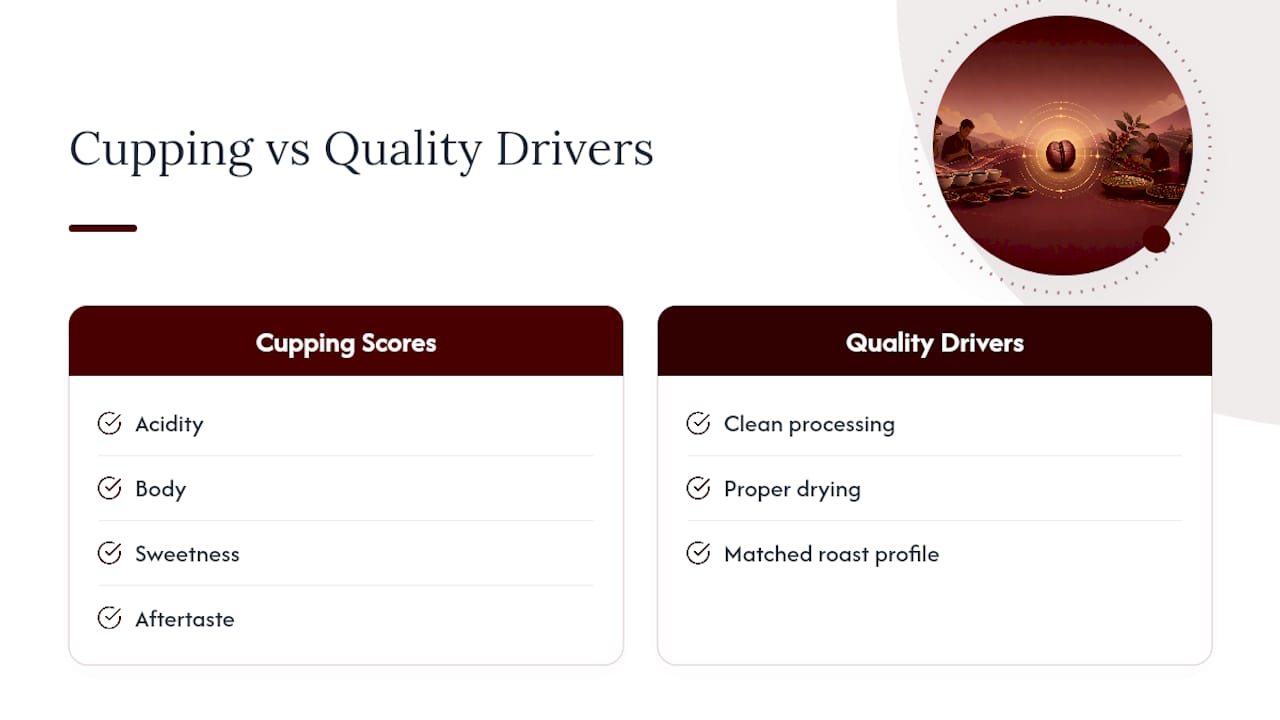
Not consistently, and the evidence doesn’t support treating peaberry as an automatic quality upgrade. Cupping protocols score coffee on acidity, body, sweetness, aftertaste, and balance, and none of those categories reward bean shape directly. What they reward is clean processing, proper drying, and a roast that matches the bean’s density and moisture content.
Blind cuppings that compare peaberry and flat-bean lots harvested from the same farm and crop year tend to produce mixed results rather than a clear win for the round beans. Some tasters pick up a brighter, cleaner cup in the peaberry sample. Others find no meaningful difference, or even prefer the flat-bean lot. That inconsistency is the strongest argument against treating “peaberry” as a quality grade on its own.
What actually correlates with a higher cupping score is the same thing that predicts quality in any coffee: careful cherry selection, controlled fermentation or drying, and a roast profile suited to the bean. A high-scoring peaberry lot usually comes from a farm that was already producing excellent flat-bean coffee, and the peaberry happens to reflect that same quality because it grew in the same soil, got picked at the same ripeness, and went through the same processing.
That’s worth remembering the next time a bag advertises “rare peaberry” as its main selling point. Rarity affects price. It doesn’t automatically affect the score a trained cupper would give it, and pretending otherwise oversells a bean shape that’s really just a byproduct of biology.
Does Peaberry Coffee Have More Caffeine Than Regular Beans?
Some evidence points that way, though the research is limited. A sample-level analysis published through Jefferson Digital Commons found higher average caffeine concentrations in tested peaberry extracts compared with regular bean samples. That’s a real, sourced finding, but it comes from limited sample testing rather than a large-scale comparative study, so treat it as a documented signal rather than a settled fact about every peaberry lot on the market.
The logical explanation tracks with how peaberries form. A single seed inside the cherry doesn’t split nutrients and caffeine-producing compounds with a second seed, so it’s plausible that a peaberry ends up carrying more concentrated caffeine per bean than a comparable flat bean from the same cherry. Antioxidant activity in the same research stayed high across samples regardless of brewing method, suggesting the caffeine difference is more about seed development than anything happening in your brewer.
Practically, this shouldn’t change how you dose a cup by much. Coffee’s caffeine content varies more by roast level, bean origin, and brew method than by shape alone. If you’re sensitive to caffeine, treat a peaberry lot the same way you’d treat any new bean: start with your usual dose, pay attention to how it hits you, and adjust from there rather than assuming a fixed percentage increase.
How to Store Peaberry Coffee to Keep Its Flavor Intact
Peaberry’s density actually works in its favor here. Because the bean is more tightly packed than a flat bean, it tends to lose aromatic compounds a little more slowly once it’s roasted, though that advantage disappears fast if storage conditions are careless.
The basics still apply, and they matter more with a lot you’ve likely paid a premium for:
- Store beans in an airtight, opaque container. Light and oxygen degrade the fruity, brighter notes peaberry lots are known for faster than they degrade a heavier, darker roast.
- Keep beans away from heat sources and direct sunlight. A cabinet away from the stove beats a countertop jar every time.
- Buy in smaller quantities you’ll use within two to three weeks of the roast date, rather than stockpiling a large bag that sits half-finished for a month.
- Skip the freezer for your everyday supply. Repeated temperature swings from freezer to counter introduce moisture that dulls flavor faster than proper airtight storage at room temperature.
- Grind only what you need right before brewing. Peaberry’s even shape makes for a consistent grind, but that consistency doesn’t help if the beans have already gone stale.
Given how much labor goes into isolating a peaberry lot in the first place, sloppy storage undoes a meaningful part of what you paid for. Treat it the way you’d treat any small-batch specialty coffee: buy fresh, store tight, and use it within its window.
Common Myths About Peaberry Coffee, Debunked
The biggest misconception is that “peaberry” functions as a quality grade, similar to how a coffee might be labeled Grade AA or Specialty. It doesn’t. Peaberry describes a bean’s shape, not its cupping score, its processing method, or its farm quality. A poorly processed peaberry lot can taste worse than a well-processed flat-bean lot from the same region.
A second myth: that peaberry is a rare varietal grown on special trees. It isn’t a varietal at all. Any coffee plant, from any origin, can produce peaberries, and most farms end up with a small peaberry yield mixed into every harvest whether they market it separately or not. Tanzania and Kona built visible markets around their peaberry lots because they have the sorting infrastructure and brand recognition to charge for the extra labor, not because their trees produce more peaberries than anyone else’s.
A third myth worth correcting: that peaberry always tastes brighter or fruitier. That reputation comes mostly from Tanzanian peaberry specifically, where the region’s volcanic soil and processing style produce that wine-like fruit character in both peaberry and flat-bean lots. A peaberry from a different origin, roasted a different way, can land anywhere on the flavor spectrum, including flat and unremarkable if the underlying coffee wasn’t great to begin with.
Last one: that peaberry justifies any price tag. Scarcity and labor cost drive the premium, not a guaranteed jump in cup quality. A transparent roaster will tell you exactly why a peaberry lot costs more, rather than letting the word do the selling for them.
The Honest Take on Whether Peaberry Is Worth Buying
The peaberry conversation has a marketing problem: the story is more interesting than the science. A round bean is genuinely fun to hold, easy to explain, and easy to sell as something rare. None of that makes it definitively better in the cup, and the blind cupping data backs that up.
Here’s where I’d push back on the conventional wisdom. Most guides treat peaberry as a flavor category you’re either buying into or skipping. That’s the wrong frame. Peaberry is a shape category that happens to correlate with good farms investing in good sorting, which is a real but indirect signal of quality. Buy peaberry because you trust the farm and the roaster behind it, not because the word itself promises a better cup.
If you’re prioritizing anything here, prioritize origin and roast date over the peaberry label. A fresh, well-roasted flat-bean lot from a serious farm will beat a stale, mediocre peaberry lot every time. The shape is the least interesting thing about a genuinely excellent coffee.
— Jett
Where to Try Peaberry Coffee Without Overpaying for the Label
Coffee roasting by origin, roast level, and lot rather than folding everything into a generic house blend is an approach a peaberry bean rewards. That means when a peaberry lot is available, it gets the separate-batch treatment described here, not a shortcut roast tossed in with standard stock.

Start with the coffee collection to see current single-origin and small-lot offerings by roast level, from light to dark. If you want ongoing access to whatever’s rotating through the roastery, including limited peaberry lots when they’re available, the Members Club subscription is built for exactly that kind of recurring discovery instead of a one-time guess. Coffee at Espritkaffe starts at $15, and the full storefront also carries merch starting at $19.99 if you want to gear up while your order roasts. Pick a bag, check the roast date, and order what actually matches the cup you’re chasing.
Sources
- Peaberry — Wikipedia
- Sample analysis — Jefferson Digital Commons
- What Is Peaberry Coffee and Is It Worth the Premium? — Coffee Studies
- What Makes Peaberry Coffee So Special? — Serious Eats
FAQ
What Is So Special About Peaberry Coffee?
Peaberry forms when a coffee cherry grows a single round seed instead of the usual two flat ones, making it rarer and denser than standard beans. That rarity, not a guaranteed flavor upgrade, is what makes it special to collectors and roasters.
Why Is Peaberry Coffee So Expensive?
The premium comes from low yield and extra hand-sorting or density-sorting labor needed to separate peaberries from flat beans, according to Coffee Studies. It reflects the cost of isolating the bean, not a certified jump in quality.
What Does Peaberry Coffee Taste Like?
Reported notes include brighter acidity, a cleaner cup, and lighter body, with Tanzanian peaberry specifically known for a concentrated, wine-like fruitiness. Blind cupping results are mixed, so origin and roast tend to matter more than the shape itself.
What Is Peaberry Kona Coffee?
Kona peaberry is a peaberry lot sorted from coffee grown in Hawaii’s Kona region, prized for the same smooth, low-acid character found in standard Kona coffee. It carries a premium price for the same reason Tanzania peaberry does: scarcity and the labor required to sort it out by hand.