

Anaerobic coffee is coffee that spends part of its fermentation locked in a sealed, oxygen-free tank instead of open air. That missing oxygen changes which microbes thrive and what they produce, which is why anaerobic lots often taste like tropical fruit candy, wine, or yogurt in ways washed coffee never will. The trade-off: this method can deliver some of the most dramatic flavor diversification in specialty coffee, but a mismanaged batch can also taste like a science experiment gone wrong.
TL;DR:
- Extending fermentation time to 48-72 hours in anaerobic processing significantly increases fruit and wine-like flavors in the coffee.
- Proper monitoring of pH, Brix, and microbial communities is crucial to avoid contamination and over-fermentation risks.
- Not all anaerobic coffees will showcase origin characteristics; aggressive processing can make different varietals taste increasingly similar.
- Resting anaerobic coffee for at least three to four weeks after roasting enhances clarity and preserves delicate aromatic compounds.
- Transparency about fermentation protocols and cupping notes is essential for selecting high-quality anaerobic lots.
Table of Contents
- What Is Anaerobic Coffee Processing, Exactly?
- The Microbiology Behind Anaerobic Coffee’s Flavor Shift
- The Main Anaerobic Protocols Producers Use
- What Anaerobic Coffee Tastes Like in the Cup
- How to Buy, Rest, and Brew Anaerobic Coffee at Home
- Risks, Consistency, and the Quality Signals Worth Trusting
- Why Espritkaffe Approaches Process-Driven Lots Carefully
- Try a Process-Driven Lot Without the Guesswork
- Sources
- FAQ
What Is Anaerobic Coffee Processing, Exactly?
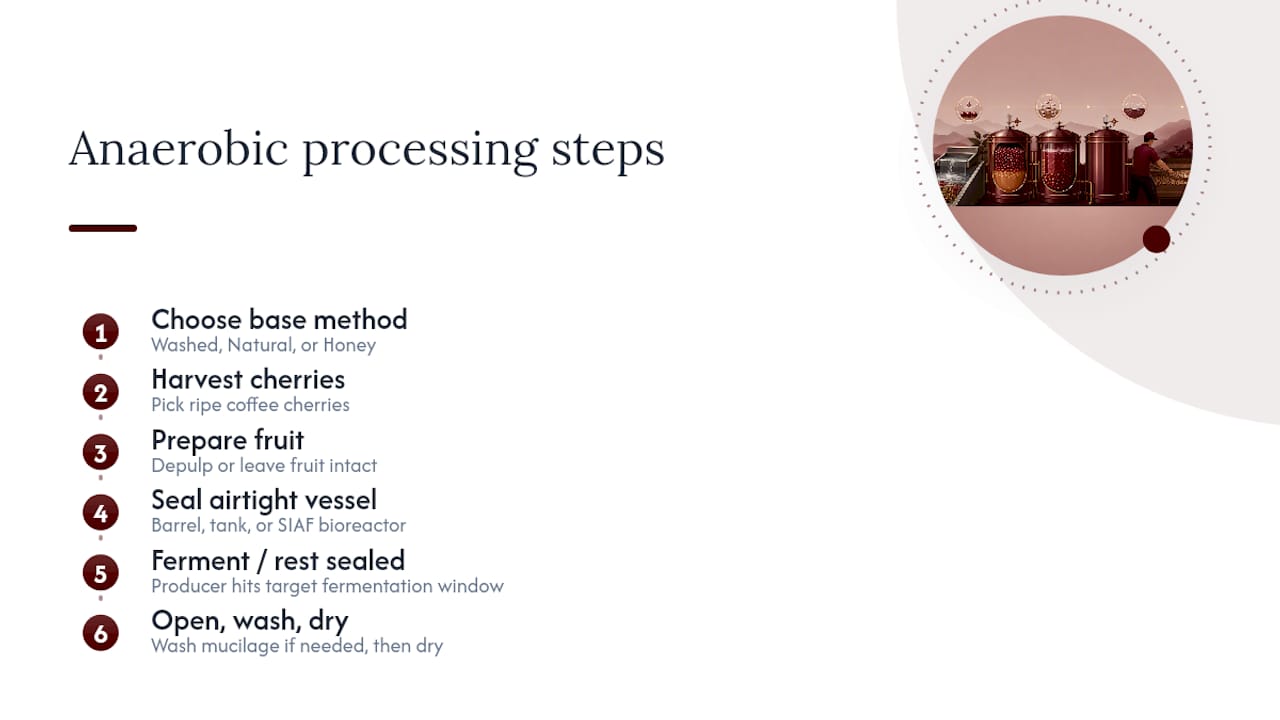
Anaerobic processing is not a fourth standalone method alongside washed, natural, and honey. It’s a modifier you bolt onto one of those three. A producer picks cherries, decides whether to depulp them or leave the fruit intact, then seals that coffee in an airtight vessel before fermentation, drying, or resting begins.
The equipment varies by farm size and budget. Small operations use food-grade barrels or sealed steel tanks fitted with a one-way CO2 valve that lets gas escape without letting oxygen back in. Larger or more research-driven farms use SIAF bioreactors, essentially heavy-duty plastic tanks designed for self-induced anaerobic fermentation, where the coffee’s own respiration burns off residual oxygen and builds internal CO2 pressure.
Once fermentation hits the target window, producers open the tank, wash off residual mucilage if needed, and move straight into drying. That is where the anaerobic chemistry gets locked into the bean for good, ready for the roaster to reveal it.
The Microbiology Behind Anaerobic Coffee’s Flavor Shift
Oxygen starvation doesn’t just slow things down. It rewires which organisms take over the ferment. Lactic acid bacteria and specific yeast strains tend to dominate anaerobic tanks, while some SIAF studies also detect Enterobacteriaceae activity, a detail that explains both the funkier flavor notes and the contamination risk producers have to manage.
Duration matters more than almost any other variable. Research on SIAF fermentation found that extending the anaerobic phase to 48 to 72 hours increases production of esters like ethyl acetate and amyl acetate, along with higher alcohol content, while lactic and acetic acid become the dominant organic acids. Those compounds survive roasting and show up directly in the cup as fruit, wine, and creamy acidity.
A separate 2025 study on fermentation time confirmed that duration is the single most influential variable in the process, more than temperature or inoculation choice, and that oxygen availability itself reshapes the entire microbial community.
Tank geometry adds another wrinkle. In static tanks, cherries at the bottom, middle, and top ferment differently because sugar consumption and metabolite buildup vary by layer. Producers who skip agitation risk an inconsistent lot even from a single batch.
Documented risks worth knowing:
- Toxigenic fungi have been identified during some SIAF trials, particularly in poorly monitored tanks.
- Enterobacteriaceae presence can signal an unstable ferment rather than a controlled one.
- Washing cherries before sealing them can accelerate fermentation and shorten the ideal window, catching producers off guard if they don’t adjust timing.
Pro Tip: A lot that smells sharply of vinegar or nail polish remover rather than ripe fruit has likely over-fermented. That’s a defect, not a flavor.
The Main Anaerobic Protocols Producers Use
Not all anaerobic coffee follows the same recipe. Four approaches dominate the specialty market right now.
- SIAF (self-induced anaerobic fermentation). Cherries or beans sit in a sealed tank where their own respiration depletes oxygen naturally, no added gas required. It’s cheap to set up, which is why it’s the most studied protocol in peer-reviewed research.
- Carbonic maceration. Borrowed directly from winemaking, whole cherries ferment intact under CO2 pressure, intensifying fruit-forward, almost effervescent qualities in the final cup.
- Depulped anaerobic. The skin and fruit come off before sealing, which produces a cleaner, less wild profile than whole-cherry approaches while still capturing lactic complexity.
- Inoculated versus wild ferments. Some producers add specific yeast or bacterial cultures to steer flavor outcomes predictably; others let wild microbes run the show and accept more variation lot to lot.
Most serious producers now cup across multiple fermentation durations on the same harvest, tasting the 24 hour, 48 hour, and 72 hour versions side by side before deciding which batch actually goes to market.
What Anaerobic Coffee Tastes Like in the Cup
Expect intensity first, subtlety second. Anaerobic lots commonly show tropical fruit notes like mango, pineapple, or passionfruit, along with an estery, almost candy-like sweetness, a lactic creaminess that reads as yogurt or milk chocolate, and a syrupy, wine-like body that washed coffee rarely reaches.

Roast level changes how much of that survives. Light roasts preserve the volatile esters responsible for the fruitiest, most floral notes. Push into medium-dark or dark roast territory and those delicate compounds get overwhelmed by caramelization, replaced by toasted, roast-driven flavors that flatten the anaerobic signature.
There’s also a real question of whether anaerobic processing showcases a coffee’s origin or buries it. A well-executed ferment amplifies what a varietal and terroir already offer. An aggressive one can mask origin character entirely, making an Ethiopian lot taste indistinguishable from a Colombian one. If every anaerobic coffee you’ve tried tastes vaguely the same regardless of where it’s from, that’s the tell.
Pro Tip: If a cup tastes boozy in an unpleasant way, more like rubbing alcohol than wine, that’s usually a sign of an over-extended or poorly controlled ferment, not an intentional flavor choice.
How to Buy, Rest, and Brew Anaerobic Coffee at Home
Getting a good anaerobic lot home is only half the job. Here’s how to handle it from purchase to cup.
- Check the bag for transparency. Look for fermentation duration, whether it’s SIAF or carbonic maceration, and actual cupping notes, not just the word “anaerobic” slapped on as a marketing term.
- Rest it longer than you think you need to. Roaster guidance consistently recommends three to four weeks of rest after roasting for anaerobic lots, since they tend to hold more residual CO2 than washed coffee and taste muddled if brewed too fresh.
- Brew with a filter or immersion method. Both preserve the clarity of volatile esters better than pressure-based methods like espresso, where intensity can tip into muddiness.
- Adjust your ratio and agitation. A slightly coarser grind and gentler pour reduce over-extraction, which shows up fast in these already-intense coffees. Water around 200°F is a reasonable starting point; adjust down slightly if the cup tastes bitter or hollow.
Pro Tip: Cup the same anaerobic bag at two different rest points, one week and three weeks post-roast, and taste the difference yourself. It’s the fastest way to understand why patience matters here.
Risks, Consistency, and the Quality Signals Worth Trusting
Anaerobic coffee has a real quality-control problem that the marketing rarely mentions. The same sealed environment that builds interesting esters can also harbor the fungi and bacteria that ruin a batch, and multiple studies flag this as a genuine concern rather than a rare edge case.
What separates a well-run anaerobic lot from a risky one:
- Producers who monitor pH and Brix levels throughout fermentation, rather than guessing by smell or time alone.
- Use of starter cultures to steer the microbial community toward lactic acid bacteria instead of leaving it to chance.
- Cupping across multiple fermentation durations before selecting the final export lot.
- Published lab testing or third-party sensory scoring rather than vague marketing language.
Operational best practices like batch record keeping and consistent monitoring are widely recommended across the industry, even though exact numeric targets still vary by farm and remain under active study. A high price tag tells you almost nothing about whether a producer did this work. Transparency about the process does.
Why Espritkaffe Approaches Process-Driven Lots Carefully
Process-driven coffee excites me because it rewards curiosity, but it also punishes carelessness. At Espritkaffe, that means we don’t chase an anaerobic label just because it sells. When we bring in a fermented lot, we taste it across its rest window and communicate what we found, fermentation style included, so you’re not guessing at what’s in the bag.
I’d genuinely like to hear what you taste. Fermented coffee rewards a second and third cup as it settles, and your notes help sharpen how we talk about future lots.
— Jett
Try a Process-Driven Lot Without the Guesswork
Some roasters roast each lot based on that specific coffee’s needs rather than using a one-size-fits-all profile, which matters even more with fermentation-driven beans where timing and rest change the outcome. If you want to taste the difference anaerobic processing makes without buying a full bag blind, the Single Origin Favorites Sample Pack lets you compare process styles side by side.
Give any process-forward lot its recommended three to four weeks of rest before brewing; it changes everything about clarity in the cup. If you land on a profile you love, the Esprit Kaffe Members Club Subscription keeps curated, small-lot coffee arriving on a schedule so you’re not re-researching every bag from scratch. Start with the full coffee collection and pick your first lot today.
Sources
For the science, read the SIAF microbiology and metabolite study and the MDPI fermentation timing research. For context on risk and technique, see Imbibe Magazine’s explainer.
- Understanding the Effects of Self-Induced Anaerobic Fermentation on Coffee Beans Quality: Microbiological, Metabolic, and Sensory Studies
- Study: Effects of fermentation condition and time on coffee quality (MDPI)
- What Is Anaerobic Coffee? Processing, Flavor & Why It’s Trending | Cuppd
FAQ
What Is the Difference Between Aerobic and Anaerobic Coffee?
Aerobic, or conventional, processing lets cherries ferment in open air or open tanks where oxygen freely reaches the coffee. Anaerobic processing seals the coffee in an oxygen-free vessel, which shifts the microbial community toward lactic acid bacteria and yeast and produces noticeably more esters and fruit-forward flavor compounds, as SIAF research documents.
What Are the Benefits of Drinking Anaerobic Coffee?
The main benefit is flavor diversity you won’t get from washed or standard natural coffee, think tropical fruit, wine-like depth, and a creamy, lactic acidity. There’s no established health advantage over other processing methods; the appeal is entirely sensory and experiential.
What Is the Best Anaerobic Coffee to Try First?
Look for a roaster that publishes fermentation duration, protocol type, and cupping notes on the bag rather than just the word “anaerobic.” Espritkaffe’s process-driven lots are evaluated across multiple rest points before release, which is the kind of transparency worth prioritizing over brand hype.
What Is the Healthiest Form of Coffee to Drink?
No processing method, anaerobic included, has been shown to make coffee meaningfully healthier or less healthy than another. What matters more for most drinkers is choosing beans free of contaminants like mold or mycotoxins, and brewing without excess sugar or cream added.
How Long Should You Rest Anaerobic Coffee Before Brewing?
Most roaster guidance recommends three to four weeks of rest after roasting, longer than the one to two weeks typical for washed coffee. Anaerobic lots retain more residual CO2, and brewing too early often produces a muddled, less defined cup.