

Plain black coffee will not meaningfully break most intermittent fasts. It runs about 2 to 5 calories a cup, triggers no real insulin response in healthy people, and several small trials have found it does not shift fasting glucose or triglycerides. What actually breaks a fast is what you add to it: milk, sugar, cream, or a spoonful of butter turns your cup into a snack. Medical or pre-procedure fasts follow different, stricter rules entirely.
TL;DR:
- Drinking plain black coffee with 2 to 5 calories does not meaningfully break a fast or impact insulin sensitivity in most healthy individuals.
- Additives like milk, sugar, cream, or butter turn coffee into a snack and will end a caloric fast or hinder autophagy and insulin benefits.
- Caffeine’s appetite-suppressing and fat-burning effects are well-supported, but its influence on autophagy remains mostly unproven in humans during fasting.
- People with diabetes or metabolic risks should monitor caffeine’s effects, as it can temporarily reduce insulin sensitivity in some individuals.
- For optimal fasting maintenance, stick to black coffee or unsweetened decaf, and avoid flavorings or high-calorie add-ins that can break your fast.
Table of Contents
- Does Plain Black Coffee Break a Fast? Definitions and Evidence
- How Coffee Affects Fasting Benefits: Appetite, Fat Burning, and Autophagy
- What Can You Put in Coffee During a Fast?
- Timing, Amounts, and Avoiding Coffee’s Side Effects While Fasting
- When Should You Avoid Coffee During a Fast?
- Espritkaffe’s Take on Coffee as a Fasting Ritual
- Find Your Fasting-Friendly Coffee With Espritkaffe
- Sources
- FAQ
Does Plain Black Coffee Break a Fast? Definitions and Evidence
“Breaking a fast” means different things depending on why you’re fasting. If your goal is weight management through time-restricted eating, the relevant threshold is calories: staying under roughly 50 calories generally keeps your fasting window intact. If your goal is insulin sensitivity, the question becomes whether a food or drink spikes insulin. And if you’re fasting for gut rest before a procedure, the standard is stricter still: nothing but water, sometimes not even that.
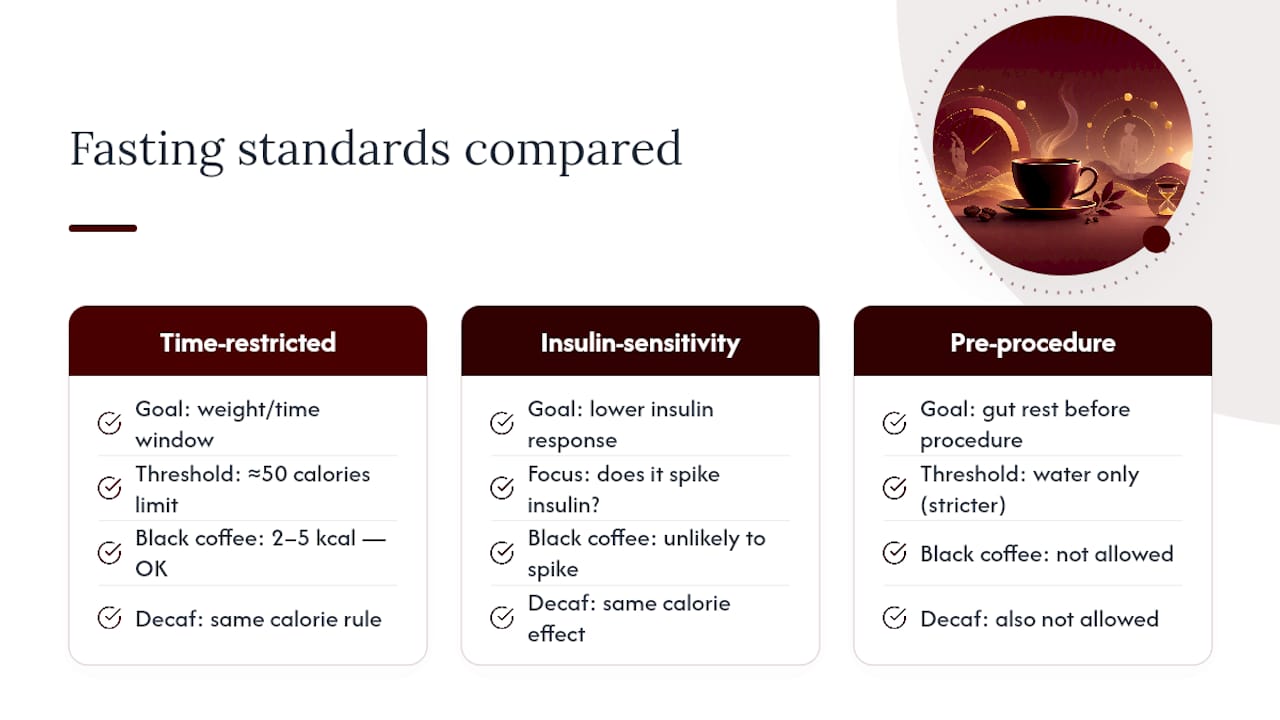
Black coffee clears the first two bars easily. According to USDA FoodData Central, an 8-ounce cup of brewed black coffee contains roughly 2 to 5 calories, with no meaningful carbs, protein, or fat to trigger digestion.
By the numbers: A cup of black coffee has fewer calories than a stick of sugar-free gum, yet many fasters worry it will “count” the same as breakfast.
A small randomized crossover trial found that participants who drank 8 ounces of black coffee before a fat tolerance test showed no significant change in fasting triglycerides or glucose compared to those who drank water. The sample size was small, so treat it as an encouraging early signal, not a settled verdict. Healthline’s review of the evidence reaches a similar conclusion: moderate black coffee is unlikely to undo the metabolic benefits people fast for.
Decaf behaves the same way calorie-wise since the decaffeination process doesn’t add calories, carbs, or protein. The only difference is the caffeine, which matters more for the benefits discussed next than for whether your fast technically stays intact.
How Coffee Affects Fasting Benefits: Appetite, Fat Burning, and Autophagy
Coffee doesn’t just fail to break your fast. It can actively support some of the reasons you’re fasting in the first place, though the evidence is stronger for some benefits than others.
- Appetite suppression: Caffeine measurably blunts perceived hunger for many people, which is often the single biggest reason fasters reach for a cup around hour 12 or 14.
- Fat oxidation: Caffeine stimulates lipolysis, the breakdown of stored fat, and produces a modest thermogenic bump in metabolic rate, according to research on caffeine’s metabolic effects.
- Ketone production: Because fat breakdown feeds ketone synthesis, coffee’s lipolytic effect may modestly support the ketosis some fasters chase, though direct human data on this exact pathway during fasting windows are thin.
- Autophagy: This is the weakest evidence link in the chain. Most autophagy research tying coffee compounds to cellular cleanup comes from animal or cell studies, not controlled human trials during fasting.
Statistic to know: the lipolysis and mild metabolic rate increase tied to caffeine is one of the better-documented effects in this list, while human autophagy data during real-world fasting remains largely unmeasured.
There’s a caveat worth taking seriously if you have diabetes or elevated cardiometabolic risk. Caffeine can transiently reduce insulin sensitivity in some people, according to research published on PubMed. That doesn’t mean coffee is off the table, but it does mean people managing blood sugar closely should watch how their body responds rather than assuming coffee is automatically neutral for them.
What Can You Put in Coffee During a Fast?
The additive is what actually decides whether you’ve broken your fast, not the coffee itself. Here’s a rough hierarchy from safest to fast-ending:
- Black drip coffee, Americano, or plain cold brew. Zero meaningful calories, no insulin response, fully fasting-compatible.
- Unsweetened decaf. Same calorie profile as regular black coffee, just without the caffeine kick.
- A splash (not a pour) of unsweetened almond milk. This sits in a gray zone. A teaspoon or two adds negligible calories, but people chasing strict autophagy or insulin benefits often skip it anyway.
- A small amount of heavy cream. Also gray-zone territory, and more calorie-dense than almond milk. Registered dietitians describe this kind of small-calorie add-in as “dirty fasting,” which can technically end a strict fast even if the calorie count feels trivial.
- Milk, sugar, flavored syrups, or bulletproof coffee with MCT oil and butter. These end a caloric fast outright. Sugar spikes insulin, milk brings protein and carbs, and MCT/butter combinations can add 100 to 200 calories or more.
If you’re ordering out or grabbing something packaged, check the nutrition label for anything beyond trace calories, and be skeptical of “skinny” or “protein” coffee drinks marketed as fasting-friendly. They usually aren’t.
Timing, Amounts, and Avoiding Coffee’s Side Effects While Fasting
Most healthy adults do fine with a few cups of black coffee a day during a fasting window. Beyond that, you start running into diminishing returns and real downsides: jitteriness, elevated cortisol, acid reflux on an empty stomach, and disrupted sleep if you drink it too late.
- Consider waiting until mid-morning for your first cup if you notice jitters. Cortisol naturally peaks shortly after waking, and stacking caffeine on top of that peak can amplify anxious or wired feelings for sensitive people.
- Cut off caffeine by early afternoon. Caffeine’s half-life runs several hours, and a 2 p.m. cup can still be affecting your sleep at 10 p.m.
- If coffee irritates your stomach while fasting, a low-acid roast or a switch to decaf black coffee keeps the ritual without the burn.
- Drink water alongside your coffee. Coffee has a mild diuretic effect, and dehydration makes fasting headaches and fatigue worse, not better.
Pro Tip: Treat your coffee break as a genuine pause, not a fill-in-the-gap task. A few minutes of quiet with your cup tends to do more for fasting adherence than the caffeine itself, because it gives your brain a real signal that this is a deliberate ritual, not a hunger workaround.
When Should You Avoid Coffee During a Fast?
Casual intermittent fasting and clinical fasting are not the same thing, and mixing up their rules can cause real problems. If a doctor has told you to fast before blood work, imaging, or surgery, follow that instruction exactly, even if it seems stricter than what you’d normally allow for weight management.
Clinical advisories on pre-procedure fasting note that coffee may be explicitly disallowed before certain tests or surgeries, even though it’s generally fine for everyday intermittent fasting, according to guidance reviewed by physicians.
The small trial mentioned earlier, which found no change in fasting triglycerides or glucose after black coffee, involved a limited number of participants and shouldn’t be read as blanket clearance for every clinical context. If you have diabetes, a cardiac condition, or significant gastrointestinal disease, check with your clinician before treating coffee as automatically safe during any prescribed fast.
Espritkaffe’s Take on Coffee as a Fasting Ritual
Fasting works better when it feels intentional instead of like deprivation. That’s where a mindful coffee ritual earns its place: a genuinely good black brew gives you something to look forward to without asking anything of your fasting window. Espritkaffe leans toward low-acid roasts and clean black-brew options for exactly this reason. Pair it with an intentional pause instead of rushing it, and the ritual does more work than the caffeine alone.
— Jett
Find Your Fasting-Friendly Coffee With Espritkaffe
Some coffee roasters focus on personalized coffee roasting, which can matter when you’re building a fasting routine around one specific cup instead of a generic blend.
If you want to figure out which roast sits the easiest on an empty stomach, the Single Origin Favorites Sample Pack lets you test a few low-acid, black-brew-friendly options before committing to a bag. For fasters who want this dialed in permanently, the Esprit Kaffe Members Club Subscription delivers a curated rotation so you’re never stuck with a roast that fights your stomach at hour 14. Coffee starts at $15.00 on the main shop page, where you can browse by roast, origin, or blend. Pick a roast, brew it black, and build your fasting ritual around it.
This article is general information, not a substitute for advice from a qualified doctor. Consult a qualified healthcare professional about your own circumstances before acting on anything here.
Sources
- Can You Combine Intermittent Fasting and Coffee? | Healthline
- Prevention: Can you drink coffee while fasting?
- Preliminary randomized crossover trial assessing coffee before metabolic testing (PMC7258390)
FAQ
What Can I Put in Coffee That Won’t Break My Fast?
Plain black coffee, an Americano, or unsweetened cold brew won’t meaningfully break a fast since they carry only about 2 to 5 calories per 8-ounce cup. Avoid milk, sugar, syrups, and butter or MCT additions, since those bring enough calories and carbs to end a caloric fast.
Why Is 16 Hours Often Cited as a Key Fasting Window?
Sixteen hours is a common target in time-restricted eating because it’s long enough for insulin levels to drop and stored fat to become the body’s primary fuel source for many people. There’s nothing magic about the exact number. Shorter or longer windows can work depending on your goals and how your body responds.
Will Coffee Break Intermittent Fasting?
Plain black coffee, hot or cold, generally will not break an intermittent fast for weight loss or time-restricted eating goals. Adding milk, cream, sugar, or MCT oil turns it into a caloric drink that can end a strict fast, and registered dietitians point to this exact mix-up as a common source of confusion.
What Is “Dirty Fasting”?
Dirty fasting refers to allowing small amounts of calories, like a splash of cream in coffee, during what’s meant to be a strict fast. It can still support weight-loss goals for some people, but it interrupts the zero-calorie state needed for full cellular fasting benefits, according to dietitian guidance on the practice.
Does Espritkaffe Offer Coffee Suited to Fasting?
Espritkaffe sells black-brew-friendly roasts, including low-acid options, chosen by roast, origin, or blend starting at $15.00 on the Espritkaffe shop. The Single Origin Favorites Sample Pack is a practical way to test which roast works best for your fasting routine before committing to a full bag.