

Honey-processed coffee is coffee where the cherry skin gets stripped off but a layer of sticky, sugar-rich mucilage stays on the bean while it dries in the sun. No actual honey touches the beans. What you get in the cup is sweeter, rounder, and fuller-bodied than a washed coffee, with acidity that usually feels more integrated instead of sharp.
TL;DR:
- Honey processing retains more mucilage than washed methods, which increases the risk of uneven fermentation and mold if drying is not carefully managed.
- The color grades—white, yellow, red, and black—indicate mucilage amounts, with darker grades offering more sweetness but requiring longer, more precise drying.
- Honey-processed coffee tends to be heavier, smoother, and more caramel or fruit-forward in flavor, with a low-acid, rounded finish.
- Proper roasting of honey lots involves gentler heat, controlled development, and often shorter brew yields to avoid scorching the sugar-rich exterior.
- Water savings are significant, as honey processing skips extensive rinsing, but it demands disciplined drying and moisture monitoring to prevent spoilage.
Table of Contents
- How Is Honey Processed Coffee Made on the Farm?
- Honey Color Grades Explained: White, Yellow, Red, and Black
- What Does Honey Processed Coffee Actually Taste Like?
- How Should You Roast and Brew Honey Process Coffee?
- Does Honey Processing Actually Save Water?
- What Should You Look for When Buying Honey Processed Coffee?
- Why Esprit Kaffe Pays Close Attention to Processing Detail
- When a Honey Lot Actually Earns Its Spot in Your Rotation
- Try a Honey-Processed Lot From Espritkaffe
- Sources
How Is Honey Processed Coffee Made on the Farm?
Honey processing starts the moment the cherries come off the tree. Farmers depulp them almost immediately, usually the same day, running the ripe cherries through a mechanical depulper that strips the outer skin without touching the layer of mucilage underneath. That mucilage, sometimes called the “sugar layer,” is where honey process gets its name from the Spanish term miel, and Costa Rican micro-mills are widely credited with turning it into a formal, repeatable processing method.
What happens next determines everything about the final cup. Here’s the general sequence a mill follows:
- Harvest and sort ripe, evenly colored cherries, since underripe fruit throws off sugar content and drying behavior.
- Depulp within hours using a mechanical depulper set to remove skin only, leaving mucilage intact on the parchment.
- Decide on mucilage retention, either leaving the full sugar layer or mechanically demucilaging a portion of it depending on the color grade the mill wants to hit.
- Spread on drying beds, typically raised African-style beds or concrete patios, in a thin, even layer.
- Turn regularly, sometimes every 30 to 60 minutes during peak sun, to prevent the sticky parchment from clumping and fermenting unevenly.
- Monitor moisture and airflow, watching for consistent drying across the batch rather than a fast average.
That turning schedule matters more than most home brewers realize. Sticky, mucilage-covered parchment loves to clump together on the bed, and a clump dries from the outside in, creating pockets of trapped moisture that can turn sour or moldy while the surface looks fine. Good mills track this with more than a glance and a guess, aiming for a final moisture content around 11 to 12% and watching water activity (aW), a measure of how much of that remaining moisture is actually available to feed mold and bacteria.
Honey Color Grades Explained: White, Yellow, Red, and Black
The color names you see on a bag, white, yellow, red, or black honey, describe how much mucilage was left on the bean and how long it stayed there during drying. This system was largely popularized by Costa Rican micro-mills, and it’s become the closest thing the specialty trade has to a shared vocabulary for honey lots.
It’s worth knowing upfront that these grades aren’t governed by any official body. Mills apply the labels somewhat differently, so a “red honey” from one farm might run closer to another farm’s “black.” Asking a producer or roaster for the actual mucilage percentage rather than trusting the color name alone gives you a much clearer picture of what’s in the bag.
Those percentage ranges reflect trade convention rather than a fixed formula, but the pattern holds across most origins:
- More mucilage means more risk. Black honey lots sit on the drying bed the longest, which widens the window for uneven fermentation or mold if a mill isn’t disciplined about turning and airflow.
- More mucilage usually means more sweetness. The sugar layer feeds directly into the bean during drying, so heavier grades tend to taste sweeter and heavier in the cup.
- Lighter grades behave more predictably. White and yellow honey dry faster and cup closer to washed coffee, which makes them a safer bet if you’re new to the category.
What Does Honey Processed Coffee Actually Taste Like?
Pull a cup of honey process coffee and the first thing you’ll likely notice is weight. It sits heavier on the tongue than a washed coffee, closer to syrup than tea, with sweetness that reads as brown sugar or caramelized fruit rather than the bright, juicy sweetness naturals often show. Honey lots tend to land somewhere between washed clarity and natural intensity, which is exactly the point of the method.
Common tasting notes you’ll run into across honey-processed lots:
- Brown sugar and toffee
- Stone fruit, especially peach or apricot
- Dried fruit, like raisin or fig
- Milk chocolate or cocoa
- A rounded, low-acid finish rather than a sharp snap
Origin and varietal push that profile around quite a bit. A Central American honey lot, say from Costa Rica or Honduras, often leans toward caramel and stone fruit with a silky body. Coffees from other growing regions using honey processing can swing more toward tropical fruit or a heavier, almost fermented richness depending on the varietal and how much mucilage the mill left on.
Pro Tip: Buy the same-origin coffee in washed, honey, and natural versions if you can find them, and cup all three side by side. The differences in body and sweetness become obvious within the first sip in a way that reading about them never quite captures.
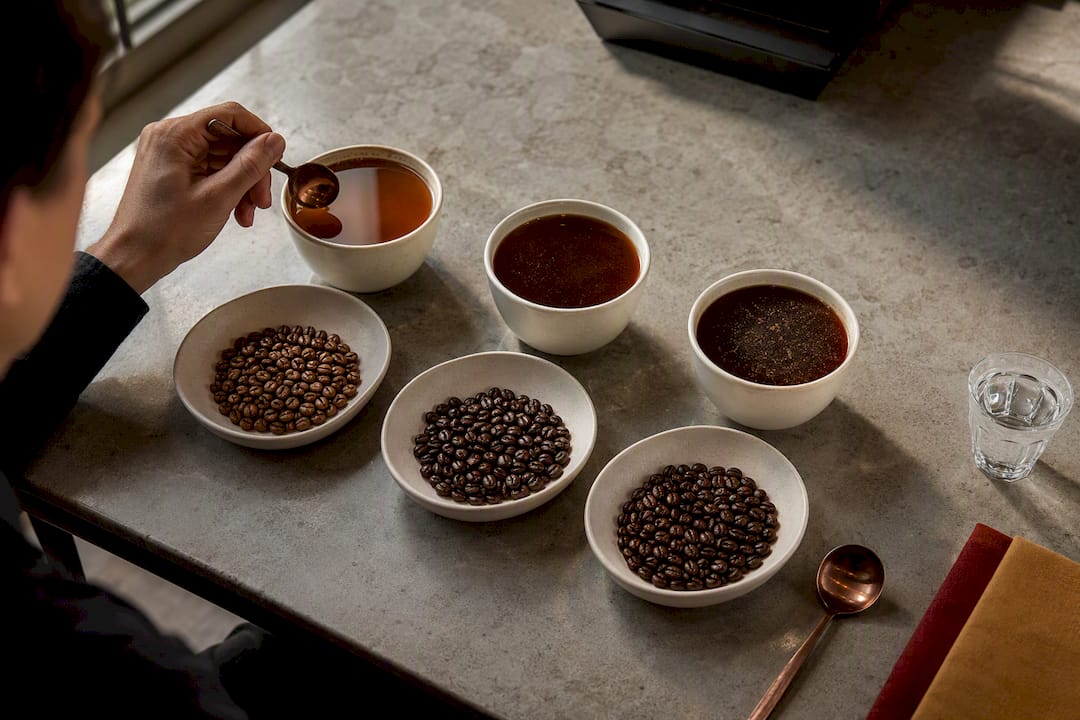
If you want a more structured way to run that comparison, a basic cupping approach gives you a framework for scoring sweetness, body, and acidity consistently instead of relying on memory alone.
How Should You Roast and Brew Honey Process Coffee?
Honey lots carry more sugar on the outside of the bean than washed coffee does, and that sugar caramelizes fast once you hit Maillard reactions. Roasters who push through that phase too aggressively often end up scorching the exterior before the interior of the bean catches up, which shows up as a flat, burnt-sugar edge in the cup.
A few adjustments tend to help:
- Ease off the heat rate through Maillard. Gentler development through this phase protects sweetness instead of caramelizing it into bitterness.
- Watch your charge temperature. A slightly lower charge than you’d use for a washed lot of the same density gives you more room to control the roast curve.
- Extend first crack to development ratio carefully. Rushing this stage on a honey lot tends to lock in char flavors rather than sweetness.
For home brewing, honey process coffee rewards methods that highlight body rather than fight it. Pour-over at a slightly coarser grind than you’d use for washed coffee keeps the syrupy texture from turning muddy, while immersion methods like a French press lean into that same fuller mouthfeel.
Pro Tip: If you’re pulling espresso, start with a slightly shorter yield than usual and a touch lower brew temperature. Honey lots can taste over-extracted and jammy at standard ratios, and dialing back gives the sweetness room to show without the fruit turning sour.
Does Honey Processing Actually Save Water?
Yes, and that’s a big part of why it exists in the first place. Fully washed processing requires large volumes of water for fermentation tanks and rinsing, while honey processing skips most of that step entirely by drying the mucilage onto the bean instead of washing it away. For farms in water-stressed regions, that difference matters more than flavor preference.
The trade-off shows up in labor and risk instead of water bills:
- Drying beds need constant attention, sometimes turning every 30 to 60 minutes during peak sun hours.
- Longer drying windows, especially for red and black grades, mean more days of exposure to weather swings and more chances for uneven fermentation.
- Mold risk climbs directly with mucilage retention, which is why moisture and water-activity monitoring isn’t optional for mills doing this well.
Honey processing tends to make the most sense for farms with reliable sun, disciplined labor for bed turning, and genuine water constraints. Skip the discipline part and you end up with a moldy, inconsistent lot no matter how good the water savings looked on paper.
What Should You Look for When Buying Honey Processed Coffee?
Start with the process line on the bag or spec sheet, not the tasting notes. A flavor descriptor like “honey” can describe a taste without the coffee ever having been honey processed, so the actual method label is what tells you the truth.
A few checks worth running before you commit to a full bag:
- Ask for the specific color grade (white, yellow, red, or black), not just the word “honey.”
- Look for moisture and water-activity figures if the roaster publishes them; it signals a mill that’s actually monitoring drying.
- Check whether the roaster gives brewing or roasting guidance specific to that lot, since generic advice often means the process details weren’t part of the sourcing conversation.
- Buy a small sample bag first and cup it against a washed coffee from a similar origin before committing to a full-size order.
- Treat vague or missing processing information as a red flag, especially on lots priced at a premium for “honey.”
Why Esprit Kaffe Pays Close Attention to Processing Detail
Jett covers processing and sensory topics for the Espritkaffe blog, including deeper looks at wet milling and how a cherry becomes a bean. That grounding in how mucilage, drying, and moisture control shape a cup is exactly what informs the roasting and buying guidance above. Espritkaffe roasts with that same attention to origin and process, treating each lot as a distinct decision rather than a generic label.
When a Honey Lot Actually Earns Its Spot in Your Rotation
Honey process coffee shines in dessert-forward brews and cold brew, where its body and sweetness carry through concentration instead of getting diluted. Rotate one in every few bags rather than every time, and always sample before committing to a full order.
— Jett
Try a Honey-Processed Lot From Espritkaffe
Espritkaffe sources and roasts honey-processed lots alongside its washed and natural offerings, with roast profiles built around each lot’s own sugar content and drying history rather than a one-size-fits-all curve. If you’re curious how that fuller body and rounded sweetness translate into a glass of cold brew, where concentration tends to amplify exactly the traits honey processing produces, the cold brew coffee lineup is a practical place to start.

For sustainability-minded drinkers weighing water use alongside flavor, it’s also worth exploring alternative approaches like mushroom coffee as part of a broader look at lower-impact options. But if you want the real thing, roasted with the process details intact, order a bag and taste what a properly dried honey lot brings to the cup.
Sources
- What is Honey Processed Coffee? | Sprudge
- The Honey Process: Roastopedia
- Honey Processed Coffee: A Guide | Green Coffee Collective
- Honey Process Coffee: A Buyer’s Guide for Roasters | Keffa