

Arabica and Robusta are the two species behind nearly every cup you’ll drink, and the choice comes down to what you want from the cup. Arabica (Coffea arabica) gives you sweeter, more complex, less bitter coffee, which is why it dominates specialty bags and pour-over setups. Robusta (Coffea canephora) brings more body, more crema, and roughly double the caffeine, which is why it shows up in espresso blends, instant coffee, and Vietnamese preparations. Blends and roast level can narrow that gap considerably.
TL;DR:
- Choosing Arabica over Robusta yields a sweeter, more aromatic cup suitable for filter coffee and single-origin brews, especially if light roasting highlights origin character.
- Robusta’s double caffeine content and greater resilience to pests make it ideal for espresso blends, instant coffee, and strong Vietnamese brews, especially with darker roasts.
- Light roasts reveal the chemical differences, with Arabica’s higher sugar and lipid content emphasizing sweetness and Robusta’s increased chlorogenic acids heightening bitterness.
- Robusta tends to be cheaper, more widely available, and better suited for low-altitude, high-temperature regions, while Arabica requires more careful cultivation and commands a premium.
- For taste comparisons, select light-roast Arabica and Robusta beans side by side, as dark roasts tend to mask their distinctive flavor profiles.
Table of Contents
- Arabica vs Robusta at a Glance
- Why Arabica and Robusta Taste So Different
- Caffeine Content: The Real Numbers
- How Growing Conditions Shape Price and Availability
- Matching the Bean to the Brew
- How to Choose Between Arabica and Robusta
- How Espritkaffe Thinks About Arabica and Robusta
- Try It Yourself: Where to Start
- Sources
Arabica vs Robusta at a Glance
Before getting into the chemistry, here’s the short version most people actually need when they’re standing in front of a shelf of bags.
- Taste: Arabica tends toward sweet, fruity, floral, or wine-like notes with mild acidity. Robusta skews earthier, heavier, and more bitter, sometimes described as woody or grain-like.
- Caffeine: Robusta carries roughly twice the caffeine of Arabica by dry weight, a real difference you’ll notice cup to cup.
- Growing: Arabica needs high altitude, cooler temperatures, and careful cultivation. Robusta grows at lower elevations, tolerates heat and pests, and yields more per plant.
- Common uses: Arabica shows up in single-origin bags and filter coffee. Robusta anchors traditional Italian espresso blends and dominates instant coffee production.
Arabica accounts for a majority share of U.S. coffee consumption, while Robusta is more prominent in Vietnam and in mass-market instant products worldwide. That split isn’t an accident. It reflects what each bean does best.
Why Arabica and Robusta Taste So Different
The flavor gap starts at the molecular level, not in the roaster. Arabica beans carry more sugar and more lipids than Robusta, and that higher sugar and lipid content is a big part of why Arabica tastes sweeter and more aromatic. Fat carries flavor compounds and smooths out the mouthfeel, and sugar gives roasters more raw material to work with during the Maillard reaction and caramelization, the two chemical processes that turn a green, grassy bean into something that smells like chocolate, caramel, or fruit.
Robusta runs the other direction chemically. It has meaningfully higher chlorogenic acid (CGA) content, and CGA is one of the main sources of bitterness and astringency in a finished cup. More CGA also means more antioxidant compounds, but on the palate it reads as a heavier, harsher edge, especially in a light roast where those acids haven’t been broken down yet.
Roasting is where the two beans can either converge or diverge further. A dark roast burns off more sugar and pushes both species toward smoky, bitter notes, which is part of why a heavily roasted blend can mask which bean you’re drinking, as explained in this guide to roast levels. A lighter roast preserves more of the original chemistry, so Arabica’s sweetness and origin character stay intact while Robusta’s rougher edges stay more exposed. Bean size and shape matter too: Robusta beans are typically smaller and rounder, and they roast at a slightly different rate than Arabica’s larger, oval beans, which is one reason blending the two requires attention to roast timing rather than just tossing them in the same drum.
Caffeine Content: The Real Numbers
Here’s the figure that surprises most people: Arabica runs roughly 1.2% to 1.7% caffeine by dry weight, while Robusta runs about 2.2% to 2.7%, close to double. That difference isn’t marketing. It’s biology. Robusta evolved at lower altitudes where insects and pests are more aggressive, and caffeine acts as a natural pesticide for the plant. Arabica grows at higher elevations with fewer pests, so it never needed to produce as much.
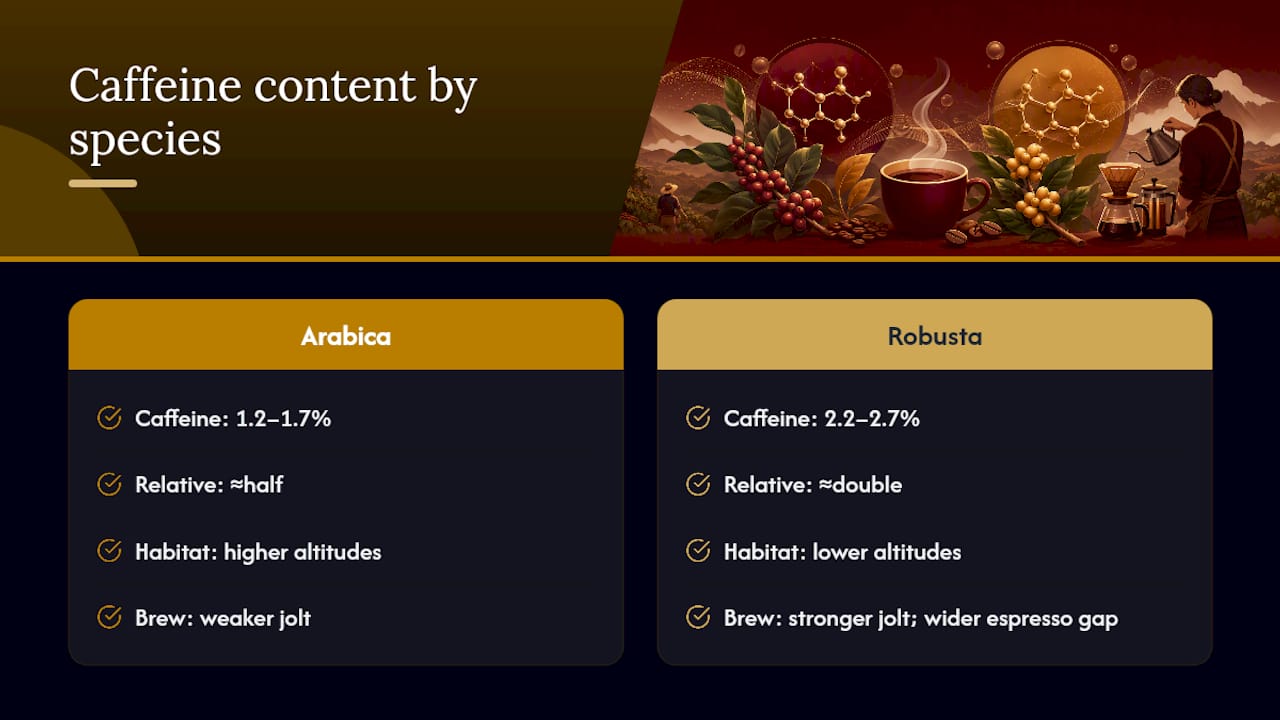
In your cup, that translates to a meaningfully stronger jolt from Robusta, even before you account for brew ratio. A standard 12-ounce cup made from Robusta grounds will typically carry more caffeine than the same cup made from Arabica, and that gap widens further in concentrated brews like espresso or Vietnamese-style coffee. Roast level has a smaller effect on caffeine than most people assume. If you’re watching your daily intake, checking the bag for species matters more than checking for “dark roast” versus “light roast.”
How Growing Conditions Shape Price and Availability
Arabica is the harder plant to farm, and that difficulty shows up on the price tag. Arabica prefers high altitude, cooler temperatures, and stable conditions, while it’s also notably susceptible to leaf rust, a fungal disease that can wipe out entire harvests. Robusta grows at lower elevations, tolerates heat, and resists leaf rust far better, which lets farmers plant it in a wider range of climates and get higher yields per hectare.
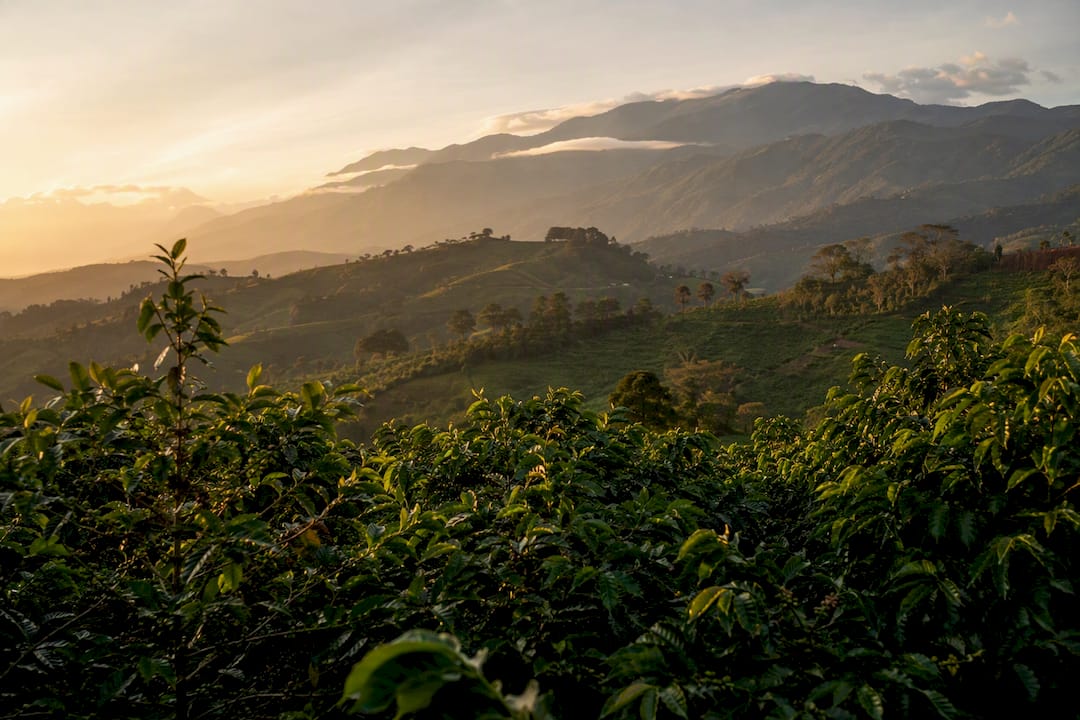
That combination of lower yield and higher disease risk is a major reason Arabica commands a premium on the commodity market. Major Arabica regions include Ethiopia, Colombia, and parts of Central America, where altitude and climate line up. Robusta production concentrates heavily in Vietnam and Indonesia. When you see a cheaper bag of “coffee” with no species listed, it’s very often Robusta, or a Robusta-heavy blend, doing the heavy lifting on cost.
Matching the Bean to the Brew
Espresso is where Robusta earns its keep. Its lower fat and higher solubility help build a thicker, more persistent crema, and many traditional Italian espresso blends include a moderate proportion of Robusta to enhance body and caffeine. specifically for that body and caffeine boost. Straight Arabica espresso can taste thinner and less stable in the cup without that support.
Filter coffee and pour-over flip the priority.
- Robusta dominates instant coffee production because it holds up better to processing and freeze-drying without losing all its character.
- Vietnamese coffee, brewed strong through a phin filter and often mixed with condensed milk, was built around Robusta’s intensity from the start.
- A darker roast smooths over species differences; a lighter roast exposes them, which matters if you’re trying to taste what makes a bean unique.
Pro Tip: If you want to actually taste the difference between the two species, buy a light-roast Arabica and a light-roast Robusta side by side. A dark roast will hide most of what makes them distinct.
For more on how espresso blends handle this trade-off, Espritkaffe’s breakdown of espresso beans versus coffee walks through it in more detail, and the guide to Italian blend coffee covers typical ratios.
How to Choose Between Arabica and Robusta
Neither bean wins outright. Robusta is a tool for body and caffeine; Arabica is a canvas for origin and nuance. Use this order of operations to land on the right bag.
- Decide the job first. Are you after flavor clarity and a smooth cup, or do you want maximum strength and a thick, lasting crema?
- Read the label closely. Look for the species name, roast date, origin, and any tasting notes. A bag that lists none of these is probably a commodity-grade blend.
- Buy small before committing. A sample size or single-origin trial bag lets you compare Arabica and Robusta, or different origins within Arabica, without overcommitting.
- Set a budget expectation. If you want pure Arabica clarity, expect to pay more. If a Robusta-forward blend or an espresso blend with 10% to 30% Robusta fits your routine and your wallet, that’s a legitimate, well-reasoned choice, not a downgrade.
How Espritkaffe Thinks About Arabica and Robusta
Espritkaffe roasts around what you’re actually trying to drink, not around a one-size-fits-all house blend. Species choice changes everything downstream, from roast curve to grind size to how the cup behaves under pressure, so that decision gets made deliberately rather than by default.
For readers chasing origin clarity, a single-origin Arabica makes the clearest case for what a bean can taste like on its own. For readers who want the same reliable cup every morning without thinking about it, a subscription built around a consistent roast profile solves a different problem entirely. The two aren’t competing goals; they’re different jobs, and the right bean depends on which one you’re solving for that week.
— Jett
Try It Yourself: Where to Start
If the chemistry and the flavor breakdown above made you want to taste the difference instead of just reading about it, that’s the point. Espritkaffe’s single-origin collection is built for exactly that: pure Arabica lots roasted to show off what altitude, origin, and processing actually do to a cup.
If you’d rather not think about it every morning, the Espritkaffe Members Club subscription delivers roast-to-order coffee on a schedule you set, so the bean matches your routine without a weekly decision. And if convenience and crema matter more than brewing ritual, the single-serve coffee capsules give you consistent extraction with zero guesswork on grind or ratio. Pick the format that matches the job you defined above, and place an order to see the difference for yourself.
Sources
- Arabica vs Robusta: Taste, Caffeine, and Differences — Coffee Studies
- Arabica vs Robusta Coffee Beans: The Botanical and Chemical Differences - ITA Coffee
- Arabica and Robusta coffee differences — Food & Wine