

The real split between an espresso roast and a filter roast isn’t dark versus light. It’s roast development, how long a bean spends past first crack, tuned to match a specific extraction method. Espresso needs a fast, pressurized 25 to 30 second brew, so roasters push development further to build solubility and body. Filter coffee steeps or drips for several minutes under gravity alone, so roasters pull the roast earlier to protect acidity and origin flavor. Perfect Daily Grind’s roasting analysis notes that specialty roasters increasingly break from the old “dark equals espresso” rule entirely.
Here’s what that means at the cup:
- Espresso roasts trade some acidity for solubility, body, and crema stability under pressure.
- Filter roasts hold onto brighter acidity, floral and fruit notes, and a cleaner finish.
- Neither is “better.” They’re built for different physics.
Key Takeaways
The core difference between espresso and filter roasts comes down to development time and solubility, tuned to match a fast pressurized brew or a slow gravity one.
| Point | Details |
|---|---|
| Development beats color | Post-crack development time predicts extraction behavior more reliably than roast color alone. |
| Match grind to roast density | Lighter espresso roasts often need a finer grind than darker ones to reach full solubility. |
| Respect rest windows | Filter roasts peak in about three to five days; espresso roasts often need seven to fourteen. |
| Storage protects oils | Espresso roasts oxidize faster due to surface oil, so use airtight, opaque containers and buy smaller amounts. |
| Roast to your brew method | Espritkaffe roasts beans by intended brew method rather than selling one profile as universal. |
Table of Contents
- Espresso Roast vs Filter Roast: Roast Level and Development
- How Roast Development Changes Extraction and Flavor
- How to Dial In Espresso and Filter Roasts at Home
- Can You Use an Espresso Roast for Filter, or Filter Roast for Espresso?
- Espritkaffe’s Approach to Roast and Brew Method
- Why Rest and Degassing Timing Differ by Roast
- A Short History of Espresso and Filter Roasting
- Which Coffee Beans Suit Each Roast Type
- Recommended Grind Size for Espresso vs Filter Roasts
- How Roast Profile Shapes Crema in Espresso
- Storing Espresso Roasts and Filter Roasts
- Coffee Drinks Best Suited to Each Roast
- What Roasters Get Right That Most Guides Miss
- Get Coffee Roasted for How You Actually Brew
- Frequently Asked Questions
- Sources
Espresso Roast vs Filter Roast: Roast Level and Development
Roast level describes color: the bean’s surface darkness at drop time. Roast development describes something different, the percentage of total roast time spent after first crack, and it matters more for flavor outcome than color alone. Two beans dropped at the same color can taste completely different depending on how fast or slow they got there.
Filter roasts typically use shorter development, often in the range roasters describe as light to medium, to lock in the volatile aromatics that define a coffee’s origin. Espresso roasts usually extend development further. ICT Coffee’s roasting guide points out that filter roasts commonly run shorter post-crack development while espresso roasts stretch it out specifically to raise solubility, since a fast, high-pressure shot needs a bean that gives up its solubles quickly.
- Charge temperature sets how the bean absorbs early heat, affecting how evenly development proceeds.
- Rate of rise through the roast, especially near first crack, determines how much sugar caramelizes versus how much acid survives.
- Drop point locks in the final development percentage, the number that actually predicts solubility more reliably than color.
That said, the “espresso must be dark” rule is fading fast. Plenty of specialty roasters now pull espresso at medium, even medium-light, to showcase origin character in a shot, especially for competition and single-origin work.
Pro Tip: If you’re roasting at home or picking bags by color alone, ask about development time instead. A medium-color bean with long development behaves very differently in the portafilter than a medium-color bean pulled fast.
How Roast Development Changes Extraction and Flavor
Roasting is a controlled disassembly of the bean’s chemistry, and how far you take it determines what’s left to extract. Lighter roasts preserve more chlorogenic acids and volatile aromatic compounds, the source of the bright, fruit-forward, floral notes that filter drinkers chase. Push the roast further and those acids break down, sugars caramelize into deeper sweetness, and cell structure becomes more porous, which is exactly what espresso needs for fast, even solubility.
Extraction itself happens in a rough sequence: acids and fruit-toned compounds come out first, sweetness follows, and bitterness trails behind. In a filter brew running four to five minutes, that whole sequence has time to unfold and balance. In a 25 to 30 second espresso shot, you’re compressing that same sequence into a fraction of the time, which is part of why espresso roasts get pushed toward more soluble, more developed profiles. Otherwise you risk pulling a shot that’s sharp and sour before the sweetness ever catches up.
Coffee Review’s roast-style reference categorizes the pattern clearly:
- Light to medium roasts: highest acidity, most origin clarity, lightest body.
- Medium to medium-dark: the acidity-sweetness balance point, where most modern espresso profiles sit.
- Dark roasts: lowest acidity, heaviest body, dominant roast-driven bittersweet notes over origin character.
Filter roasts commonly sit at shorter post-crack development, while espresso roasts often extend meaningfully further, according to ICT Coffee, a gap that alone explains a lot of the flavor divide between a pour-over and a shot pulled from the same origin.
How to Dial In Espresso and Filter Roasts at Home
Espresso rewards precision because it concentrates every variable. Start with a 1:2 ratio, 18 grams of coffee dosed to 36 grams of liquid out, which Serious Eats’ breakdown of espresso mechanics treats as the standard baseline worth building from.
- Grind finer for lighter espresso roasts. Less-developed beans resist extraction, so they need more surface area to hit the same solubility a darker roast reaches more easily.
- Raise your brew temperature slightly for light roasts, since denser, less-soluble beans often extract better a couple of degrees hotter.
- Target a 25 to 30 second shot and watch for early, thin flow (channeling, grind too coarse) versus slow, sputtering flow (grind too fine).
- For filter, grind noticeably coarser, run water several degrees cooler than espresso range, and let the brew stretch to three or four minutes of total contact time.
- Watch the bloom. Fresh, well-developed beans bloom vigorously; flat, sluggish blooming often signals a bean that’s under-rested or over-roasted.
Troubleshooting is mostly pattern matching. Sour, thin espresso almost always means grind finer or raise temperature. A flat, muddy filter cup from a dark roast usually means the water’s too cool or the grind’s too coarse for that level of development, try hotter water first, or switch to a lighter roast entirely.
Pro Tip: Weigh everything. A gram of dose or a few seconds of extraction time matters more with espresso than with almost any other brew method, because there’s no room to hide a mistake in 30 seconds.
Can You Use an Espresso Roast for Filter, or Filter Roast for Espresso?
You can, and roasters call a bean built to work reasonably well both ways an “omni roast,” usually a medium profile with balanced development that doesn’t lean hard into either extreme. Perfect Daily Grind notes that omni roasts are genuinely possible, but roasters who try them almost always find some compromise on one side or the other. That’s a real trade-off, not a marketing myth.
If you’re swapping:
- Pulling a filter roast as espresso: expect sourness. Compensate with a finer grind, longer preinfusion, and a slightly higher brew temperature.
- Brewing an espresso roast as filter: expect flatness and heavy body. Go coarser, cooler water, and shorter steep time.
- Milk-based drinks (lattes, cappuccinos) generally do better with medium to medium-dark roasts, since that body and sweetness cuts through dairy instead of getting lost in it.
Espritkaffe’s Approach to Roast and Brew Method
At Espritkaffe, the whole premise is roasted for you, not for everyone, which in practice means matching the roast profile to how you actually plan to brew it rather than selling one profile as a universal answer. A bean meant for pour-over gets pulled earlier; a bean meant for your espresso machine gets developed further for the solubility that method demands.
If you want to go deeper on any of this, a few resources worth your time:
- Coffee Roast Levels Explained breaks down the full flavor spectrum from light to dark.
- Fire Roast Coffee covers method-specific brewing in more detail.
- Adjusting grind size for your exact roast and brew combination.
The right roast isn’t the darkest or the lightest one on the shelf. It’s the one developed with your brew method already in mind.
Why Rest and Degassing Timing Differ by Roast
Fresh-roasted coffee off-gasses carbon dioxide for days after roasting, and that CO2 directly affects extraction, too much of it and water can’t fully saturate the grounds, which shows up as uneven flavor and an overly aggressive bloom. How long you wait before brewing depends heavily on which roast you’re holding.
Filter roasts, with their shorter development and lighter structure, tend to be ready sooner. ICT Coffee puts that window around three to five days post-roast for filter coffee to taste its best. Espresso roasts need more patience: their denser, more developed structure holds gas longer, and most roasters identify a later peak performance window after several days. Pull an espresso roast too early and you’ll fight a shot that gushes unpredictably and tastes hollow, even if the grind and dose are correct.
This is one of the more common mistakes home brewers make: buying a bag, brewing it the next morning, and blaming the roast or the machine when the real issue is timing. If your espresso shots taste inconsistent in the first few days after opening a bag, that’s often degassing, not a dial-in problem.
Once a roast passes its peak window, flavor doesn’t collapse overnight, but it does fade gradually, acidity softens, aromatics thin out, and the coffee starts tasting flatter than it did at its best. That decline happens for both roast types, just on different timelines. Buying smaller bags more often, timed to when you’ll actually reach peak freshness, solves more brewing complaints than any grinder upgrade.
A Short History of Espresso and Filter Roasting
Espresso’s roasting tradition traces back to early 20th century Italy, where machines built for speed and pressure demanded beans that could give up flavor fast under a few dozen seconds of contact. Traditional Italian roasters leaned dark almost by necessity: darker roasts were more forgiving on inconsistent early machines and masked defects in lower-grade green coffee that was common at the time. That legacy is why so many people still associate espresso with a near-black bean, even though the equipment and green coffee quality driving that choice have both moved on dramatically.
Filter brewing has a longer and more geographically scattered history, from early drip devices in Germany and France to the pour-over culture that took hold in Japan mid-century and eventually fed into the specialty coffee movement in the United States and Scandinavia. Filter’s guiding philosophy stayed consistent across all of that: let a longer, gentler extraction show off what the bean actually tastes like at origin, which favored lighter, shorter-development roasting from early on.
The specialty coffee wave of the last two decades scrambled the old assumptions on both sides. Third-wave roasters started treating espresso as another canvas for showing origin character rather than a delivery vehicle for caffeine and crema, pushing profiles lighter. Meanwhile filter coffee, once almost exclusively associated with mild, mass-market beans, became the format where competitive roasters show off their most prized, expensive lots. The old dark-espresso, light-filter divide still shows up on grocery shelves, but it’s no longer where the real craft conversation lives.
Which Coffee Beans Suit Each Roast Type
Origin and processing matter as much as roast profile in deciding what a bean is good for. Certain beans simply respond better to one style of roasting than another.
For espresso, roasters often favor:
- Brazilian and other lower-acid, naturally sweet beans that hold up well under extended development.
- Traditional Italian-style blends combining Arabica with a modest amount of Robusta for extra body and crema.
- Washed Central American beans (Guatemala, Honduras) roasted to medium-dark for a balanced, syrupy shot.
For filter, roasters typically reach for:
- Washed Ethiopian and Kenyan beans, prized for floral, citrus, and berry-forward acidity that shines at lighter development.
- Central and South American single-origins roasted light to medium to highlight varietal character.
- Naturally processed lots, which bring fruit-forward funk that a slower, gentler brew can resolve more gracefully than a fast espresso shot.
If you’re curious about how a classic Italian-style blend performs specifically in espresso, Espritkaffe’s guide to Italian blend coffee walks through the flavor logic and bean selection behind it. The broader point: roast profile and bean origin aren’t independent decisions. Roasters choose both together, aiming for the same extraction target.
Recommended Grind Size for Espresso vs Filter Roasts
Grind size is where roast and brew method collide most directly, and getting it wrong is the single most common reason a good bean tastes disappointing at home.
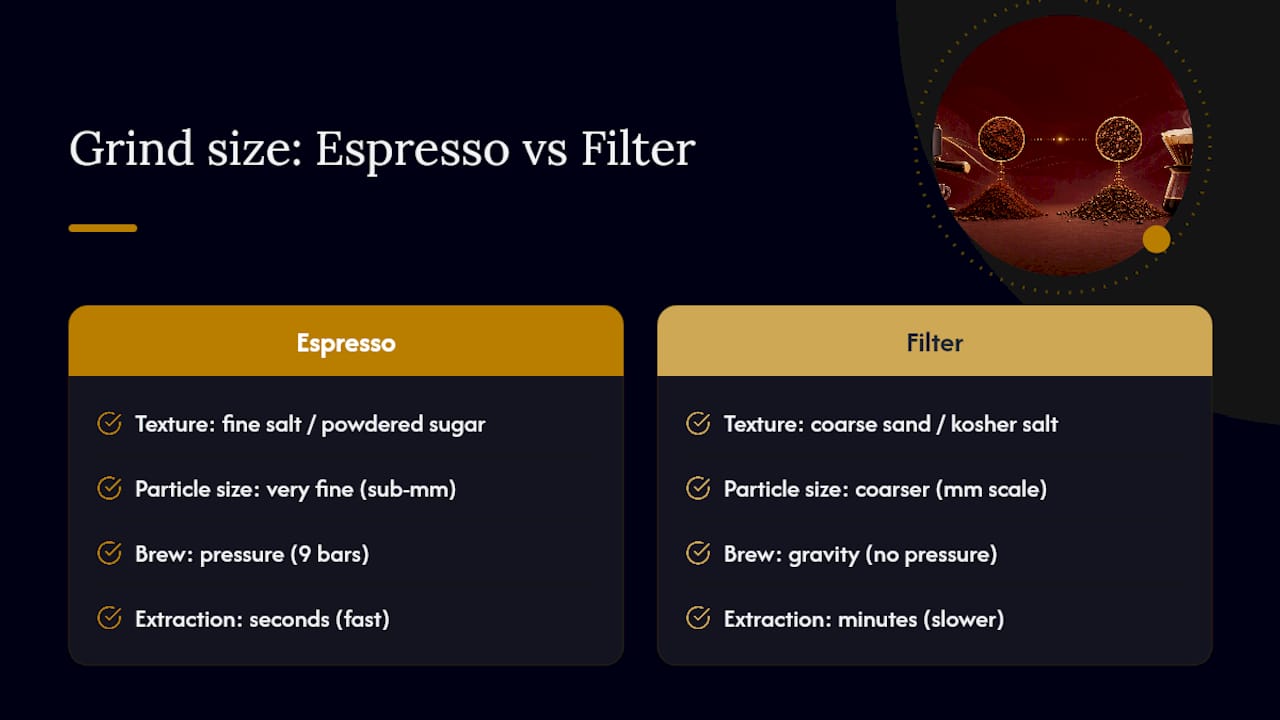
Espresso needs a grind fine enough to create real resistance against 9 bars of pressure, roughly the texture of fine table salt or slightly finer, similar to powdered sugar without quite reaching flour. Lighter, less-developed espresso roasts typically need an even finer grind than darker ones, since their denser cell structure resists extraction more, an adjustment worth making before you touch anything else on the machine.
Filter coffee runs much coarser, closer to coarse sand or kosher salt, since gravity brewing has minutes rather than seconds to pull flavor through the grounds. Within filter, roast level still nudges the setting: a very light roast sometimes benefits from grinding a touch finer than a medium filter roast, since its denser structure resists water penetration slightly more.
Espritkaffe’s guide to adjusting grind size covers the full range in more detail, including how to walk grind settings in small increments rather than jumping straight to a guess. That incremental approach matters more with espresso, where a tiny grind change can shift a shot from sour to balanced to bitter within a couple of clicks on most grinders.
How Roast Profile Shapes Crema in Espresso
Crema, that tan-to-golden foam sitting on top of a fresh shot, comes from CO2 trapped in the coffee combined with oils and fine solids emulsified under pressure. Roast profile influences all three of those ingredients directly.
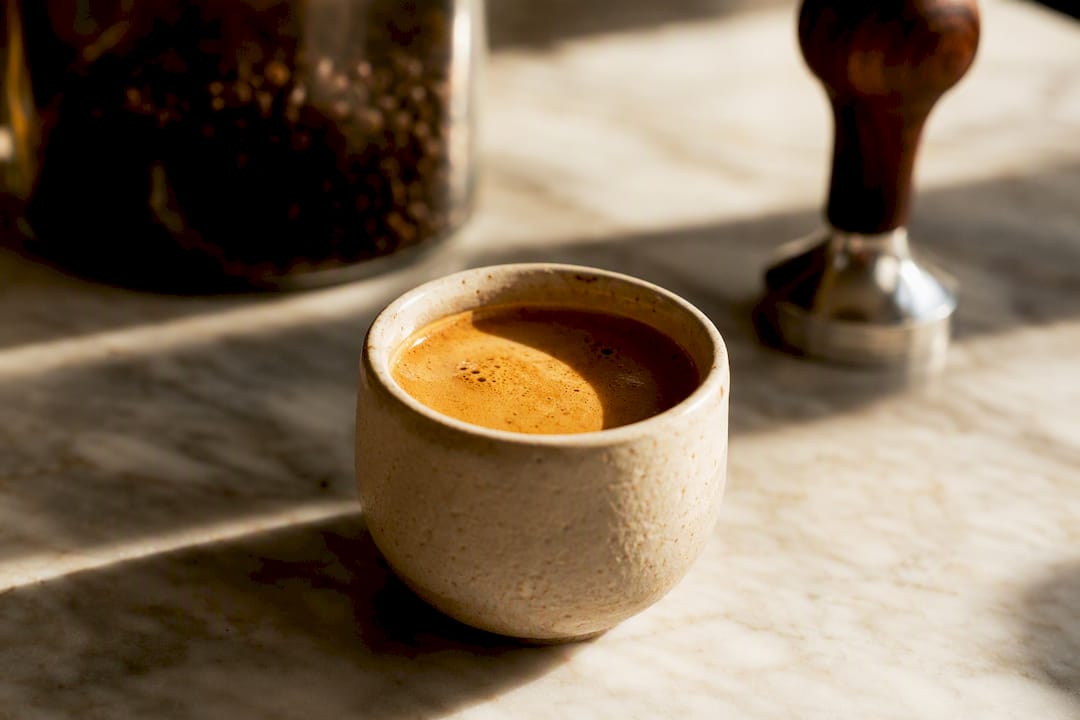
Fresher, more recently roasted beans hold more CO2, which produces thicker, longer-lasting crema, one more reason the seven to fourteen day rest window matters so much for espresso specifically. Darker, more developed roasts tend to release oils to the bean’s surface more readily, which historically made dark roasts the go-to for a rich-looking, heavy crema. That’s part of why traditional Italian espresso, dark and oily, built a reputation for dramatic, thick foam.
Lighter espresso roasts can still produce solid crema, but it tends to run thinner and pales faster, closer to a light tan than deep caramel. Because lighter roasts are less soluble, baristas often need tighter dialing, a slightly finer grind and careful attention to shot time, to build comparable crema without under-extracting the shot. If you’re pulling shots on equipment with adjustable pressure profiling, easing into pressure gradually rather than hitting full pressure immediately tends to produce a more stable, longer-lasting crema regardless of roast level.
Crema volume alone isn’t a quality signal. A thin, quickly fading crema on a well-dialed light roast can sit on top of a shot that tastes far better than a thick, dark-roast crema masking a burnt or stale bean underneath.
Storing Espresso Roasts and Filter Roasts
Both roast types share the same enemies, oxygen, light, moisture, and heat, but they don’t degrade at exactly the same pace or need identical handling.
Darker, more developed espresso roasts carry more surface oil, which oxidizes faster once exposed to air. That makes airtight, opaque containers even more important for espresso roasts than for lighter filter roasts, and it’s worth buying espresso in smaller quantities you’ll finish within two to three weeks of opening. A one-way valve bag helps release built-up CO2 without letting oxygen back in, which is standard on most quality roasted bags today.
Lighter filter roasts hold up slightly longer in the bag thanks to less surface oil and a denser bean structure, but they’re not immune to staling. Keep both away from your stovetop, direct sunlight, and the fridge, refrigeration introduces moisture and odor absorption that does more harm than the cool temperature does good. Whole beans always store better than ground coffee for both roast types, since grinding multiplies surface area and accelerates staling within hours, not weeks.
If you buy in bulk to save money, split the bag: keep two weeks’ worth in your everyday container and freeze the rest in a sealed, airtight bag, pulling portions out only as needed rather than repeatedly thawing the whole batch.
Coffee Drinks Best Suited to Each Roast
Certain drinks were practically built around one roast profile or the other, and matching the two correctly makes a bigger difference than most people expect.
Espresso roast territory:
- Straight espresso and ristretto, where a medium to medium-dark roast delivers the syrupy body and balanced sweetness the format depends on.
- Cappuccino and latte, where medium-dark roasts hold their own against steamed milk instead of getting washed out.
- Cortado and flat white, drinks that split the difference and usually favor a slightly lighter medium roast for a bit more clarity under the milk.
Filter roast territory:
- Pour-over (V60, Chemex), where light to medium roasts show off origin character in full detail.
- Batch brew and drip, typically medium roasts that balance clarity with enough body to hold up when reheated or held on a warmer.
- Cold brew, where medium to medium-dark filter roasts often produce a smoother, less acidic result over a long steep.
If you’re serving milk drinks regularly, it’s worth knowing your equipment’s real limits before committing to a lighter espresso roast. A machine that struggles to hit consistent pressure, worth checking against options like the Dr Coffee F11, will punish a temperamental light roast far more than a forgiving medium-dark one.
What Roasters Get Right That Most Guides Miss
Most articles on this topic treat roast level as the whole story and stop there. It isn’t. Development time, the percentage of the roast spent past first crack, predicts extraction behavior far more reliably than color does, and almost nobody outside professional roasting circles talks about it in those terms. Two “medium” roasts can behave completely differently in a portafilter depending on how they got to that color.
The conventional advice, “buy dark for espresso, light for filter,” isn’t wrong exactly. It’s just outdated, and it optimizes for machines and green coffee quality that improved decades ago. Specialty roasters have quietly moved past that binary while most retail shelving and most articles haven’t caught up.
If you take one thing from all this: stop shopping by color and start asking about development and rest timing. A bag that lists roast date and brew intent tells you more than a bag that just says “dark roast” or “light roast” ever will. That’s the gap between roasting for a label and roasting for a cup, and it’s the difference that actually shows up when you pull the shot or pour the water.
Get Coffee Roasted for How You Actually Brew
Espritkaffe roasts to order by roast level, origin, and blend, and every batch is tested free of mycotoxins, heavy metals, mold, and yeast, so you’re not choosing between flavor and quality control. Instead of grabbing a generic bag off a shelf and hoping the roast happens to fit your setup, you tell us your brew method and we match the roast development to it.
If mornings are tight and a full brew setup isn’t always realistic, Espritkaffe’s instant coffee gives you a roast-considered option without the dial-in. For something with added functional benefits, the instant coffee with mushroom blend is worth a look too. Order your next bag matched to your actual brew method, and skip the guesswork that comes with buying by color alone.
Frequently Asked Questions
Is espresso roast always darker than filter roast? No. That was true historically, but specialty roasters now frequently roast espresso to medium or even medium-light to highlight origin flavor, reserving darker profiles mainly for milk-based drinks or traditional Italian-style blends.
Can I brew filter roast coffee in my espresso machine? You can, but expect sourness and thin body since the shorter development limits solubility. Compensate with a finer grind, slightly hotter water, and a longer preinfusion if your machine allows it.
What’s the difference between roast level and roast development? Roast level refers to how dark the bean looks at drop time. Roast development refers to how much time was spent past first crack relative to total roast time, and it’s development, not color, that most directly drives solubility and extraction behavior.
How long should I wait to brew coffee after roasting? Filter roasts generally taste best three to five days after roasting. Espresso roasts usually need longer, often seven to fourteen days, since their denser structure holds carbon dioxide longer.
Does a darker roast mean less caffeine? Roast level has a minor effect on caffeine by weight, but the difference is small enough that brew method and dose matter far more for how much caffeine ends up in your cup.
Sources
- Roasting for Filter Coffee vs. For Espresso - Perfect Daily Grind
- Roasting for Filter Coffee vs. For Espresso - ICT Coffee (news)
- Coffee Review — Roast styles and roast table
- How espresso is made, step-by-step — Serious Eats