

Use opened ground coffee within 1 to 2 weeks for peak flavor. Unopened, a sealed bag holds close to peak quality until its best-by date, often 3 to 5 months from the roast date. The rule that matters more than any calendar: keep it airtight, cool, and dark, and grind only what you’re about to brew.
- Store opened grounds in an airtight, opaque container away from your stove.
- Buy amounts you’ll finish in 1 to 2 weeks, or buy whole bean and grind as you go.
- Freeze only in vacuum-sealed, portioned packs if you need long-term storage.
A sealed bag can hold near-peak aroma for about three months thanks to the CO2 still trapped inside from roasting. Once you break that seal, the clock speeds up fast.
Key Takeaways
Ground coffee shelf life depends far more on oxygen exposure and moisture than on how fancy your storage container looks.
| Point | Details |
|---|---|
| Opened grounds peak fast | Use opened ground coffee within 1 to 2 weeks for the best flavor. |
| Unopened bags last longer | A sealed bag holds close to peak quality until its best-by date, often 3 to 5 months out. |
| Whole bean beats pre-ground | Smaller surface area means whole beans resist staling far longer than pre-ground coffee. |
| Freeze whole bean only | Vacuum-seal portioned whole beans if freezing; ground coffee gains almost nothing from the freezer. |
| Espritkaffe roasts to order | Espritkaffe ships freshly roasted beans rather than warehouse-aged stock, extending your real usable window. |
Table of Contents
- Ground Coffee Shelf Life: Unopened vs. Opened, Whole Bean vs. Ground
- What Actually Makes Coffee Go Stale
- How to Store Ground Coffee You Use Every Day
- Should You Freeze Coffee Beans? Here’s the Correct Way
- Signs Your Ground Coffee Has Gone Bad
- What the Research Actually Tells You to Prioritize
- Freshly Roasted Coffee That Doesn’t Sit Around Waiting to Stale
- Frequently Asked Questions
- Sources
Ground Coffee Shelf Life: Unopened vs. Opened, Whole Bean vs. Ground
The “ground coffee shelf life” question really has two different answers depending on whether the bag has been opened. An unopened bag of ground coffee, sitting in a cabinet, tracks closely with its printed best-by date. Manufacturers typically stamp the best-by date several months out, and if the packaging did its job, the coffee inside is close to what it was on day one.
Crack that seal open, though, and the countdown changes entirely. Opened ground coffee stored at room temperature typically holds peak flavor for a couple of weeks. It won’t spoil after day 14. You can still drink it weeks later. But the bright, complex notes that made you buy that bag in the first place start fading fast.
Whole bean tells a different story. Because the surface area is so much smaller than ground coffee, oxygen and moisture take longer to reach the oils and compounds that carry flavor. Grinding blows that protection apart instantly: it multiplies exposed surface area many times over, which is why certain aroma compounds decline substantially within a few days of grinding rather than weeks.
A quick note on formats you might also have in your pantry:
- Coffee pods are sealed individually, so each one behaves like a tiny unopened bag. Often holding freshness for many months.
- Instant coffee is dehydrated and far more stable than ground coffee, frequently lasting a year or more unopened with minimal flavor loss.
What Actually Makes Coffee Go Stale
Staling isn’t one thing. It’s four separate attacks happening at once, and understanding each one tells you exactly which habit to fix.
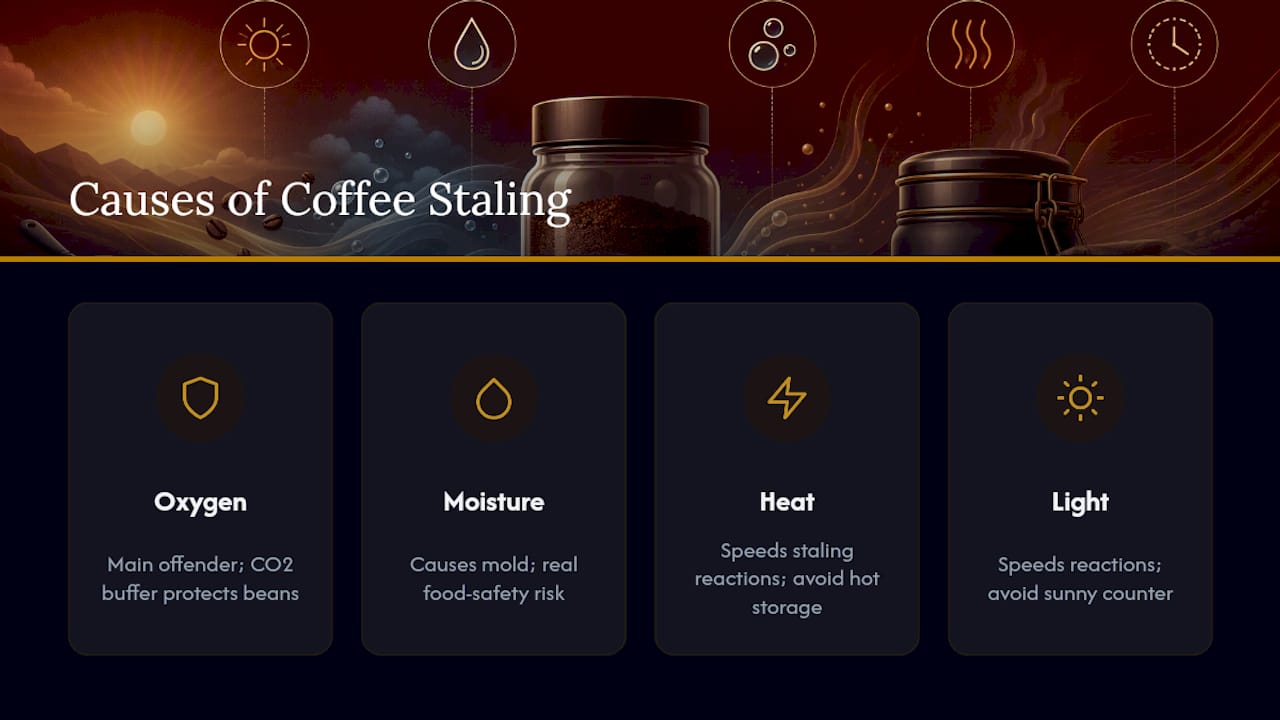
Oxygen is the main offender. Roasted coffee releases CO2 for days after roasting, and that gas forms a protective buffer against oxygen inside a sealed bag. This is why reducing oxygen exposure significantly extends shelf life, and it’s the entire reason one-way valve bags exist: they let built-up CO2 escape without letting oxygen back in.
Moisture is the one to actually worry about. Dry coffee sitting in a cabinet doesn’t become dangerous just because it’s a few weeks old. It only becomes a safety issue if it picks up moisture and starts growing mold, per USDA food safety guidance on dry goods.
Heat and light speed up every chemical reaction involved in staling, which is the real argument against that cute clear canister on your sunny counter.
Roast level and grind size both matter more than people assume. Dark roasts have more surface oil and a more porous bean structure, so they stale faster than light roasts. Finer grinds, the kind you’d use for espresso, expose more surface area than a coarse French press grind, and lose their edge quicker as a result.
How to Store Ground Coffee You Use Every Day
Most staling comes down to habits, not bad luck. Fixing storage practices can make a noticeable difference fairly quickly.
- Leave it in the original bag if it has a one-way valve. That valve is doing real work, releasing gas while blocking oxygen, and there’s rarely a reason to transfer coffee out of good packaging just because you bought a canister.
- Store it in a cool, dark cabinet, not next to the stove. Heat radiating off your range or oven accelerates the same reactions that ruin coffee left in sunlight.
- If you do transfer it, use an opaque, airtight canister with minimal headspace. Extra air in the container is extra oxygen working against your coffee. Skip the glass jar on the counter, however photogenic it looks.
- Skip the refrigerator for daily-use grounds. Coffee absorbs odors easily, and the fridge introduces moisture every time you open the door. The one exception: very humid climates, where a sealed, moisture-proof container in the fridge can beat a hot, sticky kitchen.
- Buy only what you’ll use in 1 to 2 weeks, or buy whole bean and grind fresh. This single change does more for flavor than any container upgrade. Industry voices consistently point to smaller, more frequent purchases as the most cost-effective way to preserve flavor, especially compared to buying in bulk and losing half of it to staling before you get through the bag.
If you’re setting up a dedicated coffee station, keeping grounds away from spice racks and scented items also helps, since coffee picks up nearby aromas surprisingly fast.
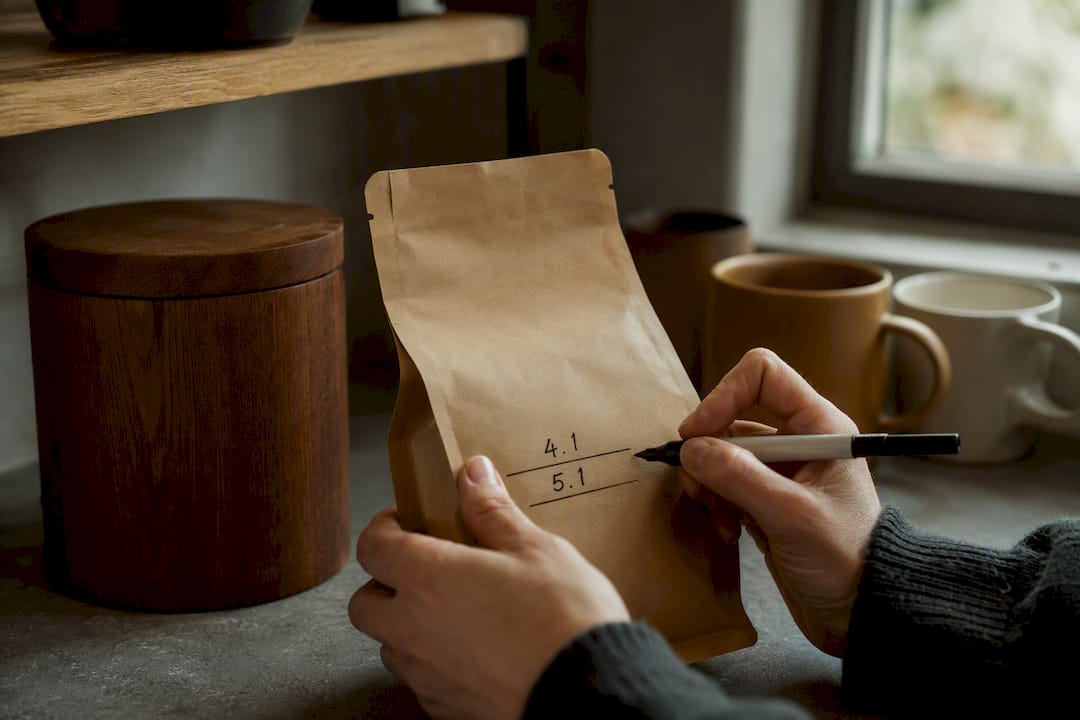
Pro Tip: Grab a marker and write the roast date and an expected “peak by” date right on the bag the day you open it. It takes ten seconds and removes all the guesswork about whether that half-used bag in the back of the cabinet is still worth brewing.
Should You Freeze Coffee Beans? Here’s the Correct Way
Freezing works, but only if you do it right. Cold temperatures slow the chemical reactions behind staling and dramatically reduce the rate of degassing, which is why freezing vacuum-sealed, portioned whole beans is an accepted method among roasters and serious home brewers.
- Freeze whole bean, not ground. Ground coffee has so much more surface area that freezing it barely extends its usable life, maybe a few extra days, which isn’t worth the freezer space.
- Portion beans into small, vacuum-sealed packs or airtight pouches before freezing, sized for what you’ll use in one or two brewing sessions.
- If you’re freezing the original bag, tape over the one-way valve first to stop moist freezer air from sneaking in through it.
- Grind straight from frozen when possible, and never refreeze beans once they’ve thawed. That cycle introduces condensation, which is the exact moisture staling and mold both need.
Set realistic expectations: freezing preserves quality for months, but the benefits taper off after about 12 months even under ideal conditions.
Pro Tip: Freeze coffee at peak freshness, not the moment it arrives. The freezer locks in whatever state the bean is in when you seal it, so freezing a bag that’s already three weeks old just preserves mediocre coffee a little longer.
Signs Your Ground Coffee Has Gone Bad
Most of the time, “bad” coffee just means flat, not dangerous. Here’s how to tell the difference.
- Smell test first. Fresh grounds smell rich and slightly sweet. Stale grounds smell flat, papery, or dull, and rancid grounds smell almost like old cardboard or paint.
- Taste check. A flavor deficit tastes bland or one-dimensional. Rancidity tastes distinctly sour or bitter in a way that doesn’t improve no matter how you brew it.
- Look for clumping, dampness, or visible mold. Any of these three means the container failed, not the coffee, and the batch should go straight in the trash.
- When in doubt, toss it. Dry coffee rarely becomes unsafe unless moisture gets in, so if you’re staring at questionable grounds, moisture is almost always the culprit.
Stale but mold-free grounds still have a second life: work them into garden soil, use them as a fridge deodorizer, or scrub greasy pans with them before washing.
What Espritkaffe and Jett Have Learned About Freshness
The single habit that changes everything is portioning before you freeze, not after you notice the bag going stale. Once you’re scooping from a half-thawed block, you’ve already lost the fight.
Espritkaffe roasts to order rather than to a warehouse schedule, which means the coffee in your bag hasn’t been sitting on a shelf for months before it reaches you. Author Jett, who writes on storage and roast practices for Espritkaffe, recommends labeling every bag the day it’s opened and portioning larger batches into smaller sealed packs immediately, rather than waiting until half the bag is gone. For more on protecting whole beans specifically, see Espritkaffe’s guide to storing whole beans in a kitchen cabinet.
What the Research Actually Tells You to Prioritize
Most storage advice fixates on the container. Buy this canister, avoid that jar. The container matters less than people think. What actually drives ground coffee shelf life is how much oxygen and moisture reach the grounds and how long they sit exposed, which is a purchasing habit as much as a storage one.
The conventional wisdom oversells the fridge and undersells timing. Refrigeration introduces moisture and odor risk that outweighs the modest cold it provides, while buying smaller amounts more often solves the actual problem: too much surface area sitting exposed for too long. If you take one thing from the research on packaging closures, it’s that a well-designed closure measurably outperforms a loose re-close, which means the five extra seconds it takes to squeeze air out and seal a bag properly is not a wasted step.
Prioritize this order: buy less, grind fresh when you can, seal tightly, then worry about which container looks nicest on your counter.
Freshly Roasted Coffee That Doesn’t Sit Around Waiting to Stale
The best fix for ground coffee shelf life problems isn’t a better container. It’s coffee that hasn’t been sitting in a warehouse before it reaches your cabinet. Espritkaffe roasts to order in light, medium, and dark profiles, so the bag you open is weeks fresher than most shelf-stocked options, giving you a longer real window of peak flavor before staling even becomes a concern.

Every batch is also tested and certified free of mycotoxins, heavy metals, mold, and yeast, which matters if you’re the kind of drinker who reads the storage section of an article like this one. If you want to taste the difference roast-to-order timing makes, try the Coffee with Mushrooms Medium Roast or grab a ready-to-drink Cold Brew Coffee for days you don’t feel like brewing at all. Order what you’ll actually finish in two weeks, and let the roast date do the rest of the work.
Frequently Asked Questions
How long does ground coffee last after opening? Ground coffee stored airtight at room temperature typically holds peak flavor for about 1 to 2 weeks. It stays drinkable longer, but the aroma and brightness fade steadily after that window.
Does ground coffee expire or just lose flavor? Dry ground coffee rarely becomes unsafe on its own. It just goes flat and loses complexity over time. The exception is moisture exposure, which can lead to mold, and that’s when you should discard it.
Should you freeze coffee beans or ground coffee? Freeze whole beans, not ground coffee. Ground coffee’s larger surface area means freezing barely extends its usable life, while whole beans hold up well for months when vacuum-sealed and portioned.
Is it better to store ground coffee in the fridge? Generally no. The fridge introduces moisture and odor absorption risks that outweigh the modest cold benefit for daily-use grounds. A cool, dark cabinet works better except in very humid climates.
Does grind size affect ground coffee shelf life? Yes. Finer grinds expose more surface area to oxygen and moisture, so they stale faster than coarser grinds. This is one more reason to grind just before brewing whenever possible.
Sources
- Serious Eats — Best way to store coffee
- Storage and shelf life - About Coffee
- Study on storage methods and secondary shelf-life (ScienceDirect)
- Perfect Daily Grind — Freezing roasted coffee: best practices