

Most coffee comes down to a handful of standard weights: 12 oz (about 340 g) and 16 oz/1 lb for retail shelves and subscriptions, 8 oz or 250 g for samplers and gifting, and 2 to 5 lb (or 1 kg) pouches for wholesale and back-of-house use. Finished pouch dimensions shift with bag style, valve placement, and gusset depth even at the same weight. A size chart and a short buying checklist below fill in the rest.
TL;DR:
- The finished dimensions of coffee bags vary significantly based on bag style, gusset depth, and valve placement, even at the same weight.
- Retail shelf fit depends primarily on width, with 12 to 16 oz sizes dominating North American markets due to their optimal space and shipping considerations.
- A 250 g bag typically makes around 14 to 18 cups, while a 1 lb (454 g) bag usually yields 25 to 32 cups, depending on brewing strength and grind.
- Valves are essential on larger whole bean bags to vent built-up gas, and thicker films reduce interior volume, requiring slightly larger finished dimensions.
- Confirm specific specifications, including final size, valve model, and case pack, with suppliers before ordering, and consider small test fills to ensure proper fit and performance.
Table of Contents
- Coffee Bag Size Chart: Weights, Dimensions, and Best Uses
- What Finished Dimensions Mean for Shelf Fit and Shipping
- How Many Cups Does a Bag of Coffee Actually Make?
- Why Valves, Zippers, and Film Thickness Change the Numbers
- Choosing the Right Bag Size for Your Roastery or Kitchen
- Why We Settled on the Sizes We Did
- A Simpler Way to Skip the Sizing Decision Entirely
- Sources
Coffee Bag Size Chart: Weights, Dimensions, and Best Uses
The nominal weight on a bag tells you almost nothing about how big the actual pouch is. A 12 oz stand-up pouch with a wide gusset looks nothing like a 12 oz flat-bottom bag with a tall, narrow profile. That’s why converters and packaging suppliers describe finished pouches with three numbers, in a fixed order: Width × Height + Gusset.
Here’s how the common weight classes line up against representative finished dimensions, based on supplier size charts and industry sizing guides:
Metric markets tend to skip straight to 250 g, 500 g, and 1 kg instead of ounces, and that ladder works well across most channels when you’re deciding what to stock or order.
A few things worth flagging before you treat any of these numbers as gospel:
- Bag style changes everything: a flat-bottom pouch and a pillow-style bag at the same weight can differ by 20mm or more in height.
- Gusset depth is often the variable suppliers adjust first when a bag looks too flat or too puffy.
- Valve placement can shrink usable fill space by a few millimeters even though it doesn’t show up in the nominal dimensions.
What Finished Dimensions Mean for Shelf Fit and Shipping
Reading a spec sheet as Width × Height + Gusset isn’t arbitrary. Width comes first because it’s the dimension that determines how many bags fit across a shelf facing or a case, and retailers plan planograms around that number before anything else.
That’s part of why 12 to 16 oz dominates supermarket shelves in North America. It’s the sweet spot between enough coffee to justify shelf space and a footprint that doesn’t crowd out the next brand’s facing. Direct-to-consumer roasters have more room to experiment, since they’re not fighting for planogram inches, but many still cap their core sizes around 2 lb to keep shipping costs predictable. Once a box crosses certain dimensional thresholds, carriers charge by volume instead of actual weight, and an oversized bag of light, airy beans can cost more to ship than the coffee itself is worth.
Before you finalize an order with a converter, confirm:
- Finished dimensions in millimeters, not just the nominal weight
- Exact valve placement and model
- Case pack quantity and how it affects your shipping math
Pro Tip: Ask your supplier for a physical sample bag before committing to a print run. A PDF mockup never tells you how a bag actually sits on a shelf or feels in a customer’s hand.
How Many Cups Does a Bag of Coffee Actually Make?
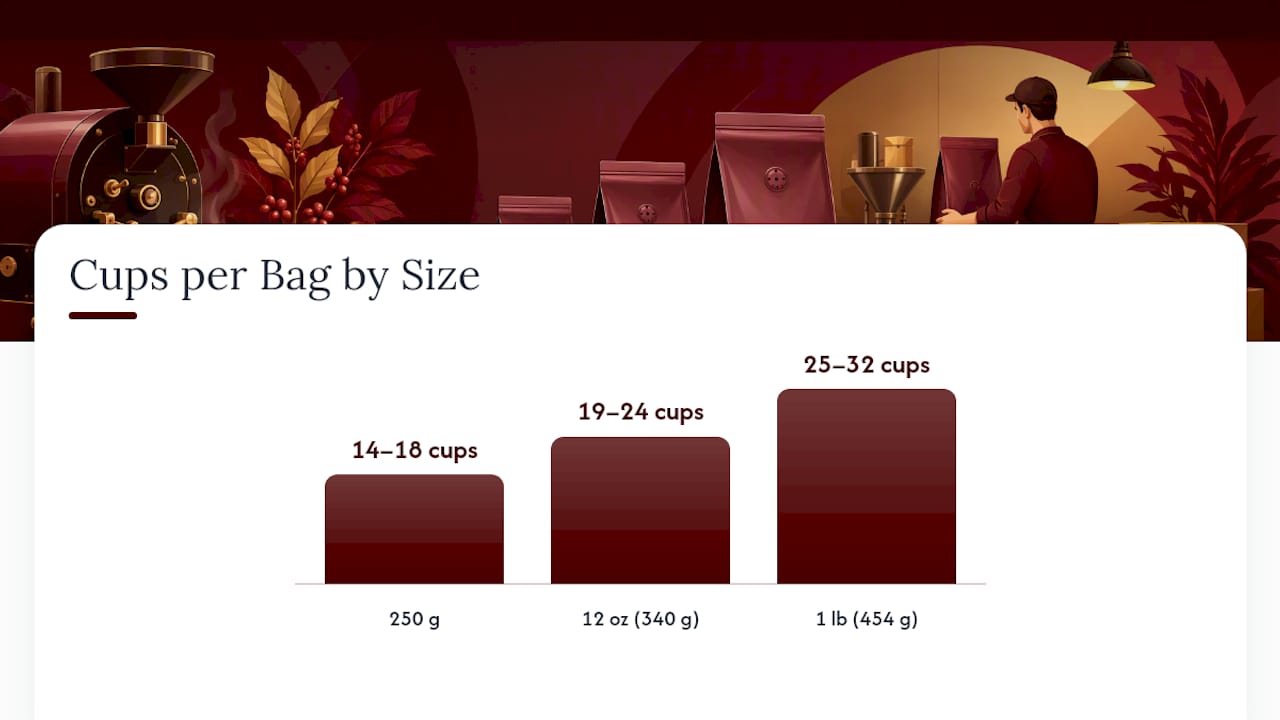
The math is simple: cups per bag equal the bag’s weight in grams divided by your brew dose in grams per cup. Standard brew doses run 14 to 18 grams per 8 to 12 ounce cup, so the same bag can yield noticeably different numbers depending on how strong you brew.
Run the numbers on the common sizes:
- A 250 g bag yields roughly 14 to 18 cups at a 14 to 18 g dose.
- A 12 oz (340 g) bag yields roughly 19 to 24 cups.
- A 1 lb (454 g) bag yields roughly 25 to 32 cups.
Cup size, grind setting, and brew strength all push these numbers around, and if you’re dialing in a new bag, our grind size adjustment guide walks through how small changes affect extraction. One thing people miss: whole beans occupy roughly 20 to 25% more volume than ground coffee at the same weight, so a bag that looks half full of beans might actually be holding a completely standard amount of coffee.
Why Valves, Zippers, and Film Thickness Change the Numbers
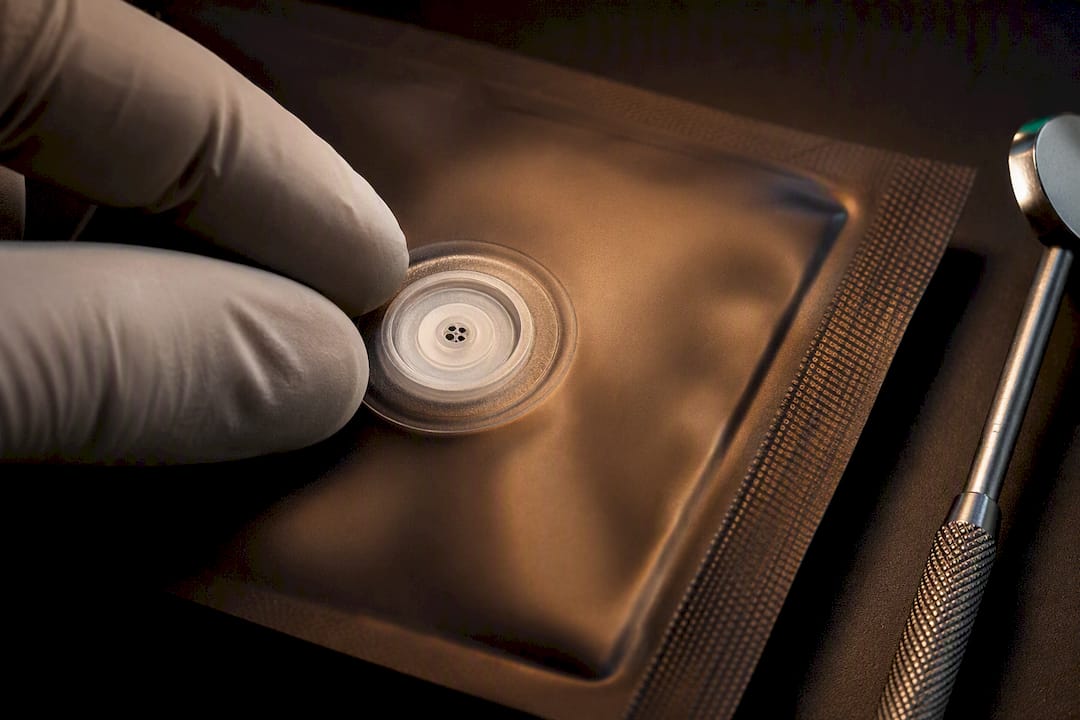
A one-way degassing valve isn’t decoration. Freshly roasted beans release carbon dioxide for days after roasting, and without somewhere for that gas to escape, a sealed bag can swell and eventually blow a seam. That’s why bags above roughly 8 to 12 ounces of whole bean coffee almost always ship with a valve, while smaller sampler bags under 5 ounces usually skip it since they don’t hold enough coffee to build up meaningful pressure.
Film thickness matters too, in a way that catches first-time buyers off guard. Thicker barrier laminates fold more heavily inside the pouch, which eats into interior volume. The common fix is to enlarge the finished dimensions by 3 to 5 millimeters when specifying a heavier laminate, so the bag still holds its stated weight without looking underfilled.
Pro Tip: If your supplier’s quote doesn’t list a finished dimension spec or a specific valve model number, that’s a red flag. Ask them to confirm both in writing before you approve a print run.
A few other things worth checking on any quote:
- Zipper and top-seal type, since both affect how much clearance the fill line needs
- Whether the valve model is rated for whole bean off-gassing or just general freshness
- How the bag looks at your actual fill weight, not just the supplier’s mockup
Choosing the Right Bag Size for Your Roastery or Kitchen
The decision gets easier once you separate it into steps instead of trying to pick a size in the abstract.
- Define the use case first: sample, retail, subscription, or wholesale.
- Pick a core ladder that matches it, rather than inventing a custom size from scratch.
- Confirm finished dimensions, valve type, and case pack with your supplier in writing.
- Run a small test fill before committing to a full production order.
- Finalize quantities once the test bag looks and performs the way you expect.
Ask any supplier these questions before you sign off: What are the finished W×H+gusset dimensions? What valve model ships standard? Is a zipper included or added? What’s the case pack and minimum order? Can you run a sample batch before full production?
For starter ladders, a three-size lineup works for most roasters:
- DTC and subscription: 12 oz core size, with an 8 oz or 250 g option for new customers testing the waters.
- Retail: 12 oz as the workhorse, since it matches shelf-facing expectations most stores are built around.
- Wholesale: 2 to 5 lb bulk bags, sized for café back-of-house use rather than individual sale.
Smaller bags cost more per ounce to package but keep coffee fresher longer for slower drinkers. Larger formats save on unit cost but only make sense if the buyer moves through coffee fast enough to use it before it stales, a tradeoff worth thinking through alongside our notes on how long ground coffee stays fresh.
Why We Settled on the Sizes We Did
The lineup can be built around freshness and shipping considerations to choose sizes that are likely used before staling becomes a concern, rather than following traditional shelf sizes. If you’re adjusting grind settings to match a new bag or figuring out where beans keep best in your kitchen, our guides on grind size and whole bean storage cover the practical side we couldn’t fit here.
— Jett
A Simpler Way to Skip the Sizing Decision Entirely
If reading through gusset depths and valve specs sounds like more homework than you signed up for, you’re not wrong to want a shortcut. Espritkaffe’s Members Club subscription removes the guesswork by shipping a size and cadence matched to how much coffee you actually drink, so you’re never stuck with a stale 2 lb bag or reordering a sample size every week. For anyone who wants zero packaging decisions at all, the single serve coffee capsules sidestep bag sizing altogether, one cup at a time. Set up your subscription preferences today and let the sizing question take care of itself.
Sources
- Coffee Bag Sizes Explained: Complete Size Chart for Coffee Roasters and Brands
- Wholesale Coffee Bag Sizes & Standard Dimensions Guide
- How Do I Choose Coffee Bag Sizes for 250g, 500g, 1kg, and 2kg products?