

Light roasts taste brighter because they retain more chlorogenic, citric, and malic acid; dark roasts lose much of that acid load but can taste harsher from roast byproducts. Titratable acidity, not pH, is what actually predicts how sour your cup tastes, and it tracks brew strength more closely than roast color. If you want less bite in your cup, the fastest fixes are roasting darker, brewing cold, or simply dialing back extraction strength.
TL;DR:
- Brewing strength and extraction methods influence perceived acidity more than roast level, with higher TDS resulting in a more sour taste regardless of roast.
- Darker roasts contain significantly less chlorogenic acid and often produce a flatter or bitter flavor, but may be gentler on the stomach due to lower acid content.
- Titratable acidity correlates closely with sourness and total dissolved solids, making it a better predictor of flavor than pH alone.
- Cold brew extracts fewer acids, resulting in a smoother, less acidic cup even from light roasted beans.
- Preferences for acidity vary, with some favoring bright, citrus flavors in lighter roasts and others preferring milder, darker profiles for stomach comfort.
Table of Contents
- Coffee Roast Acidity: pH vs Titratable Acidity Explained
- How Roasting Changes Acid Content From Light to Dark
- Why Brewing Often Changes Acidity More Than Roast Does
- When Acidity Is Good and When It’s Not
- Does Dark Roast Coffee Cause Less Stomach Acid?
- Esprit Kaffe’s Approach to Roast and Acidity
- What the Research Actually Tells Us About Roast and Acidity
- Sources
Coffee Roast Acidity: pH vs Titratable Acidity Explained
Ask a chemist and a coffee taster what “acidity” means and you’ll get two different answers. The chemist points to pH. The taster points to how sour the coffee actually feels on the tongue. Both are right, and the gap between them is the whole story of coffee roast acidity.
Brewed coffee sits somewhere between pH 4.5 and 6.0, mildly acidic but nowhere near the pucker of orange juice or vinegar. Here’s the catch: pH measures hydrogen ion concentration, and it’s a surprisingly weak predictor of how sour a cup actually tastes. Two coffees can share nearly identical pH readings and taste completely different in the cup.
Titratable acidity (TA) measures the total quantity of acid in the coffee, determined by adding a base until the solution reaches a target pH, and it lines up far better with what your tongue reports. Research on drip coffee found perceived sourness correlates strongly with titratable acidity, and TA itself tracks closely with total dissolved solids. More dissolved acid in the cup means more sourness, regardless of what the pH meter says.
The acids doing the work include:
- Chlorogenic acid (CGA): the dominant acid family in green coffee, largely destroyed by heat during roasting
- Citric acid: citrus-like brightness, common in washed Central American coffees
- Malic acid: apple-like tartness, prominent in many African varietals
- Quinic acid: a CGA breakdown product tied to a flatter, sometimes bitter sourness
- Acetic acid: vinegar-like sharpness at high concentrations, subtle brightness at low ones
- Caffeic acid: another CGA decomposition product that shapes bitterness and pH behavior late in roasting
One roast-formed compound worth knowing: N-methylpyridinium, a marker that forms as trigonelline breaks down under heat and concentrates more in darker roasts.
How Roasting Changes Acid Content From Light to Dark
Heat is a demolition crew for chlorogenic acids. As beans roast, CGAs break down into smaller acids and other compounds, and the loss is dramatic: dark roasts show a large reduction in chlorogenic acid compared with light roasts, sometimes more depending on roast time and temperature.
That degradation doesn’t move in a straight line. A 2024 study on coffee extract pH found pH actually drops through the middle stages of roasting, up to a certain chromaticity value, before climbing again at darker degrees. The reason: different CGA isomers have different thermal stability. Some break down early, releasing caffeic and quinic acid derivatives that temporarily push pH one direction. Others hold on longer and decompose only once roasting pushes into darker territory.
The relationship between roast degree and acidity isn’t a simple downhill slope. It’s a curve shaped by which acid compounds survive, which ones decompose first, and what they turn into along the way.
Here’s roughly what to expect moving through the roast spectrum:
- Light roast: highest CGA retention, brightest and most complex acidity, often citrus or berry-forward
- Medium roast: noticeable CGA loss, acidity softens into a rounder tartness, sweetness starts to balance sourness
- Dark roast: heavy CGA degradation, acid character fades behind roast-driven bitterness and body
That last point matters for anyone chasing a smoother cup. Losing acid doesn’t automatically mean a smoother cup. The compounds left behind after heavy roasting can taste flat, ashy, or bitter instead of simply “mild.” If you want to understand how these shifts map onto flavor language roasters actually use, roast levels explained breaks down the sensory side in more detail.
Why Brewing Often Changes Acidity More Than Roast Does
Roast sets the ceiling on how much acid exists in the bean. Brewing decides how much of it ends up in your cup, and research suggests that second variable often matters more.
The titratable acidity study cited earlier found something practical: TA rises linearly with total dissolved solids, meaning a stronger brew pulls more acid into solution almost by definition. Combine high TDS with low extraction yield and you get the sourest possible result, no matter what roast you started with. That combination, strong but underextracted, is the classic profile of a sour, thin-tasting pour-over.
Three levers actually move perceived acidity at home:
- Adjust TDS. Brew stronger and you extract more acid along with everything else; brew weaker, and sourness drops with it.
- Increase percent extraction. Grinding finer, brewing longer, or raising water temperature pulls more sugars and body into the cup, which balances acid rather than removing it.
- Match grind and temperature to method. Espresso extracts fast under pressure and concentrates acids differently than a slow pour-over; the difference between espresso and filter roasts comes down largely to how each method handles extraction.
Pro Tip: If your pour-over tastes sour, don’t switch beans first. Grind finer or extend your brew time by 15 to 20 seconds. That single change often fixes sourness faster than buying a darker roast.
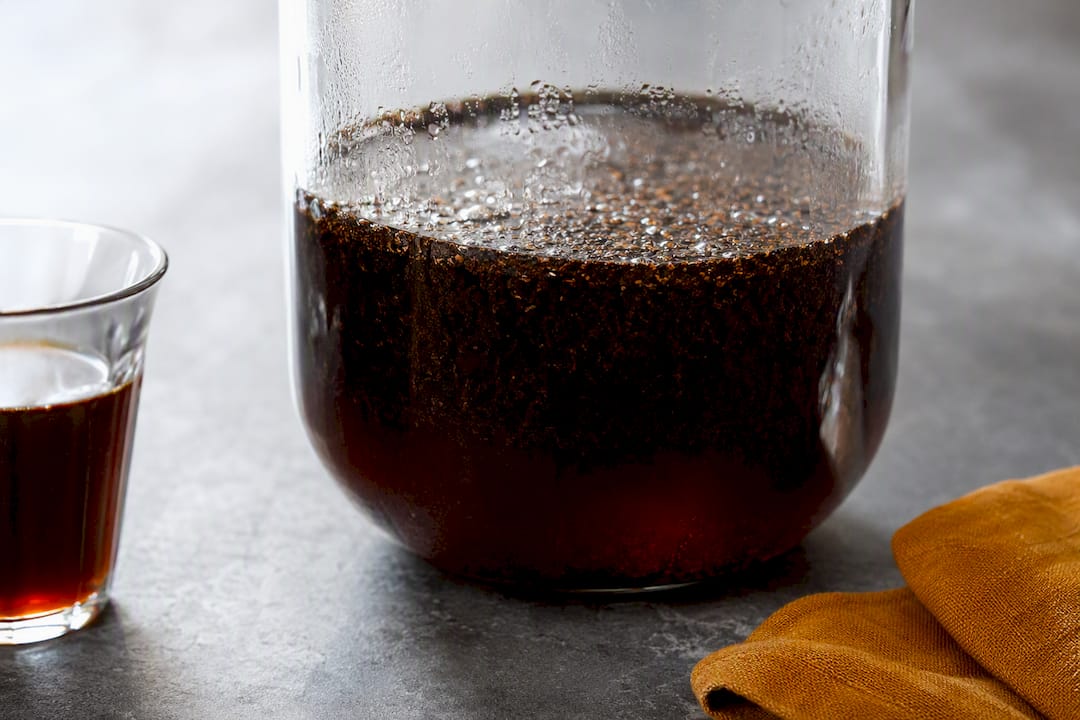
Cold brew sits at the extreme end of this spectrum. Long, cold extraction pulls fewer organic acids into solution than hot brewing does, which is why cold brew consistently reads as smoother and less sour even when made from the same beans.
When Acidity Is Good and When It’s Not
Acidity isn’t the enemy. In specialty coffee, “bright” and “acidic” are compliments, not complaints. The difference between a coffee people love and one they send back usually comes down to character, not quantity.
Desirable acidity shows up as:
- Citrus, especially lemon or bergamot, in bright Ethiopian or Kenyan coffees
- Stone fruit like peach or apricot, common in washed Central Americans
- Floral or wine-like notes in natural-processed lots
Unwanted sourness shows up as:
- A flat, sharp bite reminiscent of underripe fruit
- A metallic or puckering sensation late in the sip
- Sourness with no accompanying sweetness to balance it
Origin and processing shape which side of that line a coffee lands on. Washed coffees tend toward cleaner, more defined acidity since fermentation happens before drying. Natural and honey-processed coffees often carry heavier, funkier fruit-forward acidity because the fruit sits on the bean longer. If bright, citrusy cups appeal to you, look toward lighter roasts of washed African coffees. If you want mellow and rounded, a medium or dark roast espresso blend gets you there.
Does Dark Roast Coffee Cause Less Stomach Acid?
The evidence here is more nuanced than “dark roast is gentler.” A small clinical trial found a dark brown roast blend stimulated less gastric acid secretion in healthy volunteers than a medium market blend, tied to compositional differences including N-methylpyridinium and reduced CGA content. That’s a real finding, but it comes from a small volunteer group, and individual gastric response varies enormously based on caffeine sensitivity and unrelated digestive factors.
Practical steps if you’re sensitive:
- Try a dark roast or cold brew first, since both tend to carry lower acid loads
- Cut serving size before cutting coffee entirely
- Consider decaf if caffeine itself, not acid, is driving discomfort
- See a clinician if reflux or stomach pain persists regardless of what you drink
Esprit Kaffe’s Approach to Roast and Acidity
Coffee roasters offer light, medium, and dark roasts to match how you actually want to feel and taste your coffee, not a one-size-fits-all curve. If bright, citrus-driven cups energize your morning, a lighter roast preserves more of that natural acidity. If you want something rounder and calmer on the stomach, darker roasts trade some brightness for depth.
A few resources worth exploring:
- Roast levels explained for a deeper flavor breakdown by roast degree
- Arabica vs. Robusta for how bean species itself shifts acidity
- What is a coffee cupping for how professionals actually score acidity in the cup
Browse the full coffee collection to find a roast that matches your acidity preference, or start with a sample pack if you’re still figuring out where you land on the brightness scale.
What the Research Actually Tells Us About Roast and Acidity
Most coffee advice treats roast level as the whole story on acidity. It isn’t. The research points somewhere more useful: brewing strength, measured as titratable acidity and tied directly to TDS, predicts sourness better than pH or roast color alone. That’s the piece conventional wisdom skips.
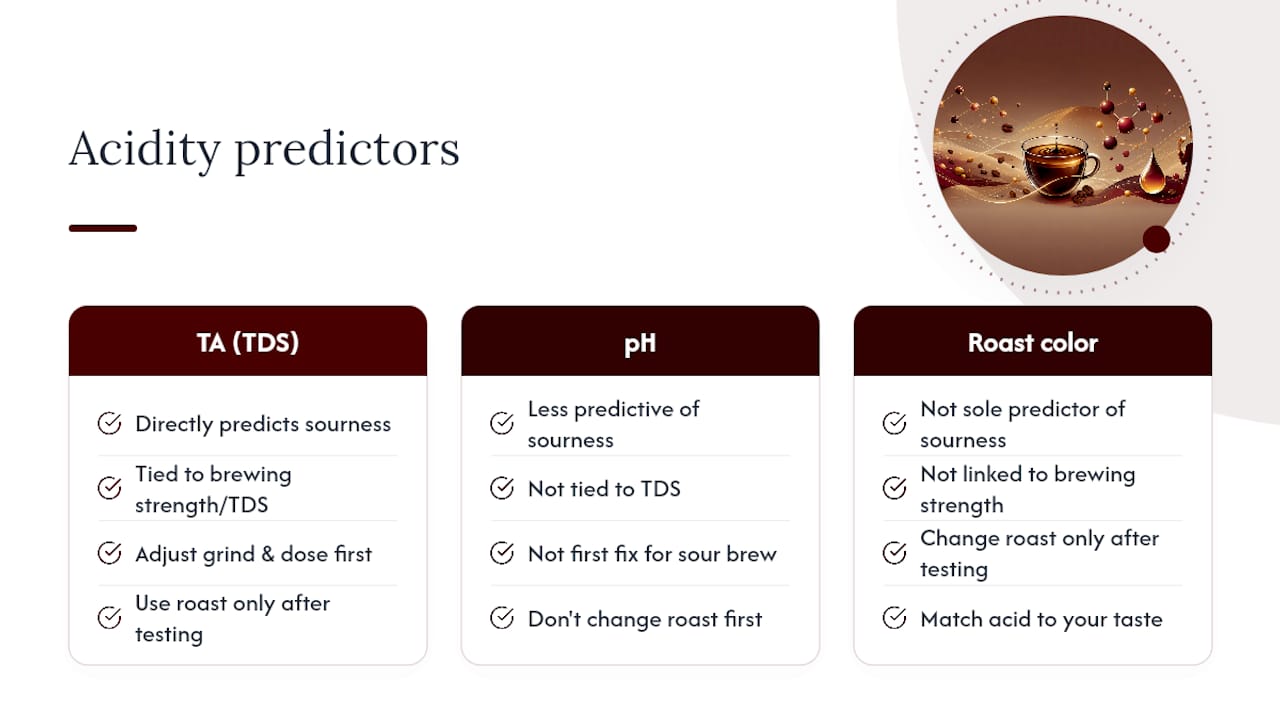
The mistake I see most often is buying a darker bag to “fix” sour coffee when the real problem sits in the brew ratio or extraction time. Fix your grind and dose first. Change roast only after you’ve confirmed brewing isn’t the culprit.
I’d also push back on treating acidity as something to eliminate. Sensory research on drip coffee found consumers split roughly down the middle between those who prefer higher acidity and those who prefer lower, which means there’s no universally “correct” amount. The goal isn’t zero acid. It’s matching acid character, and quantity, to what you actually enjoy drinking. Start there before you start swapping roasts.
— Jett
Sources
- Thermal degradation of chlorogenic acids in coffee
- Titratable acidity, perceived sourness, and liking of acidity in drip brewed coffee
- Changes in coffee bean extract pH depending on roasting degree and structural analysis of chlorogenic acid (Foods 2024)