

Start with a fresh, whole-bean medium roast Arabica, ideally a single-origin from Colombia or Guatemala. It performs well across pour-over, drip, and French press, and it’s forgiving if your grind size or water temperature is slightly off. Check the bag for a roast date before you buy anything else. Once that’s dialed in, you can branch out to lighter or darker roasts based on what you actually like.
TL;DR:
- Freshness is the most critical factor, with most beans best used within two to four weeks of their roast date rather than relying on expiration labels.
- Whole beans retain flavor longer than pre-ground coffee, which should ideally be ground just before brewing with a burr grinder for consistency.
- Medium roast Arabica beans are versatile, forgiving for most brewing methods, and serve as a good starting point for beginners.
- Origin and processing methods influence flavor profiles more than region labels, with washed, natural, and honey processes offering distinct taste differences.
- Matching the coffee’s roast level, origin, and processing to your brewing method significantly impacts the final flavor, especially in pour-over, espresso, or cold brew.
Table of Contents
- How Roast Level Changes What’s in Your Cup
- What Bean Origin and Processing Actually Tell You
- Matching Coffee Beans to Your Brew Method
- Why Freshness Beats Almost Every Other Factor
- Reading a Coffee Bag: A Quick Buying Checklist
- Espritkaffe’s Take: Why We Roast for the Beginner Default
- Where to Buy the Beans This Guide Recommends
- Sources
How Roast Level Changes What’s in Your Cup
Roast level is the single biggest lever on flavor, and it’s also the most misunderstood. A lot of new coffee drinkers think a darker roast means more caffeine or a “stronger” cup. It doesn’t. Roast level mostly changes acidity, body, and how much of the bean’s original character survives the fire.
Here’s the breakdown:
- Light roast: Bakes the bean just long enough to develop it, so floral and fruity notes stay intact and acidity is bright.
- Medium roast: Balances the origin’s natural sweetness with roast-driven caramelization, so it reads as smooth rather than sharp or smoky.
- Dark roast: Pushes caramelization further, muting the bean’s original character in favor of chocolate, nut, and toasted flavors, with acidity dropping off.
Medium roast is the recommended default for a reason: it’s the widest lane. It works with hard water, soft water, an old grinder, a good grinder, almost any brew method. If you already know you like a jammy, floral cup, go lighter. If you gravitate toward the flavor of a dark chocolate bar, go darker. Consumer Reports notes that medium roast tends to be the most versatile option for home brewing, which is exactly why it’s the smart place to start.
When you’re shopping, look past the “light/medium/dark” label on the bag. Good roasters also print tasting notes (“citrus, honey, almond”) and sometimes a roast date, both of which tell you more than the roast category alone.
Pro Tip: If a bag doesn’t list a roast date or any tasting notes, that’s a red flag about how much the roaster cares about quality control. Walk away and find one that does.
What Bean Origin and Processing Actually Tell You
Origin and processing are printed on almost every specialty bag, but they’re meaningless until you know what they predict. Start with the species: Arabica is the beginner default because it’s smoother and more nuanced, while Robusta is harsher and more bitter, though it shows up in some espresso blends for crema and body.
Origin gives you a rough flavor map:
- African beans (Ethiopia, Kenya) tend to be bright, floral, and fruit-forward, sometimes even berry-like.
- Central and South American beans (Colombia, Guatemala, Brazil) lean balanced, with chocolate, caramel, and nutty notes.
- Asian and Indonesian beans (Sumatra, Papua New Guinea) run earthy, low-acid, and full-bodied.
Processing matters just as much as origin. Fellow’s beginner guide explains that washed processing strips away the fruit pulp before drying, producing a cleaner, brighter cup, while natural processing dries the whole cherry around the bean, boosting fruitiness and body. Honey process sits in between, balancing fruit and clarity.
For your first few bags, stick with single-origin coffee. It’s easier to learn what you’re tasting when there’s only one flavor story on the label, instead of the layered result of a blend.
Matching Coffee Beans to Your Brew Method
The best bean for you depends heavily on how you actually make coffee at home. Extraction time, water contact, and pressure all change how a roast or origin comes through in the cup.
- Pour-over: Go light to medium roast, washed process, from Africa or Central America. The slower, controlled extraction highlights clarity and acidity, so brighter beans shine here.
- Drip machine: Medium roast, any balanced origin. Drip brewers extract fast and evenly, so a forgiving medium roast avoids bitterness better than an ultra-light one.
- Espresso: Medium to dark roast, often a blend. High pressure amplifies acidity and bitterness, so a rounder, more caramelized bean handles that pressure without turning sour or sharp.
- French press: Medium to dark roast, full-bodied origin like Sumatra or Brazil. The immersion method extracts a heavier body, so beans that can carry that weight work best.
- Cold brew: Dark roast or chocolatey medium roast. Cold water extracts less acidity naturally, so a bean with body and low brightness produces the smoothest result.
Grind size follows the same logic: coarse for French press and cold brew, medium for drip, medium-fine for pour-over, and fine for espresso. Get the grind wrong and even a great bean will taste flat or bitter, no matter how carefully you picked it.
Why Freshness Beats Almost Every Other Factor
Freshness matters more than roast level, origin, or price. A mediocre bean roasted last week beats a great bean roasted four months ago, every time.
The number to know is the “15-15-15” idea: The Takeout describes it as buying coffee in small batches close to its roast date and using it up quickly, rather than trusting a distant “best-by” stamp. In practice, aim to use most beans within two to four weeks of the roast date printed on the bag. That date matters far more than any expiration stamp, since a best-by date is usually set for shelf stability, not peak flavor.
Buy whole bean, not pre-ground. Ground coffee has far more surface area exposed to air, so it loses aroma and flavor fast, often within days. Grinding right before you brew locks in far more of what you’re paying for.
- Store beans in an airtight, opaque container at room temperature.
- Skip the freezer for everyday use. It invites moisture and off-flavors.
- Buy a burr grinder over a blade grinder if you can. It produces a consistent particle size, which means fewer bitter, over-extracted fines in your cup.
Pro Tip: Buy only what you’ll drink in two to three weeks. A smaller, fresher bag beats a giant bag that goes stale by week three.
Reading a Coffee Bag: A Quick Buying Checklist
Most of what you need to know is printed right on the bag. You just have to know where to look.
- Roast date: The single most important line on the bag; skip anything only listing a best-by date.
- Whole bean: Never pre-ground if you can help it.
- Origin or region: Tells you the rough flavor family (fruity, chocolatey, earthy).
- Processing method: Washed, natural, or honey, each shifting the flavor profile noticeably.
- Roast level: Light, medium, or dark, matched to your brew method.
- Tasting notes: The roaster’s own description of what you should expect to taste.
- Specialty grade: A score from the Specialty Coffee Association scale, if listed, signals higher quality control during sorting and roasting.
Expect to pay a moderate price for a 12-ounce bag of specialty-grade beans, reflecting quality and freshness. Anything drastically cheaper usually means lower-grade beans, older stock, or both. MasteringCoffee’s guide backs this up with three simple rules: buy fresh, buy whole bean, and match the bean to your brew method. A local roaster gives you the freshest possible date and a real conversation about flavor; a dedicated online roaster gives you more variety and detailed tasting notes; the grocery store aisle is convenient but often stocks beans that have already sat for months.
Espritkaffe’s Take: Why We Roast for the Beginner Default
The medium-roast Arabica recommendation isn’t a hedge, it’s a deliberate choice. We treat it as a calibration bean: something that lets you learn your own palate before chasing extremes in either direction. That’s why Espritkaffe prints the roast date on every bag and roasts in small batches, so what you’re tasting reflects the bean, not weeks of staleness. If this is your first specialty bag, start there and adjust from what you taste, not what a label promises.
— Jett
Where to Buy the Beans This Guide Recommends
Espritkaffe’s coffee collection is built around exactly what this guide recommends: fresh whole-bean medium roasts with the roast date printed on every bag, tasting notes you can actually use, and origin details instead of vague marketing copy. If you want the beginner-friendly starting point discussed above, that’s the shelf to check first.
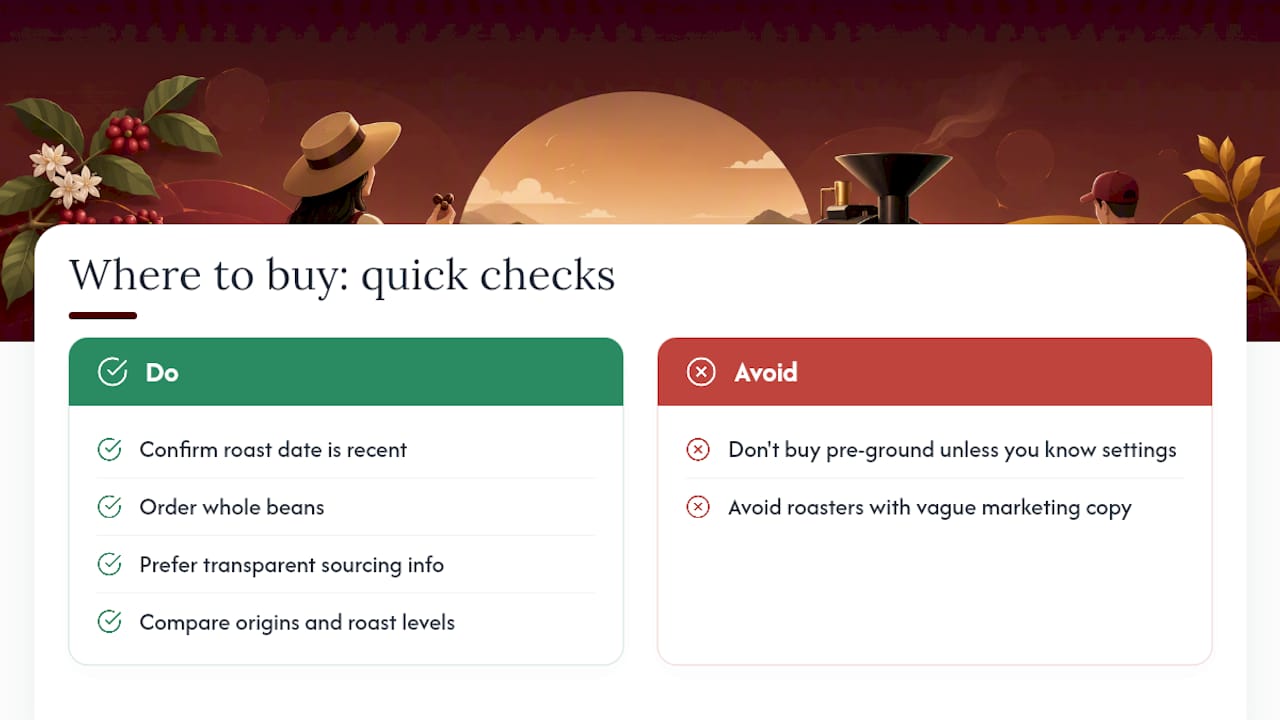
At checkout, confirm the roast date is recent and that you’re ordering whole bean, not ground, unless you already know your grinder settings. If you’re comparing roasters generally, transparency about sourcing and processing is a good quality signal wherever you shop, a point echoed in broader discussions of service and product quality standards across food and beverage industries. Browse the full coffee and tea product lineup to compare origins and roast levels side by side before you order.
Sources
- The Takeout — 15-15-15 rule for freshest coffee
- Consumer Reports — Coffee buying guide
- Fellow — How to choose coffee beans: a beginner’s guide
- MasteringCoffee — Best coffee beans guide