

The rule is simple: if your coffee tastes sour or weak, grind finer. If it tastes bitter or harsh, grind coarser. Getting that adjustment right, though, takes a bit more discipline than just turning a dial.
Here is what actually works:
- Sour or weak coffee signals under-extraction. Grind finer by 1–2 clicks and re-taste before touching anything else.
- Bitter or harsh coffee signals over-extraction. Move coarser by 1–2 clicks, same logic.
- Change only one variable at a time. Adjust grind first. If you also change dose, water temperature, and brew time simultaneously, you will never know what fixed the problem.
- Make small, incremental moves. One or two clicks per adjustment is the standard. Jumping multiple levels at once risks both mechanical damage and overshooting your target flavor.
- Grinder wear matters. Burrs dull over time, which shifts your effective grind size even when the setting stays the same. Periodic recalibration keeps your results consistent.
Grind size is the primary lever because it controls flow rate and extraction yield simultaneously. Finer particles slow water flow and pull more from the coffee; coarser particles speed flow and pull less. Every other brewing variable works around that relationship.
Which grind size should you use for each brewing method?
The right starting point depends entirely on your brew method. Use this chart as your baseline, then dial in from taste.
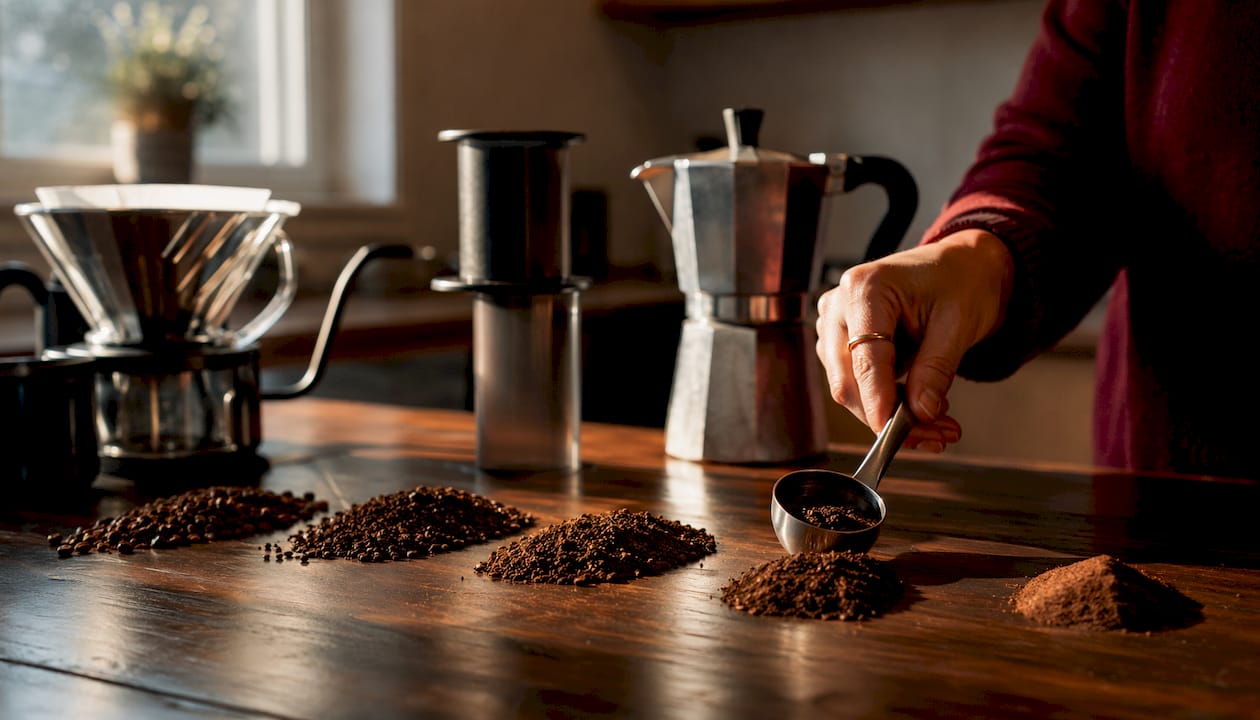
| Brew Method | Recommended Grind | Texture Reference | Common Taste Issue | Fix |
|---|---|---|---|---|
| Cold Brew | Extra Coarse | Peppercorn | Watery | Grind finer |
| French Press | Coarse | Sea salt | Muddy or bitter | Grind coarser |
| Drip Coffee | Medium | Table salt | Bitter | Grind coarser |
| Pour-Over (V60/Chemex) | Medium-Fine | Sand | Sour | Grind finer |
| AeroPress | Medium to Fine | Sand to fine | Weak | Grind finer |
| Moka Pot | Fine (not espresso-fine) | Fine sand | Bitter | Grind coarser |
| Espresso | Fine | Powdery | Fast shot, sour | Grind finer |
| Turkish Coffee | Extra Fine | Powdered sugar | Gritty | Grind finer |
A few method-specific notes worth knowing:
- French press uses full immersion, so a coarse grind prevents over-extraction and reduces sediment. If your cup looks muddy, go coarser and pour gently to avoid disturbing settled grounds. For more on managing extraction with this method, the French press brewing guide covers it in depth.
- Pour-over (V60, Chemex) is sensitive because you control the pour rate. Medium-fine gives clarity and sweetness. If the brew drains too fast and tastes sharp, go finer. If it stalls and turns bitter, go coarser. Chemex specifically has its own nuances, covered in the Chemex grind size guide.
- AeroPress tolerates a range of grind sizes because recipes vary so widely. Start at medium-fine for most recipes and adjust from there.
- Espresso is the most grind-sensitive method. Small changes, even a few millimeters of collar movement, can shift shot time by several seconds.
- Moka pot wants fine, but not espresso-fine. Too fine chokes the flow and produces harsh, over-extracted coffee.
- Cold brew steeps for hours, so it needs extra-coarse grounds to avoid over-extraction during that long contact time.
On grinder type: Burr grinders produce consistent particle sizes, which is what makes controlled extraction possible. Blade grinders chop unevenly, creating a mix of fine powder and large chunks that extract at different rates. For pour-over and espresso especially, a burr grinder is not optional if you want repeatable results. Hario makes well-regarded hand burr grinders that give home baristas real grind control without a large investment.
Pro Tip: Grinder numbers are not universal. A “15” on one machine may equal a “22” on another. Always use texture and taste as your reference points, not the number on the dial.
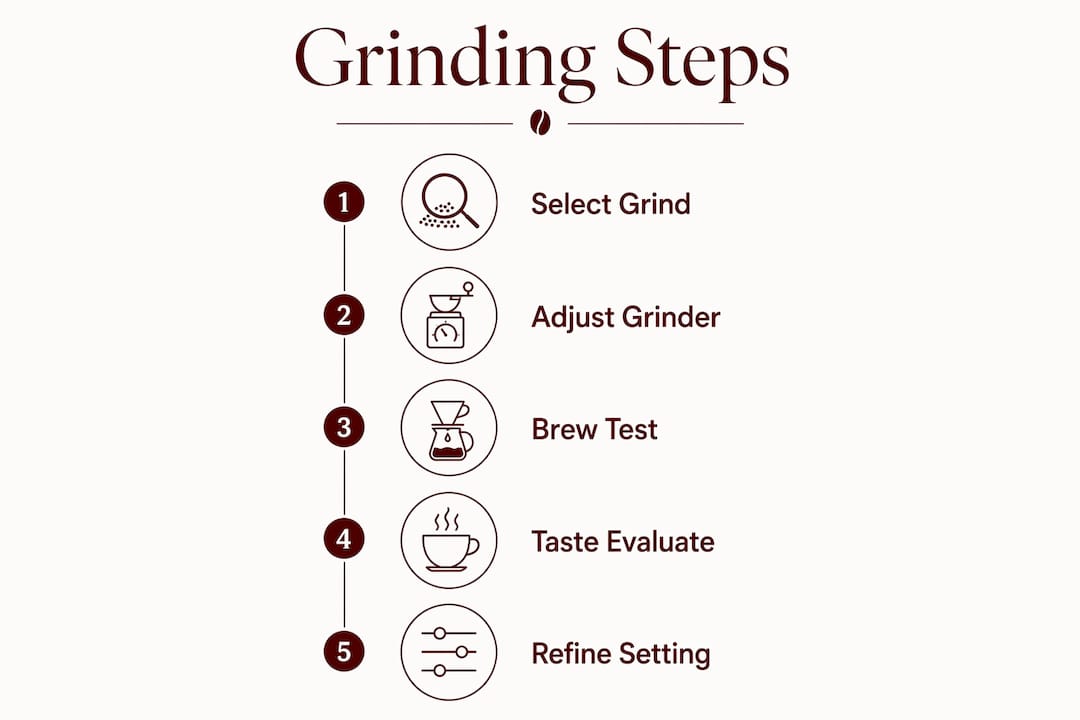
How to dial in your grind size step by step
The process is straightforward. What separates a good cup from a frustrating one is sticking to the sequence.
- Start with a burr grinder. Consistency in particle size is what makes the rest of this process work. A blade grinder makes dialing in nearly impossible.
- Set your initial grind based on the brew method chart above. If you are using a new grinder, start coarser than you think you need. Many grinders ship set too fine, which can clog burrs on the first use.
- Lock your recipe. Use the same dose, water volume, and brew time for every test. If those variables shift, you cannot tell whether the grind change made a difference.
- Brew and taste. Identify the main issue: sour and weak, or bitter and harsh. That diagnosis tells you which direction to move.
- Adjust by 1–2 clicks. No more. Re-taste before touching anything else.
- Purge 5–8g of beans after each adjustment. Grounds retained from the previous setting will skew your next dose and make the result misleading.
- Repeat. Brew, taste, adjust, purge. Most home baristas land on a dialed-in setting within two or three shots.
- Write it down. Record the grind setting, the bean, the dose, and your tasting notes. Coffee changes as it ages, and a written record saves you from starting over with every new bag. A coffee journal makes this easy to maintain over time.
Pro Tip: Adjust finer while the grinder runs, not when it is empty. Moving burrs closer together on a stationary motorized grinder can jam the mechanism and cause real damage.
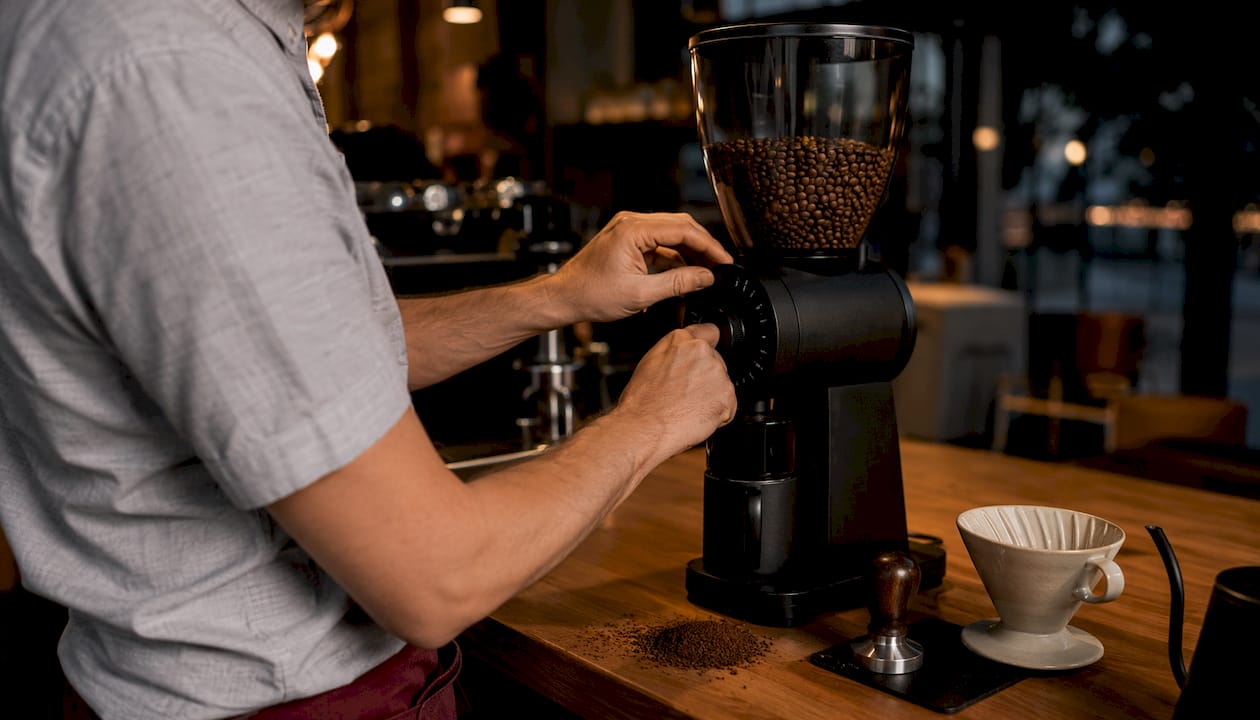
Troubleshooting common grind-related taste problems
Most bad cups trace back to one of four flavor issues. Here is how to read them and what to do.
- Sour or acidic: Under-extraction. The water moved through too fast and did not pull enough from the grounds. Grind finer by 1–2 clicks. If sourness persists after two adjustments, also check water temperature and brew time.
- Bitter or harsh: Over-extraction. Too much dissolved from the grounds, usually because the grind was too fine or contact time too long. Grind coarser. Do not also change water temperature at the same time or you will not know which fix worked.
- Weak or flat: Often under-extraction, but can also mean stale beans. If the coffee tastes thin and lifeless, try grinding finer first. If that does not help, check bean freshness. Stale grounds mimic under-extraction because the aromatics have already off-gassed.
- Muddy or gritty: Usually too fine a grind for an immersion method like French press. Go coarser. For Turkish coffee, grittiness is expected, but if it is excessive, check that your grinder actually reaches extra-fine.
A few environmental factors complicate this picture. Humidity and bean age both affect how coffee extracts. Fresh beans off-gas CO2, which can speed extraction slightly. Older beans, having lost moisture, often need a slightly finer grind to hit the same flavor target. On humid days, coffee absorbs ambient moisture and may grind slightly finer than usual at the same setting.
The cardinal rule: change one thing at a time. If you adjust grind, dose, and water temperature together, you cannot isolate the cause of any improvement or problem. Grind first, always.
What expert baristas know about grinder calibration
Grinder calibration is not a one-time task. It is an ongoing practice, and the professionals who produce consistent cups treat it that way.
Miele’s manufacturer guidance is explicit: adjust only one level at a time, brew a cup after each change, and never jump multiple levels in a single move. That caution applies broadly across grinder types, not just built-in machines. Burr geometry is precise, and large sudden shifts stress the mechanism.
Espresso professionals use what is called a diagnostic window to calibrate extraction: a shot that runs 20–30 seconds at a 1:2 dose-to-yield ratio. That window is a starting reference, not a rigid target. Once you are inside it, the focus shifts from timing to taste. Expert baristas adjust based on what they experience in the cup, using timing only as a sanity check.
Key calibration practices the professionals rely on:
- Purge after every grind change. Retained grounds from the prior setting contaminate the next dose and produce misleading results.
- Adjust finer while the grinder runs to prevent burr jams on motorized machines.
- Recalibrate periodically. Burrs wear gradually, shifting the effective grind size at any given setting. If your usual setting starts producing different results without any recipe change, the burrs may need inspection.
- Account for bean age. Freshly roasted beans extract differently than beans two weeks past roast. Small, taste-led adjustments maintain cup consistency as the bag ages.
- Track environmental shifts. Seasonal humidity changes affect grind behavior. A setting that works perfectly in dry winter air may need a small coarser adjustment in humid summer months.
The deeper insight from experienced baristas: once you are in the diagnostic window, stop chasing numbers and start chasing flavor. Grind settings are reference marks, not answers. The cup tells you what to do next.
How bean origin and roast level change your grind approach
Grind size does not exist in isolation. The beans themselves shape how any given setting performs.
Roast level is the most direct variable. Light roasts are denser and harder, which means they resist extraction more than dark roasts. To pull the same flavor complexity from a light roast that you would from a medium, you often need to grind finer or extend brew time. Dark roasts are more porous and brittle. They extract faster, so a slightly coarser grind prevents the bitterness that comes from over-extraction. A setting that produces a balanced medium roast espresso will often run too fast and taste thin on a dark roast at the same dose.
Bean origin introduces density and moisture differences that affect grind behavior. High-altitude beans from Ethiopia or Colombia tend to be denser than lower-altitude varieties, which means they may need a finer grind to achieve the same extraction rate. Processing method also plays a role: natural-processed beans, which dry with the fruit intact, often taste sweeter and more fruit-forward, and they can tolerate a slightly coarser grind before losing body. Washed beans, stripped of the fruit before drying, tend to be cleaner and brighter, and they reward precision at the finer end of the range for methods like pour-over.
The practical takeaway is that switching beans is effectively the same as switching brew methods: your dialed-in setting does not transfer automatically. Start from the method baseline on the grind size chart and work back in from taste. A coffee cupping session is one of the fastest ways to develop the palate needed to read these differences quickly.
Key Takeaways
Grind size is the single most controllable variable in home brewing: adjust finer for under-extraction, coarser for over-extraction, and always change one variable at a time.
| Point | Details |
|---|---|
| Sour means grind finer | Sour or weak coffee signals under-extraction; move 1–2 clicks finer and re-taste. |
| Bitter means grind coarser | Bitter or harsh flavor signals over-extraction; move 1–2 clicks coarser before changing anything else. |
| Purge after every adjustment | Run 5–8g of beans through after a grind change to clear retained grounds from the prior setting. |
| Roast and origin shift the baseline | Light roasts need finer grinds; dark roasts extract faster and often need a slightly coarser setting. |
| Recalibrate as burrs wear | Burrs dull over time, shifting effective grind size; periodic recalibration keeps results consistent. |

Espritkaffe roasts every coffee with a specific extraction window in mind. Whether you are pulling shots with a fine espresso grind or steeping a cold brew with extra-coarse grounds, the bean matters as much as the setting. Explore Espritkaffe’s full range and find the roast that rewards your dialing-in process.