

Coffee roast levels fall into four main categories: light, medium, medium-dark, and dark. Each is defined by the internal temperature the bean reaches during roasting, which drives chemical changes that determine color, aroma, and everything you taste in the cup. There is no universal industry standard for where one roast ends and another begins, so the same label can mean different things from one roaster to the next. What stays consistent is the underlying science.
Here is a quick reference for the four main roast levels and their internal temperature ranges:
- Light roast: 180°C–205°C internal temperature. Dry bean surface, light brown color, bright acidity, origin-forward flavors.
- Medium roast: 210°C–220°C internal temperature. Medium brown, no surface oil, balanced sweetness and body.
- Medium-dark roast: 225°C–230°C internal temperature. Richer brown with slight sheen, fuller body, bittersweet notes.
- Dark roast: 240°C–250°C internal temperature. Near-black beans, oily surface, bold and smoky flavor.
Coffee roast levels explained: temperature, color, and what changes in the bean
Roasting is a heat-driven process, and the temperature the bean reaches internally is the single most reliable way to classify a roast. Color is a useful shorthand, but it can mislead. A bean’s surface can look darker than its core, and lighting conditions in a roastery shift perception. Temperature and audible crack sounds give roasters a more objective picture.
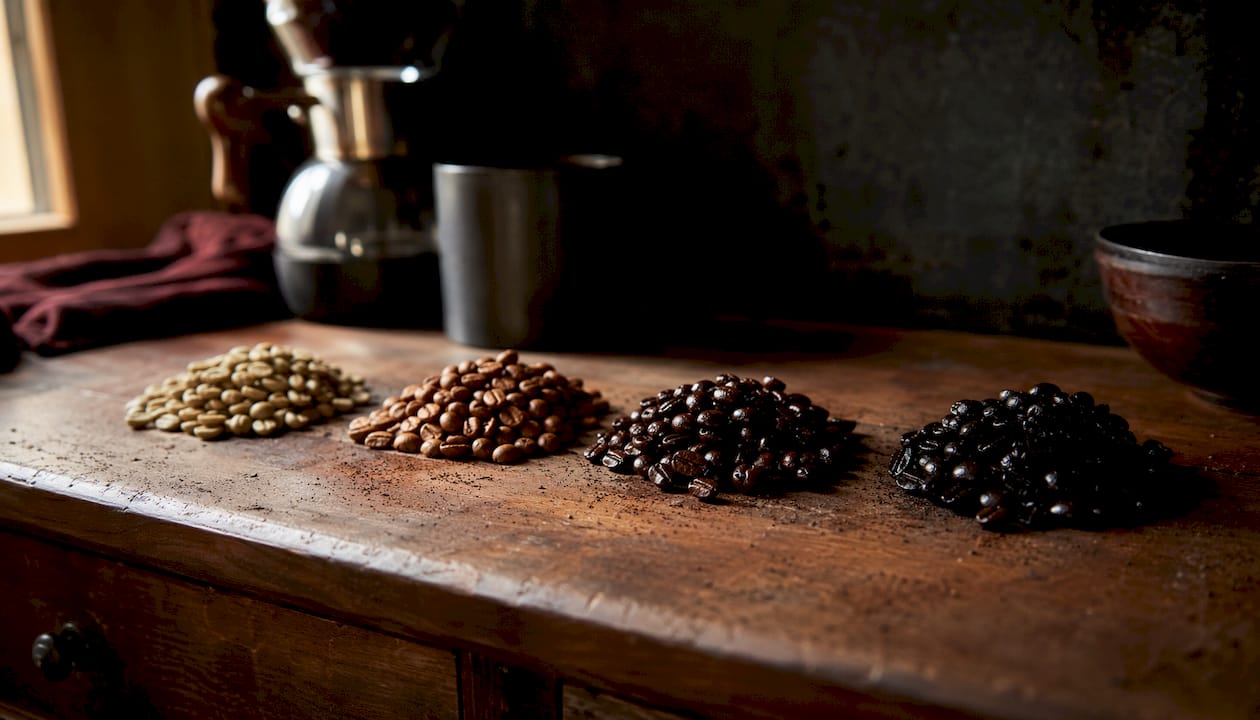
| Roast Level | Bean Color | Surface | Flavor Notes |
|---|---|---|---|
| Light | Light brown | Dry, matte | Floral, fruity, bright acidity |
| Medium | Medium brown | Dry, no oil | Caramel, balanced, mild bitterness |
| Medium-Dark | Dark brown | Slight sheen | Bittersweet, chocolate, fuller body |
| Dark | Near black | Oily, shiny | Smoky, bold, low acidity |
Two audible milestones mark the roast progression. The first crack occurs roughly between 196°C and 205°C, when moisture inside the bean vaporizes and the bean expands with a popping sound. Light roasts are pulled at or just after this point. The second crack begins around 224°C, signaling the breakdown of the bean’s cellular structure. Medium-dark and dark roasts develop past this threshold.
Once a bean crosses the second crack, oils migrate from the interior to the surface. Acidity drops sharply, and the flavors you taste come less from the bean’s origin and more from the roasting process itself. That is why a dark-roasted Ethiopian bean and a dark-roasted Colombian bean can taste remarkably similar, while the same two origins taste worlds apart as light roasts.
Light roast beans are denser and harder because they retain more moisture. They also grind differently, producing a finer, more uniform particle at the same grinder setting compared to a brittle dark roast bean.
How roast level shapes flavor, aroma, and your brewing choices
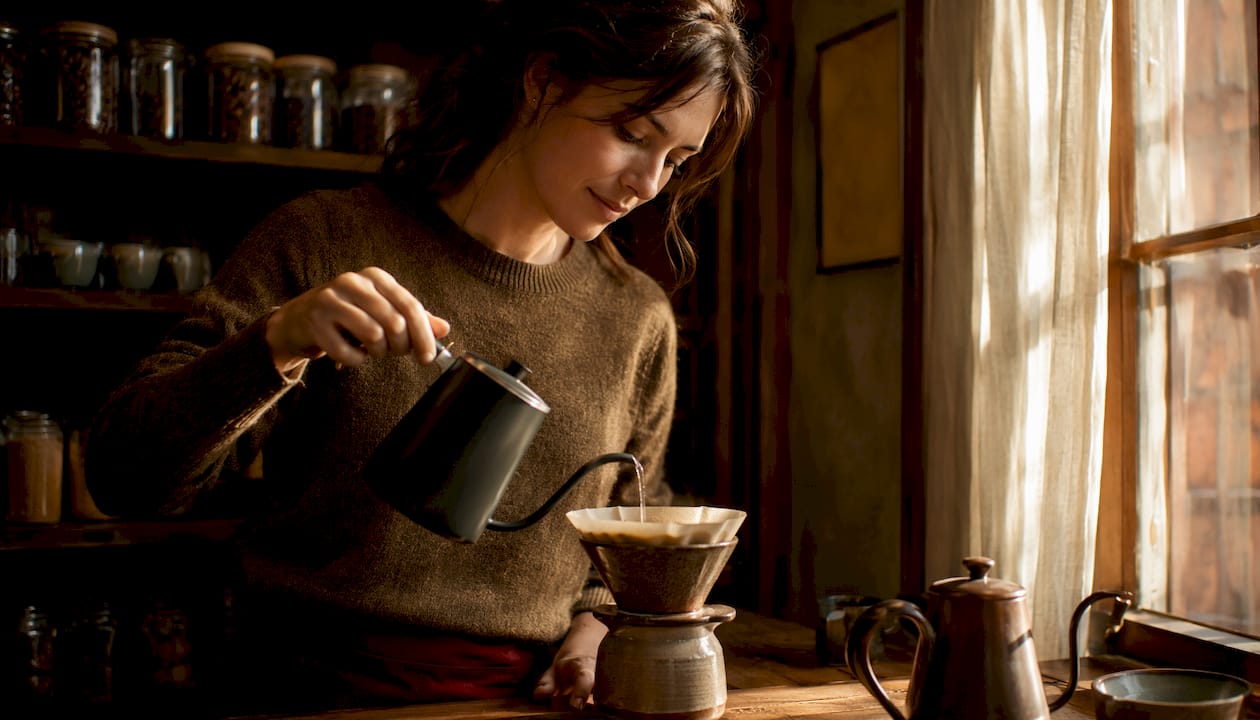
Roast level is the biggest variable you control before water ever touches the coffee. Acidity, sweetness, bitterness, and body all shift predictably as roast deepens.
- Light roast: High acidity, delicate sweetness, complex origin character. Floral and fruit notes dominate. Thin to medium body.
- Medium roast: Balanced acidity and sweetness, caramel and nutty tones, approachable body. The American roast label comes from medium roast’s long dominance in U.S. drip coffee culture.
- Medium-dark roast: Lower acidity, bittersweet chocolate notes, heavier body. Works well for drinkers who want richness without full smokiness.
- Dark roast: Minimal acidity, pronounced bitterness, roast-derived flavors like char and smoke. Bold and straightforward.
One persistent myth: dark roast is stronger in caffeine. It is not. Light roast beans actually retain slightly more caffeine because caffeine degrades marginally with prolonged heat exposure. The perceived “strength” of dark roast is a flavor quality, not a chemical one.
Brewing method matters too. Light roasts shine in pour-over and drip brewing, where slower extraction pulls out their delicate acids and aromatics. Medium roast is the most forgiving across methods, working reliably in drip, French press, and espresso alike. For French press brewing, medium to medium-dark roasts tend to produce the richest, most satisfying cup. Dark roasts handle the high pressure of espresso extraction well, producing a thick crema and bold base for milk drinks.
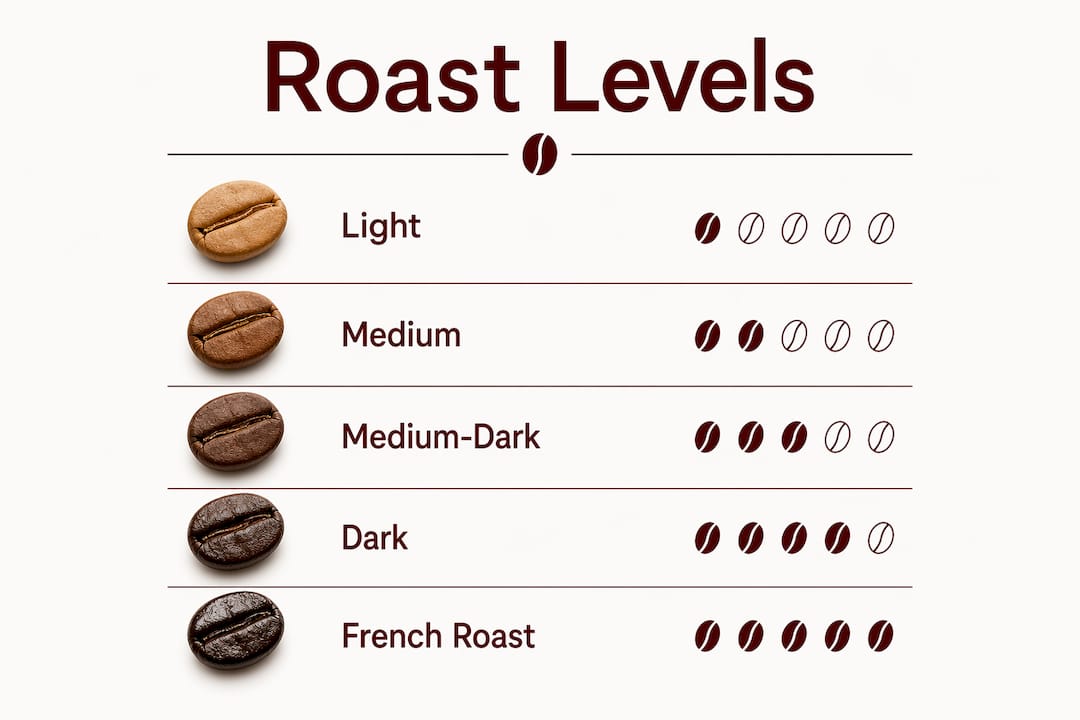
Pro Tip: Water temperature matters more with light roasts than most people realize. Brewing a light roast at 205°F (96°C) rather than the standard 195°F (91°C) extracts more of the delicate acids and sweetness that make light roast worth choosing. Drop the temperature for dark roasts to avoid amplifying bitterness.
Traditional roast names and what they actually mean today
Walk into any specialty shop and you will see names like City, Full City, Vienna, French, and Italian on the bags. These names have real historical roots, but they are applied inconsistently enough that they function more as marketing terms than reliable classifications.
Here is how traditional names roughly map to modern roast categories:
- Blonde or Cinnamon roast: Light roast. Very light brown, high acidity, sometimes underdeveloped.
- City roast: Light to medium. The bean has just passed first crack. Bright and origin-forward.
- Full City roast: Medium to medium-dark. Reached just before or at the start of second crack. Balanced and rich.
- Vienna roast: Medium-dark. Some surface oil, bittersweet character, popular for espresso blends.
- French roast: Dark. Oily beans, smoky flavor, low acidity. One of the darkest commercially available roasts.
- Italian roast: Dark to very dark. Near-charred, intense bitterness, almost no origin character left.
“Espresso roast” deserves a separate note. It is a marketing designation, not a roast level. A roaster labeling a bag “espresso roast” is signaling intended use, not a specific temperature or color. Espresso can be pulled from a light roast or a dark one depending on the flavor profile the roaster is chasing. The National Coffee Association confirms this: the beans in an espresso blend will be roasted to whatever level the roaster believes best serves the brewing method, often medium to dark, but not always.
The practical takeaway: pay more attention to the roast date and the flavor notes printed on the bag than to the traditional name. A bag labeled “French roast” from one roaster may taste completely different from another’s, because neither is bound to a fixed temperature or color standard.
How Espritkaffe evaluates roast levels using sensory cues
Identifying a roast level accurately takes more than a glance at bean color. Professional roasters at Espritkaffe use a multi-sense approach that combines temperature monitoring, audible crack detection, visual color assessment, and aroma evaluation to hit a consistent roast profile every time.
The Specialty Coffee Association has pushed the industry toward objective color measurement using Lab* color coordinates and colorimeter devices, precisely because visual assessment alone varies too much between individuals and lighting conditions. The Agtron scale, a numeric system for measuring roast color reflectance, gives roasters a repeatable number to target rather than a subjective description like “medium brown.”
Here is a simplified sensory reference Espritkaffe’s team uses to evaluate roast stages:
| Roast Stage | Aroma | Bean Surface | Sound Cue | Body Feel |
|---|---|---|---|---|
| Light | Grassy, floral, fruity | Dry, matte | After first crack | Light, tea-like |
| Medium | Caramel, toasted grain | Dry, no sheen | Between cracks | Medium, smooth |
| Medium-Dark | Chocolate, spice | Slight oil trace | Early second crack | Full, velvety |
| Dark | Smoky, charred | Oily, shiny | Past second crack | Heavy, bold |
Aroma is often the fastest indicator. A light roast smells almost grassy or floral right out of the bag. A dark roast hits you with smoke and char before you even open the grinder. Medium roasts land in the caramel and toasted-bread zone, which is why they read as familiar and approachable to most people.
The universal coffee color curve identified by SCA researchers shows that roast color progression follows a consistent pattern across all coffee origins, meaning the Lab* measurement approach works regardless of where the bean was grown. That consistency is what makes colorimeter-based evaluation so useful for roasters who source from multiple origins and need to maintain a predictable output.
For home coffee drinkers, you do not need a colorimeter. But training yourself to notice aroma, surface texture, and color together gives you a much sharper ability to evaluate roast quality and communicate what you actually want when you buy coffee. If a bag smells flat or papery, the roast may be underdeveloped or stale regardless of what the label says.
Storage affects this too. Light roasts, with their higher moisture content and more volatile aromatics, go stale faster once the bag is opened. Dark roasts, despite their oily surface, are also vulnerable because those surface oils oxidize quickly. Both benefit from airtight containers kept away from heat and light, with whole beans ground only as needed.
Espritkaffe builds every roast with this kind of precision in mind. If you want coffee roasted to a specific profile rather than a generic label, the Espritkaffe instant coffee range delivers that same intentional approach in a format that fits any morning.
Key Takeaways
Roast level, defined by internal bean temperature, is the primary driver of coffee flavor, color, and brewing behavior across all four roast categories.
| Point | Details |
|---|---|
| Temperature defines roast level | Light: 180°C–205°C; Medium: 210°C–220°C; Medium-Dark: 225°C–230°C; Dark: 240°C–250°C. |
| Caffeine myth | Light roast retains slightly more caffeine; dark roast’s “strength” is flavor, not chemistry. |
| Traditional names are unreliable | City, French, and Italian roast labels vary by roaster and region with no fixed standard. |
| Brewing method follows roast | Light roast suits pour-over; medium works across methods; dark handles espresso pressure well. |
| Sensory cues beat labels | Aroma, surface texture, and roast date tell you more than a bag’s roast name ever will. |