

Can you roast coffee beans with a rotisserie drum?
Yes, you can roast coffee beans using a rotisserie drum, and the results can be genuinely good. The method works by tumbling green beans inside a rotating mesh or perforated drum over a heat source, keeping them in constant motion so they roast more evenly than they would sitting still on a pan. That continuous agitation is the whole point: it mimics what commercial drum roasters do, just at a fraction of the scale and cost.
The two main paths home roasters take are household appliance conversions and outdoor BBQ setups. Each sits at a different point on the spectrum of control and convenience:
- Household appliance rotisseries (air fryers, toaster ovens): low cost to start, but limited by temperature caps and inconsistent heat cycling
- BBQ grill drum setups: higher upfront effort, but far better heat control, larger batch sizes, and a more authentic roast
- DIY builds: full customization of drum size, motor speed, and heat source, but require tools and time
- Purpose-built drum kits (like RK Drums): the middle ground between DIY and commercial, designed specifically for grill-based coffee roasting
The core limitation across all rotisserie methods is that home roasting requires well-ventilated spaces to manage smoke and prevent carbon monoxide risks. That applies whether you’re using a countertop air fryer or a propane-fired BBQ drum outdoors.
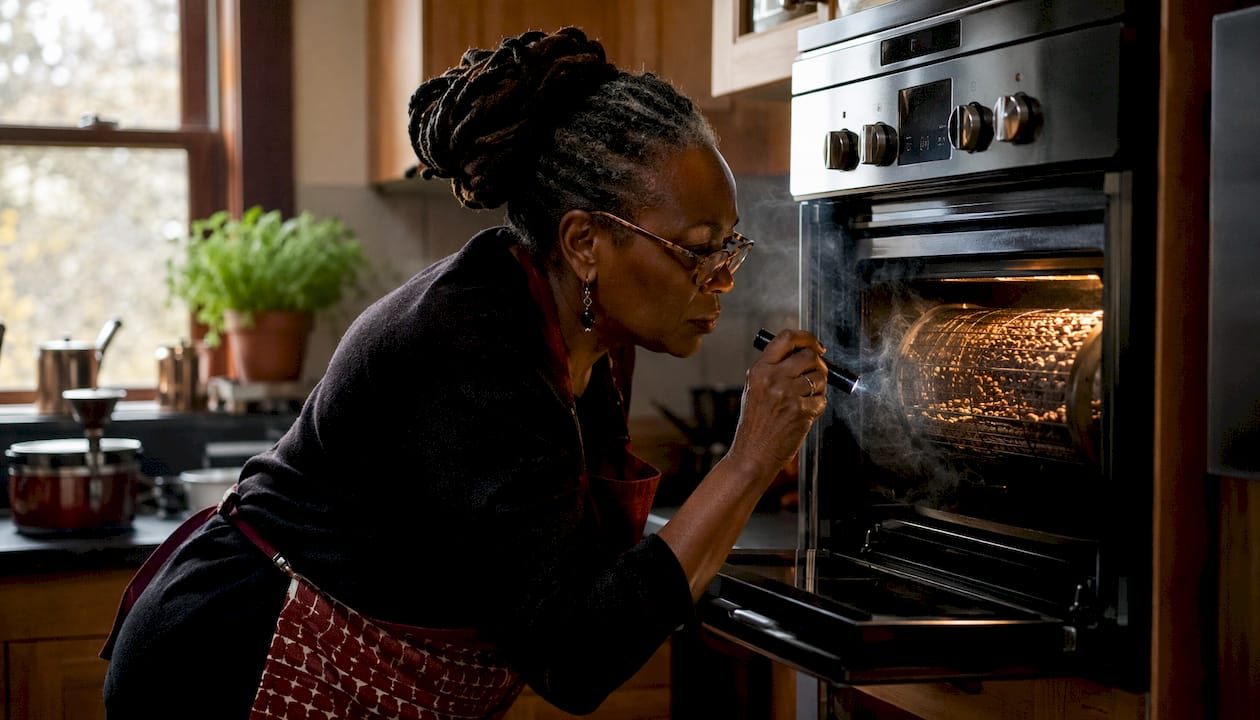
How to roast coffee in a household appliance rotisserie drum
The Cosori Air Fryer Rotisserie setup is the most documented household appliance approach in home roasting communities. The Cosori CS130AO model (30L, 1800W) pairs with an inexpensive stainless steel mesh drum, roughly 12 x 18 cm, that fits the oven’s spit rod. Total cost for the pairing runs around $220. It’s accessible, but it comes with real trade-offs.
Step-by-step process
- Preheat the oven to its maximum temperature (typically 400°F) for at least 10 minutes before loading beans.
- Load the drum with green coffee beans, filling it no more than halfway to allow tumbling.
- Mount the drum on the spit rod and lock it in place before inserting into the hot oven.
- Set fan speed to maximum to push as much hot air through the drum as possible.
- Monitor closely using a strong LED light shined through the oven’s front glass to observe bean color, since first crack sounds can be muffled and hard to hear during a long, slow roast.
- Remove and cool immediately when beans reach your target color, using heat-resistant gloves.
Limitations to know before you start
- Temperature ceiling: Most air fryer models cap the rotisserie setting at 400°F, which is below the environmental temperature commercial drum roasters operate at. The result is a slower roast that can taste flat.
- Heat cycling: Off-the-shelf air fryer rotisserie drums often cycle heating elements on and off, producing slower, less uniform roasts. Experienced hobbyists sometimes modify the thermostat to keep elements on continuously.
- Visibility: Judging roast level through a small oven window with a spinning drum is genuinely difficult, even for experienced roasters.
- Slow roasts: Expect 20–25 minutes to first crack, compared to 8–12 minutes on a well-set BBQ drum. Longer roasts tend to produce a baked, less vibrant cup.
Pros and cons
| Pros | Cons |
|---|---|
| Low startup cost (~$220) | Temperature capped at 400°F |
| Indoor use possible | Heat cycling causes uneven roasts |
| Even bean tumbling | Roast visibility is poor |
| Easy cleanup | Slow roast times |
| No outdoor space needed | Small batch capacity |
Pro Tip: Shine a strong LED flashlight upward through the front glass of the oven toward the spinning drum. It’s the most practical way to judge bean color without stopping the roast and opening the door.
How to roast coffee on a BBQ grill with a rotisserie drum
Outdoor BBQ rotisserie setups give you something the countertop appliance simply cannot: real heat. A propane grill running at full output can reach the temperatures a drum roast actually needs, and the open-air environment handles smoke naturally. The tradeoff is setup complexity and the need for the right equipment.
What you need
- A propane or gas grill with rotisserie cutouts and sufficient BTU output
- A food-grade stainless steel drum (mesh size 3/16" is standard for coffee beans)
- A rotisserie motor capable of 15–20 RPM (standard motors run at 2–5 RPM, which is too slow for even roasting)
- A reliable thermometer rated to at least 700°F
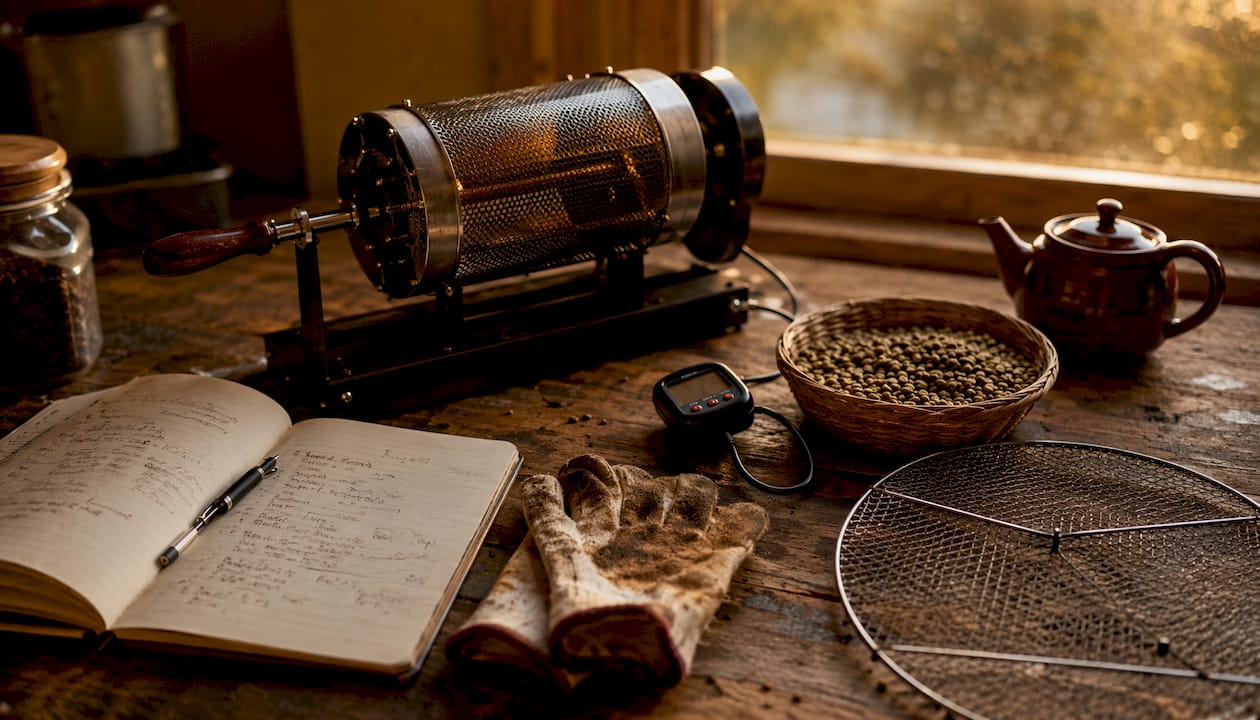
- Heat-resistant gloves and a cooling tray or screened container over a fan
Step-by-step BBQ roasting process
- Preheat the grill with the lid closed for 10–15 minutes, targeting a stable temperature in the 400–450°F range inside the drum zone.
- Load green beans into the drum, filling it about halfway.
- Mount the drum on the rotisserie rod and engage the motor before the drum gets hot.
- Monitor temperature with a thermometer probe positioned near the drum surface, not just the grill’s built-in gauge.
- Listen and watch for first crack at around the 8–12 minute mark, which sounds like popcorn popping and signals the start of light roast territory.
- Adjust heat by raising or lowering burner output to control development time after first crack.
- Remove the drum and cool beans immediately by spreading them on a screen over a fan.
Motor speed matters more than most guides admit
Standard rotisserie motors run at 2–5 RPM. That’s designed for a chicken, not coffee beans. At that speed, beans sit against the drum wall long enough to scorch on one side while the other stays underdeveloped. Upgrading to a 15–20 RPM motor is the single most impactful modification you can make. The Reddit home roasting community has documented this swap extensively, and the improvement in roast uniformity is consistent.
- Keep the drum no more than half full to allow proper bean tumbling
- Use a grill with rotisserie cutouts so the rod sits level and stable
- Position burners evenly under the drum’s length to avoid hot spots
- Never leave the grill unattended once beans reach roasting temperature
Statistic callout: Home roasting can significantly reduce bean costs compared to buying pre-roasted specialty coffee, and the BBQ drum method scales to batch sizes that make that math work in your favor.
Best practices and safety for rotisserie coffee roasting at home
Safety is the part most guides rush past. Coffee oils can ignite at temperatures not far above second crack, and chaff, the papery skin that sheds from beans during roasting, is combustible. Neither of these facts is theoretical.
- Ventilate aggressively: Roast outdoors or in a garage with the door open. A kitchen window cracked is not adequate. Carbon monoxide is a real risk in enclosed spaces, especially with gas-powered setups.
- Keep a fire extinguisher within reach: Not across the garage. Right next to you. An avid home roaster with 18 years of experience, quoted by Serious Eats, made this the first piece of advice he gave to beginners.
- Never walk away: A runaway roast produces thick smoke, then a scorched smell, then potentially flames. Stay within arm’s reach the entire time.
- Manage chaff buildup: Empty chaff from the drum area between batches. Accumulated chaff near a heat source is a fire hazard.
- Use heat-resistant gloves: Removing a hot drum from a grill or oven without proper gloves is how burns happen.
Pro Tip: If you’re roasting indoors with a household appliance, crack a window and point a box fan outward to create negative pressure. This pulls smoke out rather than just circulating it.
Common mistakes and how to fix them
Slow roast, flat cup: Usually a heat problem. Preheat longer, push the temperature higher, or reduce batch size so the beans heat faster.
Uneven roast: Almost always a motor speed issue. If your drum turns slower than 15 RPM, beans will scorch on one side. Swap the motor.
Over-roasting past second crack: Rotisserie setups make it hard to stop quickly. Practice removing and cooling the drum fast, and pull slightly earlier than you think you need to since the beans keep developing from residual heat.
Can’t hear first crack: Normal with rotisserie setups. Rely on visual cues (bean color shifting from green to yellow to tan to brown) and a thermometer rather than sound alone.
The home roasting process with rotisserie drums, from start to finish
Understanding the full roasting timeline helps you make decisions in real time rather than reacting to problems after they’ve already happened.
Roasting phases
- Preheat (10–15 minutes): Get your appliance or grill to operating temperature before the beans go in. Cold-start roasting produces uneven results.
- Drying phase (0–5 minutes): Beans lose moisture and turn from green to yellow. No cracking yet. The drum should be turning the whole time.
- First crack (typically 8–12 minutes in a well-set BBQ drum): An audible popping sound, similar to popcorn. This marks the beginning of light roast territory.
- Development phase (1–4 minutes after first crack): This window defines your roast level. Pull early for light, let it run for medium.
- Second crack (roughly 2–4 minutes after first crack): A quieter, more rapid crackling. Dark roast territory begins here.
- Cooling (4–5 minutes): Spread beans on a screen over a fan immediately. Slow cooling lets residual heat push the roast darker than intended.
Typical roasting sessions require several minutes of active roasting time, plus preheating and cooling phases. Budget about half an hour to complete a BBQ drum session.
Bean quantities and storage
For custom roast profiles and freshness, roasting small, frequent batches beats roasting large ones infrequently. Freshly roasted beans peak in flavor at 7–14 days after roasting. After four weeks, the aromatics fade noticeably.
Store freshly roasted beans in an airtight container with a one-way valve, away from light and heat. Green (unroasted) beans store well for 6–12 months in a cool, dry place, which is the real logistical advantage of home roasting: you can buy green beans in bulk and roast on demand.
| Phase | Timing | What to watch for |
|---|---|---|
| Preheat | 10–15 min | Stable target temperature |
| Drying | 0–5 min | Color shift from green to yellow |
| First crack | 8–12 min (BBQ drum) | Audible pop, bean color turning tan |
| Development | 1–4 min post-crack | Color and aroma guide roast level |
| Second crack | 2–4 min post-first crack | Rapid quieter crackling, oil on surface |
| Cooling | 4–5 min | Spread on screen, fan-assisted |
| Peak flavor window | 7–14 days post-roast | Store airtight with one-way valve |
For BBQ drum setups, a 2-pound batch is a practical starting point. Household appliance drums typically handle relatively small batches before airflow gets restricted. Developing your sensory evaluation skills alongside your roasting practice is what separates good batches from great ones.
Espritkaffe: when you want the roast without the setup
Rotisserie roasting at home is genuinely rewarding, but it takes time, equipment, and a real tolerance for trial and error. If you want the freshness and intentionality of a carefully crafted roast without sourcing motors, modifying thermostats, or managing chaff fires, Espritkaffe is built for exactly that.
Espritkaffe roasts to order, so what arrives at your door is fresh, not sitting in a warehouse. The Coffee with Mushrooms Medium Roast is the kind of cup that makes you understand why roast timing matters: balanced, clean, and developed without going flat. For those who prefer something deeper, the Coffee with Mushrooms Dark Roast delivers the body and intensity that a well-controlled drum roast produces. Order your roast at Espritkaffe.com and taste what intentional roasting actually means.
Key Takeaways
A rotisserie drum roasts coffee evenly through constant tumbling, but household appliance setups require motor and thermostat modifications to produce results worth drinking.
| Point | Details |
|---|---|
| Motor speed is critical | Standard 2–5 RPM motors cause scorching; upgrade to 15–20 RPM for even roasts. |
| Appliance temperature limits | Air fryer rotisseries cap at 400°F, producing slow 20–25 minute roasts that taste flat. |
| BBQ drums outperform appliances | Outdoor grill setups offer real heat, larger batches, and better roast control. |
| Freshness window is short | Roasted beans peak at 7–14 days; roast small batches frequently to stay in that window. |
| Espritkaffe roasts to order | For freshness without the DIY effort, Espritkaffe delivers custom-roasted coffee on demand. |