

Caffeine timing is defined as the deliberate scheduling of caffeine intake to align its peak cognitive effects with your highest-demand mental work. The difference between a focused, productive morning and a jittery, distracted one often comes down not to how much coffee you drink, but when you drink it. Research confirms that peak plasma concentrations occur 30 to 60 minutes after consumption, meaning your cup of coffee has a precise focus window. Miss it, and you miss the benefit. Understanding why caffeine timing affects focus gives you a tool that most people never use correctly.
Why caffeine timing affects focus: the pharmacology behind it
Caffeine works by blocking adenosine A1 and A2A receptors in the brain, the receptors responsible for signaling fatigue and building sleep pressure throughout the day. When those receptors are blocked, you feel alert, your reaction time improves, and your ability to sustain attention sharpens. This is not caffeine creating energy from nothing. It is caffeine masking the fatigue signal your brain was already sending.
The timing of that blockade is everything. Because peak blood caffeine levels occur 30 to 60 minutes post-ingestion, the window of strongest cognitive benefit is narrow and predictable. A 75 mg caffeine serving has been shown to improve attention and response speed in meta-analytic studies, but only when that peak aligns with actual cognitive demand. Drinking coffee an hour before you need to focus means the peak hits during your work. Drinking it right before means you are still waiting for it to kick in.

What complicates this further is individual metabolism. Caffeine half-life ranges from 3 to 7 hours depending on genetic variants in the CYP1A2 enzyme, smoking status, and certain medications. For a fast metabolizer, a mid-morning coffee clears the system by early afternoon. For a slow metabolizer, that same cup is still circulating at 9 PM. This variability means that a timing strategy that works perfectly for your colleague may actively undermine your sleep and next-day focus.
Pro Tip: If you consistently feel wired after a single cup or crash hard two hours later, you are likely a fast or slow metabolizer. Adjust your timing window by 30 to 60 minutes in either direction and track the difference over a week.
| Metabolizer type | Half-life range | Practical timing implication |
|---|---|---|
| Fast metabolizer | 3 to 4 hours | Can tolerate a second dose by early afternoon without sleep disruption |
| Average metabolizer | 4 to 5 hours | Single morning dose clears before evening; second dose before noon is safe |
| Slow metabolizer | 5 to 7 hours | Morning-only caffeine strongly recommended; afternoon doses linger into sleep |
How cortisol and circadian rhythms change your ideal caffeine window
Your body already produces its own alertness signal every morning. The cortisol awakening response peaks between 8:00 and 9:00 AM for most people, naturally driving mental clarity and energy in the first hour after waking. Neurologists, including Dr. Ella Akkerman, recommend waiting 90 to 120 minutes after waking before consuming caffeine, specifically to avoid layering a stimulant on top of an already-elevated cortisol response.
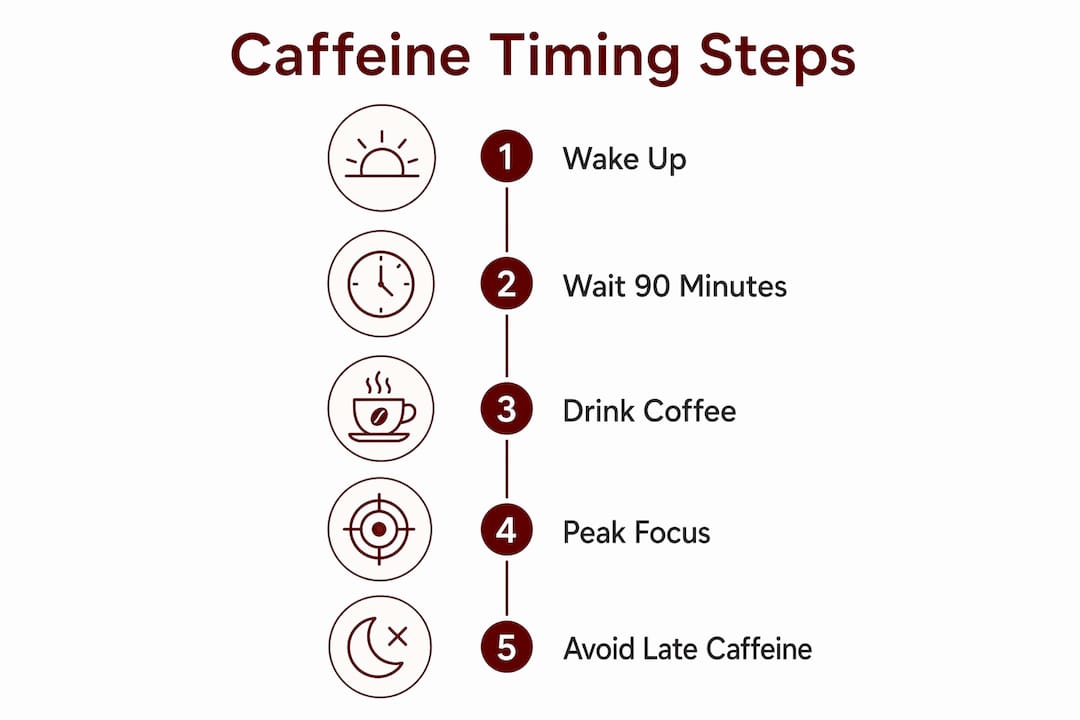
The practical consequence of ignoring this is real. When you drink coffee immediately after waking, you are adding caffeine’s stimulant effect on top of your cortisol peak. For sensitive individuals, this combination produces jitteriness, anxiety, and a paradoxical reduction in calm, sustained focus. The overstimulation feels like productivity but often produces scattered attention rather than deep concentration.
Waiting until cortisol begins to decline, typically between 9:30 and 11:00 AM, means caffeine steps in precisely as your natural alertness starts to dip. The result is a smoother, more sustained focus window rather than a spike followed by a crash. Here is what the research-backed morning timing framework looks like in practice:
- Wake up and allow the cortisol awakening response to do its job for 60 to 90 minutes without caffeine
- Eat something before your first cup to slow absorption and reduce gastrointestinal discomfort, since empty stomach caffeine accelerates absorption and increases the likelihood of jitters
- Time your first cup to land 30 to 60 minutes before your first high-focus work block
- Avoid caffeine after 2:00 PM if you are an average or slow metabolizer
Pro Tip: If your most demanding cognitive work happens between 10:00 AM and noon, drink your first cup around 9:00 to 9:30 AM. The peak effect lands exactly when you need it most.
How late-day caffeine disrupts sleep and destroys next-day focus
The most underestimated cost of poor caffeine timing is not the afternoon crash. It is the sleep debt you accumulate without realizing it. Caffeine consumed in the afternoon does not just keep you awake at night. It disrupts sleep architecture by maintaining adenosine receptor blockade during the hours your brain needs to process fatigue and cycle through deep sleep phases.
Here is the mechanism that most people miss. Even when you fall asleep after an afternoon coffee, the residual caffeine in your bloodstream is still blocking adenosine receptors. Your brain cannot fully enter the slow-wave sleep stages that restore cognitive function. You wake up feeling like you slept, but your prefrontal cortex, the region responsible for attention, planning, and working memory, has not recovered fully. The next morning, you reach for more coffee to compensate. The cycle compounds.
The practical steps to break this pattern are straightforward:
- Set a hard caffeine cutoff at 2:00 PM if your bedtime is between 10:00 PM and midnight.
- Recognize that repeated caffeine doses stack elimination curves, meaning a 10:00 AM and a 2:00 PM cup together extend caffeine’s presence in your system well into the evening.
- If you need afternoon alertness, consider a 20-minute nap instead of a second cup. Naps clear adenosine naturally without disrupting nighttime sleep.
- Track your sleep quality on days with and without afternoon caffeine using a wearable like a Garmin or Oura Ring to see your personal data.
“Caffeine does not create energy. It borrows alertness from your future self by blocking the signal that tells your brain it is tired. The debt comes due at night.”
The subjective experience of caffeine is also misleading. You may feel like the afternoon coffee has worn off by 8:00 PM. But feeling alert and having cleared caffeine from your receptors are two different things. The half-life of 3 to 7 hours means a 3:00 PM cup still has significant receptor activity at 9:00 PM for an average metabolizer. That silent blockade is enough to reduce sleep quality without you ever feeling wired.
Practical strategies for timing caffeine to match your focus demands
Treating caffeine as a timed tool rather than a morning habit is the shift that separates intentional performers from everyone else. A 2026 randomized controlled trial found that 400 mg caffeine taken 1 hour prior to a cognitive task significantly improved attentional measures and reaction time, regardless of other physiological variables. The implication is clear: timing caffeine to your task, not your clock, produces the best cognitive results.
Here is how to build a practical caffeine schedule around your actual work demands:
- Identify your two or three highest-focus blocks during the day. These are the periods where you need deep concentration, not just presence.
- Work backward 30 to 60 minutes from each block to determine your ideal caffeine intake time.
- Limit total daily caffeine to a dose that delivers benefits without side effects. For most adults, this is 200 to 400 mg per day.
- Account for cumulative dosing. Two cups of coffee plus a pre-workout supplement can push you well past the threshold where caffeine helps focus and into the range where it creates anxiety and scattered attention.
The source of caffeine also affects timing strategy. Coffee delivers caffeine faster than tea due to higher concentration and fewer competing compounds. Matcha, for example, contains L-theanine alongside caffeine, which smooths the stimulant effect and reduces the likelihood of jitteriness. If you are sensitive to coffee’s intensity, a matcha-based morning drink may allow you to time your caffeine intake earlier without the overstimulation risk.
| Caffeine source | Onset time | Duration of effect | Best timing use case |
|---|---|---|---|
| Espresso or drip coffee | 15 to 30 minutes | 3 to 5 hours | Precision timing before a specific focus block |
| Cold brew coffee | 30 to 45 minutes | 4 to 6 hours | Sustained morning focus with slower release |
| Matcha | 30 to 60 minutes | 4 to 6 hours | Earlier intake with reduced jitter risk |
| Instant coffee | 10 to 20 minutes | 3 to 4 hours | Quick boost aligned with an immediate task |
You can also plan caffeine around your meeting calendar to avoid the common mistake of drinking coffee right before a high-stakes call, only to feel the peak hit 45 minutes later when the meeting is already over.
Key takeaways
Caffeine timing directly controls focus quality by aligning peak adenosine blockade with cognitive demand and protecting sleep architecture from residual receptor interference.
| Point | Details |
|---|---|
| Peak effect window | Caffeine reaches maximum focus benefit 30 to 60 minutes after consumption. |
| Cortisol conflict | Drinking coffee immediately after waking layers stimulants on your natural cortisol peak, causing overstimulation rather than calm focus. |
| Sleep architecture risk | Afternoon caffeine blocks adenosine receptors during sleep, reducing deep sleep and impairing next-day concentration. |
| Metabolizer variability | CYP1A2 genetic variants mean half-life ranges from 3 to 7 hours, requiring personalized timing adjustments. |
| Task-based scheduling | Time your first cup 30 to 60 minutes before your highest-focus work block for maximum cognitive benefit. |
The thing most people get wrong about their morning coffee
I have watched a lot of people optimize everything about their coffee except the one variable that actually moves the needle on focus: when they drink it. The ritual of the first cup the moment you wake up is deeply ingrained, and I understand it. But from a neuroscience standpoint, that first cup is often wasted on a brain that is already alert from cortisol.
What I have found, both personally and from reading the research carefully, is that the 90-minute delay feels counterintuitive until you try it for a week. Then it feels obvious. Your first cup hits differently when cortisol has already started to decline. The focus is cleaner. There is less of that wired-but-scattered feeling that people mistake for productivity.
The other thing I would push back on is the idea that more caffeine solves a focus problem. If you are reaching for a third cup because the second one did not work, the issue is almost never dose. It is timing, sleep debt, or both. Caffeine cannot fix a focus deficit caused by the caffeine you drank yesterday afternoon. That is the loop worth breaking first.
Espritkaffe’s approach to coffee, roasted for the individual rather than the average, fits naturally into this framework. Different roasts and formats deliver caffeine at different rates. Knowing your coffee is part of knowing your timing.
— Jett
Find the right coffee for your focus window

Not every cup of coffee is built for the same moment in your day. Espritkaffe offers options designed for different timing needs and sensitivity levels. The Coffee with Mushrooms Medium Roast pairs functional mushroom adaptogens with a smooth caffeine delivery, making it well-suited for the 90-minute post-wake window where you want focus without overstimulation. For a slower, more sustained release that fits a mid-morning schedule, Espritkaffe’s Cold Brew Coffee extends the alertness curve without the sharp spike. Your timing strategy is only as good as the coffee behind it.
FAQ
Why does caffeine timing matter more than the amount you drink?
Caffeine’s focus benefits depend on its peak plasma concentration aligning with your cognitive demand period. Drinking the right amount at the wrong time means the peak effect arrives before or after your work block, delivering little practical benefit.
When is the best time to drink coffee for focus?
The best time is 30 to 60 minutes before your highest-focus work block, and no earlier than 90 minutes after waking. This avoids the morning cortisol peak and ensures the caffeine effect lands when you actually need it.
Can afternoon coffee hurt my focus the next day?
Yes. Caffeine consumed after 2:00 PM can disrupt deep sleep phases through residual adenosine receptor blockade, even if you fall asleep easily. Reduced sleep quality directly impairs next-day attention, working memory, and reaction time.
Does caffeine source affect timing strategy?
It does. Espresso and drip coffee reach peak effect in 15 to 30 minutes, while cold brew and matcha take 30 to 60 minutes. Knowing your source helps you calculate the right intake window for your specific focus block.
How do I know if I am a slow caffeine metabolizer?
Signs include feeling alert for 6 or more hours after a single cup, difficulty sleeping after afternoon coffee, or heightened sensitivity to small doses. Genetic testing through services like 23andMe can confirm CYP1A2 variants that slow caffeine clearance.