

Coffee wet milling, also called the washed process, is the post-harvest method where a coffee cherry’s skin, pulp, and mucilage are stripped away before the seed is dried. It’s the industry’s benchmark method for producing coffee with clean, transparent flavor.
The core sequence runs through five stages:
- Sorting and floating — bad or underripe cherries are separated out in water
- Pulping — a machine strips off the skin and most of the fruit
- Mucilage removal — the sticky layer left behind is broken down through fermentation or mechanical demucilaging
- Washing — the parchment-coated seed is rinsed clean
- Drying — beans are dried down to roughly 10 to 12% moisture
The result is a cup that tends toward clarity and bright acidity, with the origin’s character showing through rather than getting masked by fruit sugars.
Key Takeaways
Coffee wet milling works because removing skin, pulp, and mucilage before drying isolates bean-driven flavor from fruit-driven flavor, producing a cleaner, more traceable cup.
| Point | Details |
|---|---|
| Definition | Wet milling is the washed process: pulping, mucilage removal, washing, and drying before the coffee is dry-milled. |
| Timing windows | Pulp within 6 to 8 hours of harvest; ferment 8 to 72 hours depending on temperature and elevation. |
| Moisture target | Dry parchment coffee to a stable 10 to 12% moisture content to prevent mold and defects. |
| Method choice matters | Ferment-and-wash gives more flavor control; mechanical demucilaging saves water but limits that control. |
| Watch for defects | Over-fermentation and uneven drying are the two biggest risks tied to poor timing. |
Where To Learn More About Wet Milling
- TechnoServe’s Wet Mill Processing Guide for operational detail
- Roastopedia’s washed process entry and Sprudge’s explainer for readable background
- Daily Coffee News coverage on demucilaging trade-offs
Table of Contents
- Why Does Wet Milling Matter For Coffee Quality?
- What Happens Step By Step At A Wet Mill?
- What Do Terms Like Washed, Honey, And Semi-Washed Mean?
- How Much Water Does Wet Milling Use?
- How Long Should Coffee Fermentation Take?
- How Do Roasters Judge A Well-Executed Washed Coffee?
- Frequently Asked Questions
- Sources
Why Does Wet Milling Matter For Coffee Quality?
Wet milling matters because it strips away variables. Removing the skin, pulp, and mucilage before drying takes fruit sugars out of the equation, which means what’s left in the cup reflects the bean, the soil, and the altitude rather than fermentation-driven fruitiness. That’s why washed process coffees tend to show sharper acidity and a more identifiable sense of place compared to natural or honey-processed lots.
For roasters and green buyers, that consistency has real practical value:
- Easier defect sorting, since bad cherries float off early and don’t hide inside a drying fruit skin
- More predictable cupping results across lots from the same washing station
- Cleaner traceability, since a well-run wet mill can separate batches by farm or delivery day
- Faster drying in many cases, since there’s less fruit mass clinging to the bean
Here’s the trade-off buyers weigh constantly: a natural or honey-processed coffee can deliver bigger, wilder fruit notes, but washed coffee gives buyers confidence that what they’re cupping this month will taste like what they cupped last month. That predictability is a big part of why washed lots dominate specialty contracts, even in origins where natural processing is traditional.
What Happens Step By Step At A Wet Mill?
A wet mill (sometimes called a washing station or a factory, depending on the origin) is the facility where all of this happens, and the timing at each stage matters as much as the equipment.
- Cherry reception and pre-sorting. Cherries arrive from the field and go into a flotation tank. Ripe, dense cherries sink; underripe, overripe, and insect-damaged cherries float and get skimmed off.
- Pulping. A depulper strips the skin and most of the pulp from the sorted cherries. Producers aim to pulp fairly soon after picking, ideally within 6 to 8 hours of harvest, since delayed pulping lets cherries start fermenting on the tree side, which throws off flavor control later.
- Mucilage removal. This is where methods split. Traditional ferment-and-wash puts the pulped beans into tanks (wet or dry fermentation) where natural enzymes break down the sugary mucilage layer over a window that commonly runs 8 to 72 hours, depending on ambient temperature, elevation, and bean density. The alternative is mechanical demucilaging, where a machine scrubs the mucilage off in minutes using friction and a small amount of water.
- Washing. Once mucilage is gone, beans move through washing channels. This step also does a second round of density sorting, since lighter defective beans behave differently in the water flow than dense, well-developed ones.
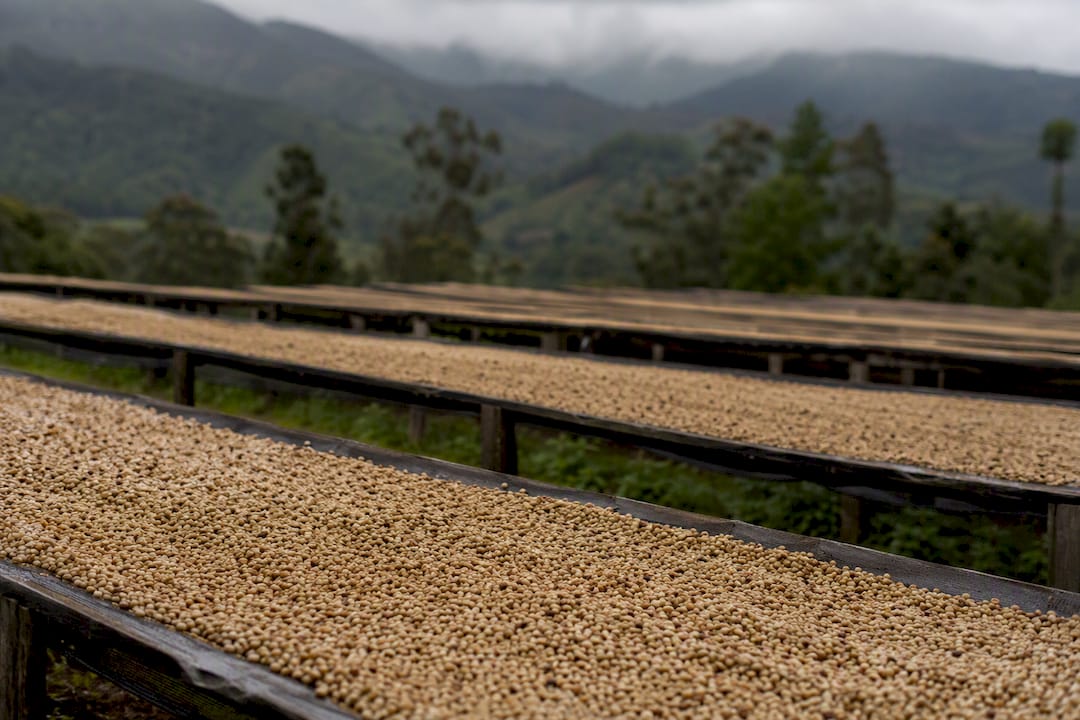
- Drying. Beans go onto raised beds, patios, or into mechanical dryers until they reach a stable 10 to 12% moisture content. This isn’t a fixed timeline. It depends on humidity, sun exposure, and how thick the layer of parchment coffee is spread.
- Storage and transport. Dried parchment coffee rests before moving to a dry mill for hulling, final sorting, and export prep.
Equipment scale varies enormously. A smallholder might run cherries through a hand-cranked pulper into a plastic tub for fermentation. A large centralized washing station runs thousands of kilos a day through mechanical pulpers, cement fermentation tanks, and long concrete washing channels.
Pro Tip: Experienced wet mill operators check fermentation progress by feel, not just the clock. They rub a handful of beans between their palms every few hours; when the mucilage no longer feels slick and the beans start to feel rough like fine gravel, fermentation is done. Waiting too long past that point risks over-fermentation, which shows up in the cup as sour, vinegary, or “stinker” defect notes.
What Do Terms Like Washed, Honey, And Semi-Washed Mean?
The vocabulary around processing gets confusing fast, so here’s a quick glossary:
- Wet mill / washing station / factory — interchangeable names for the facility where pulping, mucilage removal, and washing happen
- Depulping — mechanically removing the skin and pulp only
- Demucilaging — removing the sticky mucilage layer, either by fermentation or by machine
- Semi-washed — mucilage is partly removed mechanically, then the bean dries with a thin residual layer, common in parts of Indonesia
- Honey / pulped natural process — the skin comes off but some or all mucilage stays on the bean during drying, producing sweeter, heavier-bodied cups than a full wash
Producers pick semi-washed or honey processing partly for flavor and partly for water access. Where water is scarce, a full wash cycle simply isn’t practical.
How Much Water Does Wet Milling Use?
Traditional washed processing drinks a lot of water, and it doesn’t come out clean. Fermentation and washing generate wastewater loaded with organic material, and if that water runs untreated into rivers or groundwater, it can strip oxygen from aquatic ecosystems as it decomposes.
Producers addressing this problem tend to lean on a few tools:
- Mechanical demucilagers, which cut water use dramatically compared to soak-and-ferment tanks
- Settling tanks and constructed wetlands that filter organic solids before water is released
- Water recirculation systems that reuse washing water across multiple cycles
Pro Tip: If you’re buying green coffee or just want to support better practices as a consumer, ask whether the washing station uses water recirculation or settling ponds. Origins and cooperatives that invest in this infrastructure usually advertise it, since it’s become a real differentiator in specialty sourcing.
How Long Should Coffee Fermentation Take?
Fermentation timing is the single biggest lever a wet mill manager controls, and it swings widely based on conditions. Warmer, lower-altitude environments ferment faster; cooler, high-altitude farms need more hours to hit the same result.
- Check temperature and altitude first, since both directly set your fermentation window within that 8 to 72 hour range
- Test bean texture every few hours once you’re past the 8 hour mark
- Wash immediately once mucilage feels rough rather than slick
You’ll sometimes hear producers reference a “15 15 15” guideline, a rough shorthand some mills use for tracking fermentation checkpoints at roughly 15 hour intervals rather than guessing blind. It’s a management habit, not a scientific standard, but it keeps operators checking instead of walking away.
Common defects from timing mistakes include:
- Over-fermentation, producing sour or “stinker” beans
- Mold growth from drying too slowly or piling beans too thick
- Uneven drying, which leaves pockets of high-moisture beans that spoil in storage
How Do Roasters Judge A Well-Executed Washed Coffee?
Roasters look for a few tells before they commit to a lot. Even color across the parchment, moisture landing consistently in that 10 to 12% band, no sour or fermented off-notes on the cupping table, and a clear paper trail back to the washing station.
Pro Tip: A properly washed coffee should cup clean and bright with no funky or muddy notes. If a “washed” lot tastes boozy or overripe, that’s usually a fermentation timing miss, not a flavor feature.
What A Wet Mill Manager Sees That A Roaster Doesn’t
Fermentation timing varies more by farm than most buyers realize. I’ve noticed how much a single degree of elevation or a few hours of afternoon sun changes the window a producer has to work with, which is exactly why controlled fermentation deserves more credit than it gets in specialty marketing. Espritkaffe looks for that same discipline. Well-executed washed lots, with traceable origins and consistent moisture, are the ones worth roasting.
Ready to taste what a carefully washed lot actually delivers? Espritkaffe sources roasts built around clarity and origin character, the same qualities a well-run wet mill is designed to protect. If you want that clean cup without grinding your own beans, our instant coffee delivers the same roast-driven character in a format built for your morning. Prefer a functional twist? Our instant coffee with mushroom pairs that same quality roasting with added adaptogens for a calmer, sharper start.
Frequently Asked Questions
What is coffee wet milling in simple terms? It’s the process of removing a coffee cherry’s skin, pulp, and mucilage using water before the seed is dried, commonly known as the washed process.
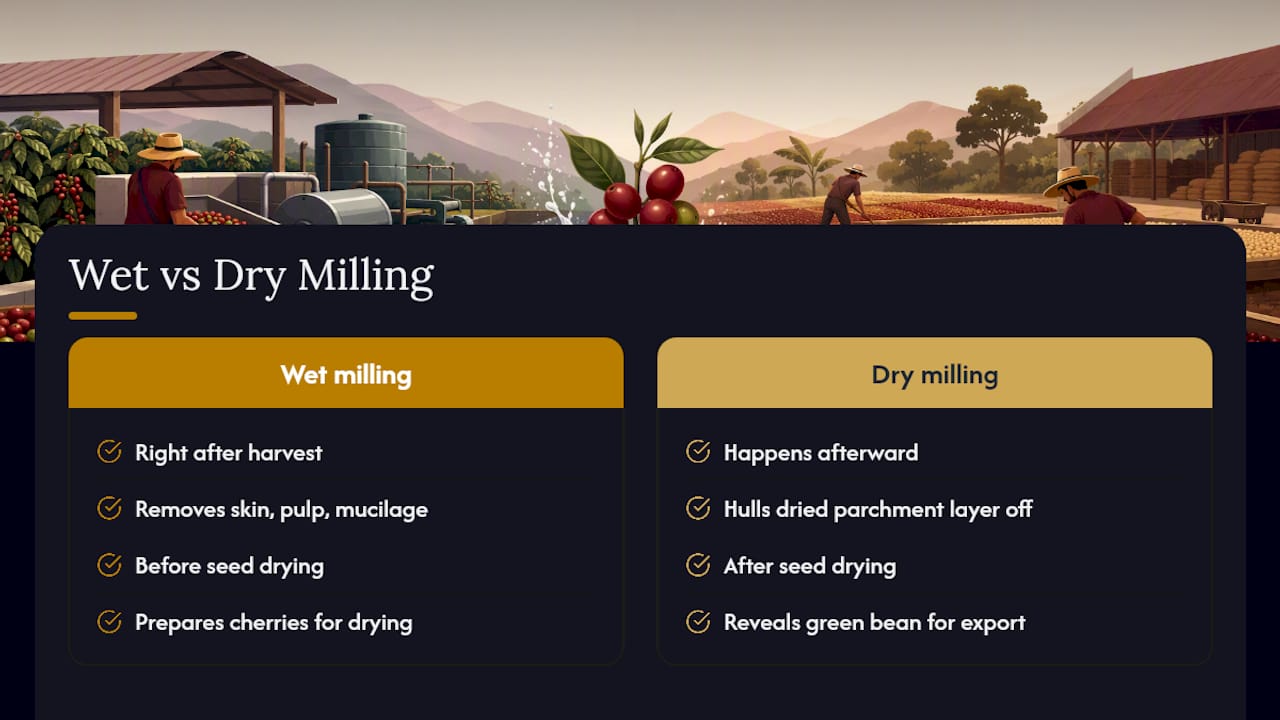
How is coffee wet milling different from dry milling? Wet milling happens right after harvest to prep fresh cherries for drying. Dry milling happens afterward, hulling the dried parchment layer off to reveal the green bean ready for export.
Does wet milling always require fermentation? No. Many mills use mechanical demucilagers instead of fermentation tanks, which strips mucilage with less water and less time, though it gives the operator less control over flavor development.
Why does washed coffee taste different from natural coffee? Removing the fruit before drying means fewer fruit sugars interact with the bean, which typically produces a cleaner, brighter cup with more acidity and less heavy fruit sweetness than natural-processed coffee.
Is wet milling bad for the environment? Traditional wet milling uses substantial water and can generate polluting wastewater if untreated, which is why many mills now use settling tanks, recirculation systems, or mechanical demucilagers to cut their footprint.
Sources
- Coffee Wet Mill Processing Guide
- Washed Process (Wet Process) - Roastopedia | The world’s coffee encyclopedia.
- What Is “Washed” Process Coffee? | Sprudge
- TechnoServe publishes authoritative guide on wet-mill coffee processing | Daily Coffee News
- How much water is in your cup of coffee? — Water Unite