

Coffee journal tracking is the systematic practice of recording your brew parameters, consumption details, and tasting notes to refine your flavor understanding and achieve consistent results in the cup. Think of it as a scientific log meets sensory diary. You document variables like grind size, water temperature, and extraction time, then use that data to make deliberate adjustments. Whether you use a pocket notebook, a Google Sheets template, or an app like BeanBook, the core purpose stays the same: turn every brew into a learning opportunity rather than a guessing game.
What is coffee journal tracking and why does it matter?
Coffee journal tracking, often called a coffee log, is defined as systematic logging of brew parameters including coffee-to-water ratio, grind size, extraction time, and temperature to refine brewing technique and flavor. That definition matters because it separates this practice from casual note-taking. You are building a repeatable dataset, not writing a diary entry.
The dual goals are flavor insight and brewing consistency. Flavor insight means you can identify exactly why a particular Ethiopian Yirgacheffe tasted bright and citrusy on Tuesday but flat on Friday. Brewing consistency means you can reproduce your best cup on demand. Without a log, both goals rely on memory, which is unreliable and degrades fast.

Most enthusiasts who start tracking report a shift in how they experience coffee. The act of writing down what you taste forces you to slow down and pay attention. That attention compounds over time, sharpening your palate in ways that passive drinking never does. Espritkaffe was built on exactly this principle: intentional living starts with intentional sipping.
What variables should you track in your coffee log?
The most useful variables to record are bean origin, roast level, grind size, water-to-coffee ratio, brew time, water temperature, and taste scores. Key data points tracked across these categories give you the raw material to spot patterns and make targeted changes. Recording all of them from day one, however, is a fast path to burnout.
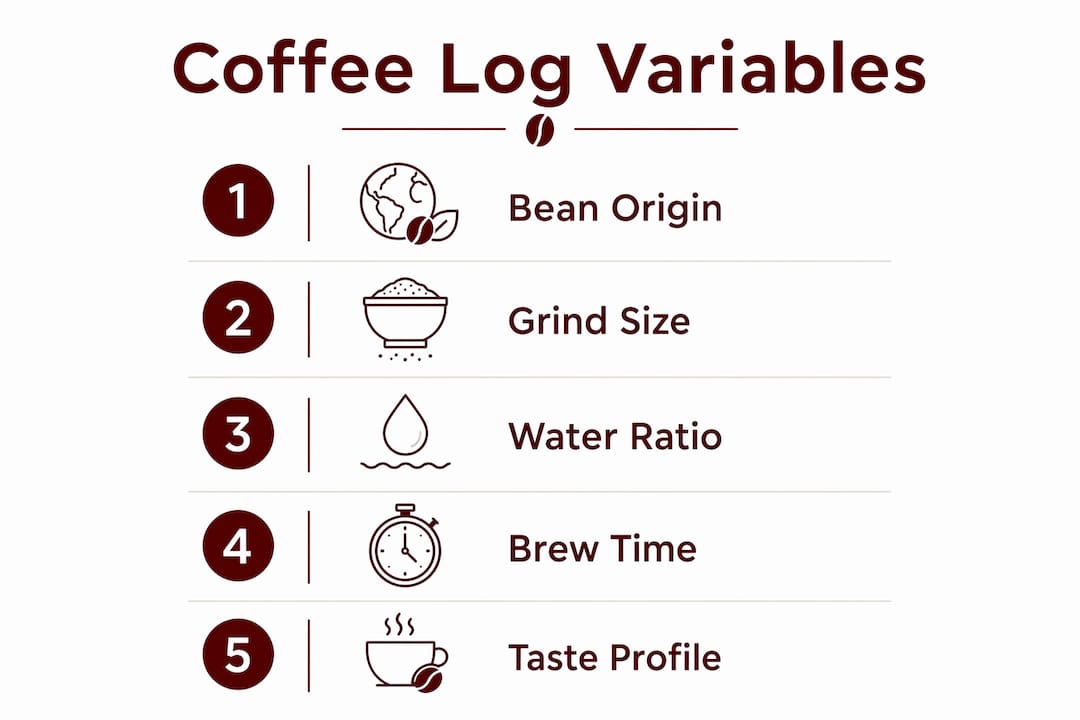
Experts recommend starting with the “golden three”: grind size, water-to-coffee ratio, and taste profile. These three variables account for the majority of flavor variation in most home brewing setups. Once you have a stable habit around those, you can layer in water temperature, bloom time, and origin notes.
Caffeine intake is a variable most enthusiasts overlook entirely. The FDA recommends 400 mg as the daily maximum for healthy adults, and a standard 5-hour half-life model lets you calculate how much caffeine remains in your system at any given time. Tracking this alongside your brews helps you understand why a 4 p.m. espresso wrecks your sleep even when you feel fine in the moment. Accurate caffeine logging also means accounting for all sources including tea, chocolate, and sodas, not just your morning pour-over.
Pro Tip: Maintain tasting notes under uniform conditions. Taste your coffee at the same temperature range and use the same water source each time. Consistent tasting protocols are what make your flavor comparisons meaningful rather than noise.
One more variable worth adding early: your mood and energy level at the time of tasting. Palate perception shifts with fatigue and stress. Logging context alongside brew data helps you distinguish between a genuinely flawed extraction and a day when nothing was going to taste right.
Analog notebooks, spreadsheets, or apps: which method wins?
No single method wins for every person. The right tool is the one that removes friction from your specific workflow. Here is how the three main options compare:
| Method | Best for | Key advantage | Main drawback |
|---|---|---|---|
| Analog notebook | Tactile learners, ritual-focused brewers | Fully customizable, no tech required | Manual, no search or analysis features |
| Spreadsheet (Google Sheets, Excel) | Data-driven enthusiasts | Deep analysis, charts, pattern spotting | Requires discipline and setup time |
| Dedicated app (e.g., BeanBook) | Busy brewers, tech-comfortable users | AI automation, cloud sync, collaboration | Subscription cost, privacy considerations |
Apps like BeanBook use AI-driven bean scanning and cloud sync to reduce manual input by up to 80%. That number matters because data entry friction is the primary reason most coffee logs get abandoned within two weeks. Less friction means more consistent data, which means better insights over time.
Spreadsheets sit in the middle ground. They offer analytic depth that no notebook can match, including the ability to chart extraction yield against taste scores across dozens of brews. The tradeoff is that you need to build and maintain the template yourself, which takes an upfront investment of time.
Analog notebooks remain the most personal option. Many serious home baristas keep a physical log specifically because the act of writing by hand slows them down and deepens sensory engagement. You can sketch your pour pattern, paste in a bag label, or draw a flavor wheel annotation. No app replicates that.
Pro Tip: If you choose a digital app, check its data export options before committing. You want to own your brewing history in a portable format like CSV, not lock it inside a platform that could change its pricing or shut down.
For caffeine timing specifically, pairing your log with resources on caffeine and focus gives your data a practical application beyond flavor. You start to see your coffee consumption as a performance variable, not just a pleasure one.
How tracking sharpens your brewing skills and flavor discovery
Identifying patterns in your log is where the real skill development happens. When you can see across 20 brews that every time your grind is coarser than setting 18 on your Baratza Encore your espresso tastes sour, you have actionable data. Without the log, that pattern stays invisible.
Tracking also creates permission to experiment. When you know your baseline, you can change one variable at a time and measure the result with confidence. This is the scientific method applied to your kitchen counter. Most home brewers who improve quickly are not more talented. They are more systematic.
Keeping brew logs separate from personal reflection is a distinction worth making early. Your brew log is a scientific record: parameters, outcomes, adjustments. Your reflection on how that cup made you feel belongs in a separate space. Mixing the two creates confusion about what you are actually measuring and often leads to abandonment of the log entirely.
Here are the practical ways tracking translates into better brewing:
- Pattern recognition: You spot which variables consistently produce your preferred flavor profile across different bean origins.
- Deliberate experimentation: Changing one variable at a time gives you clean data on what actually moved the needle.
- Palate development: Forcing yourself to articulate taste notes in writing accelerates your ability to identify flavors like brightness, body, and finish. Pairing this with a coffee cupping guide gives you a structured vocabulary to work from.
- Roast and origin literacy: Over time, your log becomes a personal reference library. You will know from experience that your Kenyan single-origin performs best at a medium-fine grind and 93°C water, not because someone told you, but because your own data proved it.
Practical tips to start and maintain your coffee journal
Starting simple is not a compromise. It is the strategy that works. Most people who attempt to log every variable from day one quit within a month. The ones who start with three variables and build from there are still logging a year later.
- Choose your medium first. Pick the notebook, spreadsheet, or app before you brew your first logged cup. Having the tool ready removes the decision barrier in the moment.
- Log immediately after brewing. Taste memory fades within minutes. If you wait until after breakfast to write your notes, you are reconstructing rather than recording.
- Use habit stacking. Attach your logging to an existing ritual. Treating journaling as a sensory ritual paired with the brewing process itself dramatically raises adherence compared to treating it as a separate administrative task.
- Set a minimum viable entry. On busy mornings, three data points beat zero. Grind setting, brew ratio, and a one-word taste descriptor keeps the streak alive without demanding ten minutes of your time.
- Review weekly, not daily. A weekly five-minute review of your entries is where the pattern recognition actually happens. Daily logging without periodic review is data collection without insight.
The ideal coffee journal is the one you consistently use. Over-logging leads to abandonment, so start simple and expand your tracked variables only when the habit feels effortless. On the digital side, consider where your data lives. Cloud-synced apps are convenient, but knowing your privacy settings and export options protects the brewing history you are building.
Key takeaways
Coffee journal tracking works because systematic data collection turns subjective taste experiences into repeatable, improvable brewing decisions.
| Point | Details |
|---|---|
| Start with the golden three | Track grind size, water-to-coffee ratio, and taste profile before adding more variables. |
| Separate logs from reflection | Keep brew data scientific and personal reflection in a separate space to avoid confusion. |
| Match the tool to your habit | Choose notebooks, spreadsheets, or apps based on which format you will actually use consistently. |
| Include caffeine as a variable | Log total daily caffeine from all sources to understand its effect on sleep and energy. |
| Review weekly for patterns | Regular review of your entries is where brewing improvement actually happens. |
Why I stopped treating my coffee log as a chore
I kept a coffee log for about three months before I nearly quit. The problem was not the logging itself. It was that I had turned a sensory ritual into a data entry job. I was filling in twelve fields per brew, cross-referencing extraction yields, and color-coding my spreadsheet tabs. By week ten, I dreaded opening the file.
What changed things was a single reframe: I stopped logging after the experience and started logging as part of it. The notebook sits next to my grinder now, not my laptop. I write three things while the kettle heats. That is it. The data is leaner, but I have not missed a day in seven months.
The other thing I got wrong early was expecting the log to tell me what to do. It does not work that way. The log surfaces patterns. You still have to interpret them and make the call. That interpretive layer is where the craft lives, and no app replaces it. Tools like BeanBook handle the mechanical side well, but the judgment call about whether a slightly astringent finish is a grind issue or a water quality issue still requires you.
My honest advice: treat your first thirty entries as practice data. Do not optimize. Do not second-guess. Just log consistently and let the picture develop. The insights that come from your own data after a month of honest recording are worth more than any brewing guide, including this one.
— Jett
Expand your tasting notes with Espritkaffe
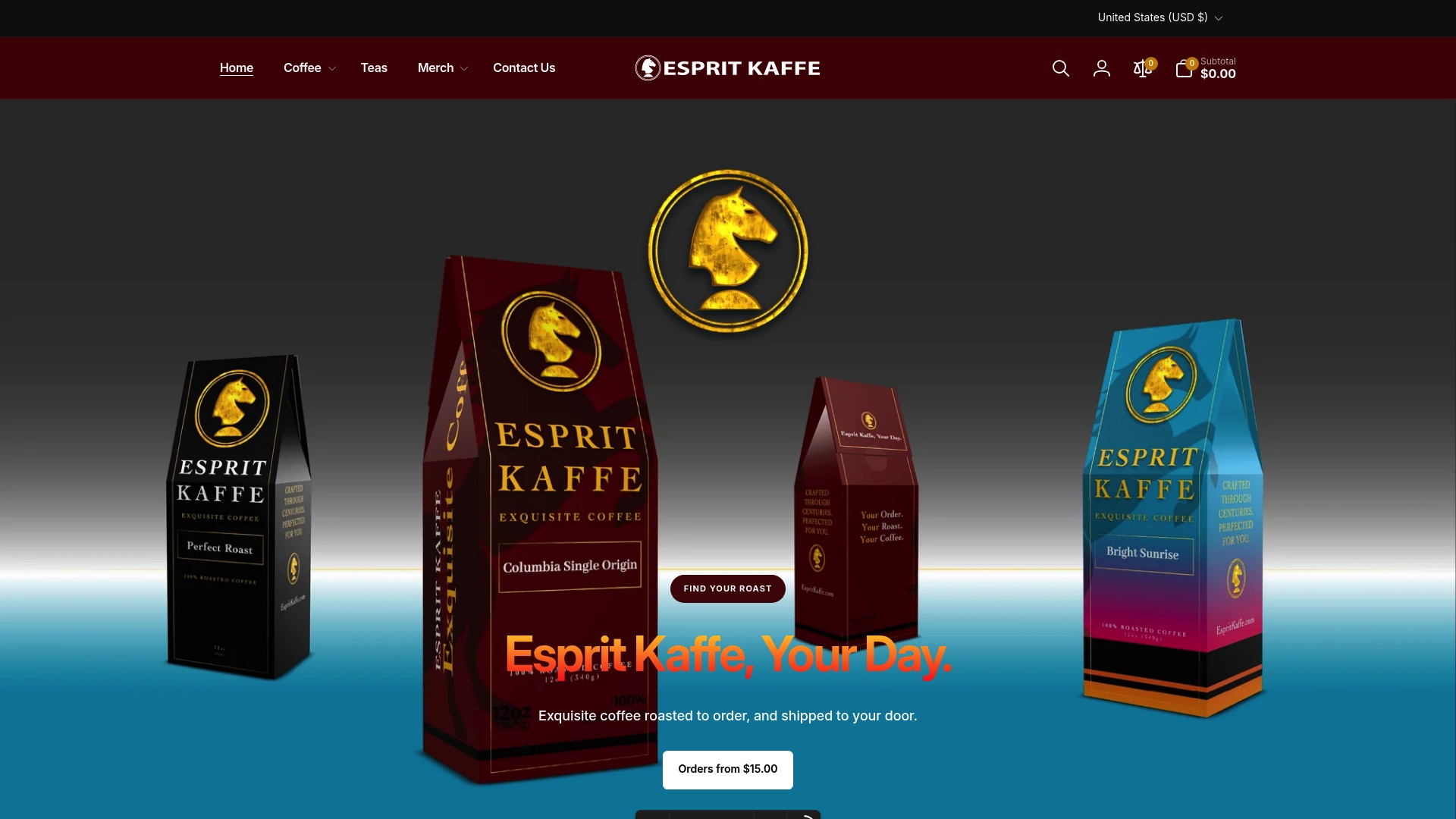
The fastest way to deepen your coffee log is to introduce genuinely new flavor profiles into your rotation. When every cup comes from the same bag, your tasting notes plateau. Espritkaffe’s Coffee with Mushrooms Medium Roast gives your journal an entirely new category to work with: the earthy, grounding depth of functional mushrooms layered over a balanced medium roast. It is the kind of cup that forces you to reach for new descriptors. For those who track roast diversity, the dark roast variation adds a bolder contrast entry to your log. Your journal is only as rich as the coffees you put through it.
FAQ
What is a coffee log?
A coffee log is a record of your brew parameters and tasting notes, including variables like grind size, water ratio, and extraction time. Its purpose is to create a repeatable dataset that helps you improve flavor consistency and brewing technique.
How do I start tracking coffee consumption?
Start by choosing one medium, a notebook, spreadsheet, or app, and log three variables per brew: grind size, water-to-coffee ratio, and a taste descriptor. Consistency matters more than completeness in the early weeks.
What are the main benefits of coffee journaling?
Coffee journaling builds pattern recognition, accelerates palate development, and gives you the data to make deliberate brewing adjustments. Enthusiasts who log consistently report faster improvement in cup quality than those who brew by feel alone.
How much caffeine should I track per day?
The FDA sets 400 mg as the daily maximum for healthy adults. Accurate tracking requires logging all caffeine sources including tea, chocolate, and sodas, not just coffee, and using a half-life model to estimate systemic levels throughout the day.
Do I need an app to track my coffee journal?
No. Analog notebooks and spreadsheets work equally well depending on your preference. Apps like BeanBook reduce manual input significantly through AI automation, but the most effective tool is whichever format you will use every single day without friction.