

The best water temperature for most hot-brewed coffee sits between 92°C and 96°C, or 198°F to 205°F, with a common midpoint near 93 to 95°C. Espresso runs a little cooler, and AeroPress recipes often go lower depending on steep time. The fastest way to get there without a thermometer: bring water to a full boil, then let it sit for about half a minute before pouring.
TL;DR:
- Maintaining water between 92°C and 96°C ensures balanced extraction, with slight variations depending on brew method and roast level.
- French press and espresso preparations often require slightly cooler or hotter water within the recommended range due to contact time and pressure.
- Discrepancies in flavor quality are more frequently caused by grind size, brew ratio, or water quality than by small temperature adjustments within the standard range.
- Achieving precise brewing temperature at home can be easily done by boiling water and resting for 30 to 45 seconds or using calibrated kettles and thermometers.
- Water chemistry and cleanliness significantly impact taste, and equipment pre-warming can prevent temperature drops that lead to flat or under-extracted coffee.
Table of Contents
- What the Specialty Coffee Association recommends and why it matters
- Temperature targets by brewing method
- What the research says about temperature and taste
- Simple ways to hit your target temperature at home
- When temperature won’t fix a bad cup: water quality and equipment
- Fast fixes for sour, bitter, or weak coffee
- Why roast and temperature decisions go together
- A roast profile built for your brewing method
- Sources
- FAQ
What the Specialty Coffee Association recommends and why it matters
The Specialty Coffee Association recommends a brewing water temperature range of 92°C to 96°C, or 198°F to 205°F, for most hot-brewed coffee methods. This range is the industry’s working standard for filter and drip coffee, and it shows up in competition rules and brewer certification criteria alike.
Hotter water pulls flavor compounds out of ground coffee faster. Inside the SCA range, that speed stays balanced: acids, sugars, and bitter compounds extract at rates that tend to produce a cup most tasters describe as pleasant. Go colder and extraction slows, often leaving sourness and a thin body. Go hotter and bitterness can arrive before the sweeter compounds have a chance to balance it.
SCA commentary also points out that grind size, brew ratio, and water quality often produce larger, more noticeable flavor shifts than a one or two degree change within that range. Temperature sets the pace of extraction. It does not override the other variables in your recipe.

Temperature targets by brewing method
Every brewing method interacts with heat differently, mostly because contact time and pressure change how fast extraction happens.
- Pour-over and drip: aim for roughly 92 to 95°C, leaning toward the cooler end for lighter roasts, and pre-warm the dripper and filter so the water doesn’t lose heat on contact.
- French press: brew nearer the hotter end of the range, since a long steep time means the water is losing heat the entire time it sits with the grounds.
- AeroPress: many recipes run cooler, often 80 to 90°C, because shorter contact time and immersion pressure change how much heat is needed to hit a balanced extraction.
- Espresso: machines typically hold water at 88 to 93°C, cooler than filter brewing, because pressure shortens the effective extraction time and concentrates flavor quickly.
- Cold brew: uses room-temperature or refrigerated water, since extraction here is driven by time, often many hours, rather than heat.
Roast level shifts these targets slightly. A light roast, denser and less porous, often benefits from water on the higher end of its method’s range, while a dark roast can turn bitter fast at the same temperature. Our guide to roast levels breaks down how roast development changes what a bean needs from your brew water.
What the research says about temperature and taste
Hotter water speeds up how fast soluble compounds dissolve out of the grounds. That is the entire mechanism: temperature does not add flavor, it changes how quickly flavor comes out.
Brew temperature, at fixed brew strength and extraction, has little impact on the sensory profile of drip brew coffee.
A Scientific Reports study conducted with UC Davis researchers tested drip coffee brewed between 87°C and 93°C. When the researchers held brew strength (TDS) and extraction yield (PE) constant across those temperatures, trained tasters detected minimal sensory differences.
That finding reorders the usual troubleshooting list. Grind size and brew ratio determine how much material dissolves into your cup; time determines how long that dissolving process runs. Temperature is the last dial to touch, not the first. If your coffee tastes off, check grind, then ratio, then brew time, before reaching for a thermometer.
Simple ways to hit your target temperature at home
You don’t need lab equipment to land inside the SCA range consistently.
A practical home method is to bring water to a full boil, then let it rest for about 30 to 45 seconds before pouring. That timing gets many kettles into the 93 to 95°C band, though it varies with kettle mass and room temperature: a stovetop kettle typically loses about 1°C every 10 to 15 seconds off the heat, while a heavy kettle in a warm kitchen cools more slowly.
For repeatable results, use either tool below:
- Instant-read thermometer: boil water, remove from heat, and check the temperature directly before pouring.
- Temperature-controlled kettle: set the target temperature once and skip the guesswork on every brew.
- No thermometer: boil, wait 30 to 45 seconds, and pour, adjusting the wait time up or down after a few tries based on taste.
Pre-warming your dripper, French press, or mug matters almost as much as the water itself. Cold glass or ceramic pulls heat out of your water on contact, which can drop the effective brewing temperature several degrees before extraction even starts.
Pro Tip: Rinse your brewing equipment with hot water right before adding grounds. It takes ten seconds and removes one of the most common causes of a cup that tastes cooler and flatter than it should.

When temperature won’t fix a bad cup: water quality and equipment
Water chemistry sets a ceiling on what temperature adjustments can do. Scott Rao’s water chemistry guidance identifies alkalinity as one of the most important factors in how coffee tastes, since high alkalinity buffers and mutes perceived acidity no matter how precisely you control heat.
If a cup stays flat or dull after you have dialed in temperature, grind, and ratio, the water itself may be the problem. A basic carbon filter removes chlorine and off-flavors, and blending filtered water with a small amount of reverse-osmosis water can correct excess hardness. If a machine consistently produces lukewarm coffee even after preheating, it may not be reaching brewing temperature at all: that’s a repair or replacement issue, not a recipe fix.
Fast fixes for sour, bitter, or weak coffee
Most flavor complaints trace back to one of three issues.
- Sour: check for a grind that’s too coarse or a machine running cooler than it should, then raise brew temperature slightly.
- Bitter: coarsen the grind, lower the temperature a degree or two, or shorten contact time.
- Flat or weak: check your dose and confirm the machine reaches its recommended temperature, then pre-warm your equipment before the next brew.
Our grind size guide walks through the adjustments that usually matter more than temperature does.
Why roast and temperature decisions go together
Roasters build a roast curve around how a bean will eventually be brewed. A filter roast is developed to taste balanced in the 92 to 95°C range typical of pour-over, while an espresso roast is tuned for the cooler, pressure-driven extraction of a machine, as explained in our comparison of espresso and filter roasts. Matching the right roast to your method means less time adjusting temperature and grind to chase a balanced cup.
— Jett
A roast profile built for your brewing method
Choosing a roast already tuned for your method cuts down on the guesswork this article just walked through. Esprit Kaffe’s Coffee lineup is organized by roast, origin, and blend, starting at $15.00, so you can pick a filter-leaning roast for pour-over or a darker, espresso-tuned option without adjusting temperature to compensate for a mismatched bean.
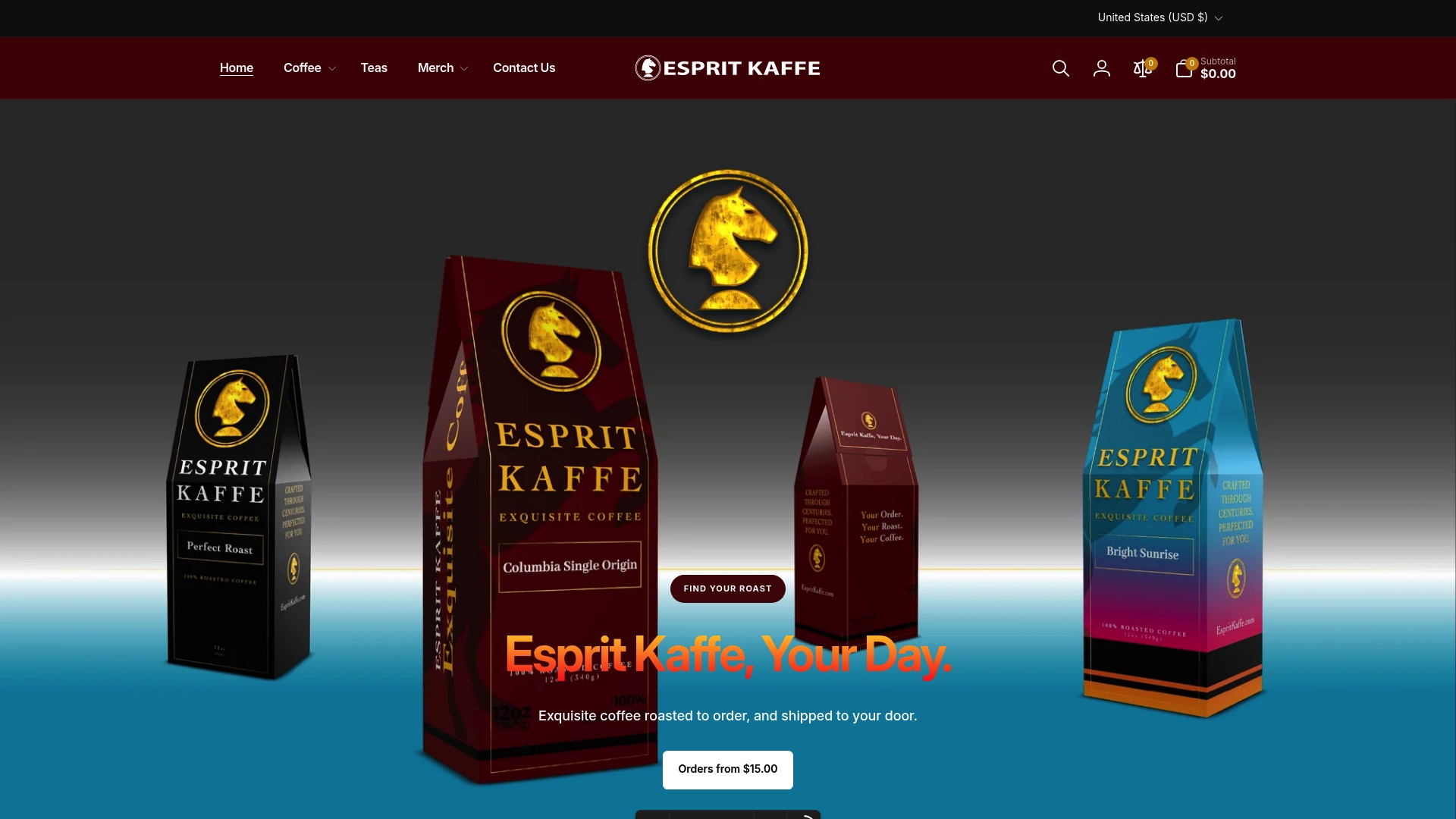
For regular access to roasts selected around how you brew, the Esprit Kaffe Members Club Subscription delivers beans suited to your method on an ongoing basis. Browse the current lineup and find the roast that matches your kettle and your morning.
Sources
- How hot is hot enough? Brew temperature, sensory profile and consumer acceptance of brewed coffee — SCA
- Brew temperature, at fixed brew strength and extraction, has little impact on the sensory profile of drip brew coffee — Scientific Reports
- Best water temperature for coffee — Coffee Studies
- Demystifying water for coffee — Scott Rao
FAQ
What is the 15-15-15 rule for coffee?
The 15-15-15 rule is a simple home ratio: about 15 grams of coffee, 15 seconds of bloom, and roughly 15 to 1 water-to-coffee ratio, depending on the version used. It’s a starting point for pour-over brewing rather than a fixed standard, and grind size and water temperature still need adjusting from there.
Is 200 degrees too hot for coffee?
No. The temperature falls inside the SCA-recommended range of 198°F to 205°F for most hot-brewed coffee methods. It’s a reasonable target for pour-over and drip, though espresso and some AeroPress recipes use cooler water.
What is the 80/20 rule for coffee?
Definitions vary, and there isn’t a single standardized version tied to brewing temperature.
What temperature should espresso be brewed at?
Espresso machines typically hold water between 88°C and 93°C, cooler than filter methods, because pressure and short contact time change how quickly extraction happens. That range lets espresso concentrate flavor without turning bitter as fast as a hotter brew would.