

Indonesia Sulawesi coffee is defined as a specialty Arabica grown in the highland regions of Toraja and Kalosi on the island of Sulawesi, producing one of the most complex and full-bodied cups in the Indonesian coffee canon. The two origins sit at altitudes between 1,200 and 1,900 meters, where volcanic soil and a humid tropical climate create conditions no other growing region replicates. What separates Sulawesi from other Indonesian coffees is not just geography. It is the interplay between terroir, smallholder farming traditions, and a processing method called Giling Basah, or wet-hulling, that defines every cup. If you drink Sulawesi coffee without understanding those three variables, you are missing the point entirely.
Where is Indonesia Sulawesi coffee grown?
Sulawesi coffee production concentrates in two distinct highland areas: the Toraja plateau in South Sulawesi and the Enrekang district, home to the Kalosi growing region. These are not interchangeable origins. Each produces a coffee with a measurably different character, and origin and processing differences fundamentally change flavor and body in ways that most traders overlook when they label everything simply as “Sulawesi.”
Toraja: the high-altitude benchmark
Toraja is grown at 1,400 to 1,900 meters, making it one of the highest-altitude coffee origins in Indonesia. The Toraja plateau sits on ancient volcanic geology, and the combination of mineral-rich soil, consistent rainfall, and significant day-to-night temperature swings slows cherry development. Slower development means denser beans with more concentrated sugars, which translates directly into the heavier body and lower acidity that Toraja is known for.
Kalosi: the Enrekang valley origin
Kalosi coffee grows in the Enrekang regency at 1,200 to 1,800 meters, slightly lower than Toraja but still firmly in specialty altitude territory. The trade label “Sulawesi Kalosi” is actually a geographic indication tied to the collection and milling hub in Kalosi town, not a single farm or village. Knowing this matters if you are sourcing at a connoisseur level, because the label covers a range of smallholder lots from across Enrekang.
Both regions rely almost entirely on smallholder farmers working plots of one to three hectares. Harvesting is selective and done by hand, with ripe red cherries picked individually rather than strip-harvested. This labor-intensive approach is one reason quality stays high, but it also means seasonal supply is limited and pricing reflects that reality.
- Toraja altitude: 1,400 to 1,900 meters above sea level
- Kalosi altitude: 1,200 to 1,800 meters above sea level
- Soil type: volcanic, mineral-rich across both regions
- Farming model: smallholder plots, hand-picked selective harvest
- Primary harvest season: May through October
Pro Tip: When buying Sulawesi coffee beans, ask your roaster whether the lot is Toraja or Kalosi. The two origins cup differently enough that treating them as one profile is like treating Ethiopian Yirgacheffe and Sidama as the same coffee.
How does Sulawesi coffee processing shape the cup?
Processing is where Sulawesi coffee diverges most sharply from African or Latin American specialty origins. Indonesia’s wet-hulling process, Giling Basah, removes the parchment layer from the bean while it still holds 35 to 40 percent moisture. The bean then dries down to an export-ready 11 to 12 percent moisture. No other major producing country uses this method at scale, and it is the single biggest reason Indonesian coffees taste the way they do.
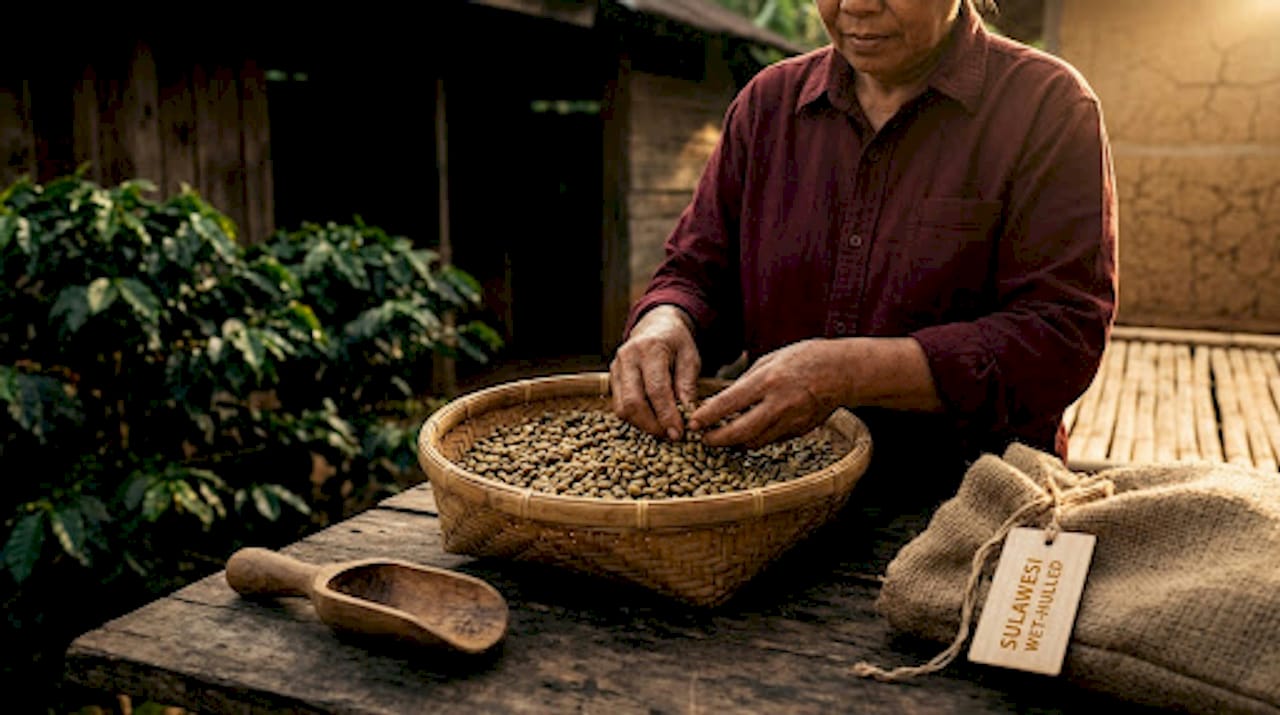
The practical logic behind wet-hulling is climate adaptation. Indonesia’s humidity makes traditional fully washed or natural drying unreliable. Wet-hulling adapts to humid climate challenges, allowing producers to move beans through the processing chain faster without risking mold or uneven fermentation. The trade-off is a cup that leans toward earth, herb, and dark fruit rather than the bright fruit acids you find in a washed Ethiopian or a natural Yemeni.
Toraja vs. Kalosi: how processing differs
Toraja and Kalosi do not follow identical processing paths, and the difference shows in the cup. Toraja producers typically use wet-hulling with multi-step fermentation. The Bolokan Valley method, for example, involves 24-hour fermentation, washing, a second 12-hour fermentation, and then drying on covered raised beds to around 20 percent moisture before wet-hulling. This layered approach builds the earthy, herbal complexity that defines Toraja’s signature.
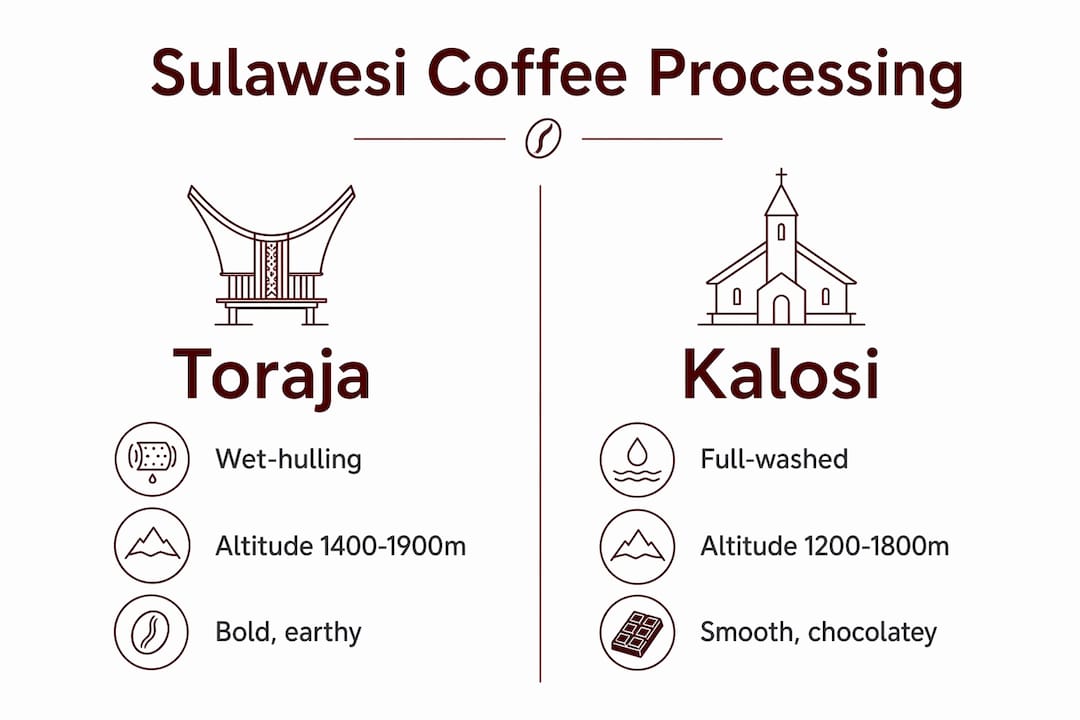
Kalosi takes a different route. Kalosi uses full-washed cherry processing with dry-hulling at 13 to 14 percent moisture, which preserves slightly more acidity and allows the floral and spice notes to come through more clearly. The result is a cup that still has Indonesian body but with a brighter, more aromatic top end than Toraja.
| Factor | Toraja | Kalosi |
|---|---|---|
| Processing method | Wet-hulling (Giling Basah) | Full-washed, dry-hulling |
| Hulling moisture | 35 to 40% | 13 to 14% |
| Fermentation | Multi-step, 24h + 12h | Single-step washed |
| Body | Full, heavy | Medium to full |
| Acidity | Low | Low to medium |
| Flavor notes | Earthy, herbal, dark fruit | Floral, spice, dark chocolate |
Pro Tip: If you are a roaster handling wet-hulled Toraja green beans, calibrate your moisture baseline to 10 to 12 percent before building your roast curve. Higher residual moisture in wet-hulled beans creates inconsistent development if you apply the same profile you use for washed Central Americans.
What flavor profiles define Sulawesi coffee beans?
The wet-hulling process shapes the classic Indonesian cup with heavy body, muted acidity, and earthy, herbal flavors. Within that framework, Toraja and Kalosi each carve out a distinct sensory identity that rewards careful tasting.
Toraja cups are defined by full body, low acidity, and a flavor range that moves through dark fruit, cedar, tobacco, and cocoa. The aftertaste is long and savory, sometimes with a faint mushroom or forest floor note that divides casual drinkers but thrills connoisseurs. Aroma tends toward roasted nut and dark spice, with the herbal character becoming more pronounced as the cup cools.
Kalosi presents a different picture. Grade 1 Kalosi coffees score 82 to 85+ SCA points with medium to full body, low to medium acidity, and flavor highlights that include dark chocolate, sweet spice, and a subtle floral lift. That floral quality is the clearest sensory marker separating Kalosi from Toraja, and it comes directly from the dry-hulling process preserving more of the aromatic compounds.
Key tasting notes by origin:
- Toraja: Dark fruit, cedar, tobacco, cocoa, earthy, herbal, long savory finish
- Kalosi: Dark chocolate, sweet spice, floral, brown sugar, medium-bright acidity, clean finish
Both origins share a syrupy mouthfeel that makes them particularly satisfying as espresso or in brewing methods that emphasize texture. The body is not aggressive or astringent. It is dense and smooth, the kind of weight that makes a cup feel substantial without being harsh. For anyone exploring Indonesian coffee varieties beyond Sumatra, Sulawesi offers a more nuanced and less polarizing entry point.
How to brew Sulawesi coffee to highlight its best qualities
Brewing wet-hulled Sulawesi coffee well means working with its strengths rather than against them. The goal is to highlight body and moderate acidity while keeping the earthy, herbal notes in balance. Brewing methods that favor texture and chocolate heaviness over brightness are the right starting point.
- Choose a pour-over or cone brewer. A Hario V60, Chemex, or Kalita Wave gives you control over extraction speed and flow rate. These methods let the coffee’s natural body come through without the over-extraction that can turn earthy notes into harsh bitterness.
- Grind medium-coarse. Wet-hulled beans are physically softer than washed beans because parchment removal at high moisture slightly opens the bean structure. A finer grind increases extraction speed and risks pulling bitter, astringent compounds. Medium-coarse protects the cup.
- Use water at 92 to 94 degrees Celsius. Lower temperatures than you might use for a bright washed Ethiopian. Sulawesi’s muted acidity does not need heat to unlock fruit acids. Cooler water keeps the extraction balanced and the body smooth.
- Brew ratio: 1:15 to 1:16. A slightly higher ratio than you might use for a light roast. Sulawesi’s density means you get full extraction at a longer ratio without thinning the body.
- Let the cup cool before judging. Sulawesi coffee changes significantly as it cools. The earthy and herbal notes sharpen, the sweetness becomes more apparent, and the body feels even more pronounced. A cup that seems unremarkable at 80 degrees Celsius often reveals its best character at 60 to 65 degrees.
Pro Tip: Sulawesi coffee pairs exceptionally well with dark chocolate, aged cheese, and roasted nuts. The savory, earthy notes in Toraja especially complement a piece of 70 percent cacao chocolate in a way that makes both taste better.
Key takeaways
Sulawesi coffee’s defining qualities come from the combination of high-altitude volcanic terroir in Toraja and Kalosi, Indonesia’s unique wet-hulling process, and the specific processing variations that separate these two origins in the cup.
| Point | Details |
|---|---|
| Two distinct origins | Toraja (1,400 to 1,900m) and Kalosi (1,200 to 1,800m) produce measurably different cups. |
| Wet-hulling defines flavor | Giling Basah creates heavy body and muted acidity by removing parchment at 35 to 40% moisture. |
| Processing diverges by region | Toraja uses multi-step wet-hulling; Kalosi uses full-washed dry-hulling for a brighter profile. |
| Brew for body, not brightness | Medium-coarse grind, 92 to 94°C water, and a 1:15 to 1:16 ratio protect Sulawesi’s signature texture. |
| SCA scores confirm quality | Grade 1 Kalosi scores 82 to 85+ SCA points, placing it firmly in specialty Arabica territory. |
Sulawesi coffee deserves more precision than it gets
Most specialty coffee conversations about Indonesia default to Sumatra. Sulawesi gets mentioned as a footnote, and when it does appear, it is often lumped into a single “Indonesian profile” that flattens everything interesting about it. That frustrates me, because Toraja and Kalosi are not the same coffee. They are not even close.
What I find most underappreciated is the Kalosi processing story. The dry-hulling approach at 13 to 14 percent moisture is a deliberate choice that preserves floral and spice compounds that wet-hulling would otherwise suppress. When you taste a well-sourced Grade 1 Kalosi next to a Toraja from the same harvest year, the difference is immediately apparent. One is earthy and savory. The other is aromatic and sweet-spiced. Calling both “Sulawesi coffee” without qualification is like calling Burgundy and Bordeaux both “French red wine.”
The roasting side adds another layer of complexity. Wet-hulled green beans behave differently in the drum. The softer physical structure means heat penetrates faster, and roasters who apply standard washed-coffee curves often underdevelop the center of the bean while scorching the surface. The best Sulawesi roasts I have tasted came from roasters who treat these beans as a distinct moisture physics category, not just another Indonesian lot.
Globally, Sulawesi is gaining recognition in specialty circles, particularly in Japan and South Korea, where the heavy body and savory complexity align with local taste preferences. That recognition is deserved. If you have only ever experienced Sulawesi coffee as a component in a blend, finding a single-origin Toraja or Kalosi lot and brewing it properly is one of the more rewarding things you can do as a coffee drinker.
— Jett
Explore single-origin coffees from Espritkaffe
Espritkaffe curates a selection of single-origin and specialty coffees for drinkers who want to understand what is actually in their cup. If Sulawesi’s heavy body and complex flavor profile appeals to you, the single-origin collection is the right place to start exploring what origin-specific roasting actually tastes like.
For something unexpected alongside your Sulawesi exploration, Espritkaffe’s mushroom dark roast and mushroom medium roast bring a different kind of depth to the cup. The earthy, savory notes in those blends complement the same flavor register that makes Sulawesi coffee so compelling. If you prefer cold, smooth texture, the cold brew option showcases that syrupy body in a format that needs no brewing skill at all.
FAQ
What makes Sulawesi coffee different from Sumatra?
Sulawesi coffee uses similar wet-hulling processing but produces a cleaner, less intensely earthy cup than most Sumatran coffees. The Kalosi origin in particular offers floral and spice notes that Sumatra rarely delivers.
What are the main flavor notes in Sulawesi coffee?
Toraja delivers dark fruit, cedar, cocoa, and earthy herbal notes with a long savory finish. Kalosi offers dark chocolate, sweet spice, and a subtle floral quality with slightly brighter acidity.
What is the best brewing method for Sulawesi coffee?
Pour-over methods like the Hario V60 or Chemex work best, using a medium-coarse grind, water at 92 to 94 degrees Celsius, and a 1:15 to 1:16 brew ratio to highlight body without over-extracting bitter notes.
What is Giling Basah and why does it matter?
Giling Basah is Indonesia’s wet-hulling process, where parchment is removed at 35 to 40 percent bean moisture. It produces the heavy body and muted acidity that define Sulawesi and other Indonesian specialty coffees.
Is Sulawesi coffee considered specialty grade?
Yes. Grade 1 Kalosi coffees regularly score 82 to 85+ on the SCA scale, which qualifies them as specialty Arabica. Toraja lots from reputable producers reach similar scores when properly processed and roasted.