

Dark decaf coffee is a dark roast coffee that has had its caffeine removed while preserving the bold, full-bodied flavor coffee enthusiasts love. The industry term for this category is dark roast decaffeinated, and it covers any bean roasted past the second crack with caffeine extracted before or after roasting. Quality versions use solvent-free methods like the Swiss Water Process, certified to USDA Organic standards, and deliver rich chocolate, caramel, and baking spice notes with a smooth, low-acid finish. For anyone who wants the depth of a dark roast without the stimulant, this is the most satisfying option on the market.
What makes dark decaf coffee different from regular decaf?
Dark roast decaffeinated coffee stands apart because the roast level does most of the heavy lifting on flavor. Lighter decaf roasts can taste thin or papery when caffeine is removed. A dark roast brings enough caramelization, body, and bittersweet complexity that the cup still tastes complete, even without caffeine.
The roast also changes the bean’s chemistry in ways that benefit decaf drinkers specifically. Dark roasting reduces chlorogenic acid content, which lowers the coffee’s overall acidity. That means a smooth decaf coffee experience that is gentler on the stomach than a light or medium decaf roast. The combination of low acid and no caffeine makes dark roast decaffeinated the go-to choice for people who want coffee as a ritual, not a stimulant.
How do decaffeination methods preserve flavor?
The decaffeination method determines how much of the bean’s natural sweetness and body survive the process. Three main methods exist: chemical solvent extraction (using ethyl acetate or methylene chloride), supercritical CO2 extraction, and water-based methods. Water-based methods produce the best results for dark roast enthusiasts.
Swiss Water Process
The Swiss Water Process uses hot water and a Green Coffee Extract (GCE) to draw caffeine out of the bean selectively. The GCE is already saturated with the flavor compounds found in coffee, so it pulls only caffeine rather than stripping the bean of its oils and sugars. Swiss Water Process removes up to 99.9% of caffeine without any chemical solvents. That level of extraction meets USDA Organic certification requirements and leaves the bean’s sweetness and body largely intact.
Chemical solvent methods, by contrast, can leave trace residues and often strip delicate flavor compounds along with the caffeine. The resulting cup tastes flatter and less complex. For a dark roast where body and sweetness are the main selling points, solvent-based decaffeination undercuts the whole purpose.
- Swiss Water Process: 99.9% caffeine removal, no solvents, preserves sweetness and body
- CO2 extraction: Highly selective, expensive, used in premium specialty applications
- Solvent-based methods: Lower cost, higher risk of flavor loss and residue concerns
- Green Coffee Extract (GCE): The key to Swiss Water’s selectivity, pre-saturated with flavor compounds
Pro Tip: When buying dark roast decaffeinated beans, look for “Swiss Water Process certified” on the label. That certification is your guarantee of both solvent-free extraction and retained flavor integrity.
What flavor profile should you expect?
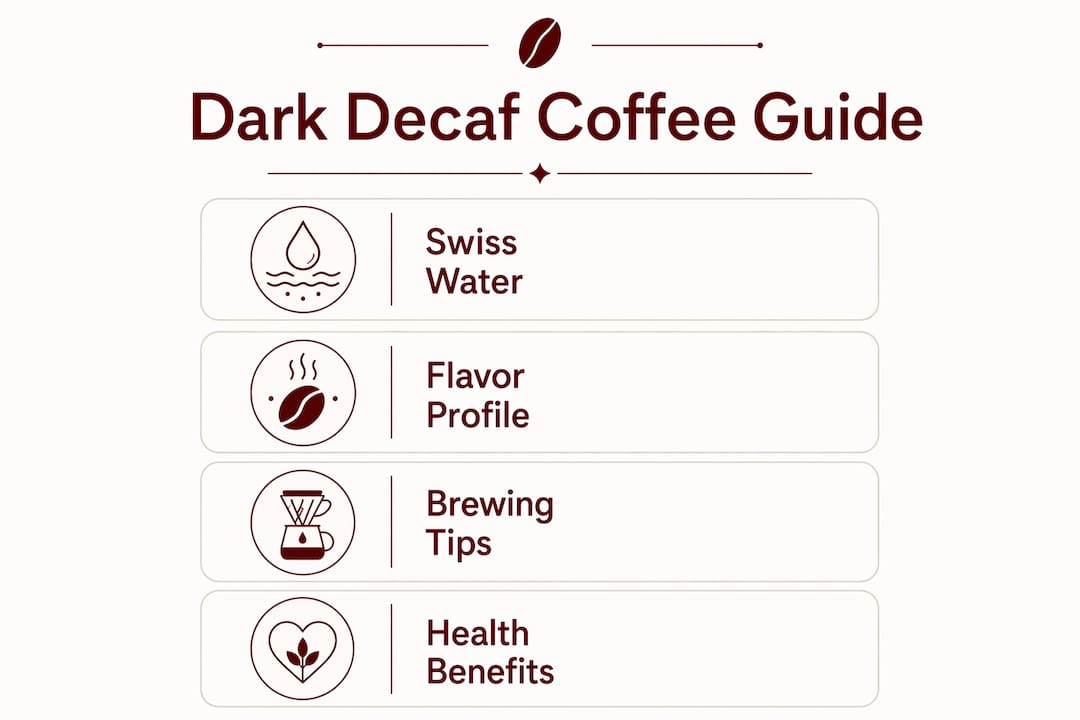
A quality dark decaf roast delivers a specific and recognizable set of flavors. The roast level drives most of them, and the decaffeination process, when done correctly, does not subtract from the experience.
Primary flavor notes
Water-processed decaf beans retain inherent sweetness and a heavy body that dark roast enthusiasts expect. The most common tasting notes include dark malt, bittersweet chocolate, caramelized sugar, and baking spices like cinnamon or clove. The mouthfeel is full and syrupy, coating the palate in a way that lighter roasts never achieve.
One detail that surprises many coffee drinkers: the sweetness in a dark decaf cup increases as the coffee cools. A rich, lingering finish with gentle roast bitterness and emerging sweetness is the hallmark of a well-made dark decaf. At drinking temperature, the bitterness leads. As the cup drops to around 130°F, the caramel and chocolate notes come forward.
- Bittersweet chocolate: The most consistent note across dark roast decaf profiles
- Caramelized sugar: Comes from Maillard reactions during roasting, survives decaffeination
- Dark malt: Adds depth and a slight grain-like quality to the finish
- Low acidity: The defining textural quality that separates dark decaf from lighter options
- Syrupy body: Full mouthfeel that makes the cup feel substantial and satisfying
Pro Tip: Pour a small amount into a tasting cup and let it cool for 3–4 minutes before evaluating. The sweetness you find at lower temperatures tells you more about the bean’s quality than the first hot sip does.
How should you brew dark decaf coffee?
Brewing method has a direct impact on how much of the dark roast’s body and sweetness you extract. Dark decaf behaves slightly differently from caffeinated dark roast because the decaffeination process changes the bean’s cell structure and density. The right method brings out the best qualities. The wrong one amplifies bitterness.
1. French press
Full-immersion brewing like French press enhances the syrupy body and chocolatey notes of dark decaf. The metal filter allows oils and fine particles to pass into the cup, which adds texture and depth. Use a coarse grind, a 4-minute steep, and water at 200°F. The result is a thick, rich cup that showcases everything a dark roast decaffeinated bean can offer.
2. Cold brew
Cold brew mellows the inherent bitterness of dark roast and brings the natural sweetness forward. Extended steeping in cold water over 12–18 hours extracts flavor compounds slowly, reducing the harsh edges that hot water can produce. The result is a smooth, sweet concentrate that works well straight or over ice. Dark decaf cold brew is one of the most approachable ways to experience the roast’s full flavor range.
3. Drip and pour-over
Drip and pour-over methods work well for dark decaf, but grind size matters more here than with other methods. A slightly coarser grind prevents over-extraction and keeps the flavor balanced. Because decaffeinated beans are more porous than their caffeinated counterparts, they extract faster. A grind one step coarser than you would use for regular dark roast is the right starting point.
4. Espresso
Dark decaf espresso produces rich crema and cuts through milk effectively in lattes and cappuccinos. The bold profile of a dark roast holds up against steamed milk in a way that lighter decaf roasts cannot. For anyone who wants a flat white or cortado without caffeine, dark roast decaffeinated espresso is the correct choice. The flavor integrity stays intact, and the crema production is comparable to a standard espresso shot.
Pro Tip: For espresso, dial in your grind slightly coarser than your standard setting and pull a slightly longer shot. Dark decaf extracts faster, and a coarser grind with a longer pull balances the extraction curve.
What are the health benefits of dark decaf coffee?
Dark coffee without caffeine offers a specific set of health advantages that neither regular coffee nor lighter decaf fully replicates. The combination of low caffeine and low acidity makes it the most accessible form of coffee for people with certain health conditions.
Decaf coffee reduces caffeine significantly, making it suitable for people with hypertension, caffeine sensitivity, anxiety disorders, or sleep disruption. Removing caffeine does not remove the antioxidants. Polyphenols, including chlorogenic acids, remain present in decaffeinated coffee and contribute to the same antioxidant activity found in regular coffee.
Dark roast coffee has lower acidity than lighter roasts, which can reduce gastrointestinal discomfort for people with acid reflux or GERD. The extended roasting process breaks down more of the chlorogenic acids that trigger acid production in the stomach. Dark decaf combines both advantages: no caffeine and reduced acid.
- Hypertension and heart health: Lower caffeine reduces cardiovascular stimulation
- GERD and acid reflux: Lower acidity means less stomach irritation
- Sleep quality: No caffeine means no interference with sleep cycles, making evening coffee possible
- Antioxidant retention: Polyphenols survive decaffeination and continue to provide cellular protection
- UTI sensitivity: Caffeine is a known bladder irritant; decaf removes that trigger entirely
For anyone reducing caffeine without losing the ritual of a quality cup, dark roast decaffeinated is the most complete solution available.
Key Takeaways
Dark decaf coffee delivers the full flavor and body of a dark roast with caffeine removed, making it the best option for coffee enthusiasts who want depth without the stimulant.
| Point | Details |
|---|---|
| Choose Swiss Water Process | This method removes 99.9% of caffeine without solvents, preserving sweetness and body. |
| Expect bold, low-acid flavor | Dark roast decaffeinated delivers chocolate, caramel, and malt notes with a syrupy mouthfeel. |
| Adjust your grind size | Use a slightly coarser grind than regular dark roast to prevent over-extraction in drip and pour-over. |
| French press and cold brew excel | Full-immersion and cold extraction methods bring out the richest body and sweetest finish. |
| Health benefits are real | Low caffeine and low acidity make dark decaf the most accessible coffee for sensitive drinkers. |
My honest take on dark decaf after years of tasting
Most coffee drinkers dismiss decaf before they try a water-processed dark roast. That is a mistake I made for years. The assumption is that removing caffeine removes character. A Swiss Water Process French roast proves that wrong in the first sip.
What I have found is that the best dark decaf cups come from enthusiasts who treat the grind and brew method as seriously as they would for any specialty coffee. The beans are more porous and extract faster. Ignore that, and you get bitterness. Respect it, and you get a cup that rivals any caffeinated dark roast for complexity and body.
My personal preference is a Sumatra-style dark decaf brewed in a French press and allowed to cool slightly before drinking. The earthiness of the origin combined with the caramelization of a dark roast produces something genuinely interesting. The sweetness that develops as the cup cools is the detail that converts skeptics.
The biggest mistake I see is people using the same grind they use for regular coffee. Go coarser. Pull back the extraction time slightly. Let the bean do the work instead of forcing it. Dark decaf rewards patience and precision more than any other roast category.
— Jett
Espritkaffe’s dark decaf options worth trying
Espritkaffe builds its coffee around one principle: your roast, your way. For dark decaf enthusiasts, that means access to instant coffee options that deliver the bold, rich profile of a dark roast without the preparation time or the caffeine.
The instant coffee with mushroom option adds a wellness dimension to the dark decaf experience. Functional mushroom extracts pair naturally with the earthy, chocolatey notes of a dark roast and add adaptogenic benefits without altering the coffee’s core flavor. For coffee drinkers who want both quality and convenience, Espritkaffe’s range covers the full spectrum. Explore the decaf collection and find the roast that fits your ritual.
FAQ
What is dark decaf coffee?
Dark decaf coffee is a dark roast coffee with its caffeine removed through a decaffeination process, typically the Swiss Water Process. It retains the bold, chocolatey flavor and full body of a standard dark roast.
Does dark decaf coffee still taste strong?
Yes. The roast level determines flavor strength, not caffeine content. A dark roast decaffeinated bean delivers the same bittersweet, full-bodied profile as its caffeinated equivalent.
Is dark decaf coffee low acid?
Dark roast decaffeinated coffee is lower in acid than lighter roasts because extended roasting breaks down chlorogenic acids. This makes it a better choice for people with acid reflux or GERD.
What is the best brewing method for dark decaf?
French press and cold brew produce the richest results because full-immersion and cold extraction preserve body and mellow bitterness. For drip or pour-over, use a coarser grind to prevent over-extraction.
Is Swiss Water Process the safest decaffeination method?
Swiss Water Process is the most widely recognized solvent-free method, certified to remove 99.9% of caffeine without chemical solvents. It meets USDA Organic standards and is the preferred choice for quality-focused dark decaf production.