

Coffee taste testing is the deliberate process of evaluating coffee through your senses to identify its unique flavor, aroma, and texture characteristics. Known in the industry as sensory evaluation or cupping, this practice gives enthusiasts a structured way to move beyond “I like it” or “I don’t” and into a richer vocabulary of flavor. The Specialty Coffee Association (SCA) cupping protocol and the World Coffee Research (WCR) Sensory Lexicon set the global standards for this process. Whether you taste coffee at home or attend formal cupping events, the same core principles apply: consistency, attention, and a willingness to train your palate over time.
What does coffee taste testing actually involve?
Coffee taste testing is a structured sensory evaluation, not casual sipping. The SCA cupping protocol is the global standard used by Q-graders and competition judges to score coffees on 80 and 90-point scales. That scoring system forces tasters to evaluate specific attributes, including fragrance, flavor, acidity, body, balance, and finish, rather than relying on gut feeling alone.
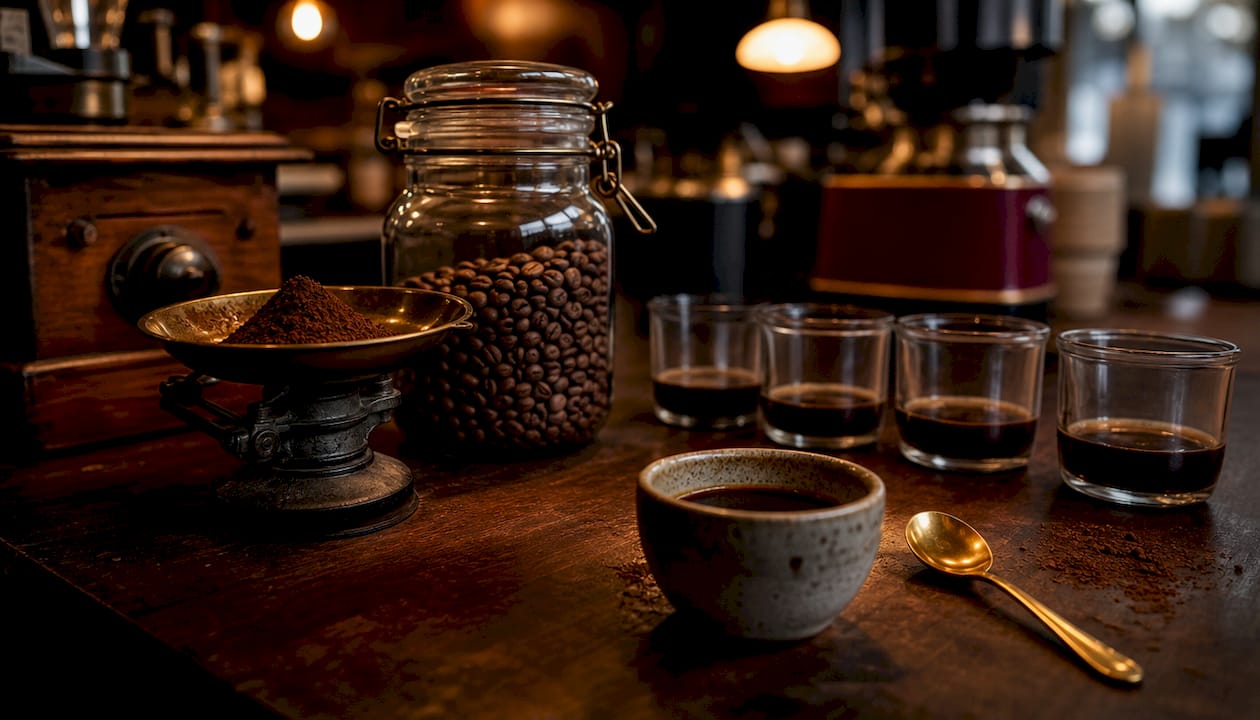
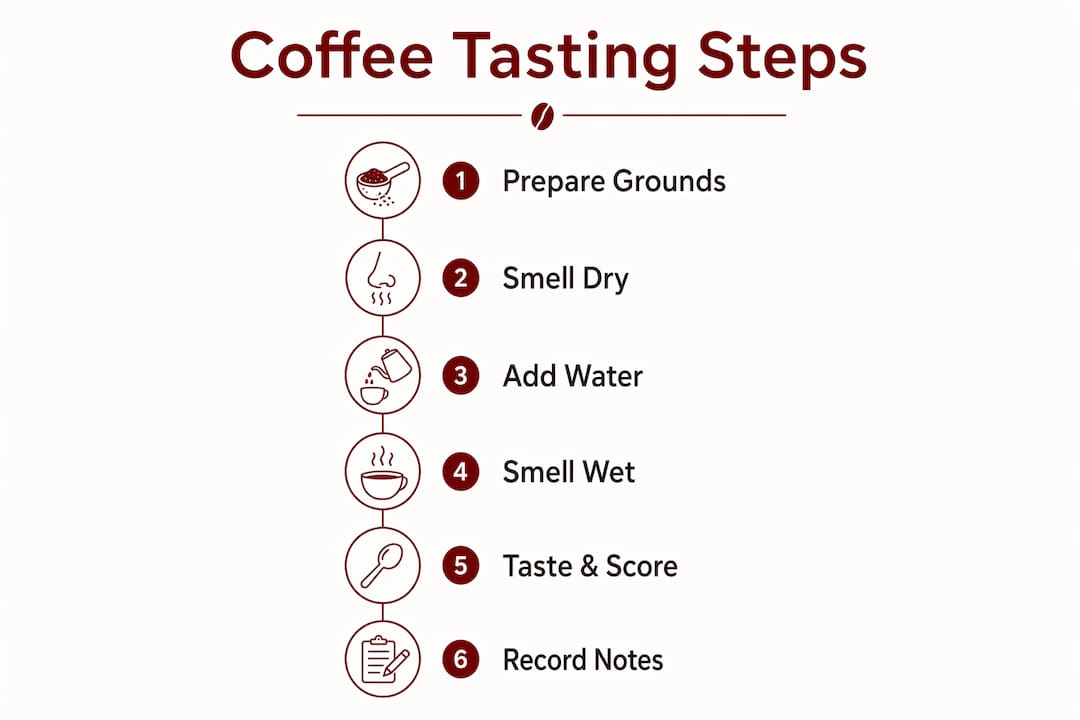
The process separates aroma evaluation from taste evaluation. You smell dry grounds first, then wet grounds after adding hot water, then taste the liquid itself. Each stage reveals different chemical compounds. This layered approach is what makes professional cupping so much more revealing than a casual cup at your kitchen table.
Flavor notes in coffee come from chemical and biological transformations during growth, processing, and roasting. That means the fruity brightness in an Ethiopian Yirgacheffe and the dark cocoa depth in a Sumatran blend are not added flavors. They develop naturally through the bean’s entire journey from farm to roaster.
What tools do you need for a reliable taste test at home?
The right setup removes variables that distort your results. You do not need a professional lab, but you do need consistent equipment and a controlled environment.
| Tool | Purpose |
|---|---|
| Burr grinder | Produces uniform particle size for even extraction |
| Digital scale | Ensures consistent coffee-to-water ratios |
| Cupping bowls or wide mugs | Allows proper aroma capture before tasting |
| Gooseneck kettle | Controls pour speed and water temperature |
| Cupping spoons | Deep bowl shape for slurping and aeration |
| Timer | Tracks steep time for repeatable results |
| Tasting journal | Records notes for palate development over time |
Beyond equipment, your environment matters. Tasting in a room with strong food smells, perfume, or background noise reduces your ability to focus on subtle flavor differences. A neutral, quiet space with good lighting gives your senses the best conditions to work accurately.
Pro Tip: Rinse your cupping spoons with hot water between samples. Residual oils from one coffee will contaminate the next and skew your perception of acidity and sweetness.
Brewing parameters must stay fixed across every sample you compare. Use the same grind size, the same water temperature, and the same steep time for each cup. Changing even one variable makes it impossible to attribute flavor differences to the coffee itself.
How to conduct a professional coffee taste test, step by step
Following a repeatable process is what separates genuine sensory learning from guesswork. The SCA cupping method gives you a proven framework you can replicate at home.
- Grind fresh. Grind each coffee immediately before tasting. Grind size should be slightly coarser than drip. Use 8.25 grams of coffee per 150 milliliters of water as a starting ratio.
- Smell the dry grounds. Inhale slowly over each bowl. Note the first aromas that come to mind without overthinking. Write them down immediately.
- Add hot water. Pour water just off the boil (around 200°F) directly over the grounds. Start your timer.
- Break the crust at four minutes. Use your cupping spoon to push through the floating grounds. Lean in and inhale the released steam. This is the most aromatic moment of the entire process.
- Clear the crust. Use two spoons to skim the grounds and foam off the surface.
- Wait for the coffee to cool. Tasting above 160°F impairs flavor perception. The optimal window runs from about 155°F down through 140°F, where sweetness and defect detection are sharpest.
- Slurp, don’t sip. Load your spoon and slurp forcefully to spray the liquid across your entire palate. This aerates the coffee and distributes it evenly across your taste receptors.
- Evaluate in sequence. Assess flavor first, then acidity, then body, then finish. Write a note for each attribute before moving to the next cup.
- Taste again as it cools. Flavors shift significantly as temperature drops. A coffee that tastes flat at 150°F may reveal bright fruit notes at 120°F.
- Score and compare. Rate each attribute on a simple 1–10 scale. Compare scores across samples to identify patterns.
Pro Tip: Taste each coffee at least twice before writing your final notes. First impressions are often dominated by temperature and aroma rather than true flavor.
Triangle testing adds a calibration layer to this process. In a triangle test, you present three cups where two are identical and one is different. Five out of six correct identifications in a triangle test demonstrates statistically significant sensory discrimination. This method is the most rigorous way to confirm that your palate is detecting real differences, not imagined ones.
How do you interpret coffee tasting notes and flavor profiles?
The SCA Flavor Wheel and WCR Sensory Lexicon provide 110 precise descriptors arranged in a hierarchy from broad categories down to specific notes. This taxonomy gives you a shared language for describing what you taste, which is far more useful than personal metaphors that mean nothing to anyone else.
The wheel organizes flavors from the center outward. The inner ring holds broad families. The outer rings break those families into specific descriptors. When you taste something “fruity,” you work outward to determine whether it is citrus, berry, stone fruit, or tropical. That process of narrowing down is exactly how professional tasters build accurate notes.
The five main flavor families you will encounter most often in specialty coffee are:
- Fruity: Citrus (lemon, orange), berry (blueberry, raspberry), stone fruit (peach, apricot)
- Floral: Jasmine, rose, lavender, elderflower
- Chocolatey: Dark chocolate, milk chocolate, cocoa powder, caramel
- Nutty: Almond, hazelnut, walnut, peanut
- Earthy/Spicy: Cedar, tobacco, clove, black pepper
Chocolate-family notes appear in about 30% of specialty coffees, making them the most common baseline flavor for new tasters. Starting with a medium-roast coffee that leads with cocoa or caramel gives you a reliable anchor point before you move into more complex fruity or floral profiles.
Roast level and brewing method both shift the flavor profile of the same bean significantly. A light roast of a Colombian coffee may taste like bright red apple and black tea. The same bean taken to a dark roast will read as bittersweet chocolate and toasted walnut. Understanding that relationship lets you control your tasting variables and isolate the origin character of the bean itself.
Flavor notes are a tool for finding language for your sensory experience, not a test you pass or fail. The goal is to build a personal reference library that makes each cup more meaningful.
What are the most common mistakes in coffee taste testing?
Palate fatigue is the most underestimated obstacle in sensory evaluation. After four or five samples, your ability to detect subtle differences drops sharply. Limit formal tasting sessions to six cups maximum and take a five-minute break between flights if you are comparing more than that.
Temperature is the second major variable tasters ignore. Coffee tasted too hot masks sweetness and acidity. Coffee tasted too cold loses aromatic volatility. The optimal tasting window between 140°F and 155°F is narrow. Use a thermometer until you can judge it by touch on the bowl.
Pro Tip: Eat a plain cracker or a small piece of unflavored bread between samples to reset your palate. Avoid coffee, food, or strong flavors for at least 30 minutes before a tasting session.
Confirmation bias is a real problem in blind tasting. Knowing the price or origin of a coffee before you taste it shapes your perception. A well-known study found that 67% of participants preferred lower-cost coffee over higher-priced gourmet options in a blind test. That result shows how powerfully expectation overrides actual sensory experience. Blind tasting, where you do not know which cup is which, is the only way to get honest data from your own palate.
Environmental distractions compound every other mistake. Strong perfume, cooking smells, or background conversation all reduce your ability to focus on subtle aromatic differences. Treat your tasting space the same way a wine sommelier treats a tasting room.
How tasting regularly deepens your coffee appreciation
Consistent practice is what converts tasting technique into genuine palate development. The more reference points you build, the faster you recognize flavors in new coffees. Keeping a tasting journal accelerates this process significantly. Write the date, the coffee origin, the roast level, and three to five specific notes after every session. Reviewing past entries reveals how your perception sharpens over time.
Pairing coffee with food is an underused tool for flavor training. A piece of dark chocolate alongside a fruity Ethiopian coffee makes the berry notes in the coffee more vivid by contrast. A slice of orange alongside a bright Kenyan coffee confirms citrus notes you might otherwise second-guess.
Community cupping events offer a different kind of learning. Hearing how other tasters describe the same cup expands your vocabulary and challenges your assumptions. Many specialty roasters and coffee shops host regular cupping sessions open to the public.
Exploring a range of origins and roast levels in a short period accelerates palate development faster than drinking the same coffee every day. An assorted coffee pack gives you side-by-side variety without committing to full bags of each. That kind of structured variety is exactly what builds a well-rounded sensory reference library.
Key Takeaways
Coffee taste testing builds a reliable sensory vocabulary by combining standardized protocols, consistent equipment, and deliberate practice across diverse coffee origins and roast levels.
| Point | Details |
|---|---|
| Use the SCA cupping protocol | Score fragrance, flavor, acidity, body, and finish for repeatable, objective results. |
| Taste in the optimal temperature window | Evaluate coffee between 140°F and 155°F for the clearest sweetness and defect detection. |
| Use triangle testing for calibration | Correctly identifying the odd cup confirms your palate detects real differences, not imagined ones. |
| Start with chocolate-family notes | These appear in about 30% of specialty coffees and serve as the most reliable baseline for new tasters. |
| Blind taste to eliminate bias | Removing price and origin information before tasting produces honest, unbiased sensory data. |
Why I think most coffee enthusiasts skip the most important step
Most people who get serious about coffee spend money on better beans and better gear before they invest any time in training their palate. I understand the impulse. A new grinder feels like progress. A bag of single-origin Ethiopian feels like progress. But without a structured tasting practice, you are still drinking coffee the same way you always have, just with more expensive inputs.
The step most enthusiasts skip is triangle testing. It feels academic and a little tedious. You set up three cups, two identical and one different, and you try to find the odd one out. But that exercise does something no amount of casual sipping can do. It forces your brain to stop relying on expectation and start relying on actual sensory data. The first time I ran a proper triangle test, I was wrong more often than I expected. That humbling experience was more useful than any tasting note I had ever written.
The other thing I have noticed is that people rush the cool-down. They taste at full heat, write their notes, and move on. The most interesting flavors in a well-processed coffee show up as it cools. A coffee that tastes like dark chocolate at 150°F can open into dried cherry and brown sugar at 120°F. Slowing down that process changed how I experience every cup, not just the ones I am formally evaluating. If you want to understand what a coffee is really doing, give it time. Your patience is the most underrated tasting tool you have.
— Jett
Espritkaffe coffees worth tasting at home
Putting a structured tasting practice into action requires coffees with enough flavor complexity to reward the effort. Espritkaffe’s lineup is built for exactly that kind of intentional drinking.
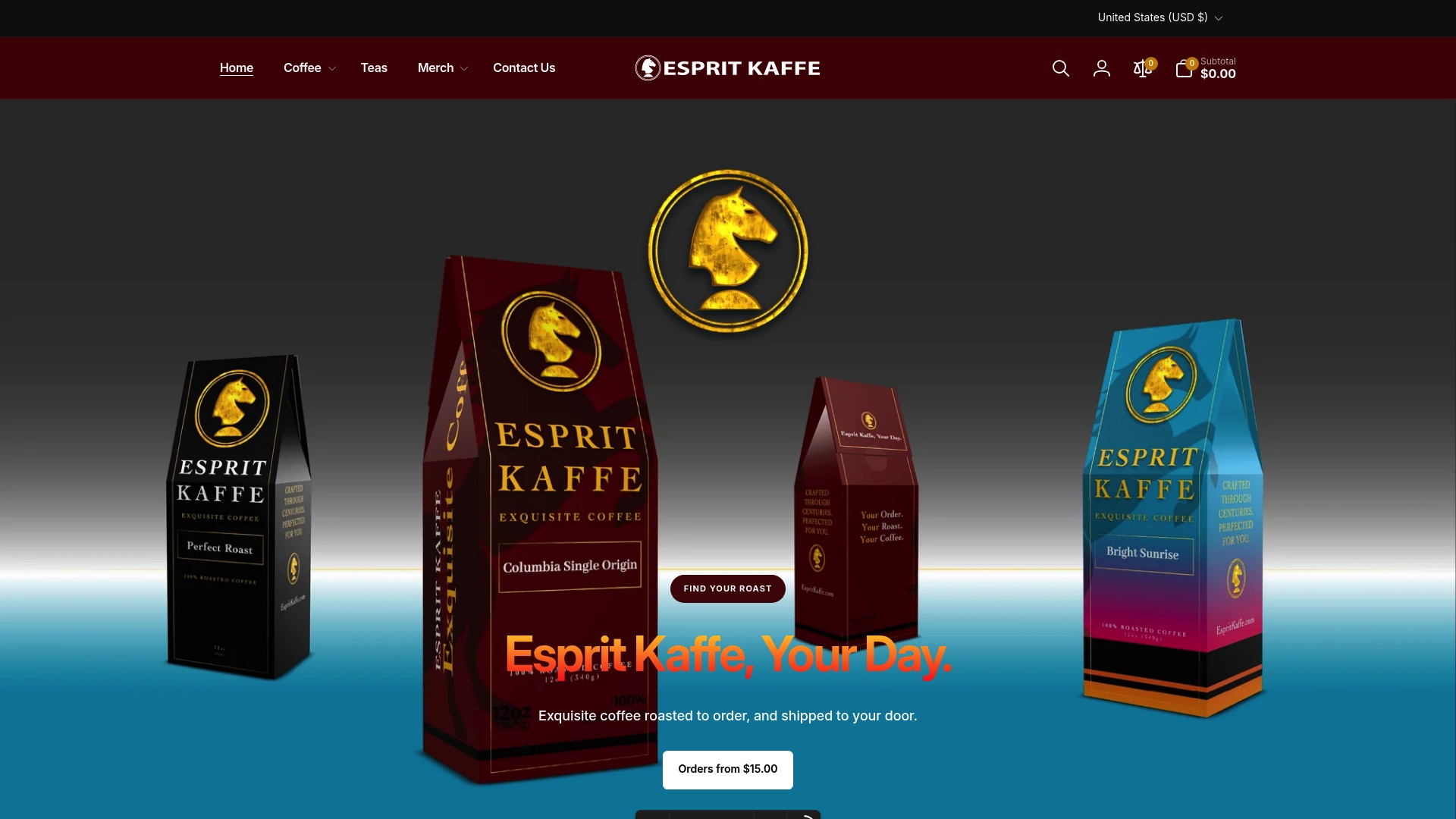
The Coffee with Mushrooms Medium Roast delivers a layered profile that rewards careful evaluation, with clean sweetness and a finish that shifts as the cup cools. The Coffee with Mushrooms Dark Roast offers the deep, chocolatey baseline that makes it ideal for anchoring a tasting flight. For regional flavor contrast, the Mexico Coffee Pods bring distinct origin character in a consistent, convenient format. Each of these coffees gives you something specific to evaluate, making your tasting sessions more focused and more rewarding.
FAQ
What is the difference between cupping and coffee taste testing?
Cupping is the formal, standardized method of coffee sensory evaluation developed by the SCA. Coffee taste testing is a broader term that includes cupping as well as informal methods like triangle testing and comparative tasting at home.
How do I build a better palate for tasting coffee?
Taste a wide range of origins and roast levels consistently, keep a written journal of your notes, and use triangle testing to confirm your sensory discrimination. Regular practice over weeks builds a reliable internal reference library.
Why does coffee taste different as it cools?
Heat suppresses sweetness and masks certain aromatic compounds. As coffee cools from 155°F toward 120°F, those compounds become more volatile and detectable, which is why flavor perception sharpens in the lower temperature range.
Does more expensive coffee always taste better?
No. Blind taste tests show that 67% of participants preferred lower-cost coffee over premium-priced options. Price signals quality in production, but it does not guarantee a flavor profile that matches your personal palate.
What is the SCA Flavor Wheel used for?
The SCA Flavor Wheel organizes 110 coffee flavor descriptors into a hierarchy from broad families to specific notes. Tasters use it to find precise language for what they detect, making evaluations consistent and comparable across different tasters and sessions.