

Coffee peanut butter is a creamy, flavor-packed fusion of two pantry staples that produces rich drinks and spreads when prepared with the right technique. The combination works because peanut butter’s natural proteins act as emulsifiers, binding fat and liquid into a smooth, velvety texture. This guide covers everything from hot peanut butter lattes to iced blended beverages and homemade coffee-infused spreads, with step-by-step instructions and science-backed tips to get it right every time.
What is coffee peanut butter and why does it work so well?
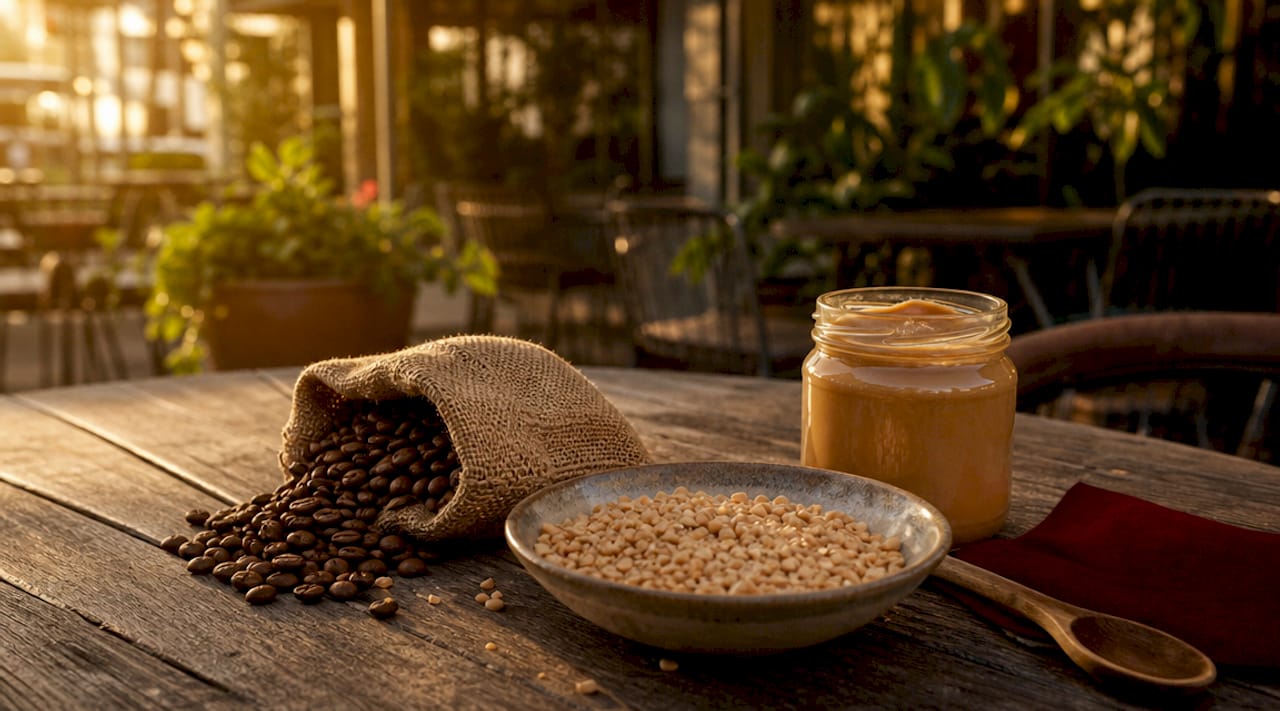
Coffee peanut butter, also called coffee nut butter in specialty food circles, is the result of combining brewed or instant coffee with peanut butter to create a unified flavor base. The pairing is not just intuitive. It is chemically sound. Peanut butter proteins like arachin and conarachin are natural emulsifiers that stabilize fat and water-based liquids when heat is applied. This means your drink stays creamy rather than separating into oily pools.
The flavor logic is equally strong. Roasted coffee and roasted peanuts share Maillard reaction compounds, the same browning chemistry that creates depth in both ingredients. When you combine them, the result is a layered, nutty bitterness that feels complete rather than competing. Brands like Justin’s, Peanut Butter & Co., and specialty producers have built entire product lines around coffee-flavored spreads because the demand from home cooks and food enthusiasts is real and growing.
Understanding this chemistry is the first step toward mastering the technique. Once you know why heat and agitation matter, every recipe decision becomes deliberate rather than guesswork.
What tools and ingredients do you need for peanut butter coffee recipes?
Getting the right setup before you start saves you from grainy, separated drinks. Here is what you need across coffee types, peanut butter forms, and equipment.
Coffee options:
- Espresso delivers the most concentrated flavor and pairs best with creamy peanut butter in hot lattes
- Strong brewed coffee (French press or Moka pot) works well for both hot and iced versions
- Cold brew concentrate is the best base for blended iced drinks because it is already chilled and low-acid
- Instant coffee dissolved in hot water is a fast, consistent option for spreads and smoothies
Peanut butter options:
- Creamy, no-stir peanut butter (such as Jif or Skippy) blends fastest and produces the most consistent texture
- Natural unsweetened peanut butter gives better flavor control but requires more mixing
- Powdered peanut butter (like PB2) dissolves cleanly into cold drinks without clumping
- Commercial coffee-infused spreads are available from specialty producers and can be used directly on toast or stirred into recipes
Other ingredients: Maple syrup, honey, or simple syrup for sweetness. Whole milk, oat milk, or coconut milk for richness. A pinch of salt to sharpen flavor.
| Tool | Purpose | Pro tip |
|---|---|---|
| Handheld milk frother | Emulsifies hot peanut butter coffee | Froth for exactly 15 to 20 seconds |
| High-speed blender | Blends iced and smoothie versions | Blend 30 to 45 seconds minimum |
| Kitchen thermometer | Monitors coffee temperature | Target 175 to 185°F for hot drinks |
| Whisk | Mixes peanut butter into steaming milk | Use before adding coffee for lattes |
| Sealed jar or shaker | Alternative to frothing | Shake 30 seconds for a foam-free version |
Pro Tip: If you do not have a frother, a mason jar with a tight lid works well. Add your peanut butter, sweetener, and hot coffee, seal it, and shake for 30 seconds. The result is a smooth, frothy drink without any equipment investment.
How to make smooth and creamy hot peanut butter coffee
The hot preparation method is where temperature control makes or breaks the result. Coffee at 175 to 185°F melts peanut butter fats efficiently and activates the proteins needed for emulsification. Anything cooler and the fats solidify before they can bind with the liquid.
Follow these steps for a reliable hot peanut butter coffee:
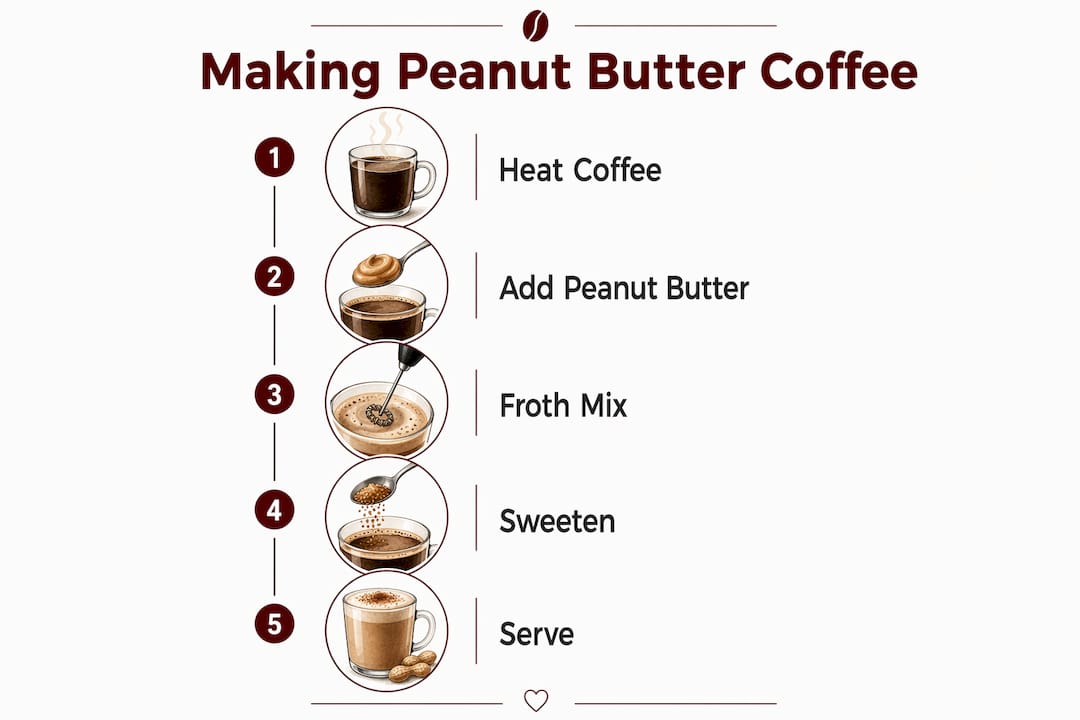
- Brew one cup of strong coffee or pull a double espresso shot. Check the temperature with a thermometer. It should read between 175 and 185°F.
- Add one tablespoon of creamy peanut butter and one teaspoon of maple syrup directly to your mug.
- Pour the hot coffee over the peanut butter. Do not stir yet.
- Wait about 10 seconds to let the heat soften the peanut butter fats. Treat it like a sauce that needs to loosen before it can be worked.
- Insert a handheld frother and froth for 15 to 20 seconds until the mixture is smooth and slightly foamy.
- Add two to four ounces of steamed milk or oat milk for extra richness and stir gently to combine.
For a peanut latte variation, whisk peanut butter into steaming milk first, then pour your espresso or brewed coffee on top. This method prioritizes emulsification before the coffee even enters the cup, which produces a silkier result than adding peanut butter directly to black coffee.
Common mistakes to avoid:
- Using coffee that has cooled below 140°F. At that temperature, peanut butter fats begin to solidify and clump rather than emulsify.
- Stirring too aggressively with a spoon. Spoons do not incorporate enough air. A frother or shaker is always more effective.
- Using crunchy peanut butter. The nut pieces do not dissolve and create an unpleasant gritty texture in the finished drink.
Pro Tip: Add a small pinch of cinnamon or a drop of vanilla extract to your mug before frothing. Both ingredients amplify the roasted notes in the coffee and the nuttiness of the peanut butter without adding sweetness.
How to prepare iced and blended peanut butter coffee drinks
Cold preparations require a different approach because heat is no longer available to activate emulsification. High-speed blending does the work instead, pre-emulsifying peanut butter and coffee before the drink is poured over ice.
Follow these steps for a smooth iced peanut butter coffee:
- Brew one cup of strong coffee and let it cool completely, or use cold brew concentrate straight from the fridge.
- Add the cooled coffee, one-half cup of milk (dairy or oat), and one tablespoon of creamy peanut butter to a blender.
- Blend on high for 30 to 45 seconds. This duration is not optional. Shorter blending leaves fat globules that separate within minutes.
- Pour immediately over a glass filled with ice. Serve right away to maintain the emulsion.
- Taste and adjust. Add maple syrup for sweetness or a splash more milk for a lighter texture.
For a coffee and peanut butter smoothie, the method scales up easily. Combine 240 ml of strong brewed coffee with four tablespoons of peanut butter, one frozen banana, and an optional scoop of protein powder. Blend for 30 to 45 seconds and you have a protein-rich morning drink that replaces both breakfast and your morning cup. The frozen banana thickens the texture and adds natural sweetness without refined sugar.
Pro Tip: Freeze your brewed coffee into ice cubes and use them instead of regular ice. As they melt, they intensify the coffee flavor rather than diluting it. This one change makes a noticeable difference in the final drink.
If your iced drink separates or turns grainy after a few minutes, the blending time was too short or the peanut butter was too cold and stiff. Natural peanut butter stored in the fridge is the most common culprit. Let it sit at room temperature for 10 minutes before blending.
Creative coffee peanut butter spreads and other uses
Coffee-flavored peanut butter spreads occupy a specific niche in the specialty food market. Shelf-stable coffee peanut butter spreads are available from producers like Bavarian Roasters and can be used on toast, stirred into oatmeal, or folded into brownie batter. Homemade versions are straightforward: blend natural peanut butter with two teaspoons of instant espresso powder and a touch of honey until smooth.
Ways to use coffee peanut butter beyond drinks:
- Spread on sourdough toast with sliced banana and a drizzle of honey
- Stir into overnight oats with cocoa powder for a mocha-flavored breakfast
- Use as a filling in chocolate sandwich cookies or thumbprint cookies
- Blend into a smoothie base for a coffee and peanut butter smoothie with added depth
- Swirl into brownie batter before baking for a nutty, caffeinated twist
Oil separation is normal in natural peanut butter spreads. Store the jar upside down to redistribute the oil, then stir before use. For coffee-infused spreads specifically, the espresso powder can settle at the bottom of homemade versions. A quick stir before each use solves this.
| Use case | Best peanut butter type | Coffee form |
|---|---|---|
| Toast spread | Natural, creamy | Instant espresso powder |
| Smoothie ingredient | Powdered (PB2) | Cold brew concentrate |
| Baking addition | Commercial no-stir | Brewed and reduced |
| Oatmeal stir-in | Natural, unsweetened | Instant coffee granules |
For readers interested in other coffee-flavored spreads, the caramel coffee powder guide on Espritkaffe covers additional flavor combinations worth exploring.
Troubleshooting common problems with coffee peanut butter
Most problems with coffee peanut butter come down to three variables: temperature, timing, and peanut butter type. Knowing which variable caused the issue points directly to the fix.
Peanut butter clumps in the coffee:
The coffee was below 140°F when the peanut butter was added. Cooling below 60°C causes peanut butter fats to solidify and pool rather than emulsify. Reheat the drink gently and froth again. Going forward, add peanut butter while the coffee is still freshly brewed.
The drink separates after a few minutes:
Frothing or blending time was too short. The emulsion was never fully formed. For hot drinks, froth for the full 15 to 20 seconds. For cold drinks, blend for the full 30 to 45 seconds. Serving iced drinks immediately after blending also reduces separation.
The texture is gritty:
Crunchy peanut butter or natural peanut butter with large particulates was used. Switch to creamy, no-stir peanut butter for drinks. If you prefer natural peanut butter for flavor, use a high-speed blender rather than a frother to break down the texture more thoroughly.
The drink tastes too bitter or too sweet:
Bitter results usually mean the coffee-to-peanut butter ratio is off. Add half a teaspoon more peanut butter or a small amount of sweetener. Overly sweet results point to commercial peanut butter with added sugar. Natural unsweetened peanut butter gives you full control over the final flavor profile.
Key takeaways
Coffee peanut butter drinks and spreads succeed when heat, timing, and the right peanut butter type work together to create a stable, creamy emulsion.
| Point | Details |
|---|---|
| Temperature is non-negotiable | Coffee must be at 175 to 185°F to melt fats and activate peanut butter proteins for emulsification. |
| Timing determines texture | Add peanut butter within 30 seconds of brewing and froth immediately after a 10-second rest. |
| Blending beats stirring | High-speed blending for 30 to 45 seconds is the only reliable method for cold and iced versions. |
| Peanut butter type matters | Creamy, no-stir varieties produce the most consistent texture in both hot and cold drinks. |
| Spreads have wide applications | Coffee peanut butter works on toast, in baking, and as a smoothie base beyond just beverages. |
Why I think most people overcomplicate this
I have made peanut butter coffee dozens of times, and the single biggest mistake I see is treating it like a precision project. People buy special equipment, source rare coffee beans, and then wonder why the result still separates or tastes flat. The truth is simpler and more frustrating: the issue is almost always temperature and patience.
The 10-second wait before frothing is the step most people skip. It feels unnecessary. It is not. That brief pause lets the hot coffee soften the peanut butter fats from the outside in, which means the frother has something workable to emulsify rather than a cold, stiff lump. I learned this the hard way after weeks of grainy drinks before I slowed down and actually read the technique.
The other thing worth saying: not all peanut butter is equal for this purpose. I have tested Jif, Justin’s, and several natural brands side by side. The natural brands taste better in spreads and baking. For drinks, the no-stir commercial varieties win on consistency every time. If you want flavor complexity in your drink, adjust the coffee strength or add a pinch of cardamom. Do not fight the peanut butter.
My honest recommendation is to start with a medium roast. Dark roasts can overpower the nuttiness, especially in iced drinks. A well-balanced medium roast lets both flavors show up clearly. Espritkaffe’s coffee flavor profiles are worth reading if you want to understand how roast level affects the final taste before you commit to a bag.
— Jett
The right coffee makes all the difference
The quality of your coffee base determines the ceiling of your peanut butter coffee. A flat, stale brew produces a flat drink regardless of technique. Espritkaffe roasts specifically for people who want clarity in every cup, and that precision translates directly into better peanut butter coffee at home.
The Coffee with Mushrooms Medium Roast is a strong starting point. Its earthy, balanced profile complements the nuttiness of peanut butter without competing for dominance. For a faster morning routine, the instant coffee options dissolve cleanly into hot water and hit the right temperature window for emulsification without any brewing equipment. If you prefer a bolder contrast, the dark roast collection delivers intensity that cuts through the richness of peanut butter in hot lattes.
FAQ
What is the best coffee for peanut butter coffee?
Medium roast coffee or espresso works best because the balanced flavor complements peanut butter without overpowering it. Cold brew concentrate is the top choice for iced and blended versions.
Why does peanut butter clump in my coffee?
Clumping happens when coffee temperature drops below 140°F before the peanut butter is added. Add peanut butter immediately after brewing and froth for 15 to 20 seconds to prevent it.
Can I use powdered peanut butter in coffee?
Yes. Powdered peanut butter like PB2 dissolves cleanly in both hot and cold coffee without clumping, making it the easiest option for iced drinks and smoothies.
How do I make a coffee and peanut butter smoothie?
Blend 240 ml of strong brewed coffee with four tablespoons of peanut butter, one frozen banana, and optional protein powder for 30 to 45 seconds until smooth.
How long does homemade coffee peanut butter spread last?
Homemade coffee peanut butter spread stored in a sealed jar in the refrigerator stays fresh for up to two weeks. Stir before each use to recombine any separated oil.