

Yes. A deliberate coffee pause of 10 minutes or less protects your mental energy and, when timed around the right kind of task, increases what you get done afterward. The evidence isn’t vague wellness talk either. A meta-analysis of 22 studies covering 2,335 workers found micro-breaks meaningfully raise vigor and cut fatigue.
Three moves make this work in your next pause:
- Time it deliberately, don’t just grab coffee when you notice you’re tired.
- Pick one focused ritual (brewing, sipping, brief movement) instead of scrolling.
- Set a short timer so the pause has a hard edge and you return on cue.
Key Takeaways
Short, deliberate coffee pauses reliably restore mental vigor and, when timed well around creative or clerical work, increase real output afterward.
| Point | Details |
|---|---|
| Micro-breaks work | Pauses under 10 minutes significantly raise vigor and lower fatigue, per meta-analysis data. |
| Task type changes the payoff | Creative and clerical tasks see real output gains; highly demanding work needs longer recovery. |
| Ritual beats random breaks | A repeatable sequence, brew, sip, brief movement, timer, detaches your mind faster than scrolling. |
| Caffeine timing adds a second boost | Alertness effects hit 15 to 45 minutes after drinking, lining up with your return to work. |
| Espritkaffe supports the ritual | Instant Coffee and the Instant Coffee with Mushroom blend give a consistent, quick-brew option for daily pauses. |
Table of Contents
- Why Intentional Pauses Boost Output: The Science Behind the Ritual
- How Do You Structure an Intentional Coffee Pause?
- When and How Long Should Your Pauses Be?
- How Do You Get Back to Work Without Losing Momentum?
- How Should You Personalize Your Coffee Pause Ritual?
- Sources
Why Intentional Pauses Boost Output: The Science Behind the Ritual
Your brain and body run on cycles, not a flat line. The Association for Business Psychology frames sustained performance as an alternation between effort and recovery: stress hormones rise while you work, and they need time to return to baseline before you can produce quality work again. Skip the recovery half of that cycle long enough and concentration erodes even if you never technically stop typing.
The numbers back this up with more precision than most productivity advice gets. The same meta-analysis of micro-breaks (defined as pauses of roughly 10 minutes or less) found a statistically significant boost to vigor (d = .36, p < .001) and a matching drop in fatigue (d = .35, p < .001).
Overall performance gains were smaller and not statistically significant across all tasks, but the pattern shifted once researchers looked at task type: clerical and creative work showed real gains, and longer micro-breaks produced bigger performance boosts than shorter ones.
That distinction matters for how you plan your day. If you’re drafting, brainstorming, or handling routine correspondence, a well-placed pause tends to pay off in output, not just in feeling better. If you’re deep in a task that demands sustained, high-stakes cognitive load, like reconciling a complex spreadsheet or writing dense legal language, a single short pause won’t fully reset you. You may need a longer recovery window instead.
Mechanically, a few things happen at once during a good pause: your attention briefly detaches from the task, letting your brain do some quiet background processing; a sensory ritual like brewing coffee shifts you out of task mode faster than passive rest; and if caffeine is involved, its effects arrive later, right when you’re stepping back in. Coffee and focus have a documented correlation worth understanding if you want to use pauses strategically rather than reactively.
How Do You Structure an Intentional Coffee Pause?
The ritual matters more than the caffeine. A pause built around mindless scrolling doesn’t give you the same detachment as one built around a small, repeatable sequence. Here’s a version worth copying:
- Step away from your screen before you start brewing, physically leave the desk.
- Prep your coffee using a method that demands attention (more on that below).
- Take the first sip slowly. Notice temperature, aroma, and body before you do anything else.
- Spend two to three minutes sipping without a phone in hand.
- Get a few minutes of light movement or look out a window if one’s nearby (important for office workers’ health and productivity).
- Set a timer before you started brewing so the end of the pause isn’t a judgment call.
For the brewing method itself, the French Press earns its place in this ritual because it forces a pace you can’t rush. Grinding, steeping, and pressing take a few unhurried minutes, and that built-in tempo does the sensory work of pulling your mind off the task you just left. A drip machine or capsule pod gets you caffeine faster, but it doesn’t give you the same forced slowdown.
Caffeine timing is worth planning around, not ignoring. Caffeine typically starts affecting alertness 15 to 45 minutes after you drink it, so a well-timed pause gives you two separate benefits: the mental reset of stepping away, followed by a stimulant boost that lands right as you’re settling back into work.
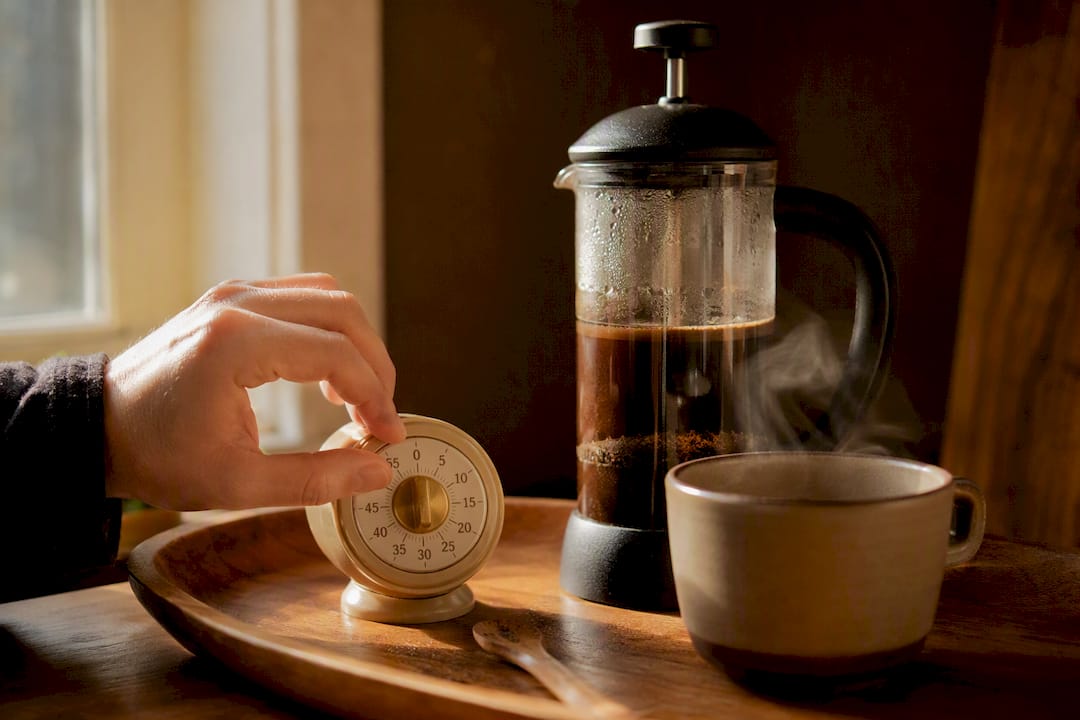
Pro Tip: Grind your beans slightly coarser than you would for drip, and use water just off the boil, around 200°F. A French Press with fine grounds turns bitter and muddy, which undercuts the sensory payoff the whole ritual depends on.
When and How Long Should Your Pauses Be?
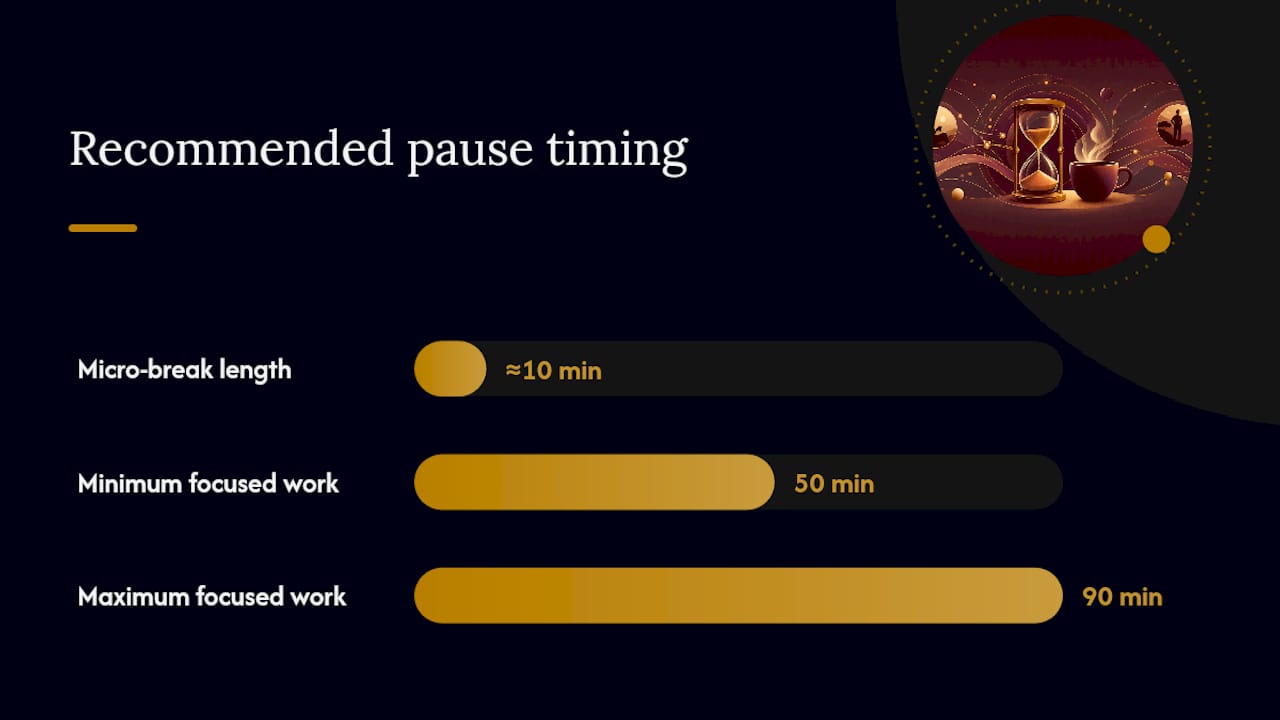
Micro-breaks generally last up to about 10 minutes, and research suggests that breaks near this length, rather than very short ones, are more likely to improve performance for creative and clerical tasks.
Timing also matters. Two windows line up well with your body’s natural rhythms:
- Mid-morning, around 10 AM, when initial cortisol from waking has settled and a dip in alertness often follows.
- Mid-afternoon, around 2 to 3 PM, when most people hit a well-documented energy slump.
As a general rhythm, take a short pause after 50 to 90 minutes of focused work, or whenever you finish a discrete task block. Adjust based on how demanding the work is and how you’re actually feeling. This isn’t a rigid formula. It’s a starting point you tune to your own energy curve.
How Do You Get Back to Work Without Losing Momentum?
The fear of not resuming is one of the biggest reasons people skip breaks altogether, according to research on the paradox of taking breaks. A few habits close that gap:
- Before you step away, leave your work in a resumable state: open document, cursor where you left off, a one-sentence note about the next step.
- Use a visible timer or set an alarm so returning is automatic, not a decision you have to remember to make.
- Tell a colleague or set a shared check-in if accountability helps you more than a timer does.
Pro Tip: Commit to just five minutes of work when you sit back down, even if it feels awful. This “five awful minutes” trick works because starting, not motivation, is usually the actual barrier. Once you’re five minutes in, momentum typically carries you the rest of the way.
How Should You Personalize Your Coffee Pause Ritual?
No single ritual fits every task or every person, and treating breaks as one-size-fits-all wastes their potential. Choose activities you genuinely enjoy. Forced relaxation doesn’t relax anyone.
Before each pause, ask yourself two quick questions: is this task creative, clerical, or heavily analytical? And how depleted do I actually feel right now? A quick clerical task after a light morning might only need five minutes. A tough analytical block after back-to-back meetings might call for the full ten, maybe paired with a short walk.
- Do pick something enjoyable: a specific brew, a few minutes outside, light stretching.
- Don’t check email or social media during the pause. That’s task-switching, not recovery.
- Do track how you feel afterward for a week. A simple 1 to 10 vigor rating tells you fast whether your ritual is working.
One trap worth naming: the “earn it” mindset, where you delay breaks until you feel like you’ve done enough. That instinct usually backfires and drains the vigor you needed the break to protect. Aligning pauses with your actual schedule rather than a guilt threshold makes the habit stick.
A Short Note From Jett
I started timing my coffee pauses instead of taking them whenever I felt fried, and the difference showed up faster than I expected: sharper first ten minutes back at the keyboard, fewer afternoon crashes. Try one deliberate pause today and just notice what changes.
If You Want a Cup Built for This Exact Ritual
Espritkaffe roasts beans specifically for the kind of pause described above: bright enough to reward slow, attentive sipping, consistent enough that the ritual feels the same every time you rely on it. That consistency is the whole point. A pause built around guesswork about how today’s coffee will taste doesn’t deliver the same reset as one built around a cup you already trust.

If you’re just building the habit, start with Instant Coffee for a fast, no-fuss version of the ritual that still gives you something worth pausing for. If you want the functional edge for longer stretches of remote work, the Instant Coffee with Mushroom blend is built for steady energy without the crash. Order a single bag first and see how it fits your pause before committing to a subscription.
Sources
- The Business Case for Taking a Break: Why Recovery Is a Strategic Performance Tool
- “Give me a break!” A systematic review and meta-analysis on the efficacy of micro-breaks for increasing well-being and performance
- The paradox of taking breaks (Psychology Today)