

The French press is the most effective manual brewing method for remote workers who want to align coffee preparation with structured focus sessions. Unlike drip machines or pod systems, it gives you a fixed 4-minute window that maps directly onto sprint warm-up routines. When you use a French press during work sprints, you are not just making coffee. You are building a repeatable ritual that primes your brain before every deep work block. Espritkaffe was built for exactly this kind of intentional, clarity-first approach to the workday.
How to use a French press during work sprints
The core principle is simple: start brewing at the exact moment your sprint warm-up begins, and pour the moment your timer hits four minutes. This synchronization turns an otherwise idle wait into productive preparation time. The 4-minute steep time is not dead time. It is your window to set sprint goals, silence notifications, and clear your workspace.
French press coffee works for this ritual because it is an immersion brew. Water and grounds stay in full contact for the entire steep, which means you get a richer extraction than paper-filter methods allow. That richness matters neurochemically. Immersion brewing preserves compounds like cafestol and chlorogenic acids that are stripped out by paper filters. These compounds are linked to neurological benefits that support cognitive function during focused work.
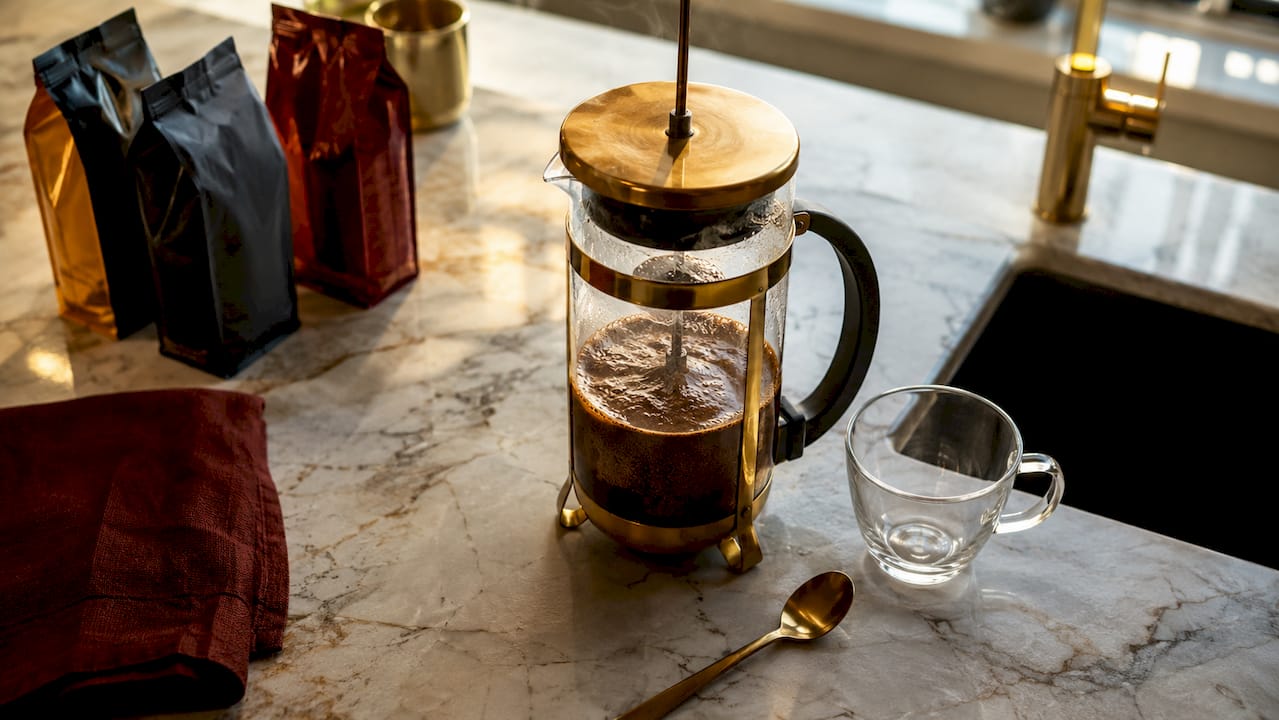
The method also rewards consistency. Once you dial in your ratio and grind, every cup is predictable. Predictability is exactly what a sprint-based workflow needs.
What equipment do you need for French press sprint brewing?
Getting the setup right before your first sprint saves you from mid-session scrambling. Here is what you need at your station:
- French press (350ml to 600ml capacity covers one to two cups per sprint block)
- Burr grinder or pre-ground coarse coffee (coarse grind is non-negotiable for clean results)
- Kitchen scale (measuring by weight beats measuring by scoops every time)
- Gooseneck or standard kettle with temperature control or a thermometer
- Timer (your phone works, but a dedicated timer keeps you off the screen)
- Decanting vessel or mug ready before you start
Grind size is the variable most remote workers get wrong. A sea-salt-like coarse grind reduces sediment and over-extraction risk, which means less cleanup and no bitter aftertaste disrupting your next sprint block. Fine or medium grinds clog the mesh filter and push sediment into your cup, which is a small but real interruption when you are trying to stay in flow.
Water temperature should sit between 195°F and 205°F. Boiling water at 212°F scorches the grounds and produces harsh flavors. If you do not have a temperature-controlled kettle, bring water to a boil and let it rest for 30 seconds before pouring.
| Variable | Target |
|---|---|
| Coffee-to-water ratio | 1:15 (e.g., 30g coffee to 450ml water) |
| Grind size | Coarse, sea-salt consistency |
| Water temperature | 195°F to 205°F |
| Steep time | 4 minutes exactly |
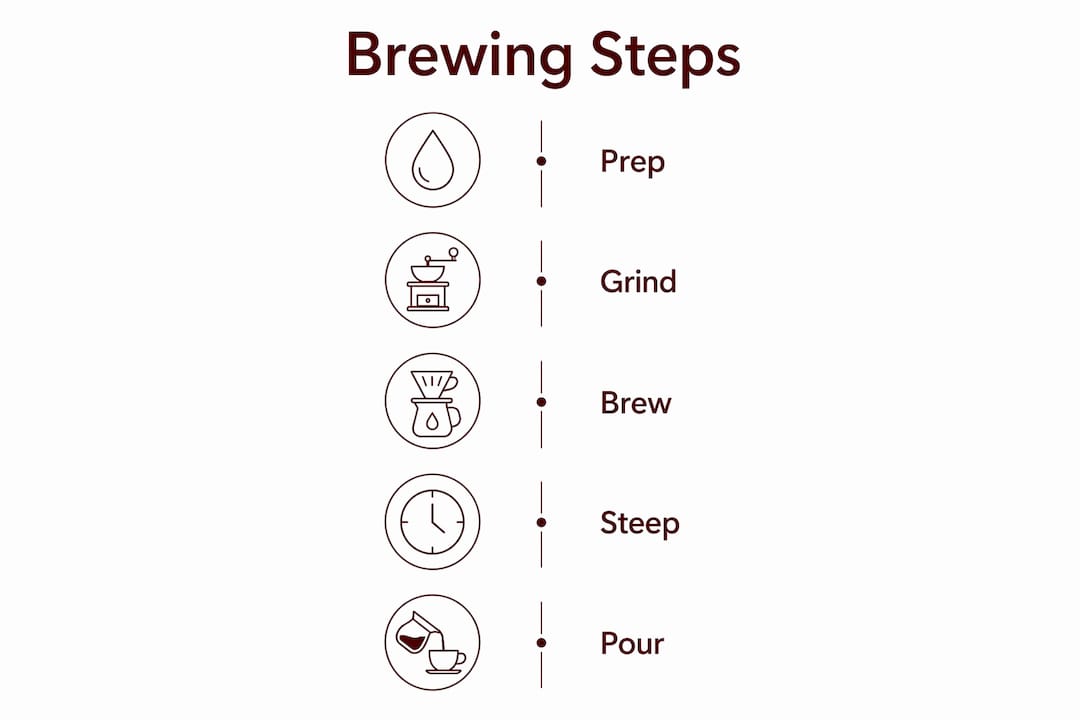
The 1:15 coffee-to-water ratio is the standard starting point for balanced extraction. Adjust slightly stronger if you prefer a bolder cup, but do not go below 1:12 or the brew turns muddy and overpowering.
Pro Tip: Pre-weigh your coffee the night before and store it in a small container at your station. This cuts your morning prep time to under 60 seconds and removes one decision from your pre-sprint routine.
Step-by-step brewing synced with your sprint routine
This sequence is designed so that your coffee is ready the moment your warm-up ends and your focus block begins.
- Set up your station before the sprint clock starts. Place your French press on the scale, add your pre-measured coffee, and have your kettle hot and ready. This takes 60 seconds and should happen before you even open your task list.
- Start your sprint warm-up timer and begin pouring simultaneously. Pour hot water slowly over the grounds, saturating them evenly. Fill to your target volume, give the grounds a gentle stir with a spoon, and place the lid on top with the plunger pulled up.
- Use the 4-minute steep for warm-up tasks only. Brewing fits best into the pre-sprint warm-up phase, not the sprint itself. Use this window to write your sprint goal in one sentence, close irrelevant browser tabs, and silence your phone.
- Press slowly and deliberately at the 4-minute mark. Apply steady downward pressure over about 20 to 30 seconds. Rushing the press forces fine particles through the filter and into your cup.
- Decant immediately into your mug or vessel. Do not leave coffee sitting on the grounds after pressing. Over-extraction beyond 4 minutes produces bitterness that negatively affects your focus in the next sprint block.
- Start your sprint timer as you take your first sip. The ritual is complete. Your brain has had a warm-up, your coffee is ready, and your focus block begins with a clear trigger.
| Sprint phase | French press action |
|---|---|
| Pre-sprint warm-up (4 min) | Brew and steep |
| Warm-up tasks | Goal setting, distraction clearing |
| Plunge and decant | Transition to sprint start |
| Sprint block | Coffee in hand, timer running |
Pro Tip: Never watch the brew. Set your timer, walk away from the press, and do your warm-up tasks. Watching the steep is wasted attention that belongs on your sprint prep.
How do French press compounds affect focus during sprints?
French press coffee delivers more than caffeine. The broader coffee matrix of oils, acids, and bioactive compounds creates synergistic cognitive effects that filtered coffee does not replicate. Cafestol and chlorogenic acids, preserved through immersion brewing, are associated with neuroprotective and anti-inflammatory properties that support sustained mental performance.
Caffeine itself is well-documented but often misunderstood as a focus guarantee. A 2026 randomized study published in the European Journal of Nutrition found that caffeine boosts selective attention and executive function acutely, but does not guarantee sustained attention improvements across an entire sprint. This means caffeine gets you into focus faster, but sprint design and structured breaks carry the load over time.
“Caffeine is not a panacea for steady focus. Pairing coffee with sprint design and breaks is essential for sustained productivity.” — Breign Research Lab
Timing your intake matters more than most remote workers realize. Caffeine half-life varies from 2 to 12 hours between individuals. A cup that clears your system by 3pm for one person may still be active at midnight for another. This wide range makes generic “stop drinking coffee after 2pm” rules unreliable. You need to plan caffeine around your schedule based on your own metabolism and sleep window.
Steep time also controls bitterness, which has a direct but underappreciated effect on focus. A bitter cup creates a mild but real aversion response. You drink less, you sip more slowly, and the ritual loses its positive reinforcement. Keeping your steep to exactly four minutes protects both flavor and the psychological reward of the routine.
What mistakes disrupt your French press sprint routine?
Most problems with French press coffee during work sprints come from small process failures that compound over time. Here is what to watch for:
- Over-steeping. Leaving grounds in contact with water past four minutes is the single most common error. The result is a bitter, astringent cup that undermines the cognitive benefits you brewed for in the first place.
- Not decanting immediately after pressing. Pressing the plunger does not stop extraction. Coffee sitting on compressed grounds continues to extract and turns bitter within minutes.
- Using too fine a grind. Fine grounds pass through the mesh filter, create sediment in your cup, and require extra cleanup that interrupts sprint flow. Grind consistency directly affects how much sediment ends up in your cup and how fast cleanup goes.
- Ignoring your caffeine metabolism. Drinking a full French press at 4pm when your half-life runs long is a sleep disruption waiting to happen. Understanding caffeine sensitivity helps you set a personal cutoff time that protects your recovery.
- Letting the ritual bleed into sprint time. Brewing and cleanup belong in warm-up and recovery phases. If you are still fussing with your press after your sprint timer starts, the ritual is working against you.
Pro Tip: Rinse your French press immediately after decanting while the grounds are still loose. A 20-second rinse is all it takes. Waiting until after your sprint means dried grounds and a longer cleanup that breaks your post-sprint momentum.
To manage caffeine crashes and sustained energy, pair your French press with a small amount of food before your sprint rather than drinking on an empty stomach. This slows caffeine absorption and smooths out the peak-and-crash curve that derails afternoon focus blocks.
Key takeaways
The most effective way to use a French press during work sprints is to treat the 4-minute steep as a structured warm-up, not dead time, and to decant immediately to protect both flavor and focus.
| Point | Details |
|---|---|
| Sync brewing with warm-up | Start steeping when your pre-sprint timer starts so coffee is ready as your focus block begins. |
| Use the 1:15 ratio | Thirty grams of coarse coffee to 450ml of water delivers consistent, balanced extraction every sprint. |
| Decant at exactly 4 minutes | Leaving coffee on grounds past four minutes produces bitterness that reduces the cognitive reward of the ritual. |
| Personalize caffeine timing | Caffeine half-life varies from 2 to 12 hours, so set your cutoff based on your own metabolism, not generic rules. |
| Coarse grind protects flow | A sea-salt-like grind minimizes sediment and speeds up cleanup, keeping sprint transitions clean. |
Why the ritual matters more than the coffee itself
I have tried every coffee method during remote work blocks: drip machines, Aeropress, pour-over, even instant. The French press is the only one that functions as a genuine cognitive trigger rather than just a caffeine delivery system. The reason is the ritual structure. Four minutes is long enough to complete a meaningful warm-up task but short enough that you cannot wander. It creates a hard boundary.
What I have found is that the biggest productivity gains do not come from the coffee compounds themselves. They come from the consistency of the process. When you do the same sequence before every sprint, your brain starts to associate the smell of the bloom, the sound of the timer, and the act of pressing with the transition into focus. That association builds over weeks into something close to a conditioned response. You sit down, you brew, and your brain shifts gears almost automatically.
The mistake I see most often is treating the French press as a passive background activity. People start the steep, then check email, then forget to decant, then wonder why their coffee tastes harsh and their sprint feels scattered. The press demands just enough attention to work as a ritual anchor without pulling you away from your warm-up tasks. That balance is rare and worth protecting.
If you are sensitive to caffeine, one thing I would add: do not try to match the coffee volume of someone with a faster metabolism. A smaller, well-brewed cup at the right time beats a large cup at the wrong time every single sprint.
— Jett
Brew sharper sprints with Espritkaffe
Espritkaffe sources and roasts coffee specifically for people who treat their workday with intention. The Coffee with Mushrooms Medium Roast is built for exactly this kind of French press sprint routine. It combines a smooth, balanced medium roast with functional mushroom extracts that support cognitive clarity without the sharp caffeine spike that disrupts afternoon focus blocks. The flavor profile holds up beautifully in a French press at the 1:15 ratio. For remote workers who want a cold option between sprints, the cold brew coffee from Espritkaffe delivers a slow-extracted, low-acid cup that pairs well with longer work sessions. Your order. Your roast. Your sprint.
FAQ
What is the ideal steep time for French press during work sprints?
Four minutes is the standard steep time for French press coffee. Decanting immediately after pressing prevents over-extraction and the bitterness that follows.
How much coffee should I use in a French press for one sprint?
Use a 1:15 coffee-to-water ratio, which means 30 grams of coarse coffee to 450ml of water for a standard two-cup brew. This ratio produces a balanced cup without sediment overload.
Does French press coffee actually improve focus?
French press coffee preserves compounds like cafestol and chlorogenic acids that paper filters remove. A 2026 study confirmed caffeine improves selective attention acutely, though sustained focus still depends on sprint structure and breaks.
When should I stop drinking French press coffee during the workday?
Caffeine half-life varies from 2 to 12 hours between individuals, so there is no universal cutoff. Track how late-day coffee affects your sleep and set your personal cutoff accordingly.
Can I use pre-ground coffee in a French press for work sprints?
Yes, as long as the grind is coarse. Pre-ground coarse coffee works well and removes one step from your pre-sprint setup, which is a real advantage when you are trying to keep the ritual tight and repeatable.