

St Germain coffee is one of those combinations that sounds unlikely until you taste it. St-Germain elderflower liqueur, with its delicate floral sweetness and light citrus undertones, has a way of transforming a well-pulled shot of espresso into something genuinely surprising. But getting the balance right takes more than just pouring both into a glass. This guide breaks down the best recipes, pairing principles, and preparation techniques so you can experiment with confidence and actually enjoy the results.
Table of Contents
- Key takeaways
- How to choose the right St Germain coffee combination
- Top 5 St Germain coffee recipes to try at home
- How coffee roast and brew style change everything
- Pairing tips: what to add alongside St-Germain in coffee drinks
- My honest take on St-Germain and coffee
- Find the right coffee for your St-Germain experiments
- FAQ
Key takeaways
| Point | Details |
|---|---|
| Roast level matters most | Light and medium roasts let elderflower notes shine; dark roasts overpower St-Germain’s floral profile. |
| Add St-Germain post-brew | Heat degrades elderflower compounds, so always add St-Germain after brewing, never before. |
| Use 1.5 oz as your baseline | Most balanced St-Germain coffee cocktails start with 1.5 oz of the liqueur as a modifier. |
| Citrus is your best friend | Acidic components like lemon or lime juice activate St-Germain’s complexity in coffee drinks. |
| Cold brew unlocks new flavor | Cold brew’s smooth, low-acid profile creates a gentler canvas for elderflower to express itself. |
How to choose the right St Germain coffee combination
Before you start mixing, you need a framework. St-Germain is not a simple sweetener. St-Germain works best as a floral modifier that requires acidic components to fully express its character. Treating it like simple syrup is the most common mistake home enthusiasts make.
Flavor compatibility principles
The elderflower profile in St-Germain is delicate. It reads as floral, lightly sweet, with a subtle pear and lychee quality. Coffee brings bitterness, roast character, and depending on origin, its own fruity or nutty notes. The bridge between them is almost always acidity. A squeeze of lemon or a splash of citrus liqueur gives St-Germain something to push against, which is when it truly opens up.
Floral notes get masked by heavy roasts and smoky beans. This is non-negotiable. If you reach for a dark French roast or an Italian roast as your base, the elderflower will disappear entirely. Stick to light or medium roasts with bright, clean flavor profiles. Ethiopian single-origins with their natural berry notes are a particularly strong match.
Measuring and technique
Standard recipes use 1.5 oz of St-Germain in floral-forward cocktails. In coffee drinks, that ratio holds well as a starting point, though you may want to dial back to 1 oz if your coffee base is already sweet or if you are working with a naturally fruity light roast.
Stirring technique also matters more than most people realize. Optimal stirring is around 30 seconds to preserve the floral essence. Over-stirring dilutes the liqueur faster than you would expect and flattens the finish.
Pro Tip: Never add St-Germain to hot coffee grounds or a brewing basket. Heat denatures elderflower flavors, so always add it after brewing, directly into the finished drink.
Top 5 St Germain coffee recipes to try at home
These are specific, tested combinations worth building into your rotation. Each one highlights a different aspect of what St Germain coffee can do.
1. St-Germain espresso martini
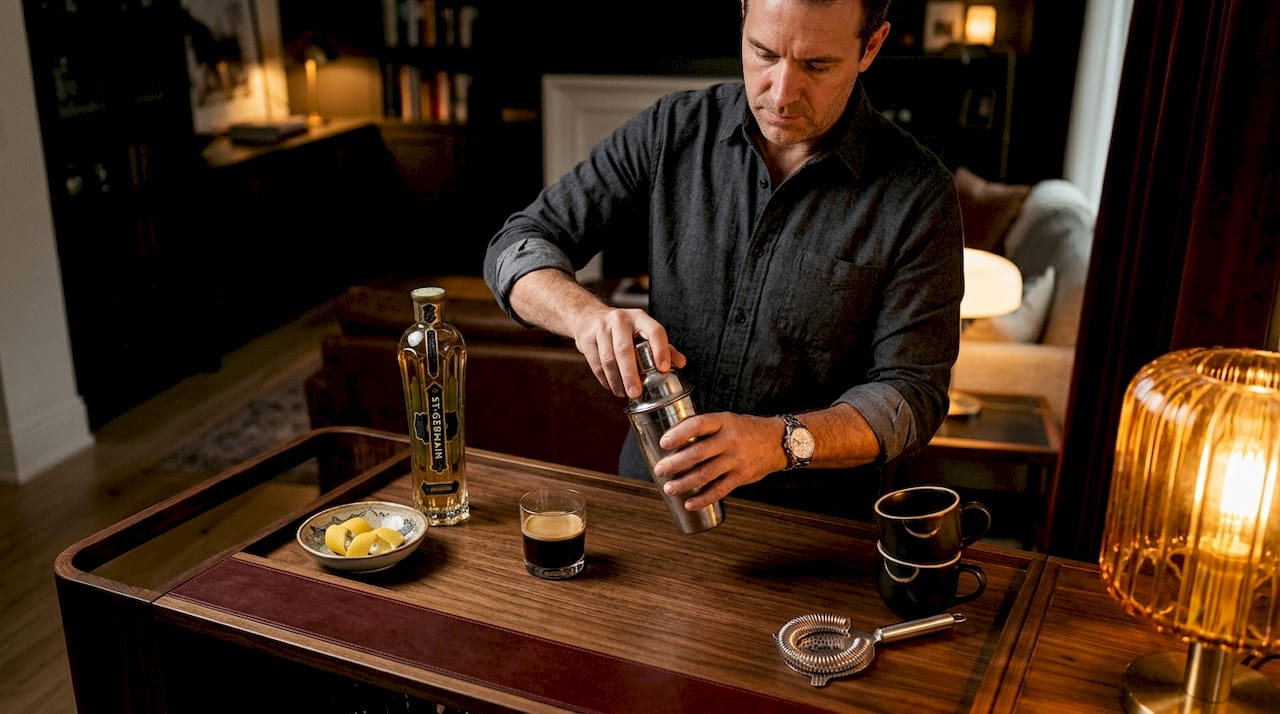
Pull a double shot of espresso and let it cool for two minutes. Combine 1.5 oz vodka, 1 oz St-Germain, 1 oz cooled espresso, and half an ounce of simple syrup in a shaker with ice. Shake hard for 15 seconds and double-strain into a chilled coupe. The elderflower lifts what is usually a one-note drink into something more layered. Craft coffee liqueurs have raised the bar for espresso martinis, and swapping in St-Germain as the floral element rather than a coffee liqueur creates a genuinely different experience.
2. Elderflower cold brew spritz
Combine 4 oz of cold brew concentrate with 1 oz St-Germain and 3 oz sparkling water over a large ice cube. Add a lemon wheel and a sprig of fresh mint. This is the most approachable entry point for St Germain coffee newcomers. The cold brew’s low acidity and natural sweetness give St-Germain room to breathe without competition. Espritkaffe’s cold brew coffee works particularly well here because of its smooth, clean finish.
3. Iced St-Germain coffee latte
Brew a strong medium roast over ice, then add 1 oz St-Germain and 2 oz of whole milk or oat milk. Stir gently and garnish with a thin lemon peel. The fat in the milk softens the elderflower’s sharpness and creates a rounded, almost creamy floral note that is genuinely pleasant in the morning. This is a St Germain coffee recipe that works as a daily ritual, not just a party trick.
4. Floral coffee Negroni variation
This one is for the adventurous. St-Germain was used by mid-2000s bartenders to moderate bitterness in classic Negroni builds. In a coffee version, stir together 1 oz gin, 0.75 oz Campari, 0.75 oz St-Germain, and 0.5 oz cold brew concentrate with ice for 30 seconds. Strain into a rocks glass over a large cube. The elderflower softens the Campari’s aggression while the cold brew adds depth without dominating.
5. French Gimlet with a coffee twist
The original French Gimlet uses gin, St-Germain, and lime. The coffee version adds 0.5 oz of cold brew to the classic build. Combine 2 oz dry gin, 1 oz St-Germain, 0.75 oz fresh lime juice, and 0.5 oz cold brew in a shaker with ice. Shake and strain into a chilled coupe. The result is bright, floral, and slightly roasty at the finish. It is one of the best St-Germain drinks for people who usually avoid coffee cocktails because of their sweetness.
Pro Tip: For any shaken St Germain coffee cocktail, use espresso or cold brew concentrate rather than drip coffee. Dilution from regular brewed coffee throws off the balance fast.
How coffee roast and brew style change everything
Understanding how different coffees interact with St-Germain is what separates a good cocktail from a great one. The table below maps the key variables.
| Coffee style | Flavor character | Compatibility with St-Germain | Best cocktail format |
|---|---|---|---|
| Light roast (washed) | Bright, acidic, floral | Excellent. Mirrors elderflower notes. | Espresso martini, cold brew spritz |
| Medium roast | Balanced, mild sweetness | Very good. Clean base for floral modifier. | Iced latte, French Gimlet twist |
| Dark roast | Bold, smoky, bitter | Poor. Overpowers elderflower entirely. | Not recommended |
| Cold brew concentrate | Smooth, low acid, chocolatey | Excellent. Gentle canvas for St-Germain. | Spritz, Negroni variation |
| Hot brewed drip | Variable, can be harsh | Moderate. Best when cooled before mixing. | Iced drinks only |
The single most important takeaway from this comparison is that roast level is a decision, not a default. Most home coffee drinkers reach for whatever they have on hand. But if you are serious about St Germain coffee cocktails, keeping a medium roast or a light roast specifically for mixing is worth it. Espritkaffe’s Latin American blend brings exactly the kind of bright acidity that makes St-Germain pop.
Bean origin plays a role too. Ethiopian and Kenyan coffees carry natural berry and citrus notes that echo St-Germain’s fruit-forward profile. Brazilian or Colombian beans with their nutty, caramel character work well with the iced latte format. Sumatran or dark-roasted Indonesian beans are best kept away from elderflower entirely.
Pairing tips: what to add alongside St-Germain in coffee drinks
Once you have the coffee and the liqueur dialed in, the supporting ingredients determine whether your drink is good or memorable.
Citrus and botanicals
Fresh lemon juice is the single most useful addition to any St Germain coffee cocktail. It activates the liqueur’s complexity and keeps the drink from reading as flat or syrupy. Lime works in gin-forward builds. Grapefruit peel as a garnish adds a bitter aromatic note that plays well against elderflower. Avoid orange juice, which tends to muddy the floral character.
Sweeteners and creamers
If you need additional sweetness beyond what St-Germain provides, use honey syrup rather than simple syrup. Honey carries its own floral notes that reinforce rather than compete with elderflower. Heavy cream or oat milk both work as softening agents. A homemade coffee creamer made with vanilla and honey is worth keeping on hand for iced St-Germain coffee latte builds.
Herbs, spices, and glassware
Fresh mint and fresh thyme are both excellent garnishes for St-Germain coffee drinks. Mint adds brightness; thyme adds an earthy herbal note that grounds the elderflower. A small pinch of cardamom in the shaker adds warmth without overwhelming the floral profile.
Glassware matters more than people admit. Coupes concentrate aroma toward your nose, which amplifies the elderflower. Rocks glasses with large ice cubes slow dilution and work well for stirred builds. Tall glasses with sparkling water additions need a long spoon stir at the end to integrate layers.
- Use fresh citrus juice, not bottled. The difference in brightness is significant.
- Avoid tonic water. Its quinine bitterness fights St-Germain rather than complementing it.
- Sparkling water or club soda works for spritz builds without adding competing flavor.
- When hosting, consider a cocktail party setup that keeps your St-Germain coffee station separate from heavier spirit builds.
- Chill your glassware before serving. Cold glass slows dilution and keeps floral notes intact longer.
My honest take on St-Germain and coffee
I have been experimenting with St Germain coffee combinations for a few years now, and the lesson I keep relearning is that restraint is the skill. The first time I made a St-Germain espresso martini, I used too much liqueur and too dark a roast. It tasted expensive and confused. Nothing stood out.
What actually works, in my experience, is treating St-Germain the way a good bartender treats bitters. It is a modifier, not a star. When you build around it rather than showcase it, the drink becomes more than the sum of its parts. The elderflower sneaks up on you at the finish, which is exactly where you want it.
The most unexpected combination I have landed on is a medium roast cold brew with St-Germain, a small pour of dry vermouth, and a lemon peel. It reads like a coffee aperitif. No one expects it, and everyone asks for the recipe.
My advice: start with the cold brew spritz. It is the lowest-risk entry point and the one most likely to make you want to keep going. Once you understand how St-Germain behaves in a cold, lightly acidic environment, the rest of the recipes start to make intuitive sense.
— Jett
Find the right coffee for your St-Germain experiments
The coffee you choose is half the equation. Espritkaffe roasts specifically for people who treat coffee as a craft, not a commodity, which makes its lineup a natural fit for cocktail experimentation.
For St-Germain coffee cocktails, the medium roast mushroom blend is worth a serious look. Its earthy undertones and clean finish create a layered base that holds up under elderflower without competing with it. For cold brew builds, the cold brew concentrate delivers the smooth, low-acid profile that gives St-Germain the most room to express itself. If you want to explore flavor-forward combinations, the flavored coffees sample pack gives you a range of starting points without committing to a full bag of any single roast.
FAQ
What is St-Germain and how does it work in coffee?
St-Germain is a French elderflower liqueur with a floral, lightly sweet profile. It works in coffee drinks as a floral modifier rather than a sweetener, adding complexity when paired with acidic or citrus elements.
What coffee roast works best with St-Germain?
Light and medium roasts are the best match. Dark roasts overpower St-Germain’s elderflower notes, while lighter roasts with natural fruit or floral character complement it.
Can you add St-Germain to hot coffee?
You can, but you should not add it during brewing. Heat damages elderflower compounds, so stir St-Germain into your finished hot coffee just before drinking rather than adding it to the grounds or brew basket.
How much St-Germain should you use in a coffee cocktail?
Start with 1 oz to 1.5 oz per serving. Most balanced St Germain coffee cocktail recipes use 1.5 oz as the standard measure, adjusted down if your coffee base is already sweet.
What is the easiest St-Germain coffee recipe to start with?
The elderflower cold brew spritz is the most approachable. Mix 4 oz cold brew concentrate with 1 oz St-Germain and 3 oz sparkling water over ice, then garnish with a lemon wheel.