

You can reduce caffeine without losing productivity by tapering your intake gradually while replacing stimulant spikes with evidence-backed habits that sustain focus all day. Most remote workers treat caffeine as a non-negotiable productivity tool, but the science points in a different direction. Caffeine tolerance builds quickly, meaning you need more to get the same effect. A deliberate reduction, guided by the 10–15% tapering rule and supported by natural energy strategies, recalibrates your brain chemistry and often produces steadier focus than high-dose caffeine ever did.
How to reduce caffeine without losing productivity: your taper plan
The most reliable method to cut caffeine intake without crashing is a structured taper, not cold turkey. Reducing caffeine over 21 days minimizes severe withdrawal migraines and brain fog compared to stopping abruptly. That matters because the symptoms most people blame on “needing coffee” are actually withdrawal from a dependency they built over months.
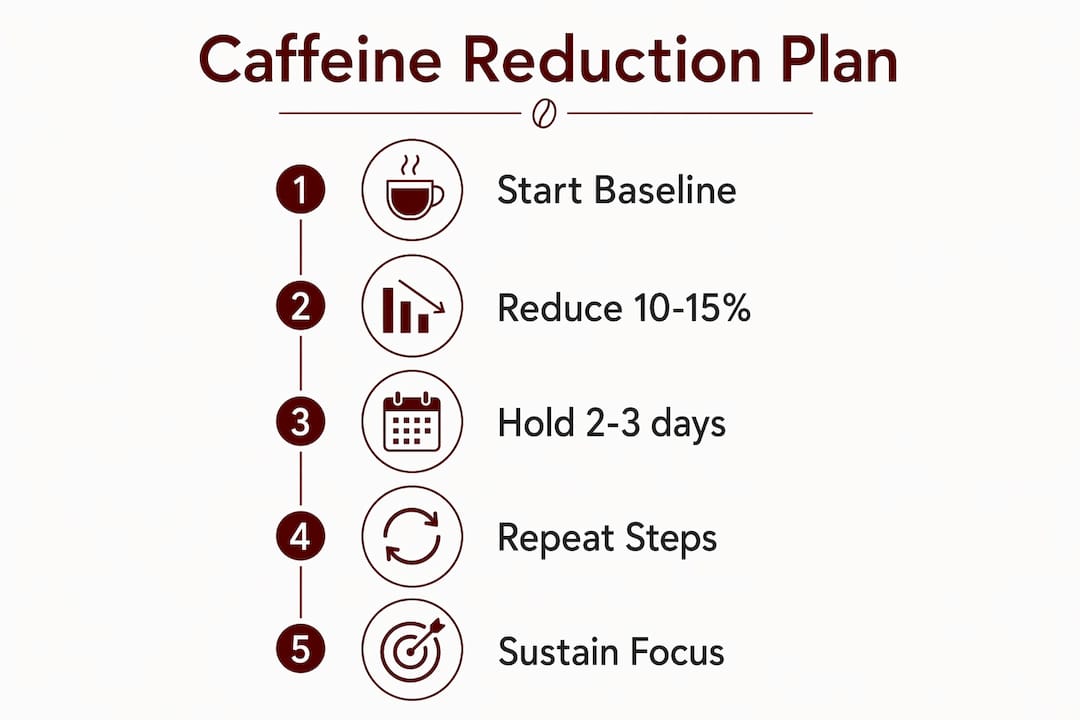
The rule is simple: reduce your daily intake by 10–15% per step, then hold that level for 2–3 days before cutting again. Skipping the hold period causes adenosine receptors to rebound, which triggers headaches and fatigue. Holding each reduction for 2–3 days allows your brain’s adenosine receptors to normalize at the new level before you drop again.

Sample 21-day taper from 400 mg/day
| Day range | Daily caffeine target | Notes |
|---|---|---|
| Days 1–3 | 360 mg | Hold and observe symptoms |
| Days 4–6 | 310 mg | Swap one cup for half-caf |
| Days 7–9 | 265 mg | Add a morning walk to replace energy |
| Days 10–12 | 225 mg | Shift all caffeine before noon |
| Days 13–15 | 190 mg | Introduce L-theanine before deep work |
| Days 16–18 | 160 mg | Replace afternoon coffee with water and a short walk |
| Days 19–21 | 100 mg | One intentional morning cup, no refills |
Before you start, map every caffeine source in your day. Hidden caffeine in pre-workout supplements, decaf coffee, energy drinks, and chocolate causes unexpected withdrawal symptoms that derail taper plans. Many remote workers underestimate their total daily intake by 100 mg or more because of these overlooked sources.
- Coffee: 80–100 mg per 8 oz cup (varies by roast and brew method)
- Decaf coffee: 5–15 mg per cup (not zero)
- Green tea: 25–45 mg per cup
- Pre-workout supplements: 150–300 mg per serving
- Dark chocolate: 12–25 mg per ounce
What natural alternatives support focus without caffeine?
Staying productive without caffeine requires replacing stimulant spikes with habits that produce steady, calm alertness. A 10–15 minute walk, cold water exposure, five minutes of sunlight, or mindfulness breathing sharpen focus within minutes and produce no crash afterward. These are not soft suggestions. They activate the same alertness systems caffeine targets, through different and more sustainable pathways.
L-theanine, found in green tea, produces calm alertness and improves sustained attention without sedation. Timed 20–30 minutes before a deep work block, it supports the kind of focused state that caffeine spikes often disrupt with anxiety or jitteriness. Pairing L-theanine with a smaller caffeine dose is a well-documented approach for remote workers who want to manage caffeine consumption without giving up the ritual entirely.
Poor sleep is the leading driver of caffeine dependence. Sleep quality has a stronger impact on attention than any supplement or stimulant. Fixing your sleep schedule, maintaining a consistent wake time, and reducing blue light exposure before bed cuts your caffeine need at the root rather than just managing the symptoms.
Pro Tip: Set a consistent wake time seven days a week, even on weekends. This single habit reduces morning grogginess more than any supplement stack and lowers the amount of caffeine you feel you need to start the day.
Additional habits that support energy without stimulants:
- Drink 16 oz of water immediately after waking to counter overnight dehydration
- Eat a protein-forward breakfast to stabilize blood sugar through the morning
- Use plant-based snacks like nuts, seeds, and whole grains to maintain steady energy between meals
- Take a two-minute standing or walking break every 45–60 minutes during focused work
- Use natural light exposure in the first hour after waking to anchor your circadian rhythm
How does caffeine timing affect sleep and next-day focus?
Timing is the most underused tool for managing caffeine consumption. Consuming caffeine before 2 PM improves sleep quality, which reduces your next-day need for stimulants and improves baseline productivity. That is a compounding effect. Better sleep tonight means you need less caffeine tomorrow, which means better sleep the night after.
Caffeine has a half-life of roughly five to six hours in most adults. Understanding how caffeine half-life works explains why a 3 PM cup still affects your 11 PM sleep, even when you feel fine in the evening. The stimulant is still active in your system at bedtime, reducing deep sleep stages without you noticing until the next morning’s fatigue hits.
Cortisol, your body’s natural alertness hormone, peaks in the first 30–60 minutes after waking. Drinking caffeine during that window wastes its effect because cortisol is already doing the job. Shifting your first cup to 90–120 minutes after waking, when cortisol begins to drop, makes the caffeine more effective at a lower dose.
Key timing adjustments that increase focus without adding caffeine:
- Delay your first cup to 90 minutes after waking
- Set a firm 2 PM caffeine cutoff, no exceptions during the taper period
- Replace the afternoon cup with a five-minute walk and a large glass of water
- Review your caffeine timing strategy if you still feel groggy despite reducing intake
What are the common challenges when cutting caffeine?
Withdrawal symptoms are the most common reason remote workers abandon a caffeine reduction plan. Tapering by 10–15% every 2–3 days allows adenosine receptors to normalize, avoiding the headaches and fatigue that come from stopping too quickly. The discomfort most people experience is not proof that they need caffeine. It is proof that their receptors have adapted to it.
The afternoon slump is the second major obstacle. Afternoon energy dips are commonly caused by sleep debt, dehydration, and screen fatigue, not by a true need for stimulants. A short walk, a glass of water, and switching to a lower-complexity task resolves most slumps within 10 minutes. Reaching for caffeine at 3 PM to fix a slump caused by dehydration is treating the wrong problem.
Withdrawal symptoms are often mistaken for caffeine need. A slow taper supports receptor adjustment and mental clarity at low caffeine levels within weeks, not months. The discomfort is temporary. The clarity on the other side is not.
Hidden caffeine is the third pitfall. Many remote workers track their coffee cups but ignore the 200 mg in their pre-workout supplement or the 30 mg in their afternoon chocolate. These sources add up and cause withdrawal symptoms that feel random and confusing.
Pro Tip: Keep a simple caffeine log for three days before starting your taper. Write down every source, including supplements, tea, and chocolate. The total will almost certainly surprise you, and it will make your taper plan far more accurate.
How do you maintain productivity long-term after reducing caffeine?
Sustaining focus after cutting caffeine requires building systems that do not depend on stimulants at all. Reducing caffeine resets tolerance within 1–2 weeks, meaning lower doses become more effective once your receptors normalize. This is the payoff: one intentional morning cup produces the effect that three cups used to.
Steady, calm productivity outperforms stimulant-driven alertness spikes for sustained work output. Attention design, stable energy, and scheduled recovery underpin reliable focus better than repeated caffeine doses. Remote workers who build these systems report fewer afternoon crashes and more consistent output across the full workday.
A practical long-term maintenance framework:
- Use caffeine as a deliberate tool, not a default. Reserve it for your highest-priority deep work block each day, not for waking up or fighting boredom.
- Anchor your morning with non-caffeine rituals. A walk, water, and protein before your first cup sets a stable energy baseline that caffeine then enhances rather than creates.
- Time caffeine-free supplements intentionally. Use supplements like L-theanine as timed inputs before deep work blocks, not as all-day energy aids.
- Protect your sleep above all else. Sleep quality drives attention more than any supplement. One night of poor sleep undoes a week of good caffeine habits.
- Review your focus stack monthly. Adjust your caffeine dose, timing, and supplement choices based on actual output, not how you feel in the moment.
- Plan caffeine around your work calendar. Aligning your one intentional cup with your most demanding task of the day, as covered in caffeine planning for remote work, produces better results than drinking on autopilot.
Key Takeaways
Reducing caffeine without losing productivity requires a structured taper, consistent sleep, and natural energy habits that replace stimulant dependence with sustainable focus systems.
| Point | Details |
|---|---|
| Use the 10–15% taper rule | Reduce daily caffeine by 10–15% per step and hold each level for 2–3 days to avoid withdrawal. |
| Map all caffeine sources first | Include decaf, supplements, and chocolate in your baseline count before starting any reduction. |
| Set a 2 PM caffeine cutoff | Stopping caffeine before 2 PM improves sleep quality and reduces your next-day stimulant need. |
| Replace spikes with steady habits | Walks, water, sunlight, and L-theanine produce calm focus without the crash that follows caffeine spikes. |
| Protect sleep as your primary tool | Sleep quality drives attention more reliably than any supplement or caffeine dose. |
Why I think most people quit caffeine reduction the wrong way
Most remote workers approach caffeine reduction like a willpower challenge. They decide to drink less, feel terrible by day three, and conclude that they simply “need” caffeine to function. That conclusion is wrong, and it costs them years of unnecessary dependency.
The real problem is almost always the method, not the person. Going from 400 mg to 200 mg in a week is not a taper. It is a shock to your adenosine receptors, and your brain responds accordingly with headaches, fog, and irritability. I have seen this pattern repeat constantly: the discomfort gets blamed on caffeine withdrawal being “impossible,” when the actual issue is skipping the hold period between reductions.
The other thing most guides miss is task structure. Caffeine does not create focus. It delays fatigue. If your work blocks are poorly defined, caffeine will not fix that. The remote workers who successfully reduce their intake are almost always the ones who also tighten their task structure, take real breaks, and stop treating every moment of low energy as a signal to drink more coffee.
Patience is the actual skill here. Two weeks of mild discomfort in exchange for steadier, cheaper, and more reliable focus for the rest of your career is an obvious trade. The caffeine and dopamine connection makes the dependency feel more essential than it is. Once you understand that mechanism, the taper becomes much easier to stick with.
— Jett
Coffee worth savoring, even with less of it
Cutting back on caffeine does not mean giving up the ritual that makes your morning work. Espritkaffe’s Mexico Coffee Pods are roasted for people who want a single, intentional cup that actually delivers on flavor and clarity, not a pot of coffee consumed on autopilot.

These pods fit naturally into a taper plan. One premium cup in the morning, timed 90 minutes after waking, gives you the ritual and the focus without the overconsumption that drives tolerance and dependency. Espritkaffe is built for sharp minds who choose quality over volume. If you are reducing your intake, make the cups you do drink count.
FAQ
How fast can I reduce caffeine without withdrawal symptoms?
Reducing caffeine by 10–15% every 2–3 days minimizes withdrawal symptoms by giving adenosine receptors time to adjust. A 21-day taper from 400 mg to 100 mg is a well-supported approach.
What is the best natural alternative to caffeine for focus?
L-theanine timed before deep work produces calm, sustained alertness without sedation or crashes. Short walks, sunlight exposure, and hydration also sharpen focus quickly without stimulant side effects.
Why do I get headaches when I cut back on coffee?
Headaches occur because caffeine upregulates adenosine receptors over time. When caffeine is removed too quickly, those receptors flood with adenosine, causing pain and fatigue. A gradual taper prevents this.
Does reducing caffeine actually improve productivity?
Yes. Tolerance resets within 1–2 weeks after tapering, meaning lower doses become more effective. Many remote workers report steadier focus and fewer afternoon crashes after reducing their intake.
What time should I stop drinking caffeine each day?
Stop all caffeine before 2 PM. Caffeine consumed after 2 PM disrupts sleep quality even when you feel unaffected, increasing your fatigue and caffeine need the following day.