

If you’ve searched for obsidian coffee and landed somewhere between a local café listing and a mysterious dark roast blend, you’re not alone. The term pulls double duty across the specialty coffee world, showing up as shop names, branded blends, and a loose descriptor for intensely dark, bold roasts. This article cuts through that ambiguity. You’ll get a clear breakdown of what obsidian coffee actually refers to, what it tastes like, where those flavors come from, and exactly how to brew it so every cup earns its name.
Table of Contents
- Key Takeaways
- What obsidian coffee actually is
- How roast level shapes the flavor profile
- Bean origins and what they bring to the cup
- Brewing obsidian coffee at home
- My honest take on the obsidian coffee experience
- Bold roasts worth exploring from Espritkaffe
- FAQ
Key Takeaways
| Point | Details |
|---|---|
| Obsidian coffee has multiple meanings | The name refers to specific shops, branded blends, and dark roast marketing concepts depending on context. |
| Dark roast drives the flavor | Chocolate, caramel, and smoky notes come from extended roasting time, not the bean’s origin alone. |
| Caffeine myths are common | Dark roasts don’t have significantly more caffeine than light roasts when brewed by weight. |
| Bean origin adds complexity | Guatemalan, Indian, and Kenyan beans each bring distinct nuances to obsidian-style blends. |
| Brewing method matters | French press and moka pot extract the most from dark roast coffee’s bold, oily character. |
What obsidian coffee actually is
Here’s the honest answer: “obsidian coffee” is not one single thing. Searches for the term often surface local coffee shops that have adopted the name rather than a globally recognized blend or roast category. That’s the first thing to understand before you spend time chasing a specific product.
The name breaks down into three distinct categories:
- Local coffee shops named Obsidian Coffee. These are independent cafés that have claimed the branding. One well-known example is the Yelp-listed shop in Danville, Illinois. Another is Jade and Elise Obsidian Coffee LLC in Belmont, North Carolina, open Tuesday through Saturday from 7AM to 3PM and Sunday from 8AM to 1PM. These are brick-and-mortar businesses with their own menus, sourcing, and roasting philosophies.
- Packaged blends sold under the obsidian name. Retailers list obsidian blend products online, though origin details and roast specifics vary widely or go unstated entirely. Buying one of these without doing your research is a gamble on flavor.
- The “obsidian” concept as branding. Some roasters use the word to evoke a dark, volcanic, intense coffee experience without any standardized definition behind it. Think of it the way “midnight” or “black” gets used in product naming. It signals boldness, not a specific roast protocol.
Knowing which category you’re dealing with changes everything about how you evaluate the coffee. A shop named Obsidian Coffee might serve light roasts alongside dark ones. A packaged obsidian blend might be a medium roast dressed up in dramatic packaging. The name alone tells you very little about what’s in the cup.
Pro Tip: When buying any coffee branded as “obsidian,” look for the roast level, origin country, and tasting notes on the label before purchasing. If those details are missing, treat it as a marketing term, not a flavor guarantee.
How roast level shapes the flavor profile
If obsidian coffee has a defining characteristic across its many uses, it’s the association with dark, bold flavor. That flavor comes almost entirely from the roasting process, and understanding it makes you a sharper buyer and a better brewer.
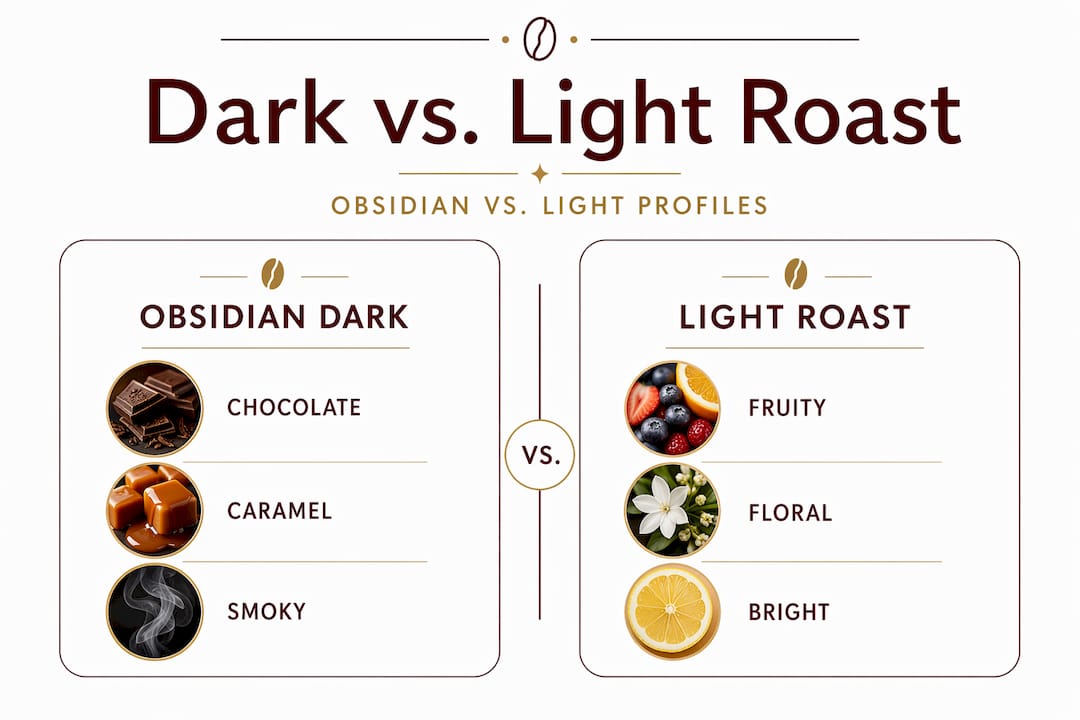
Dark roasts develop bold flavors like chocolate, caramel, and smoke through longer time in the roaster at higher temperatures. The bean’s surface becomes oily, acidity drops, and the body fills out into something heavier and more coating on the palate. That’s the profile most people picture when they hear “obsidian.”
| Characteristic | Light Roast | Dark Roast (Obsidian-style) |
|---|---|---|
| Flavor notes | Floral, fruity, bright | Chocolate, caramel, smoky |
| Acidity | Higher | Lower |
| Body | Lighter, tea-like | Full, heavy |
| Bean surface | Dry | Oily |
| Roast time | Shorter | Longer |
One of the most persistent myths worth addressing: dark roast caffeine content is not dramatically higher than light roast. When you brew by weight, the difference is minimal. The perception of “stronger” coffee from a dark roast is flavor-driven, not caffeine-driven. You’re tasting intensity, not consuming more stimulant.
Roast development time also shapes body and bitterness in ways that origin alone cannot. Roasting method drives flavor more than bean source for coffees marketed under the obsidian concept. That’s why two obsidian-branded products from different roasters can taste completely different even if they use beans from the same country.
Pro Tip: If your obsidian coffee tastes flat or overly bitter, the roast may have gone too far. Look for a roast date on the bag and aim to brew within 2 to 4 weeks of that date for peak flavor.
Bean origins and what they bring to the cup
Roast level sets the stage, but bean origin writes the supporting cast. The best obsidian-style blends use beans from specific regions that hold up under dark roasting without collapsing into one-dimensional bitterness.
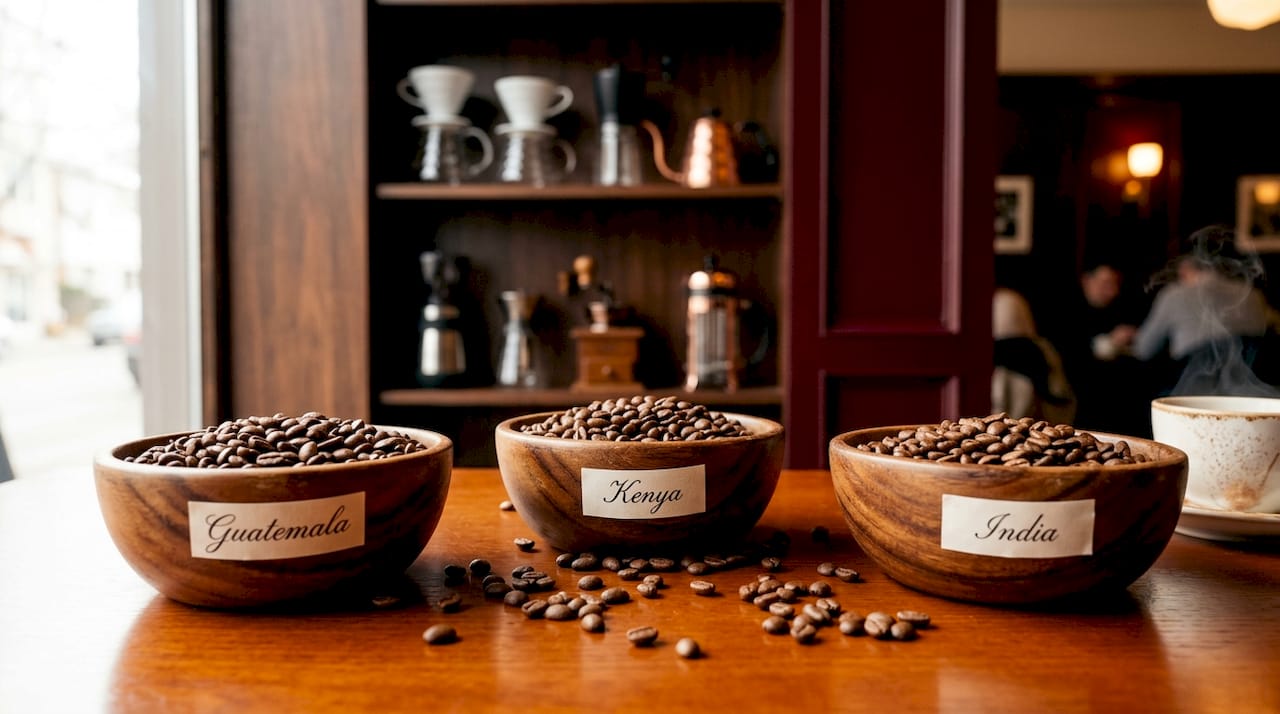
Obsidian blends often include beans from Guatemala, India, and Kenya, each contributing something distinct to the overall cup. Guatemalan beans bring caramelized sugar notes and a mild sweetness that softens the roast’s edge. Indian beans, particularly from the Monsooned Malabar process, add an earthy, low-acid heaviness that pairs naturally with dark roast body. Kenyan beans contribute brightness and a berry-like complexity that cuts through the smoke.
| Origin | Flavor contribution | Why it works in dark blends |
|---|---|---|
| Guatemala | Caramel, brown sugar, mild chocolate | Sweetness balances roast bitterness |
| India | Earthy, woody, low acidity | Adds weight and smoothness |
| Kenya | Berry, citrus brightness | Lifts complexity, prevents flatness |
Single-origin obsidian coffees are a different experience from blends. A single-origin dark roast from Guatemala will taste cleaner and more defined, with the caramel notes front and center. A blend pulling from all three origins above creates layered complexity that shifts as the cup cools. Neither is better. They serve different moods and moments.
The black coffee blend approach, where multiple origins are combined and then dark-roasted together, is the more common commercial route for obsidian-branded products. It allows roasters to dial in a consistent flavor profile even when individual crop quality varies season to season. For you as a buyer, it usually means more reliability in the cup but less traceability to a specific farm or region.
Brewing obsidian coffee at home
Getting the most from a dark roast comes down to three things: method, grind, and storage. Get these right and an obsidian-style coffee becomes exactly what the name promises.
French press and moka pot are the two methods that best highlight dark roast characteristics. French press uses full immersion and a metal filter, which lets the coffee’s natural oils stay in the cup. That gives you a heavier body and a richer mouthfeel. Moka pot uses pressure and heat to extract a concentrated, espresso-adjacent shot that amplifies the chocolate and smoky notes. If you’re looking for the best coffee for espresso-style brewing at home without a machine, moka pot is your answer.
Here are the key variables to control:
- Grind size: Use a coarse grind for French press and a fine grind for moka pot. Too fine in a French press leads to over-extraction and harsh bitterness. Too coarse in a moka pot produces a weak, watery result.
- Water temperature: Aim for 195 to 205 degrees Fahrenheit. Boiling water at 212 degrees over-extracts dark roasts and amplifies bitterness.
- Brew ratio: Start at 1:15 coffee to water by weight for French press. Adjust from there based on how bold you want the cup.
- Storage: Airtight containers away from heat preserve flavor longest. Ground coffee stales within days. Buy whole beans and grind just before brewing whenever possible.
If you enjoy obsidian coffee as a cold brew, the extended steep time (12 to 24 hours in cold water) naturally softens bitterness while preserving the deep chocolate and caramel notes. It’s one of the most forgiving methods for dark roasts and produces a concentrate you can dilute to taste. Espritkaffe’s cold brew option is worth exploring if you want a ready-to-go dark roast experience without the morning grind.
Pro Tip: For a sweeter, less bitter cup from your dark roast, try a slightly coarser grind and reduce your brew time by 30 seconds. This under-extracts slightly, pulling the caramel and chocolate notes forward while leaving some of the harsher bitter compounds behind.
My honest take on the obsidian coffee experience
I’ve tasted a lot of coffees marketed as “obsidian,” and here’s what I’ve learned: the name does more emotional work than descriptive work. It conjures something dark, volcanic, and intense. That’s powerful branding. But it doesn’t tell you whether the roast is a city plus or a full French roast, whether the beans are washed or natural processed, or whether the flavor is genuinely complex or just aggressively bitter.
What I’ve found is that the best obsidian coffees earn the name through restraint. The roasters who stop just short of burning the bean, who preserve some origin character underneath the dark exterior, produce cups that actually reward attention. The ones chasing the aesthetic without the craft produce coffee that tastes like a campfire and nothing else.
My advice for anyone exploring this category: treat “obsidian” as a starting point, not a guarantee. Ask for the roast date. Look for tasting notes beyond “bold” and “strong.” If a roaster can’t tell you where the beans came from or how they were processed, the name is doing all the work and the coffee probably isn’t.
The specialty coffee world has a naming problem. Marketing terms like “obsidian” create a subjective consumer experience that can obscure more than it reveals. I think enthusiasts are better served by learning to read roast levels and origin notes than by chasing brand aesthetics. The cup in front of you is always more honest than the label above it.
— Jett
Bold roasts worth exploring from Espritkaffe
If obsidian coffee has you craving something dark, rich, and worth waking up for, Espritkaffe has roasts built for exactly that.
The Coffee with Mushrooms Dark Roast is the closest thing to an obsidian experience in the Espritkaffe lineup. Deep chocolate notes, full body, and the added grounding quality of functional mushrooms make it a cup that delivers on every level. For those who want to explore the spectrum, the French Roast pushes into classic dark roast territory with the smoky, caramelized character obsidian lovers recognize immediately. If you’re not sure where to start, the flavored coffees sample pack lets you taste across roast levels before committing to a full bag. Every roast at Espritkaffe comes with a clear roast date and origin notes because you deserve to know what’s in your cup.
FAQ
What is obsidian coffee?
Obsidian coffee is not a single standardized product. The term refers to local coffee shops named Obsidian Coffee, packaged dark roast blends sold under the obsidian label, and a marketing concept used to signal bold, dark flavor profiles.
What does obsidian coffee taste like?
Most obsidian-branded coffees lean dark, with flavor notes of chocolate, caramel, and smoke. The specific taste depends on the roast level, bean origin, and brewing method used.
Does obsidian coffee have more caffeine than regular coffee?
Not significantly. When brewed by weight, dark roast and light roast coffees contain similar caffeine levels. The perception of extra strength in dark roasts comes from the intense flavor, not higher caffeine content.
What is the best way to brew obsidian coffee?
French press and moka pot are the most effective methods for dark roast coffee. Both preserve the oils and body that define obsidian-style flavor, and both allow you to control extraction closely.
How do I know if an obsidian coffee blend is high quality?
Look for a roast date, listed origin countries, and specific tasting notes on the packaging. A quality roaster will provide all three. If the label only says “bold” or “strong,” the branding is doing more work than the coffee.