

What cherry coffee actually means in specialty coffee
Cherry coffee is not a flavored product. It is not a bag of beans infused with cherry extract or a seasonal latte syrup. The term describes coffees that carry genuine cherry and stone-fruit sensory notes because of how the beans were harvested and processed, not what was added to them afterward.
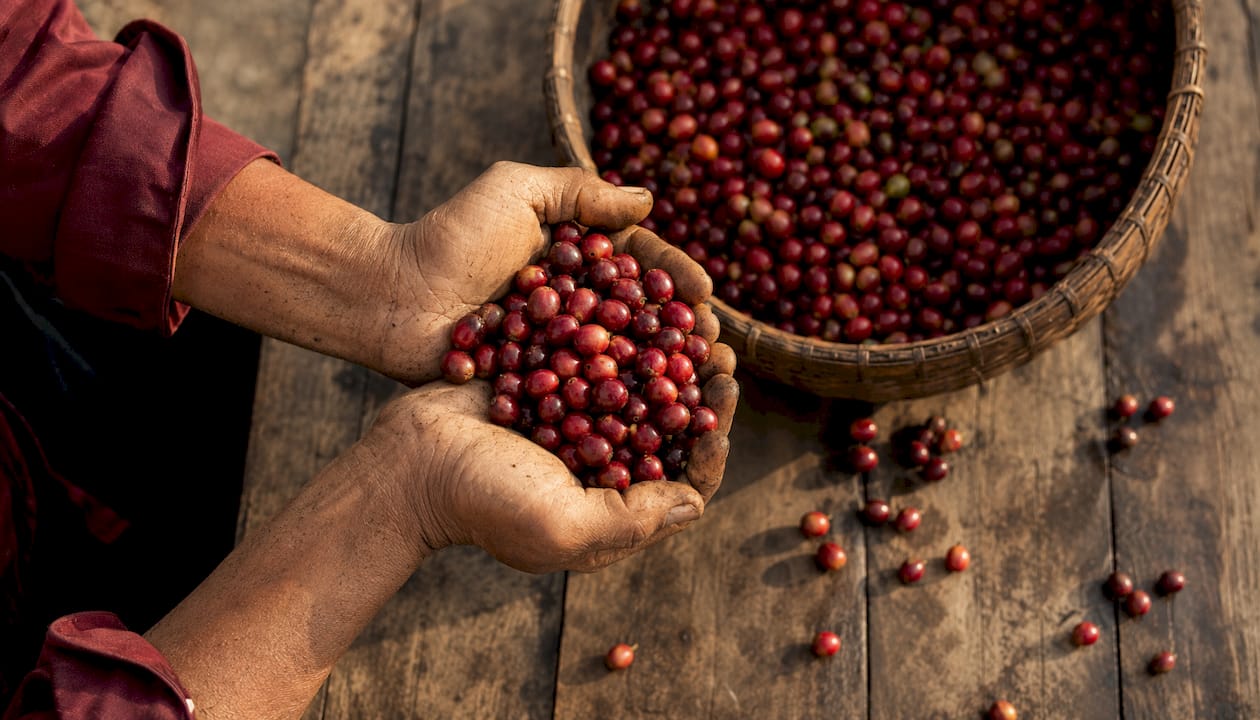
The distinction matters. Authentic cherry notes emerge from the internal chemistry of fully ripe coffee cherries and the processing decisions made immediately after picking. When producers use natural, honey, or anaerobic fermentation methods, the fruit’s sugars and esters migrate into the bean during drying. The result is a cup with jammy, dark-cherry depth, floral aromatics, and a round acidity that reads like ripe stone fruit rather than sharp citrus.
Key characteristics that define genuine cherry coffee:
- Processing method: Natural and honey-processed lots retain the most fruit contact; anaerobic fermentation amplifies cherry and berry intensity further
- Sensory profile: Jammy cherry, plum, hibiscus, and sometimes a dark-chocolate finish with no artificial sweetness
- Acidity: Balanced, ripe-fruit acidity similar to stone fruit juice, never harsh or vinegary
- Traceability: Genuine cherry-forward coffees come from micro-lots with documented harvest and processing records
- “Cherry ghost” coffees: A specific category of rare, traceable micro-lots processed with whole-cherry or extended contact to migrate subtle fruit esters into the bean without overpowering the cup
Table of Contents
- How to identify and brew cherry coffee for maximum flavor
- Michigan’s specialty coffee culture and its relationship to cherry coffee
- How Espritkaffe elevates the cherry coffee experience
- Why cherry coffee rewards the serious enthusiast
- When to find cherry coffee in Michigan shops and events
- Pairing cherry coffee with food in Michigan cafés
- Espritkaffe: coffee roasted for how you actually drink it
- Key Takeaways
How to identify and brew cherry coffee for maximum flavor
Selecting and brewing these coffees well requires more than picking a bag with “cherry” on the label.
Identifying the real thing:
- Check the processing label: “natural,” “honey,” or “anaerobic” are the markers to look for
- Look for deep-red or purple cherry coloration noted in the lot description, indicating peak ripeness at harvest
- Selective picking is critical: only fully ripe cherries produce clean, balanced fruit notes; mixed-ripeness lots muddy the profile
- Artificial cherry flavoring leaves a synthetic sweetness with no complexity on the finish; authentic notes have layers that shift as the cup cools
- A sensory guide helps you train your palate to distinguish true fruit esters from added flavoring
Brewing to highlight cherry notes:
- Pour-over methods (V60, Chemex) work best: precise water-to-coffee ratios and a controlled pour preserve delicate esters without over-extraction
- Use water around 200°F and a 1:15 coffee-to-water ratio as a starting point; adjust grind finer if the cherry notes feel thin
- Gentle pour-over technique maximizes extraction of cherry esters and aroma compounds while preventing bitterness
- Allow the cup to cool for two to three minutes before your first sip; cherry and fruit notes clarify significantly as temperature drops
Pro Tip: Skip the milk entirely with cherry-forward coffees. Dairy coats the palate and masks the delicate floral and stone-fruit esters that make these cups worth drinking.
Michigan’s specialty coffee culture and its relationship to cherry coffee
Michigan is the nation’s leading tart cherry producer, responsible for a dominant share of the US tart cherry supply. Traverse City hosts the National Cherry Festival, and the Great Lakes’ moderating climate and fast-draining sandy soils have made Northern Michigan ideal cherry-growing territory for over a century. But Michigan’s coffee culture does not trade on that agricultural identity. The connection is more interesting than that.
Michigan’s independent roasters define themselves by intentional origin respect, not by local flavor gimmicks. The specialty coffee movement here grew from the western shore cities outward, with Grand Rapids and Kalamazoo setting a standard for craft and self-sufficiency that spread east to Lansing, Ann Arbor, and Detroit. Each city developed its own coffee identity rather than copying a coastal template.
What ties Michigan’s coffee culture to cherry coffee appreciation:
- Traceability over novelty: Detroit’s Black-owned roasters and cafés emphasize producer relationships and terroir-driven profiles that naturally surface fruit notes, including cherry and berry, without artificial flavoring
- Community and producer ethics: Local roasters in Grand Rapids and Dearborn build direct-trade relationships that make micro-lot sourcing possible
- Cultural richness: Indigenous and minority-owned coffee projects across the state bring emphasis on whole, natural ingredients and honest flavor
- Southwest Michigan’s distinct voice: Roasters there have built a reputation for coffees that taste like Michigan, not like a trend imported from Seattle or Chicago
How Espritkaffe elevates the cherry coffee experience
Espritkaffe was built around one premise: coffee roasted for you, not for everyone. That philosophy maps directly onto what cherry coffee demands, which is intentionality at every stage from sourcing to cup.
- Personalized roast profiles: Espritkaffe’s approach respects bean origin and develops roast curves that preserve natural fruit characteristics rather than burning them off for a generic dark profile
- Micro-lot transparency: The brand’s commitment to ethical sourcing and traceability means the cherry-forward coffees it works with carry documented provenance
- Innovative specialty blends: Products like the Instant Coffee with Mushroom and Coffee with Mushrooms Dark Roast show a willingness to push complexity without sacrificing clarity, the same sensibility that makes cherry coffee worth pursuing
- Educational resources: Espritkaffe publishes guides on sensory appreciation and sourcing ethics, giving enthusiasts the vocabulary and knowledge to seek out genuine fruit-forward coffees
- Mindful ritual focus: The brand’s ethos, clarity over noise, purpose over routine, aligns with the patience cherry coffee requires: the cool-down, the pour-over, the attention to what is actually in the cup
Why cherry coffee rewards the serious enthusiast
Cherry coffee offers something most specialty coffees do not: a sensory experience that changes as you drink it. The jammy top notes give way to floral mid-tones, then a clean stone-fruit finish that lingers without bitterness. That arc is only possible when the sourcing, processing, and brewing are all done right.
Benefits worth knowing:
- Complex, layered flavor that rewards attention rather than speed
- Natural fruit notes that reflect actual terroir and harvest decisions, not a flavor lab
- Michigan’s specialty coffee scene, with its emphasis on producer relationships and origin honesty, gives enthusiasts real access to these coffees through local roasters and direct-order brands
- Espritkaffe’s personalized approach means you are not buying a commodity roast; you are buying a considered one
- Exploring cherry-forward coffees builds sensory literacy that improves your appreciation of every specialty coffee you drink after
When to find cherry coffee in Michigan shops and events
Coffee cherry harvests happen in origin countries, not Michigan, but the timing of when these lots reach Michigan roasters and cafés follows a predictable rhythm. Ethiopian and Kenyan naturals, two of the most reliable sources of genuine cherry notes, typically arrive at US roasters between November and March, following the October harvest and processing window. Central American lots with honey processing land a few months later, roughly February through May.
Michigan specialty shops that rotate seasonal single-origins will stock their most fruit-forward, cherry-profile lots during these windows. Traverse City’s café scene, energized by the National Cherry Festival each July, occasionally features cherry-themed coffee programming, though the best cherry-forward specialty coffees are usually available in winter and early spring. If you are shopping for a black cherry coffee experience at a Michigan roaster, ask specifically about natural-process Ethiopian or Kenyan lots, or any anaerobic micro-lot from Central America.
Pairing cherry coffee with food in Michigan cafés
Cherry-forward coffees are among the most food-friendly in specialty coffee, but the pairings that work best are not always obvious.
Dark chocolate is the classic match: the bitterness of a 70% cacao bar sharpens the cherry notes in the cup rather than competing with them. Michigan’s café scene leans into locally made pastries, and a butter-rich croissant or almond tart works well because fat softens the coffee’s acidity without masking its fruit character. Avoid anything with strong citrus or heavy spice alongside a cherry-profile coffee; those flavors fight the stone-fruit esters rather than complementing them.
For a specifically Michigan pairing, dried tart cherries alongside a natural-process Ethiopian pour-over create a layered tasting experience. The Montmorency tart cherry, which Michigan produces in greater volume than any other state, has a tartness that mirrors the acidity in a well-processed cherry coffee without overwhelming it. Local cherry preserves on a plain scone achieve the same effect with less intensity.
Espritkaffe: coffee roasted for how you actually drink it
Cherry coffee demands a roaster that treats flavor as a decision, not an accident. Espritkaffe is built for exactly that reader: someone who wants to know what is in the cup and why it tastes the way it does.

The brand’s Instant Coffee with Mushroom and Coffee with Mushrooms Dark Roast reflect the same philosophy that makes cherry coffee worth seeking: complexity achieved through ingredient integrity, not flavor additives. Every product Espritkaffe offers is rooted in intentional sourcing and a roast profile developed to honor what the bean actually is. For enthusiasts who have spent time understanding cherry-forward coffees, this is the natural next step: a brand that meets that level of attention. Browse Espritkaffe’s current offerings and find the roast built for your morning.
Key Takeaways
Genuine cherry coffee is defined by processing method and harvest precision, not by added flavoring, and Michigan’s specialty coffee culture is uniquely positioned to appreciate and deliver that experience.
| Point | Details |
|---|---|
| Cherry notes come from processing | Natural, honey, and anaerobic methods migrate fruit esters into the bean; no flavoring required. |
| Ripeness determines quality | Only fully ripe cherries produce balanced, stone-fruit acidity; mixed-ripeness lots muddy the cup. |
| Brew method matters | Pour-over with precise ratios and a cool-down period reveals the clearest cherry and floral notes. |
| Michigan’s coffee culture fits | Local roasters prioritize origin traceability and producer relationships, not novelty flavor trends. |
| Espritkaffe’s approach | Personalized roast profiles and ethical sourcing make Espritkaffe a natural home for cherry coffee enthusiasts. |