

There are two very different things people mean when they say “bourbon coffee,” and the confusion between them is more common than most enthusiasts realize. One is a centuries-old Arabica coffee cultivar with deep botanical roots and a naturally sweet, caramel-forward flavor. The other is a category of bourbon-infused coffee products aged in spirit barrels for complex, smoky depth. Neither is better. Both are worth knowing. This guide covers both forms completely, so you can order, brew, and taste with real confidence.
Table of Contents
- Key takeaways
- What bourbon coffee actually is as a plant variety
- Bourbon-infused and barrel-aged coffee products
- Cultivar vs. barrel-aged: a direct comparison
- How to brew and serve both styles well
- My take on the bourbon and coffee fusion
- Discover your next favorite roast at Espritkaffe
- FAQ
Key takeaways
| Point | Details |
|---|---|
| Two distinct categories exist | Bourbon coffee refers to both a botanical Arabica cultivar and bourbon-flavored or barrel-aged coffee products. |
| No alcohol in barrel-aged coffee | Roasting evaporates residual alcohol, so bourbon barrel-aged coffee delivers flavor without any spirit content. |
| Cultivar thrives at altitude | Bourbon Arabica grows best between 1,000 and 2,000 meters, producing balanced sweetness and refined acidity. |
| Barrel-aging beats flavoring | Aging green beans in bourbon barrels before roasting creates deeper, more integrated flavor than adding spirits after. |
| Brewing method matters | French press and pour-over highlight the Bourbon cultivar’s sweetness; cold brew brings out barrel-aged coffee’s oak and vanilla. |
What bourbon coffee actually is as a plant variety
Most people searching for “what is bourbon coffee” are surprised to learn the term predates Kentucky whiskey’s influence on coffee culture by about two centuries. Bourbon coffee is a natural mutation of the Typica Arabica cultivar, first cultivated on the island of Réunion (formerly called Bourbon, hence the name) before spreading to Latin America and East Africa in the 18th and 19th centuries. The name has nothing to do with the spirit.
As a botanical variety, Bourbon Arabica is recognized for a rich caramel or chocolatey taste, hazelnut undertones, and a smooth, well-rounded body. That profile comes partly from genetics and partly from how the plant responds to altitude and processing. The flavor is naturally sweet without any added ingredients. That sweetness surprises a lot of first-time tasters who expect something sharp or earthy.
Color mutations and what they mean for flavor
The Bourbon cultivar has produced several recognized mutations over time, each with slightly different characteristics:
- Red Bourbon: The most common variety. Produces consistent sweetness with a slightly heavier body.
- Yellow Bourbon: Ripens more slowly than Red. Often described as brighter and fruitier, with more pronounced acidity.
- Orange Bourbon: A natural hybrid of Red and Yellow. Balances the sweetness of Red with the fruity brightness of Yellow.
- Pink Bourbon: The rarest of the group. Highly prized in specialty coffee for complex floral and tropical fruit notes.
These aren’t just color differences for the sake of it. Each mutation reflects distinct growing behavior, cherry ripening speed, and sugar development, all of which shape what ends up in your cup.
Growing conditions and processing
Bourbon coffee thrives at altitudes between 1,000 and 2,000 meters, with medium to soft acidity and well-structured sweetness. You find it prominently in regions like El Salvador, Rwanda, Burundi, and parts of Brazil. The African Kahawa Blend from Espritkaffe draws on precisely this kind of high-altitude Arabica heritage.
Processing matters enormously with Bourbon. Distinct genetic profiles in the cultivar influence sweetness and acidity at the plant level, but the final cup is shaped significantly by whether beans are washed, naturally dried, or honey processed. Washed Bourbon tends to be cleaner and more delicate. Natural-processed Bourbon amplifies the inherent fruit and sweetness. Honey processing sits between the two, adding body without losing clarity.
Pro Tip: If you want to taste the purest expression of the Bourbon cultivar, start with a washed lot from Rwanda or El Salvador. The clean processing lets the variety’s natural caramel and hazelnut character stand forward without interference.
Bourbon-infused and barrel-aged coffee products
Now for the category most people discover through specialty roasters and whiskey culture crossover. Bourbon-infused coffee beans and bourbon barrel-aged coffee are products created by exposing coffee, usually green (unroasted) beans, to actual bourbon whiskey barrels. The result is a cup that carries smoky, spicy, oak, and vanilla notes that the Bourbon cultivar simply does not have on its own.
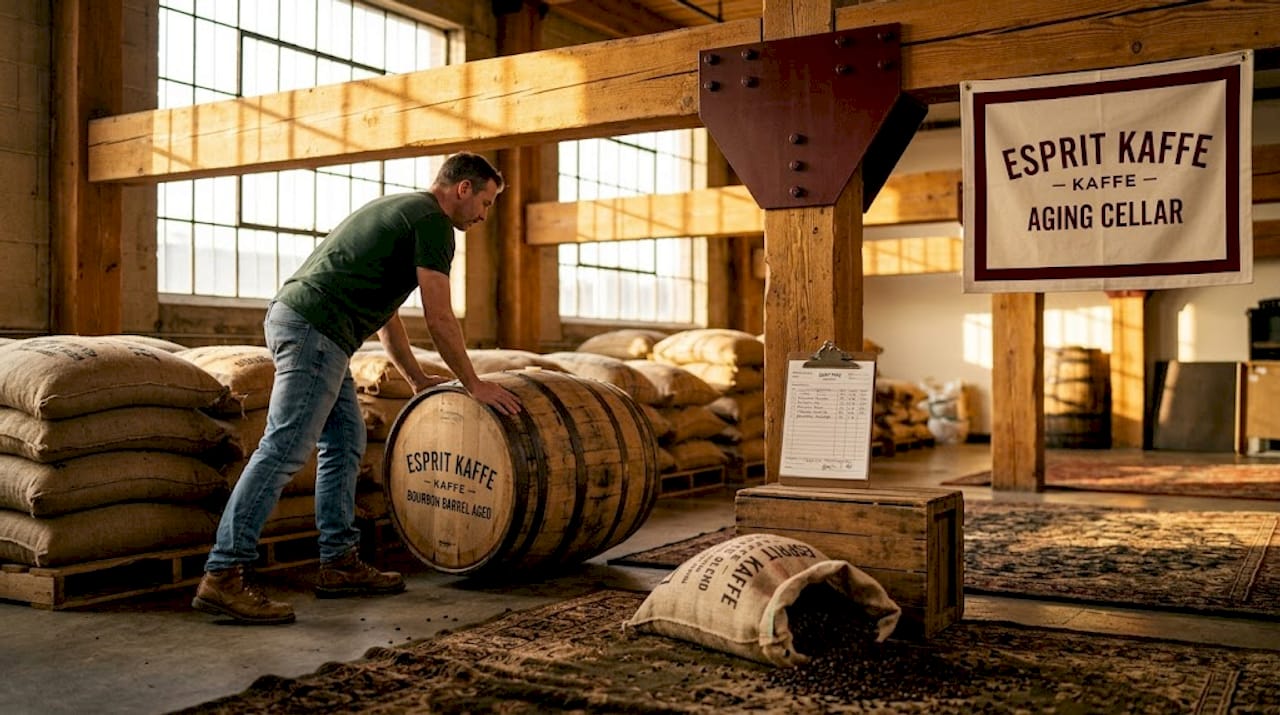
The process matters. Aging green coffee beans in bourbon barrels for weeks allows slow infusion of complex notes without any added alcohol content. This is a key point. Roasting the beans after barrel-aging burns off whatever residual moisture or spirit absorbed during aging. Bourbon barrel-aged coffee contains no alcohol after roasting. It is a flavor process, not an alcohol delivery method.
Brands like Pappy & Company and Klatch Coffee have built serious reputations in this space. Klatch Coffee’s Aged Whiskey Reserve blends Brazilian beans with barrel-aged influence for tasting notes that include smoked wood, honey, warm spice, and a caramelized finish. It works equally well hot or over ice, making it genuinely versatile. Premium barrel-aged products typically range from $11 to $26 per bag, reflecting both the additional production process and the sourcing quality behind them.
What separates the best bourbon coffee products in this category from average ones is authenticity of process. A coffee labeled “bourbon flavored” might simply use added flavoring agents rather than actual barrel contact. Barrel-aged products list their aging method clearly because that process is the selling point.
Pro Tip: When shopping for bourbon infused coffee beans, look specifically for “barrel-aged” language on the packaging. If the label just says “bourbon flavored,” you are likely getting a flavored coffee rather than the real barrel-contact product. The taste difference is significant.
Cultivar vs. barrel-aged: a direct comparison
Understanding the difference between these two categories helps you choose the right coffee for any given moment. Here is how they compare across the dimensions that matter most.
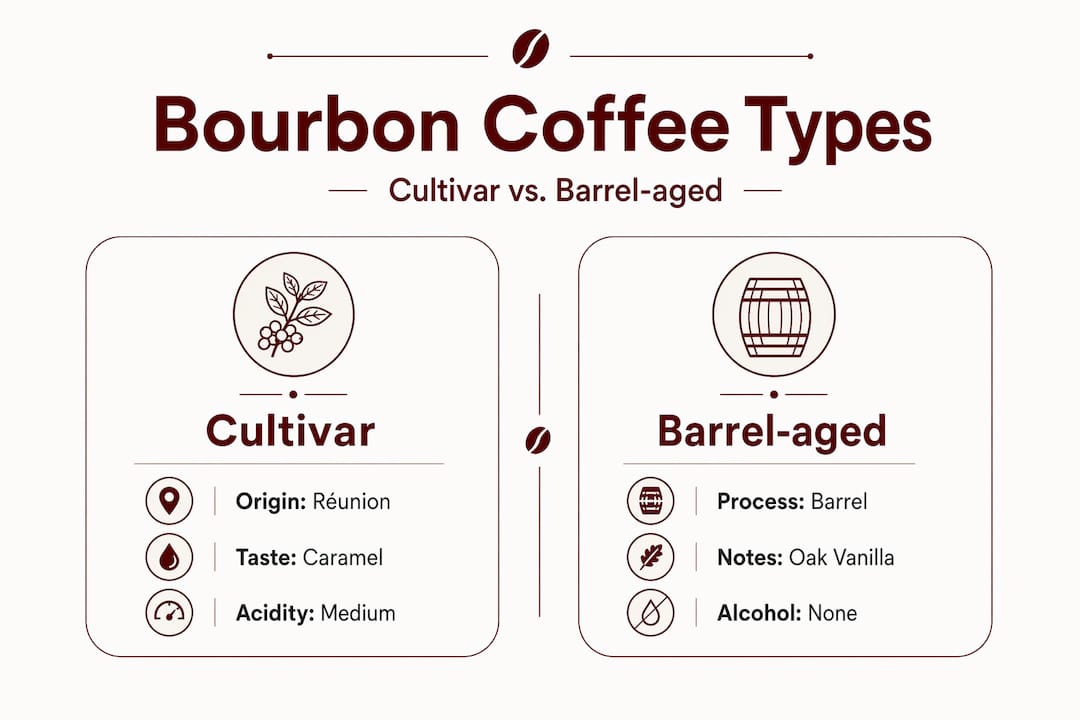
| Category | Origin | Flavor notes | Alcohol content | Best brewing method |
|---|---|---|---|---|
| Bourbon cultivar | Réunion Island / Latin America / East Africa | Caramel, chocolate, hazelnut, soft acidity | None | Pour-over, French press, filter |
| Bourbon barrel-aged coffee | Various origins, barrel-aged in the U.S. | Oak, vanilla, smoked wood, warm spice | None after roasting | Cold brew, French press, espresso |
| Bourbon flavored coffee | Various origins with added flavoring | Artificial sweetness, light bourbon character | None | Drip, pod systems |
The cultivar appeals most directly to specialty coffee drinkers who want natural sweetness and terroir expression. Barrel-aged coffee speaks to both coffee enthusiasts and bourbon fans who enjoy complexity and craft from two different traditions. The fusion of bourbon barrel-aged coffee has a unique ability to appeal across both communities, which is part of why the category keeps growing.
Flavored bourbon coffee sits at a different price and quality point. It is approachable, consistent, and familiar. But if you are reading this article, you probably want something more than approachable.
How to brew and serve both styles well
Getting the most out of your coffee depends on which category you are working with. These two forms of bourbon coffee reward different approaches.
Brewing the Bourbon cultivar
- Use a pour-over or French press. Both methods highlight the cultivar’s natural sweetness and layered acidity without masking its character. Drip machines work but often flatten the nuance.
- Grind fresh, right before brewing. The Bourbon variety’s delicate floral and caramel notes are among the first to fade after grinding. Freshness is non-negotiable.
- Water temperature matters. Aim for 195 to 205°F (90 to 96°C). Too hot and you extract bitterness; too cool and the sweetness stays locked in the bean.
- Dose conservatively. Bourbon cultivar beans tend to be dense and expressive. A 1:15 coffee-to-water ratio is a reliable starting point.
- Try it black first. Milk and sugar can easily cover the very notes that make this variety worth seeking out. Taste it straight before adding anything.
Serving barrel-aged and bourbon-infused coffee
Serving bourbon barrel-aged coffee over ice with a splash of cream or a drizzle of maple syrup enhances the oak and vanilla notes without competing with them. Cold brew is an especially strong format for barrel-aged coffee because the slow, cold extraction pulls out the wood and spice character cleanly. You can explore creative cold coffee pairings alongside ideas like the ones found in coffee cocktail recipes that complement these bolder profiles.
For home enthusiasts who want to approximate barrel-aging: prefer aging green beans in a small oak stave container over simply pouring bourbon into already-roasted coffee. The latter gives you a wet, boozy result with no depth. The former, done with patience over two to four weeks, creates genuine complexity.
Store both types of coffee in an airtight container away from direct light and heat. Barrel-aged coffee is especially vulnerable to flavor loss after opening because the aromatic compounds from barrel contact dissipate quickly. Buy in quantities you will use within two to three weeks of opening.
My take on the bourbon and coffee fusion
I’ve spent a significant amount of time tasting both sides of this conversation, and the thing that stands out most is how often people miss the botanical story entirely. Coffee enthusiasts who have never encountered the Bourbon cultivar as a variety will spend years drinking it without realizing what they are tasting. That caramel sweetness in a well-made Rwandan cup? That is the cultivar doing its work.
On the barrel-aged side, I’ve found that consumer enthusiasm for these products is not hype. It is genuine appreciation for what happens when two slow, craft-intensive processes meet. Barrel-aging coffee is not a shortcut. It requires time, sourcing discipline, and an understanding of how green beans absorb flavor differently at different roast levels.
What I find most rewarding is pairing a washed Yellow Bourbon from El Salvador alongside a cup of well-made barrel-aged coffee. The contrast is striking in the best possible way. One is precision agriculture expressed as flavor. The other is American craft tradition transferred into the morning ritual. Neither needs the other. But together they make a compelling argument for how wide coffee’s possibilities actually are.
My advice: do not choose between them. Educating yourself on both sharpens your palate faster than almost anything else you can do as a coffee enthusiast.
— Jett
Discover your next favorite roast at Espritkaffe
If this article sparked genuine curiosity about complex, layered coffee experiences, Espritkaffe has a collection built for exactly that. Whether you want to explore dark roast selections with the kind of depth that stands up to cream and ice, or you want to work through a flavored coffees sample pack to find your preferred profile, there is a starting point waiting for you. Espritkaffe’s whiskey barrel-aged coffee brings the barrel-aging conversation directly to your morning cup. For those who want something genuinely unexpected, the mushroom dark roast offers a different kind of complexity worth exploring. Your order. Your roast. Your coffee.
FAQ
What is bourbon coffee?
Bourbon coffee refers to two distinct things: a natural mutation of the Arabica coffee plant originally from Réunion Island with naturally sweet, caramel, and hazelnut flavor notes, and a category of barrel-aged or flavored coffee products inspired by Kentucky bourbon whiskey.
Does bourbon barrel-aged coffee contain alcohol?
No. Roasting evaporates any residual alcohol absorbed during the barrel-aging process, so the final coffee delivers only the flavor characteristics from the wood and spirit without any alcohol content.
What does bourbon flavored coffee taste like?
Bourbon flavored coffee typically carries notes of oak, vanilla, warm spice, and a caramelized sweetness, depending on whether it is genuinely barrel-aged or made with added flavorings. True barrel-aged versions tend to be more complex and rounded.
How do you make bourbon infused coffee at home?
For the best results, age green coffee beans in a small oak barrel or container for two to four weeks before roasting. Adding bourbon directly to roasted coffee produces a sharp, boozy result without the integrated depth that proper barrel-aging creates.
Which brewing method works best for bourbon coffee?
For the Bourbon cultivar, pour-over or French press highlight its natural sweetness and acidity. For barrel-aged bourbon coffee, cold brew or French press extraction draws out the smoky and vanilla notes most effectively.